Seven countries — Germany, Austria, Slovenia, Switzerland, Wales, South Korea and Taiwan — significantly outperform most of the world on municipal recycling. Their success stems from decades-long policies such as deposit-return systems, landfill bans, mandatory source separation and pay-as-you-throw schemes. Germany led Europe in 2024 with 67% recycled or composted; Switzerland diverts all municipal waste from landfills by recycling half and recovering energy from the rest; Taiwan reached about 60% by 2025. These examples show sustained policy and implementation matter more than wealth alone.
How Seven Countries Outsmart the World on Recycling — Lessons From Germany to Taiwan
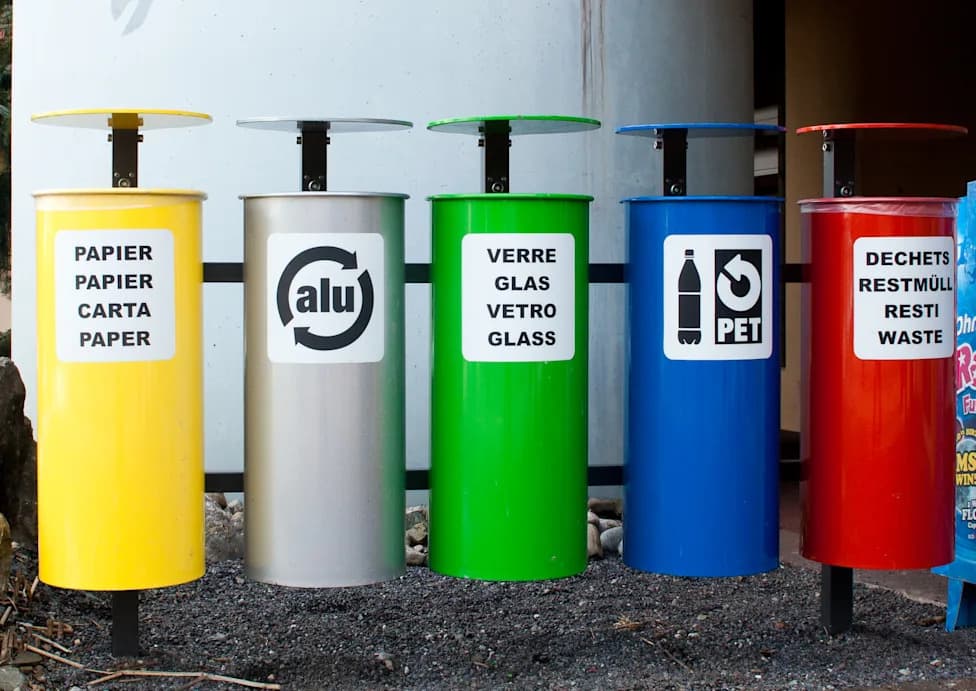
Walk down a street in Ljubljana or Taipei and you may notice a small but telling detail: recycling bins outnumber ordinary trash cans, often by four or five to one and clearly labeled for specific materials. That quiet visual cue points to a deeper reality — national systems built over decades that steer waste away from landfills and back into useful cycles.
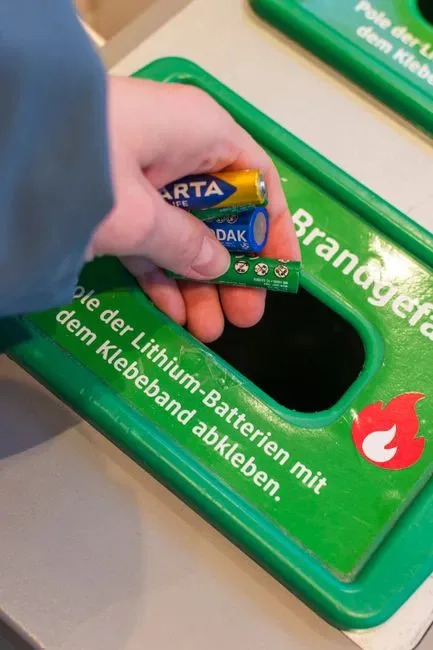
Germany (Image Credits: Pexels)
While much of the world still struggles to recycle even a third of what it discards, a handful of countries have pushed well beyond that threshold. Their methods vary — deposit-return schemes, mandatory source separation, landfill bans, pay-as-you-throw pricing and strong enforcement — yet the outcomes put them in a distinct league.
Austria (Image Credits: Unsplash)
Germany
Germany led European municipal recycling in 2024, with 67% of municipal waste recycled or composted. The country’s long-running Green Dot program obliges producers to manage packaging waste, and a national bottle deposit-return scheme produces an exceptional container return rate (about 98.4%). Strict bans on landfilling organic-rich waste and a culture of color-coded household sorting complete the picture.
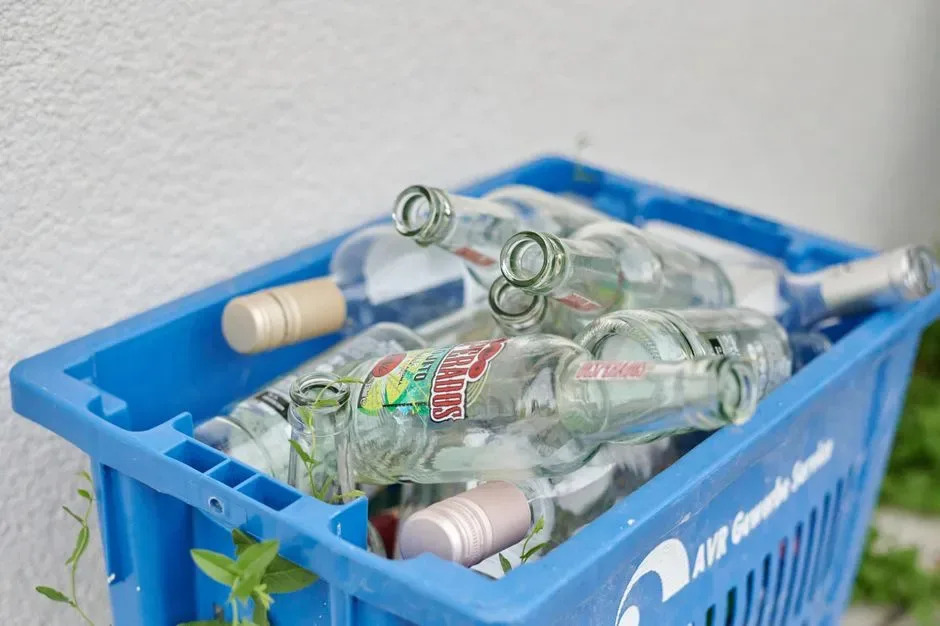
Slovenia (Image Credits: Pexels)
Austria
Austria is regularly rated among the best globally. A Reloop and Eunomia study highlighted Austria’s strong performance and the reliability of its reporting. Austria’s municipal recycling rate sits around 62.5%, a result driven in large part by a long-standing landfill ban that spurred investment in sorting and composting infrastructure.

Image Credit: Shutterstock.
Slovenia
Slovenia has quietly built a robust system. Its municipal recycling rate rose to about 62.3% in the latest reporting year, supported by mandatory separate collection for nearly every household fraction — from glass and textiles to biowaste. Packaging recycling is a particular strength (73.6%), with plastic packaging recycling at about 51.5%.
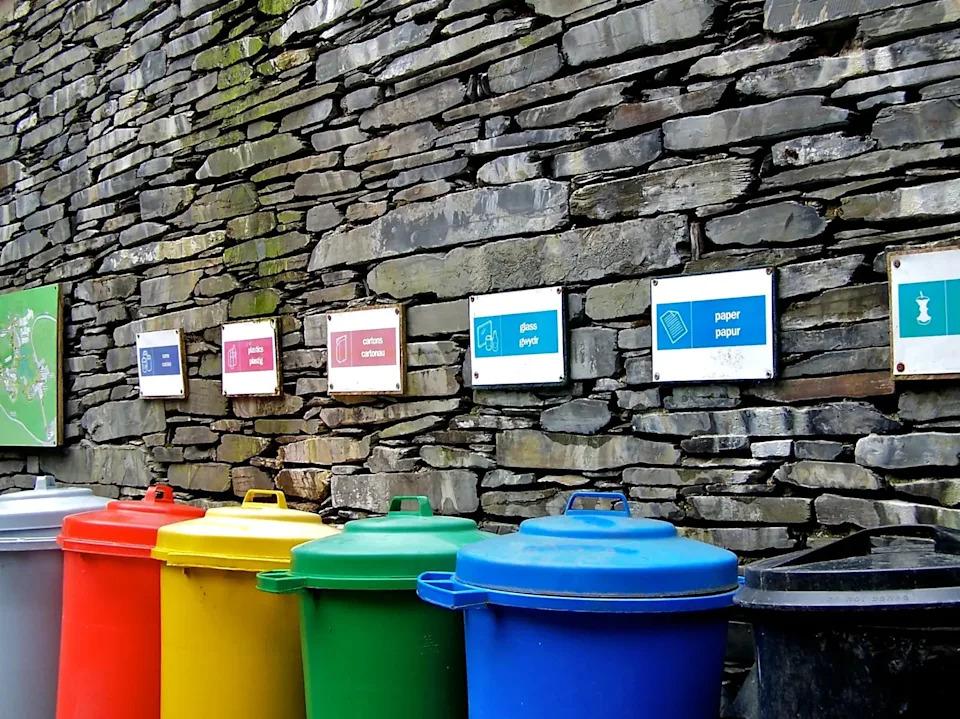
Wales (Flickr: Colourful row of recycling plastic dustbins,CC BY 2.0)
Switzerland
Switzerland diverts all municipal waste away from landfills: roughly half is recycled and the other half is incinerated with energy recovery. Minimum legal recycling rates for beverage containers were met in 2024 (glass 100%, cans 90%, PET bottles 84%). Even top performers face new challenges — for example, battery recycling rates can fluctuate as long-lived lithium-ion batteries remain in use longer.
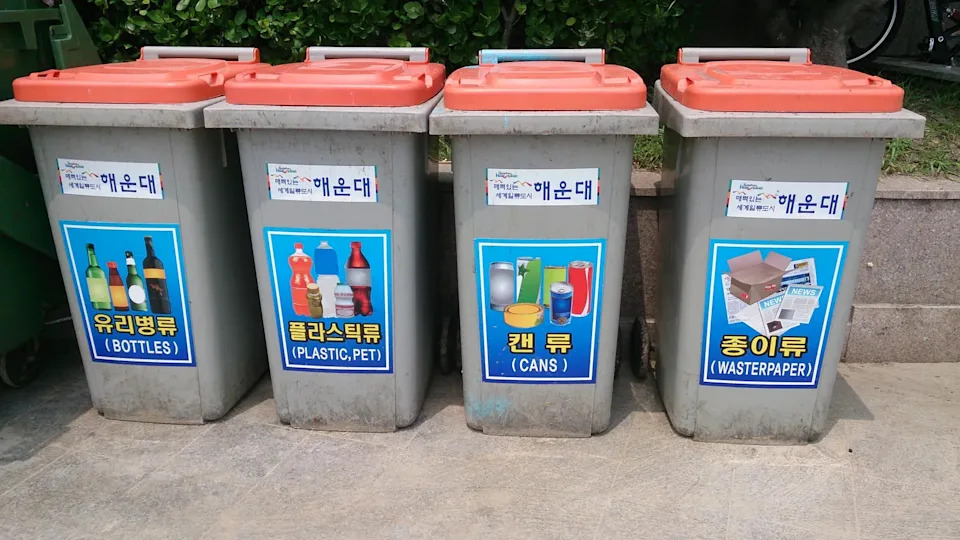
South Korea (By ProjectManhattan,CC BY-SA 3.0)
Wales
Wales is an outlier within the UK, consistently outperforming larger neighbours. In the Reloop–Eunomia comparison Wales ranked second globally; its national recycling rate exceeded a statutory target of 64%, reaching about 65.2%. This contrast with UK averages (household recycling nearer the mid-40s) highlights the impact of devolved policy and local implementation.
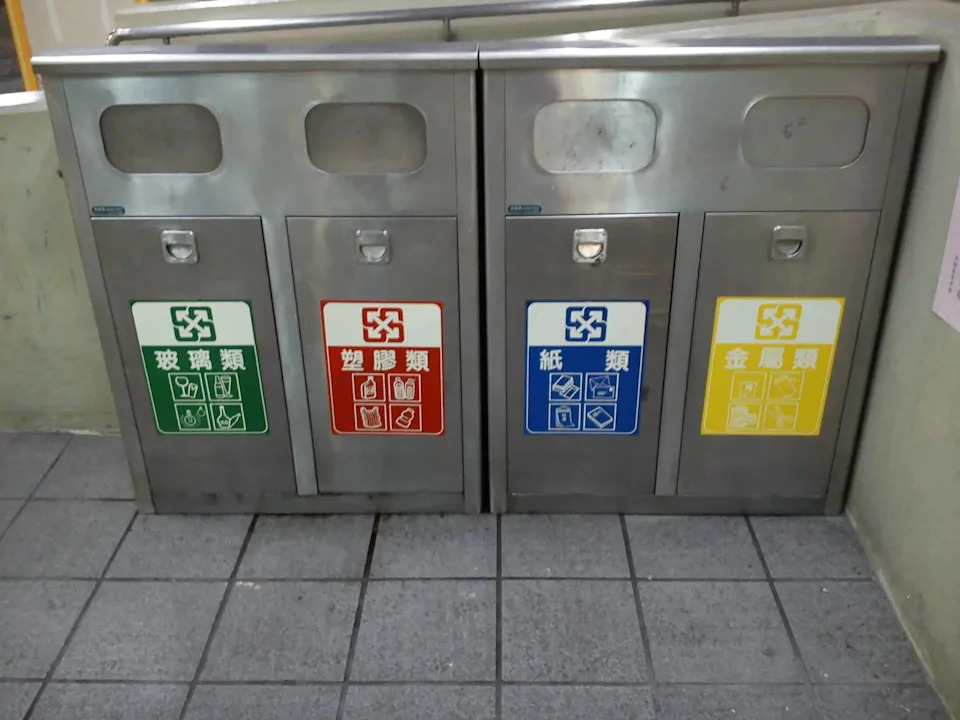
Taiwan (By 蒼空 翔,CC BY-SA 3.0)
South Korea
South Korea emphasizes household discipline and enforcement. The country attained about a 54% municipal recycling rate, supported by mandatory food-waste separation, volume-based garbage fees and digital tracking. South Korea scores highly on waste recovery metrics (EPI score ~82), particularly for food-waste management and data-driven systems.
Taiwan
Taiwan transformed its system after a landfill crisis in the 1990s. By rebuilding collection, sorting and recycling infrastructure, Taiwan reached a general waste recycling rate of roughly 60% by 2025. A distinctive feature is how residents bring waste to designated collection points on fixed schedules, with collection trucks often signaling arrival with music — a small cultural cue that supports compliance.
These seven examples do not offer a single universal blueprint. Instead, they illustrate a shared willingness to treat waste as a persistent policy problem: long-term targets, producer responsibility, mandatory separation, deposit-return schemes, landfill restrictions and sensible pricing all play roles. None of the systems are perfect, and debates about measurement continue, but the gap between these leaders and the global average shows that sustained policy and consistent implementation — more than wealth alone — drive results.
Help us improve.