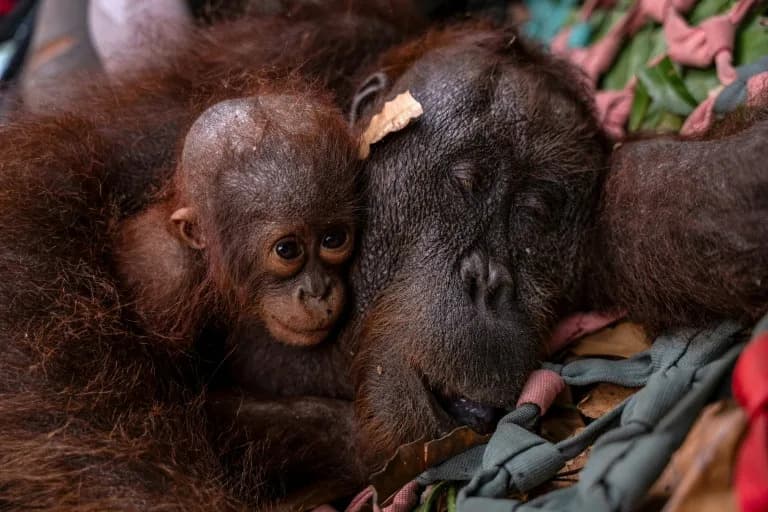
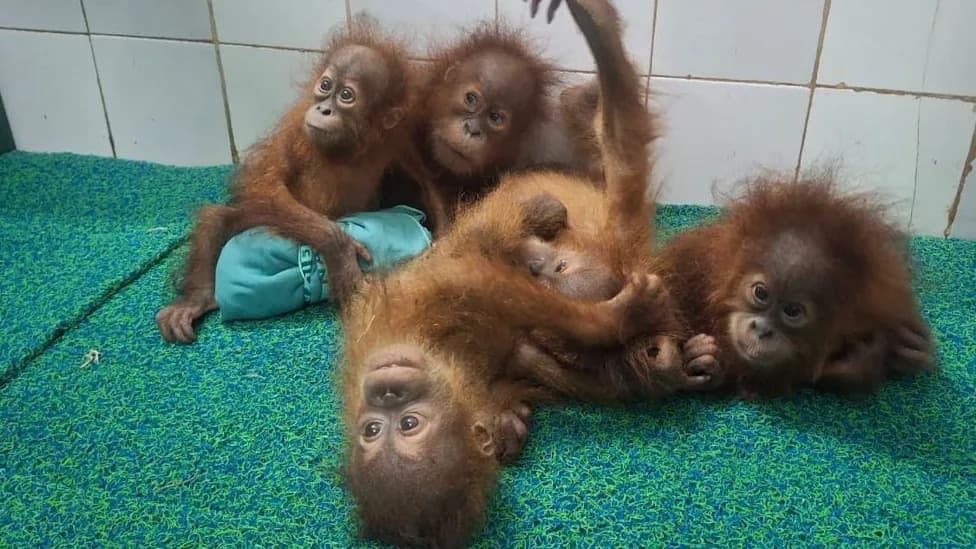
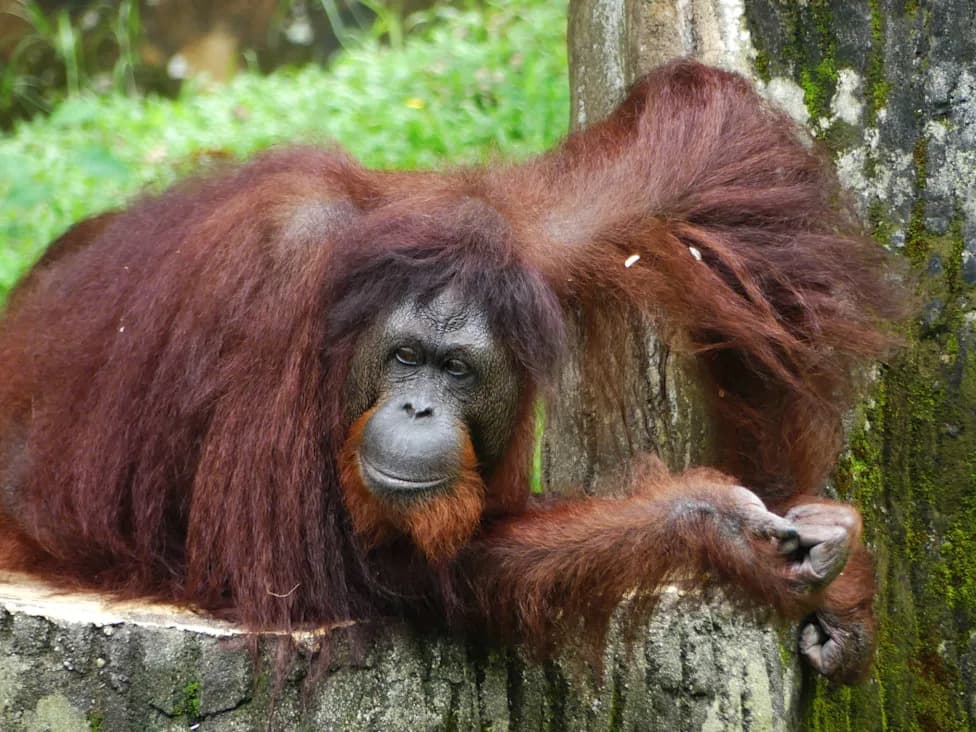
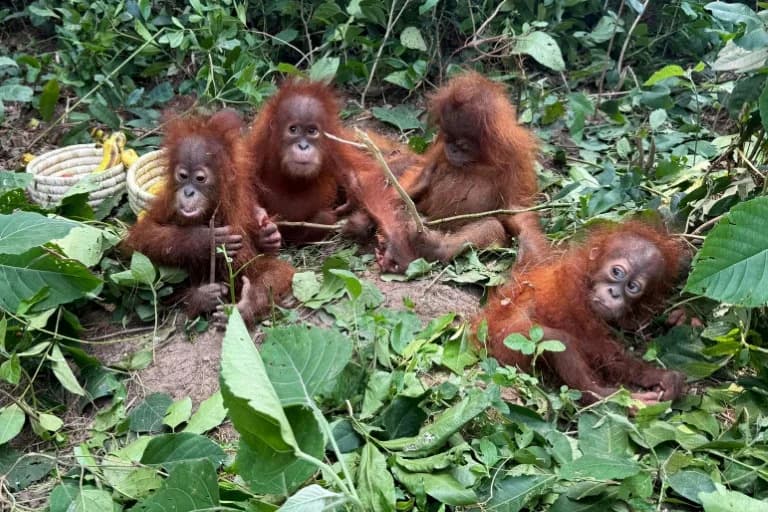
On April 27, conservationists released the first documented video of a Sumatran orangutan using a human-made canopy bridge to cross a public road — a sign of progress for the critically endangered ape. The rope bridge spans a road that divides key habitat and links remote villages to essential services; before the bridges were installed, roughly 350 apes were separated between two protected areas. Five canopy bridges were put in place two years ago, and this sighting — after smaller animals previously used them — offers hope for improved connectivity and reduced extinction risk for a species with fewer than 13,000 individuals in the wild.
Historic Conservation Win: Sumatran Orangutan Uses Human-Made Canopy Bridge to Cross Busy Road
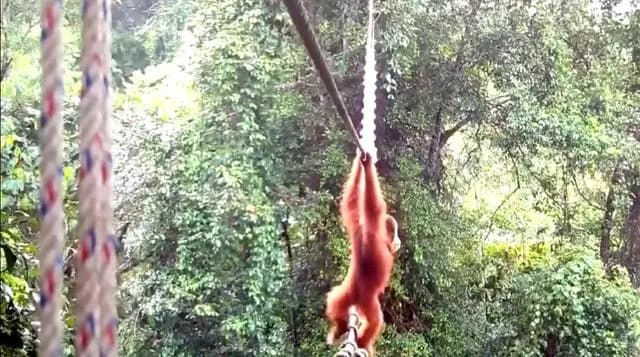
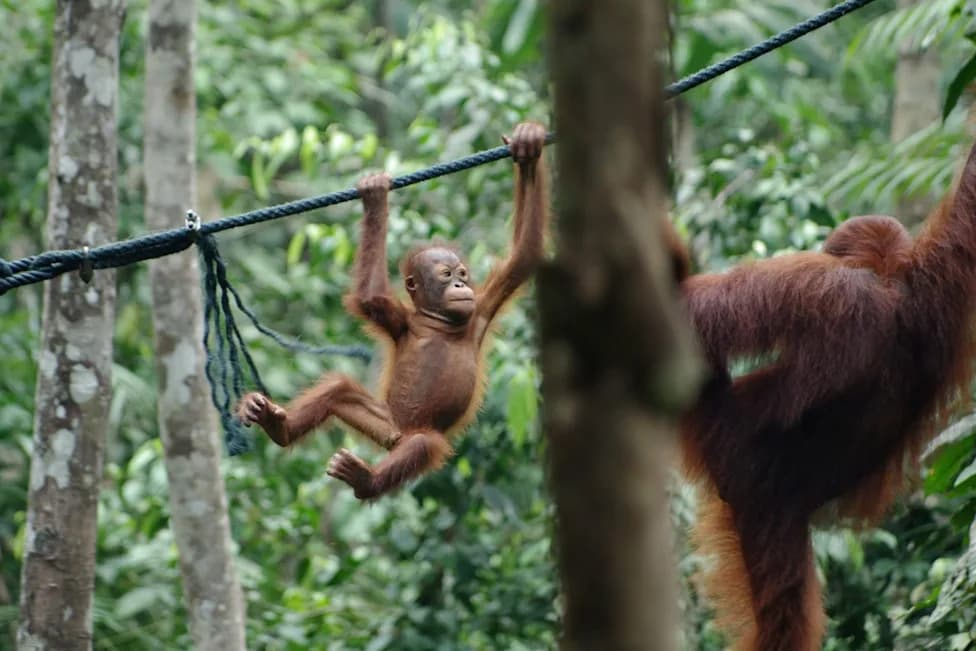
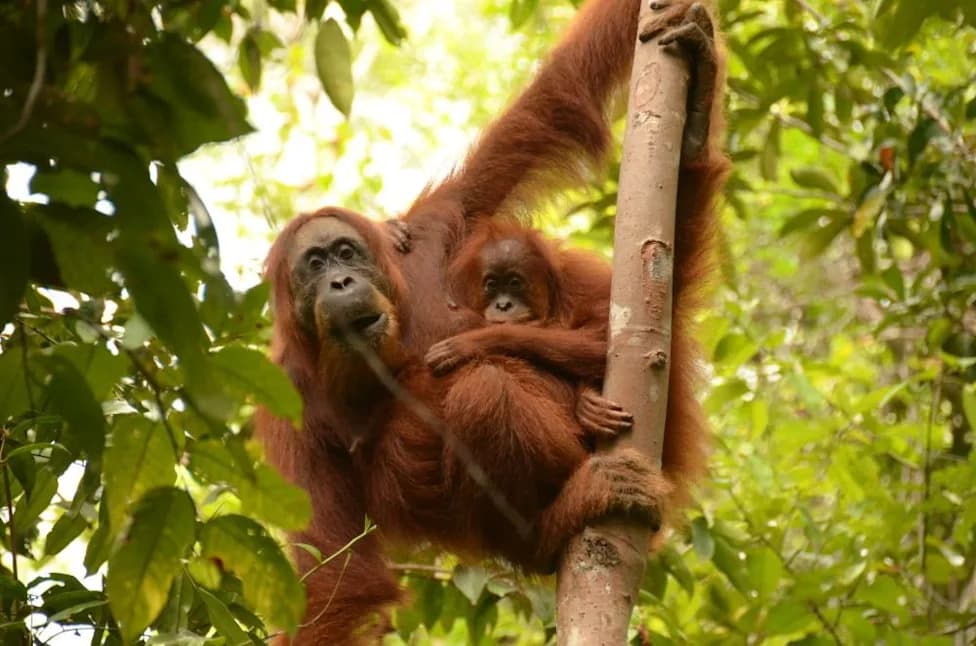
Orangutan on a canopy bridgeCredit: SUMATRAN ORANGUTAN SOCIETY/TAHUKAH
Conservationists on April 27 released the first recorded footage of a Sumatran orangutan using a human-made canopy bridge to cross a public road in Indonesia — a milestone hailed as a meaningful step for a critically endangered species.
The short video, shared by the Sumatran Orangutan Society and Indonesian group Tangguh Hutan Khatulistiwa (TaHuKah), shows a young male orangutan gripping a rope bridge with his long arms and carefully traversing above a busy roadway. Midway through the crossing he pauses to survey the area before continuing across to the opposite side.
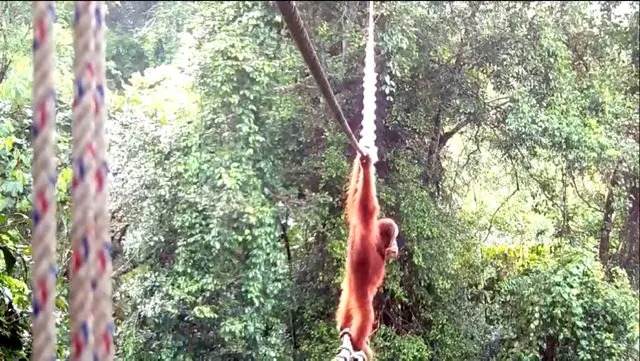
A Sumatran orangutan using a canopy bridge in Indonesia for the first timeCredit: SUMATRAN ORANGUTAN SOCIETY/TAHUKAH
Why the Crossing Matters
Human development has fragmented forests across Indonesia, slicing continuous habitat into smaller, isolated patches. The U.S. Department of Agriculture defines forest fragmentation as the loss of continuous forest and the division of remaining tracts into smaller blocks — a process that can separate groups of orangutans and force dangerous road crossings.
"This was the moment we had been waiting for," said Erwin Alamsyah Siregar, executive director of TaHuKah. "We are very grateful that the canopy here provides benefits for orangutan conservation efforts."
The canopy bridge in the footage spans a road linking two remote villages to schools, healthcare and government services while cutting directly through prime orangutan habitat. Before the installation of canopy bridges in the area, conservationists estimated about 350 apes were divided between the Siranggas Wildlife Reserve and the Sikulaping Protection Forest.
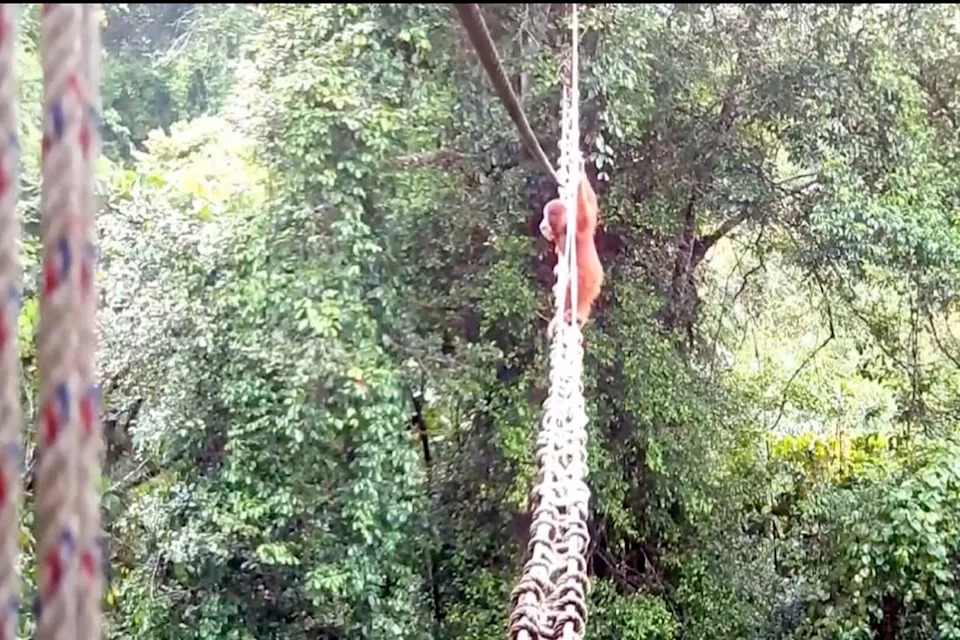
An orangutan on a canopy bridgeCredit: SUMATRAN ORANGUTAN SOCIETY/TAHUKAH
Five canopy bridges were carefully placed in the region two years ago to restore safe connectivity; until this sighting they had primarily been used by smaller monkeys and squirrels. Siregar noted that Sumatran orangutans — which number fewer than 13,000 in the wild — often approach new structures cautiously: "They don't rush. They watch, they try, they retreat." The newly recorded crossing is therefore an encouraging sign that more individuals may begin to use the bridges, helping reconnect fragmented groups and support genetic mixing.
Conservation Implications
Canopy bridges provide a low-cost, immediate tool to reduce the risk of isolation for arboreal species. By allowing orangutans to move between habitat fragments without confronting traffic or ground-level threats, these crossings can help maintain healthier, more resilient populations and reduce extinction risk while longer-term habitat protection and restoration continue.
Conservation groups say the footage demonstrates how targeted interventions can balance necessary human development with protections for wildlife. Continued monitoring will show whether more orangutans adopt the bridges, but this first recorded crossing is being celebrated as a practical conservation success.
Help us improve.