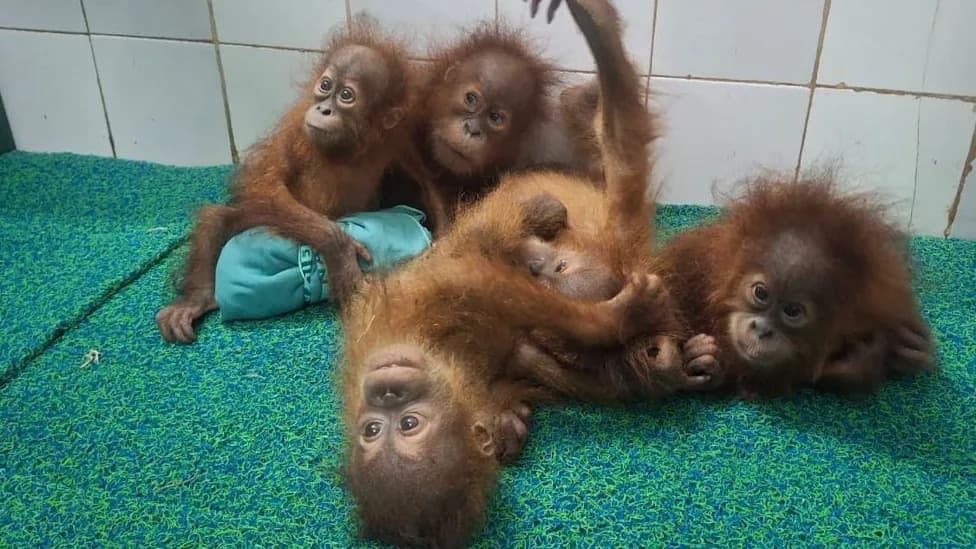
Indonesian officials have asked India to repatriate five infant orangutans found alone in Odisha, suspecting they were trafficked across the border. The one-and-a-half-year-old animals are currently being cared for in a zoo while DNA tests are planned to confirm Sumatran origin. Jakarta is coordinating with the Indian embassy and conservation NGOs on rehabilitation and reintegration plans. The case highlights broader threats to Sumatran orangutans — listed as Critically Endangered — from habitat loss, hunting and recent forest fires.
Indonesia Seeks Repatriation of Five Infant Orangutans Found Alone in India Amid Trafficking Probe

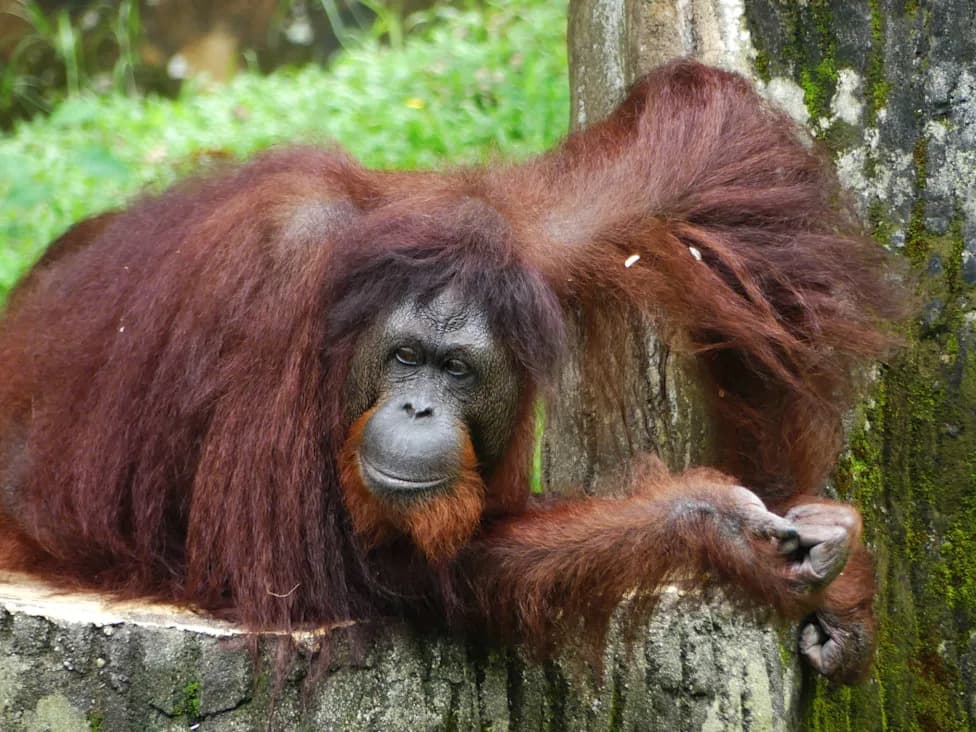
In the wild, orangutans are found only in Sumatra and Borneo (Handout)
Indonesian authorities are seeking the return of five infant orangutans discovered alone in a forest in India's Odisha state, saying the animals may have been trafficked across international borders.
Rangers found the critically endangered primates on Tuesday while patrolling the Balasore district. The youngsters — estimated at around one-and-a-half years old — appeared healthy and were placed in the care of a local zoo after their discovery, Jakarta's Forestry Ministry told AFP.
Investigation and Repatriation Efforts
Authorities suspect the orangutans were smuggled into India, prompting a criminal investigation. "The forestry ministry has begun communicating with the government of India through the Indian embassy in Jakarta," ministry spokesman Ristianto Pribadi said. Indonesia has formally requested that the animals be handed over for repatriation and rehabilitation.
Officials say the five infants appear to be of Sumatran origin and plan to use DNA testing to confirm their provenance. Indonesia is coordinating with conservation NGOs and rehabilitation specialists to prepare for the animals' potential return and eventual reintegration into the wild.
Conservation Context
The International Union for Conservation of Nature (IUCN) lists Sumatran orangutans as Critically Endangered. The species is slow to mature — young are typically weaned at around seven years — and the most recent population estimate (2016) put numbers at just over 13,500. The closely related Tapanuli orangutan, also native to Sumatra, is even rarer, with fewer than 800 individuals believed to remain.
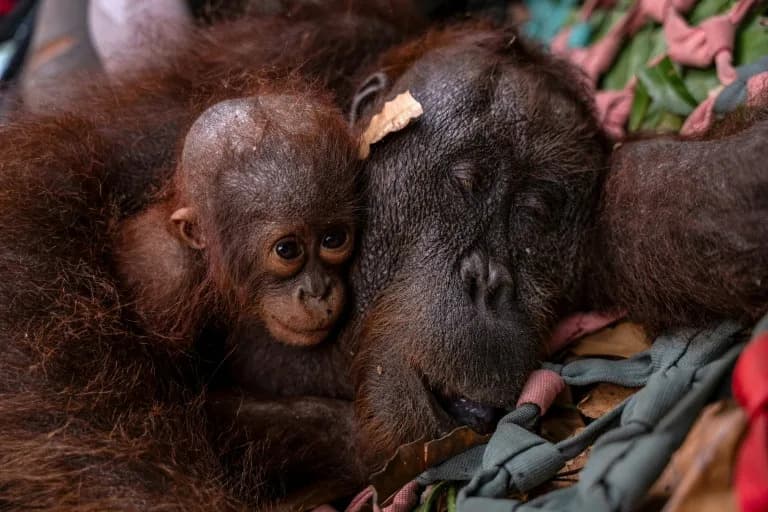
Population declines are driven by habitat loss and fragmentation from human encroachment, illegal hunting and other pressures. In recent weeks, forest fires across parts of Borneo have added further stress: in West Kalimantan province, at least 15 orangutans have been rescued from flames and thick haze since July, some trapped after fires cut off access to forest refuges.
Local Conservation Response
Panut Hadisiswoyo, founder of the Orangutan Information Centre, said the NGO supports repatriation. "Repatriation should be the priority," he said, adding that DNA tests could be completed after the animals are returned to Indonesia.
As diplomatic and legal processes continue, Indonesian officials and conservation partners are preparing health checks, quarantine protocols and rehabilitation plans to maximize the infants' prospects of eventual release back into protected forest areas.
Help us improve.