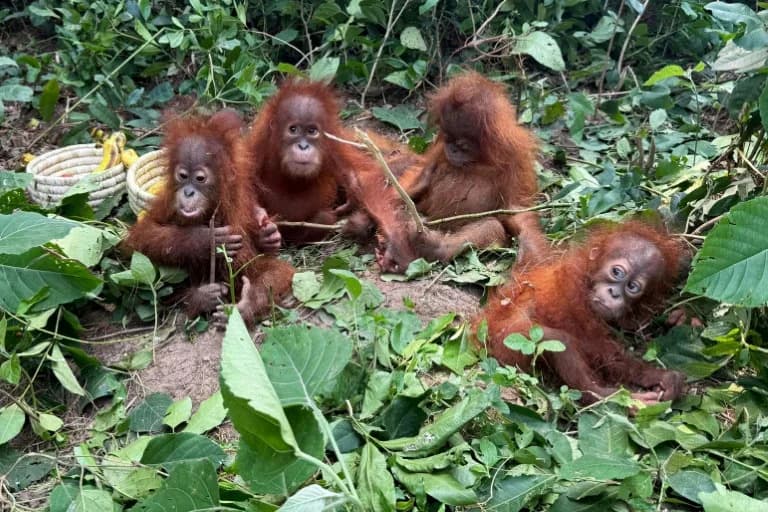
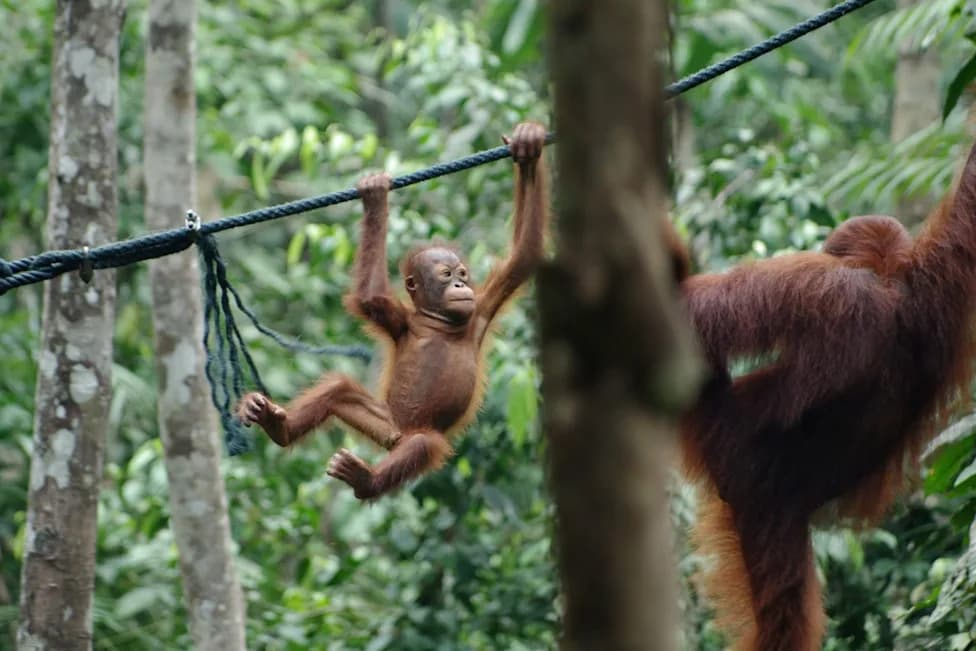
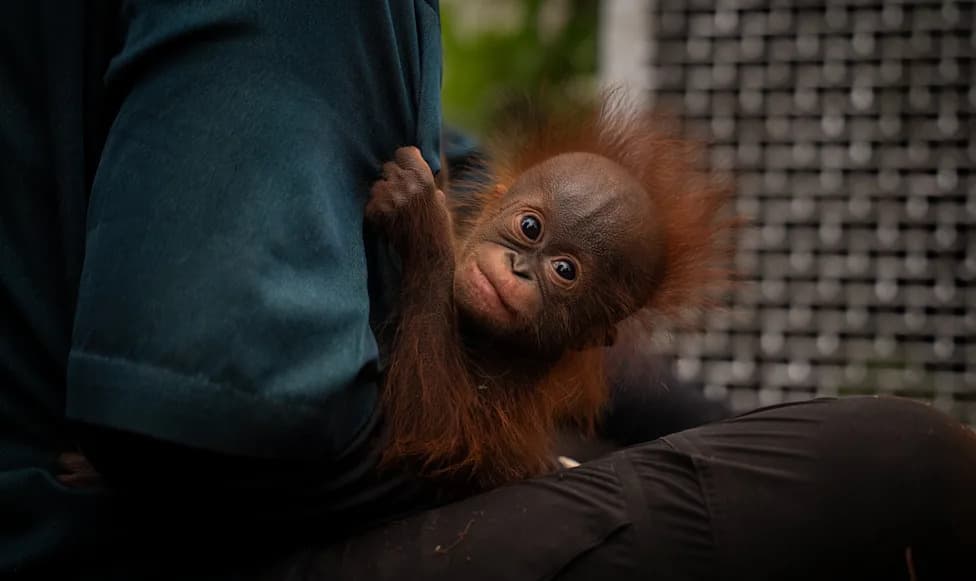
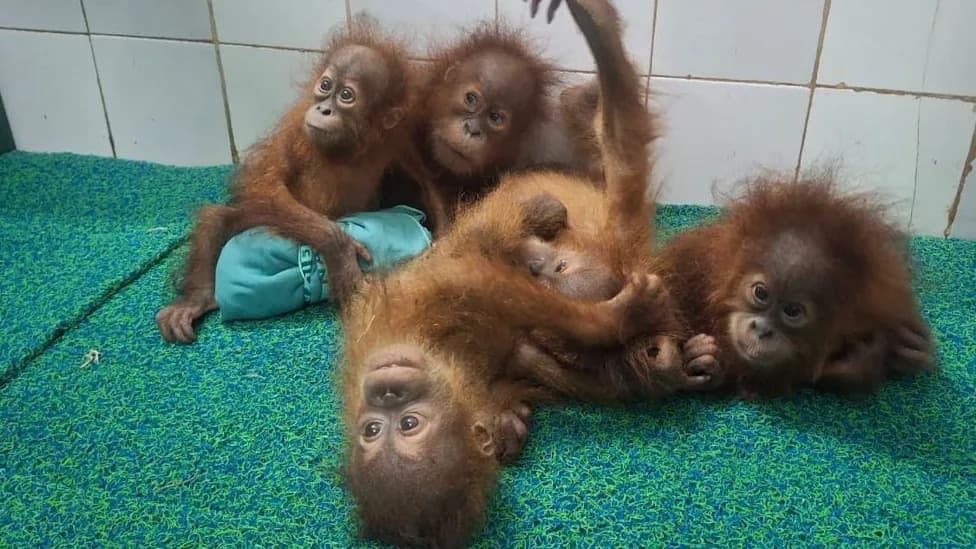
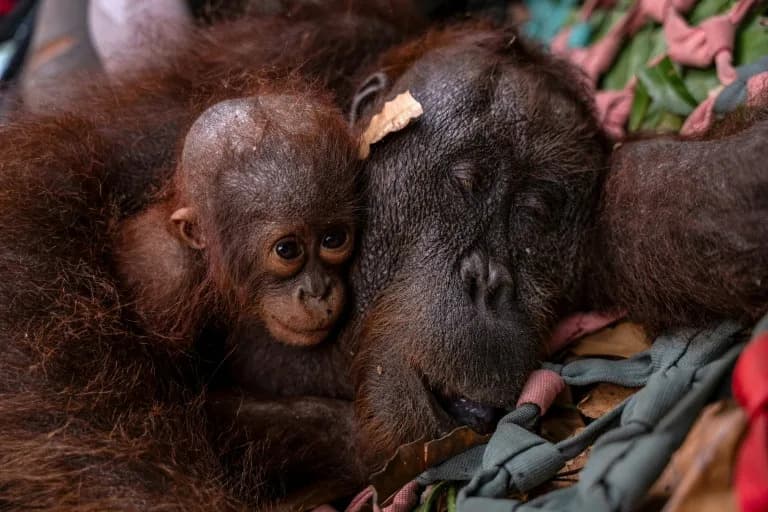
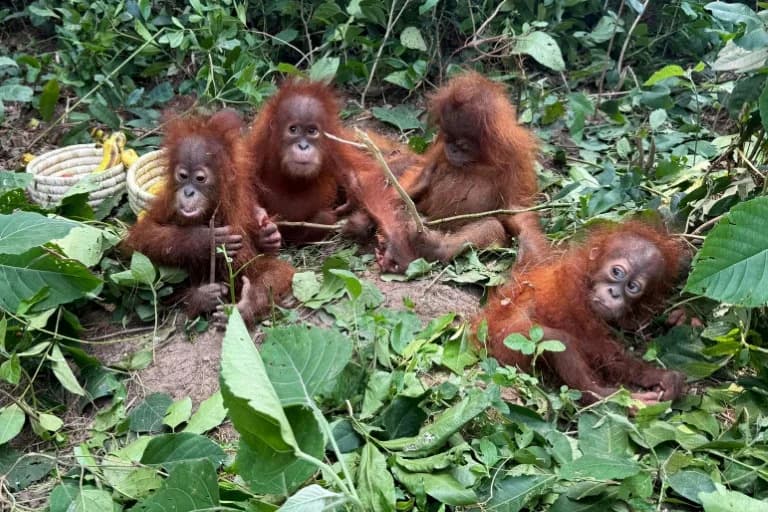
A Sumatran orangutan was filmed for the first time using a man-made canopy bridge in North Sumatra, conservation groups report. Five hanging bridges were installed in 2024 after a road expansion cut through primary rainforest and fragmented local populations. The crossing is being hailed as a major conservation milestone and a practical example of reconciling infrastructure with wildlife needs. Sumatran orangutans are classified as Critically Endangered, with just over 13,587 individuals at the last count.
First Recorded Sumatran Orangutan Crosses Man-Made Canopy Bridge — Conservation Milestone
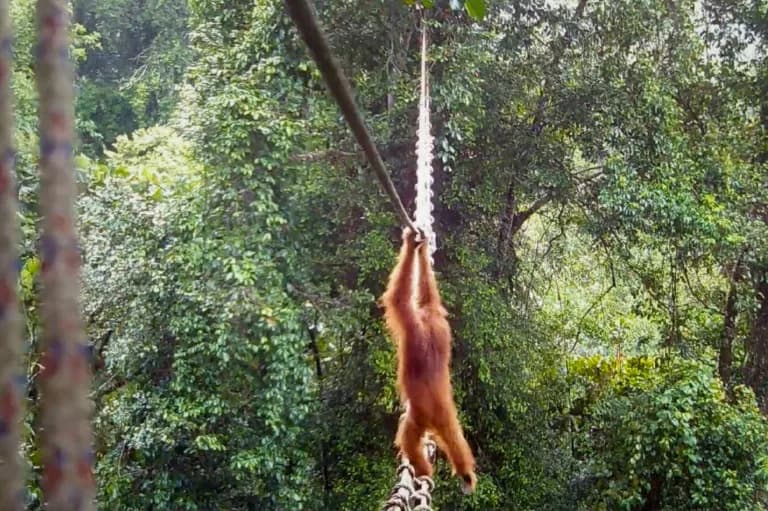
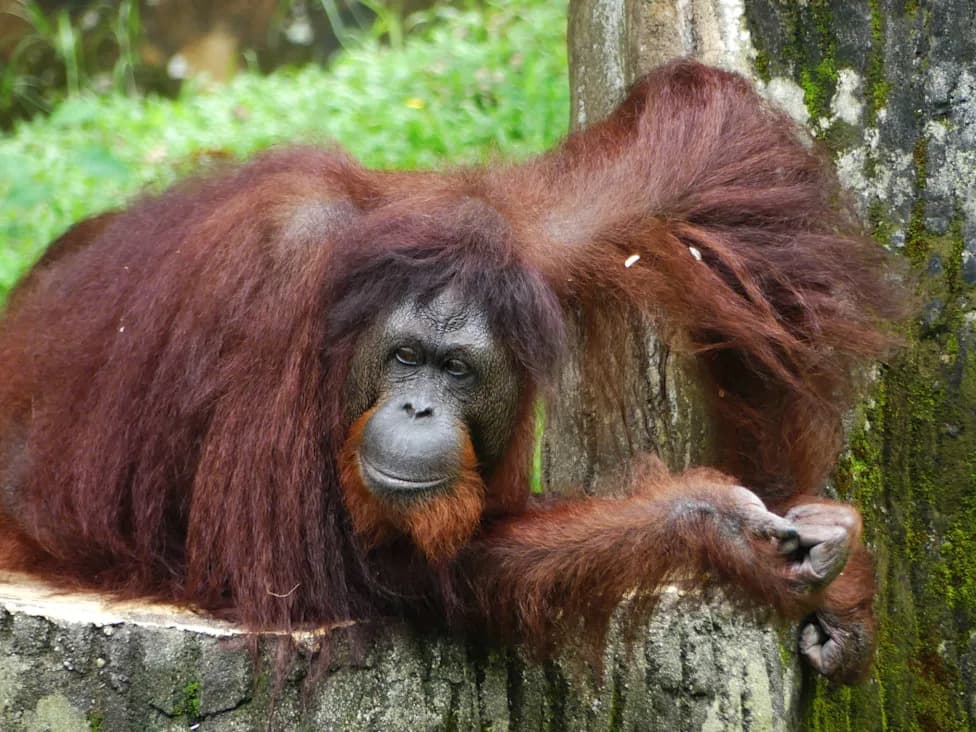
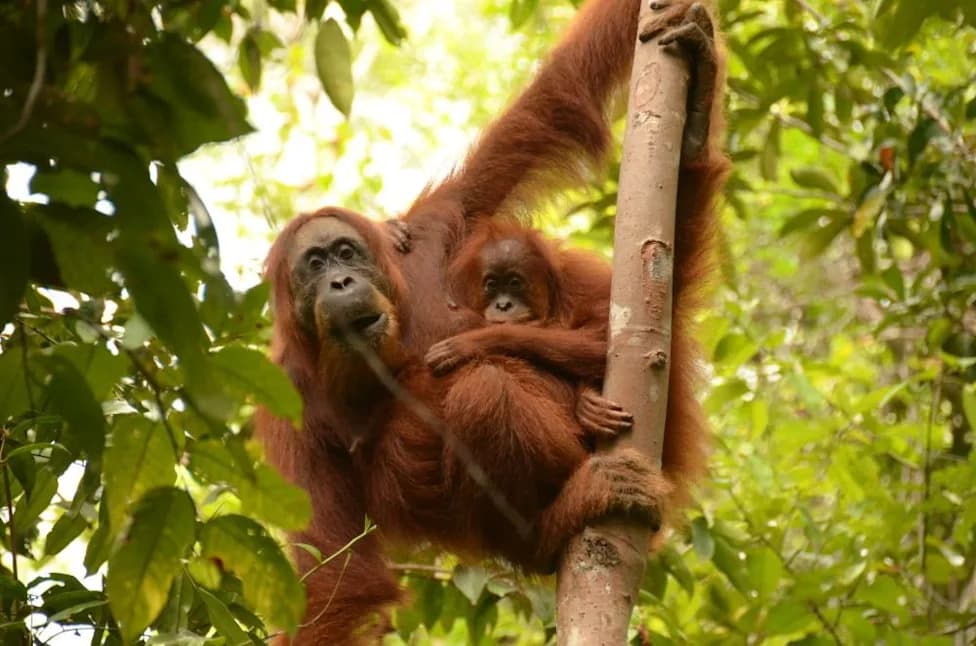
In the wild, orangutans are found only on Sumatra and the nearby island of Borneo, which is shared between Indonesia, Malaysia and Brunei (Handout)(Handout/SUMATRAN ORANGUTAN SOCIETY (SOS)/AFP)
A Sumatran orangutan has been filmed for the first time using a man-made canopy bridge built to help endangered apes cross a tarred road on the Indonesian island of Sumatra, conservation groups reported.
Local conservation group Tangguh Hutan Khatulistiwa, in partnership with the UK-based Sumatra Orangutan Society (SOS) and regional authorities, installed five hanging canopy bridges in North Sumatra province in 2024 after an expanded road — a vital route for remote communities — cut through primary rainforest.
Cameras placed at the site captured the orangutan using one of the suspended bridges, marking what SOS described as "a world first for Sumatran orangutans." While gibbons and long-tailed macaques had already been observed using the structures, this is the first documented crossing by a Sumatran orangutan.
Why This Matters
The upgraded road serves important social and economic needs for communities in Pakpak Bharat district, but it also fragmented habitat and divided a local population of about 350 orangutans. Canopy bridges are designed to reconnect tree-top routes so arboreal species can travel safely above traffic and avoid coming to the ground, where they are more vulnerable to accidents and hunting.
'These canopy bridges demonstrate that human development and wildlife don't have to be at odds. Sometimes, the simplest solutions are the most effective,' said Helen Buckland, chief executive of SOS, calling the sighting a 'huge milestone for conservation.'
Erwin Alamsyah Siregar, executive director of Tangguh Hutan Khatulistiwa, highlighted that habitat fragmentation remains "one of the greatest challenges in contemporary conservation" and expressed hope that canopy bridges will become a standard feature of infrastructure planning across the region.
Conservation Context
The International Union for Conservation of Nature (IUCN) classifies Sumatran orangutans as Critically Endangered. The species, endemic to Sumatra, numbered just over 13,587 individuals at the last count. Their decline is primarily driven by habitat loss and fragmentation, alongside illegal hunting. In the wild, orangutans occur only on Sumatra and the nearby island of Borneo, which is shared by Indonesia, Malaysia and Brunei.
Conservationists say the successful use of canopy bridges offers a low-cost, replicable measure to reduce road-related isolation and help maintain genetic and ecological connectivity for arboreal wildlife.
Help us improve.