Linda Losurdo, a PhD student at the University of Sydney, produced milligram-scale amounts of cosmic dust by applying a 10,000-volt glow discharge to a mixture of nitrogen, carbon dioxide and acetylene. The lab-made particles mimic pristine interstellar dust and provide a controlled starting point to study how organic molecules and amino acids could form in stellar environments. Independent experts say the work helps connect telescope observations with laboratory experiments and could help reconstruct the chemical histories of cometary and meteoritic material.
Lab-Made Cosmic Dust Sheds New Light On How Life Began
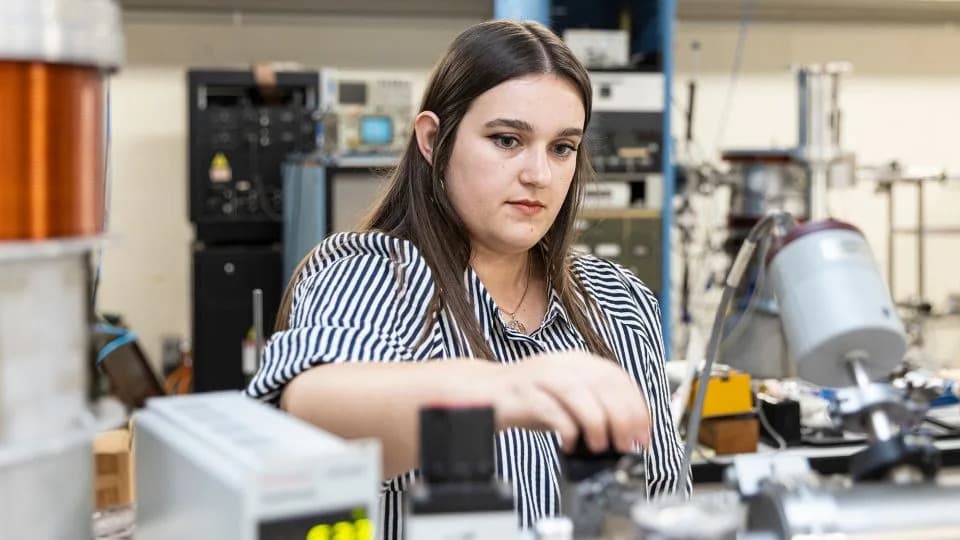
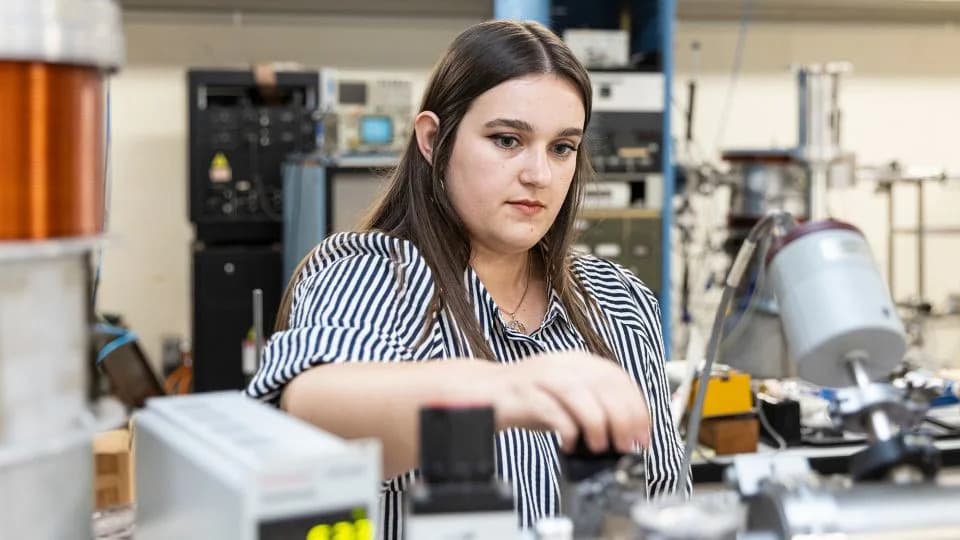
Doctoral student Linda Losurdo makes cosmic dust in her University of Sydney lab as a tool to understand the origins of life. - Fiona Wolf/University of Sydney
Linda Losurdo, a doctoral student in materials and plasma physics at the University of Sydney, has reproduced tiny amounts of cosmic dust in the lab by recreating space-like conditions with simple gases and an electrical discharge. Her experiment produced a few milligrams of dusty nanoparticles that mimic pristine interstellar grains — material thought to seed the chemistry that can lead to life.
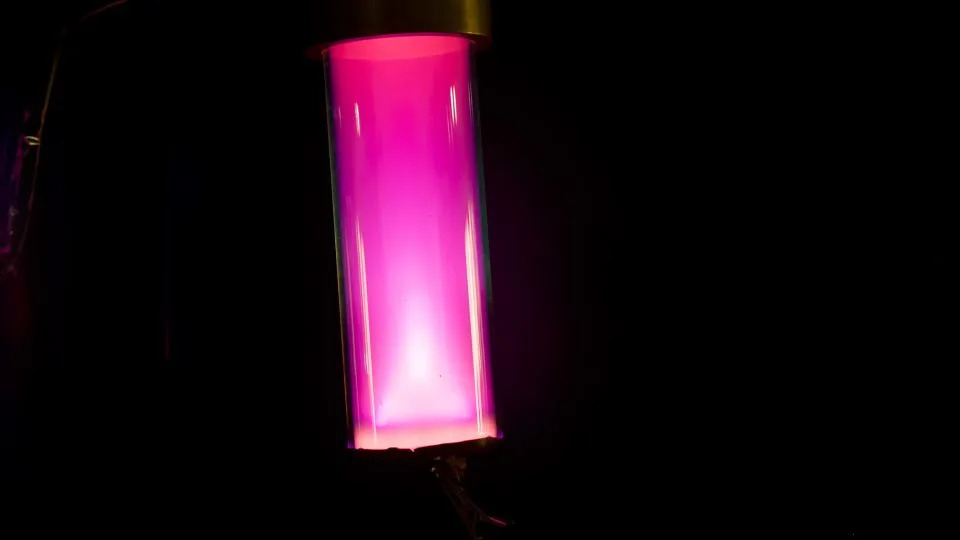
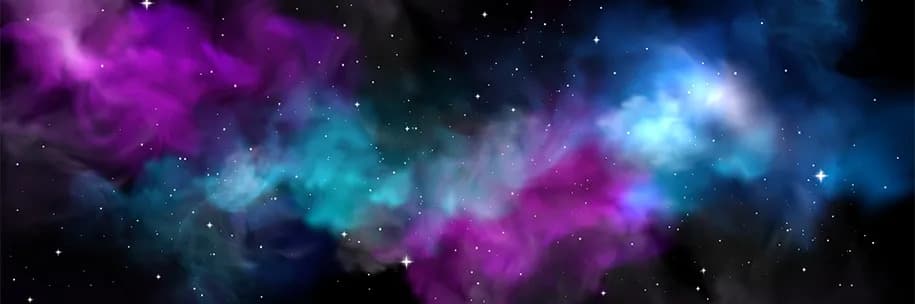
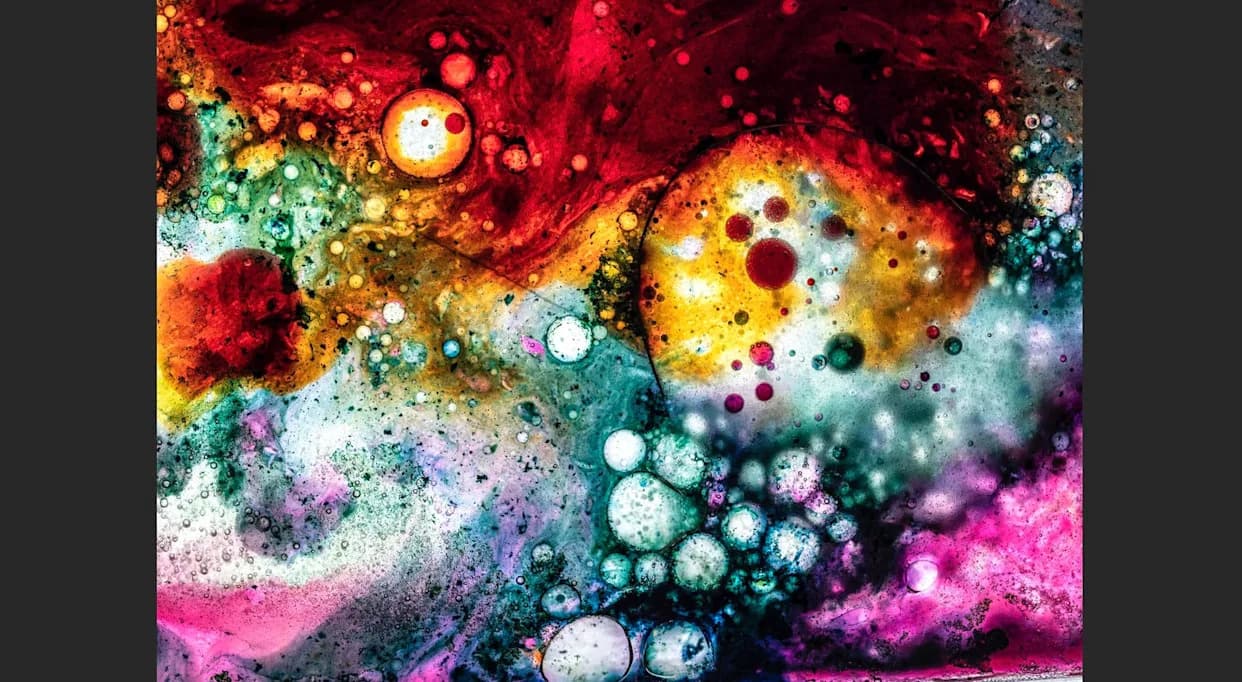
The cosmic dust in a lab consists of a mix of gases that glow different colors when excited by electricity. - Linda Losurdo/University of Sydney
How She Made the Dust
Working with coauthor David McKenzie, Losurdo evacuated a glass tube, introduced a mixture of nitrogen, carbon dioxide and acetylene, and applied 10,000 volts across the gas for about an hour. The high voltage created a glow-discharge plasma: an electrically charged gas in which atoms and molecules are energized and readily bond and aggregate into particles.
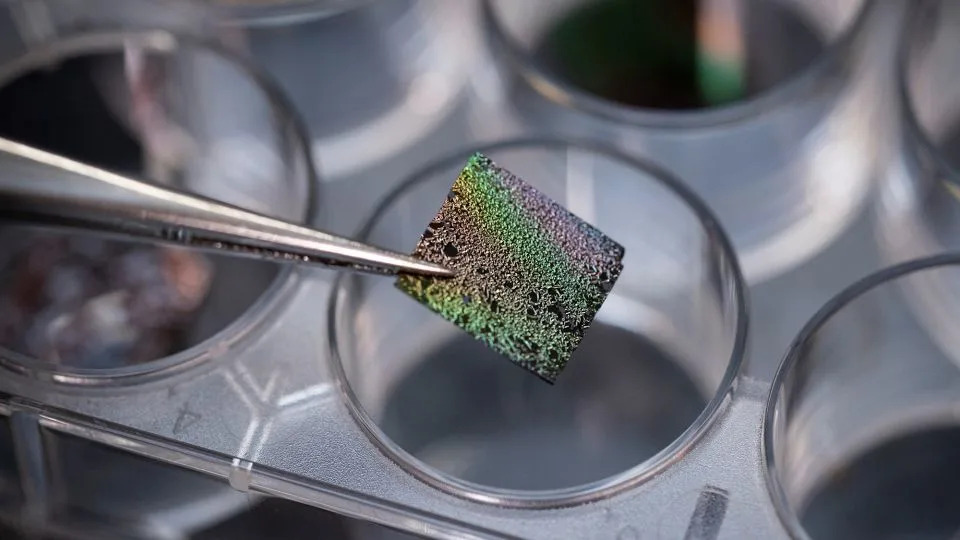
In total, Losurdo produced about a gram of cosmic dust, which was deposited on a silicon wafer for analysis. - Fiona Wolf/University of Sydney
“You complete an electrical circuit through the gas, exciting it; electrons are stripped away and the environment encourages atoms and molecules to bind, coalesce and aggregate,” Losurdo said. "That is a natural process we know happens around stars."
The experiment yielded a few milligrams of "dusty nanoparticles." To collect and analyze them, Losurdo deposits the particles onto silicon wafers, which provide a clean substrate that makes the new material easier to study.
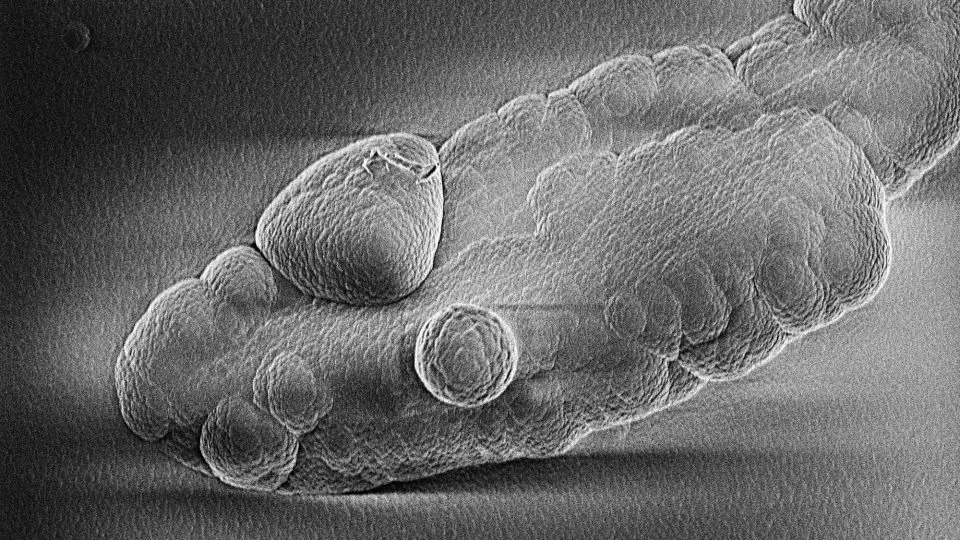
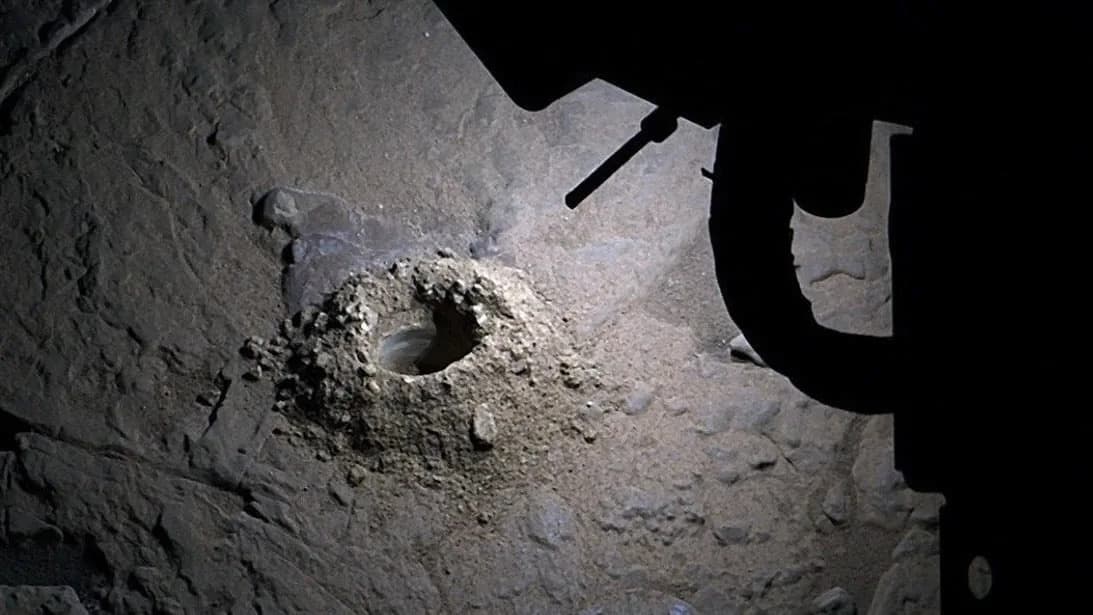
Cosmic dust made in a lab is pictured as it appears under a microscope. - Vijay Bhatia/Linda Losurdo/University of Sydney
Why This Matters
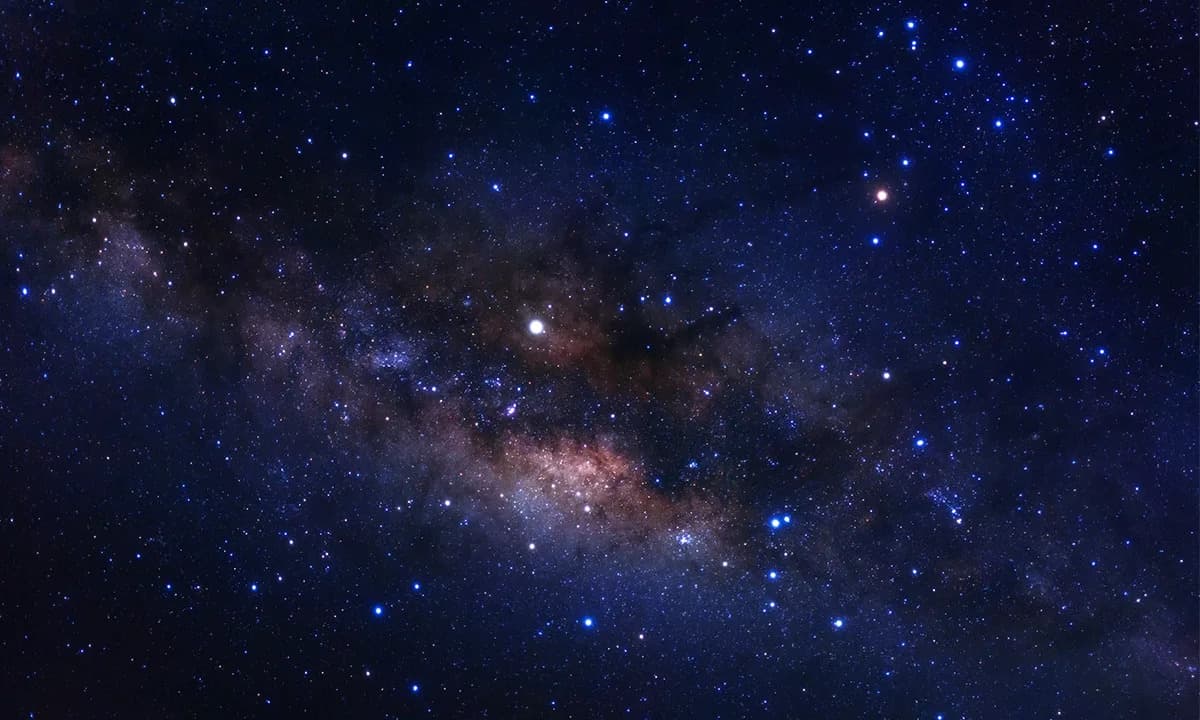
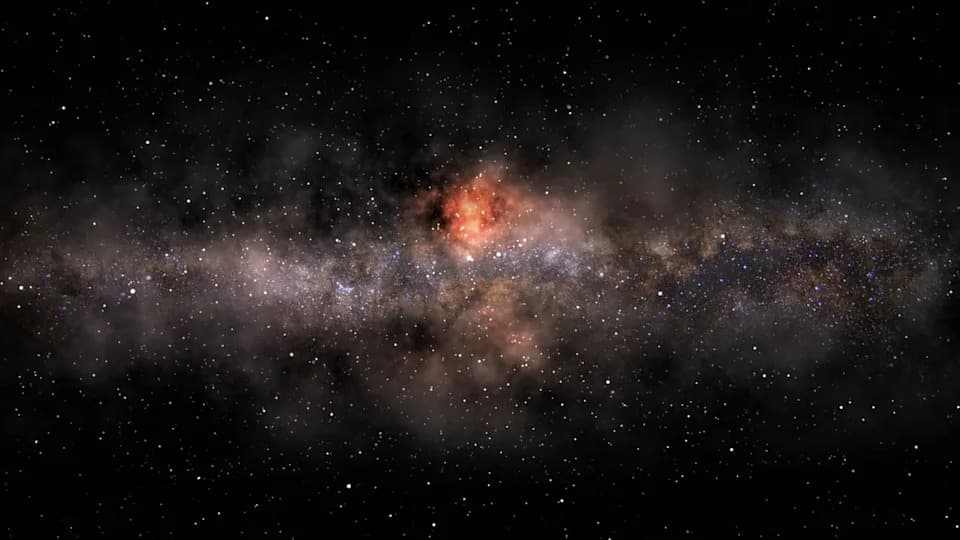
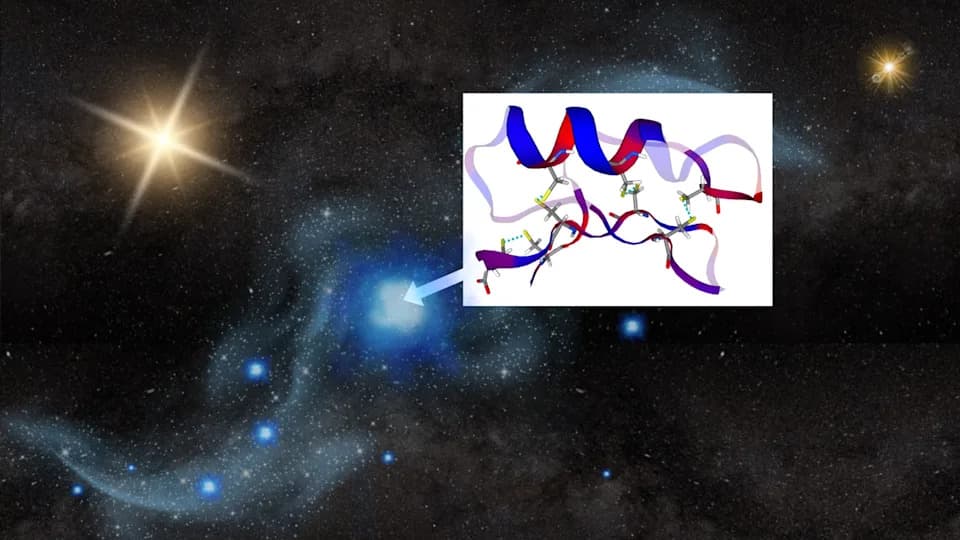
Cosmic dust plays a central role in star formation and provides surfaces where simple molecules can undergo chemistry that produces increasingly complex organic compounds, including possible precursors to amino acids. Studying lab-made, pristine dust gives researchers a controlled starting point to understand how organic matter evolves in energetic stellar environments before it becomes mixed into comets, asteroids and meteorites.
Expert Perspectives
Independent scientists praised the study as a useful bridge between telescopic observations and laboratory analysis. Martin McCoustra, professor of chemical physics at Heriot-Watt University, noted that chemical complexity can develop from simple molecules deposited on dust grains and that this evolution can be reproduced experimentally. Tobin Munsat of the University of Colorado Boulder called the approach an effective way to recreate possible formation histories of cosmic organic material. Damanveer Grewal of Yale added that if complex organics form readily in stellar environments, the chemical building blocks for life could be common across the galaxy.
Next Steps
The researchers plan to vary gas mixtures, voltages and other parameters to produce a wider range of dust analogues and build a database of types. Their goal is to better match laboratory samples with specific extraterrestrial materials such as meteorites or dust observed around particular stars.
Publication: The results appear in The Astrophysical Journal of the American Astronomical Society.
Help us improve.