Claim: Screenshots allegedly showing a Leviathan "waking up" off Virginia circulated in January 2026. Finding: Fake — the snake-like shape is a reduced, edited copy of the Scotia Arc, a natural chain of islands and underwater ridges between Antarctica and South America. Mapping checks on Google Maps and Google Earth (as of Feb. 2, 2026), evidence of editing (nonstandard icons and replaced credits), and geological data all show the image was manipulated. Meteorological agencies say the January storms were caused by Arctic cold meeting Gulf moisture and Gulf Stream interactions, not a sea creature.
Fact Check: Viral 'Leviathan' Google Maps Images Are Fake — It's the Scotia Arc, Not a Sea Monster
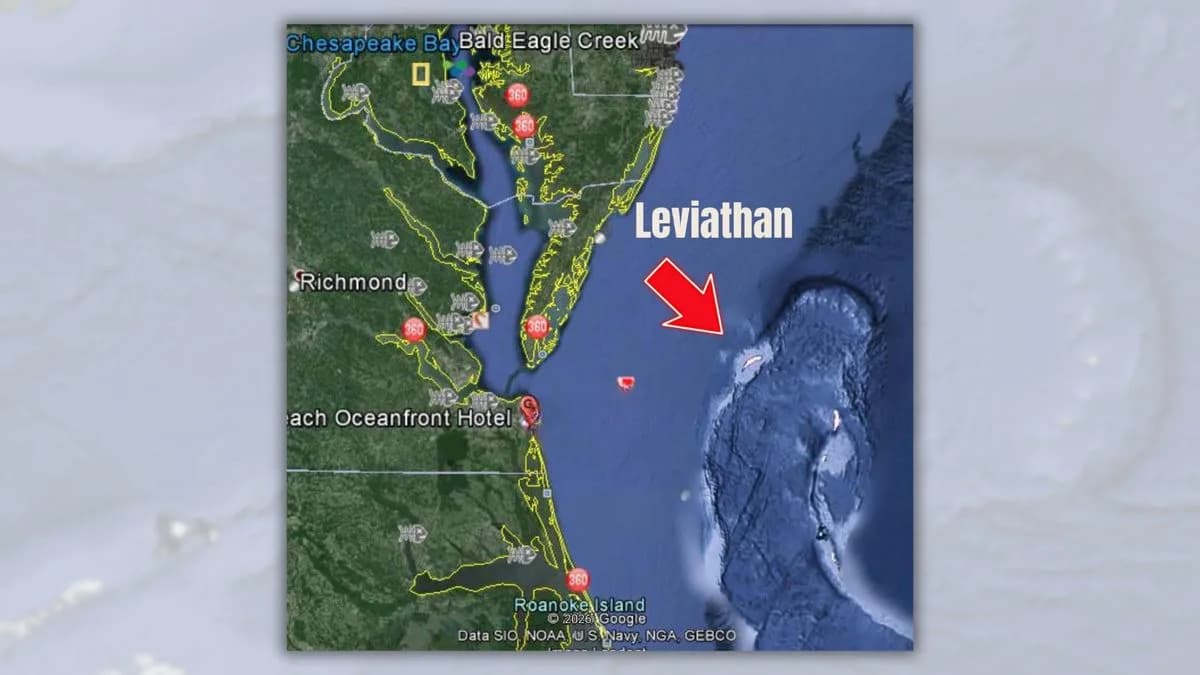
Threads user @biker_babe_69/Google Maps
Claim: In January 2026, screenshots circulating on social media purported to show the Leviathan — a biblical sea monster — "waking up" and moving along the U.S. East Coast near Virginia and North Carolina.
Rating: Fake. The snake-like shape in the viral screenshots is a reduced, edited copy of a natural geologic formation (the Scotia Arc) located between Antarctica and South America. No Google Maps or Google Earth imagery shows such a feature off Virginia as of Feb. 2, 2026.
What Was Shared
As two major winter storms affected the eastern U.S. in late January 2026, posts on Threads, Facebook and other platforms circulated two types of images: (1) a Google Maps-style screenshot showing a snake-shaped feature offshore of Virginia and (2) a side-by-side image pairing that same shape with a photorealistic reptile head. Some users also reposted unaltered screenshots of the same formation as it appears in the Southern Hemisphere and mislabelled it as Jörmungandr or a dragon.
How We Verified It
- We checked live views on Google Maps and Google Earth — neither shows the snake-shaped formation off Virginia.
- We compared the viral image to satellite maps of the Scotia Arc and found a near-exact match in shape, island placement and surrounding bathymetry — only at a much larger scale in the Southern Hemisphere.
- We traced an earlier version of the edited Virginia screenshot to a teacher's Weebly page used for a Google Earth classroom activity; that original image did not include any snake-like shape and displayed older Google credits and imagery dates (2013–2015).
Clear Signs of Manipulation
- Nonstandard icons — the viral image shows fishbone markers that are not default Google Maps/Earth icons.
- Unusual labels and font at an unexpected zoom level (for example, labels like Bald Eagle Creek and Virginia Beach Oceanfront Hotel appearing unusually prominent).
- The original Google credit and imagery date appear cropped out; the viral images show a conspicuous, high-resolution "2026" that looks pasted in rather than part of the original credit text.
- Key island shapes in the edited Virginia screenshot match islands and ridges of the Scotia Arc (the islands that form the "eyes" and the arc of islands that form the "nose").
What the Formation Really Is
The shape is the Scotia Arc and Scotia Sea region — a chain of islands, underwater ridges and volcanoes formed by tectonic interactions between the Scotia Plate and adjacent plates. These features are the geologic remnants of a former connection between South America and Antarctica; shallow areas produce islands and the darker blue on maps indicates deeper trenches.
Seafloor mapping is still incomplete: as of 2022 only about 23% of the global seafloor had high-resolution sonar maps, and public satellite basemaps often display lower-resolution gravitationally derived bathymetry. Projects such as Seabed 2030 provide improved detail but confirm the same island-and-trench pattern visible in Google Maps imagery.
Why The Weather Wasn't Caused By A Monster
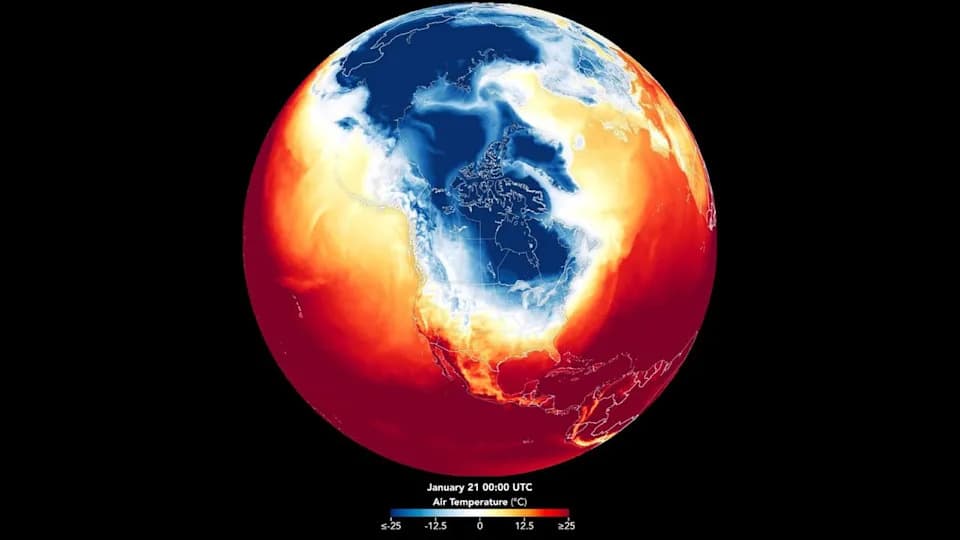
NASA and the North Carolina State Climate Office attribute the January storms to ordinary large-scale meteorology: lingering Arctic cold combined with Gulf of Mexico moisture produced one storm, while a later event occurred when cold continental air met a warm offshore Gulf Stream — a classic snowstorm setup for the region. There is no evidence linking these weather events to any large marine animal.
Visual Confirmation On The Ground
Google Street View and other photos from South Georgia Island and neighboring islands show frozen, mountainous coasts and glaciers — not any biological structures resembling a "Leviathan."
Conclusion
The viral "Leviathan" screenshots are edited images that paste a downsized copy of the Scotia Arc into a Virginia coastline screenshot. The claim is false: the images do not show a living sea monster or movement along the U.S. East Coast. The storms that prompted the social-media speculation were meteorological in origin.
Sources: Google Maps/Earth checks (Feb. 2026), NASA, North Carolina State Climate Office, NOAA/Seabed 2030 reporting, original teacher Weebly page traced during verification.
Help us improve.