The spotted lanternfly, a planthopper native to China, has rapidly colonized parts of the eastern United States. New genomic analyses show lanternflies that adapted to urban conditions in Shanghai evolved greater heat tolerance and detoxification ability—traits now present in U.S. populations. Demographic modeling identified three genetic bottlenecks tied to Shanghai's urbanization, a 2004 jump to South Korea, and the 2014 arrival in Pennsylvania. Experts say these findings could shape more effective control strategies while avoiding the spread of chemical resistance.
City-Evolved Spotted Lanternflies May Be Fueling Rapid U.S. Invasion
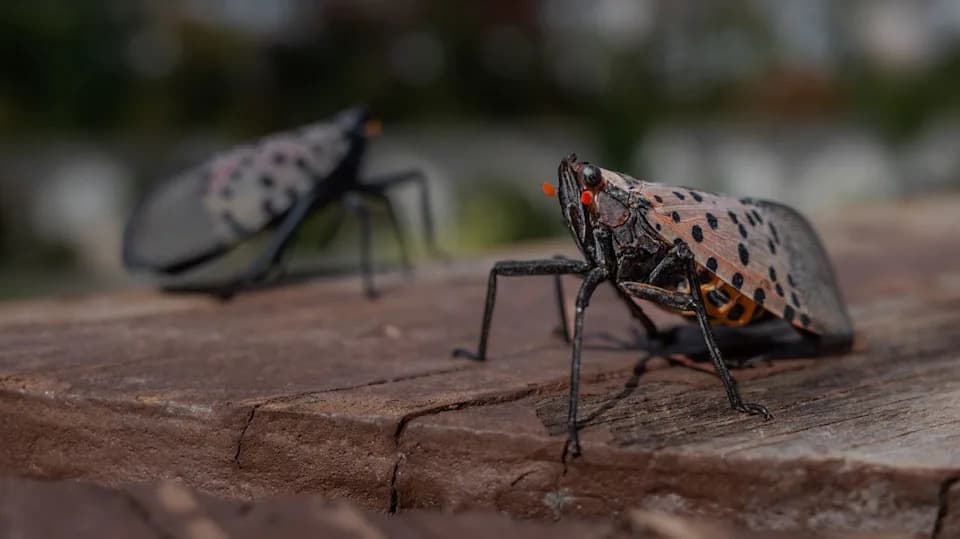
The invasive spotted lanternfly feeds on tree sap with its piercing mouthparts. | Credit: Rolf Karlsson/Getty Images
The spotted lanternfly (Lycorma delicatula) has spread rapidly across the eastern United States, and new genomic research suggests a surprising reason: populations that adapted to urban life in China evolved greater heat tolerance and enhanced detoxification abilities, traits that may have helped them thrive after arriving in North America.
Urban Evolution: An Unintended Advantage
Researchers sequenced genomes from lanternflies collected in urban and rural sites around Shanghai, China, and from U.S. populations in New York City, Connecticut and New Jersey. In China, urban and rural populations just 30 kilometers (about 19 miles) apart showed strong genetic differentiation. Shanghai's urban lanternflies exhibited genetic changes linked to improved heat tolerance and increased ability to metabolize and detoxify chemicals, including pesticides.
“Cities may act as evolutionary incubators that help an invasive species better deal with pressures like heat and pesticides, which then helps them adapt to new environments,” said Fallon (Fang) Meng, a biologist at New York University.
From Shanghai To The U.S.
Although lanternflies can fly, they remain close to their host trees because they feed continuously, which helps local populations stay genetically distinct. U.S. populations, first detected in Pennsylvania in 2014, are now reported in 19 states across the eastern U.S. The study found that U.S. populations are genetically similar to one another across hundreds of kilometers and carry further-adapted versions of the city-evolved genes identified in Shanghai.
What The Genomes Reveal
Demographic modeling of the genomic data revealed three genetic bottlenecks—periods when new populations were founded by a small number of individuals. The researchers tied these events to: (1) rapid urbanization in Shanghai more than 170 years ago, (2) the species' spread from China to South Korea around 2004, and (3) the 2014 detection in Pennsylvania, likely from insects hitchhiking on shipped goods.
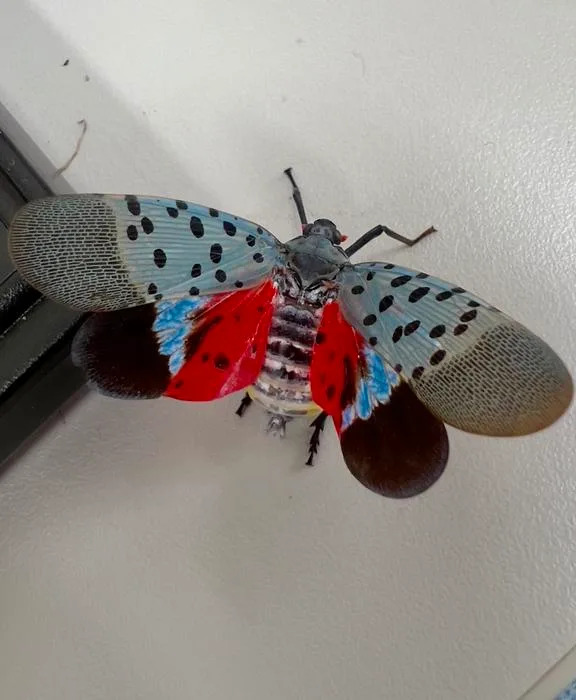
A spotted lanternfly in Shanghai. Some lanternflies in their native China have partially blue wings, unlike the gray seen on those that have invaded the U.S. | Credit: Fallon Meng/NYU
Ecological And Economic Impacts
Spotted lanternflies feed by piercing plant tissue and sucking sap. Their preferred host is the invasive tree of heaven (Ailanthus altissima), but they attack many plants of economic importance, including grapevines, hops, maples, fruit trees and hardwoods. Feeding weakens plants and produces a sticky, sugary excretion that promotes sooty mold. Bees foraging on this excretion may produce honey with a smoky aroma and lingering aftertaste, though the honey is safe to eat.
Economic estimates underscore the threat: a 2019 analysis projected that, if uncontrolled, spotted lanternfly damage in Pennsylvania alone could cost roughly $324 million per year.
Implications For Control
Independent ecologist Zach Ladin of the University of Delaware, who was not involved in the study, said urban adaptation could help explain the insect's success in the U.S. “The abundance of tree of heaven in cities gives the species a foothold,” he noted, and genes linked to chemical tolerance could also facilitate host switching. He added that the new genetic insights could guide control efforts by highlighting targets to avoid unintentionally driving resistance to certain chemicals.
Overall, the study highlights how urbanization and biological invasions can interact: adaptation to city stresses in the insect’s native range may have unintentionally primed it to survive and spread in similarly challenging environments abroad.
Help us improve.