The White House issued an unsigned statement commemorating the Mexican–American War that historians say glosses over slavery and the violence of Manifest Destiny to justify a tougher U.S. policy in Latin America. Scholars including Alexander Aviña and Albert Camarillo called the language "ahistorical" and imperialist, while Mexican President Claudia Sheinbaum emphasized sovereign rights. Critics link the release to broader efforts by the administration to reshape public history and federal records.
Historians Say White House Rewrites Mexican–American War to Justify Hardline Latin America Policy
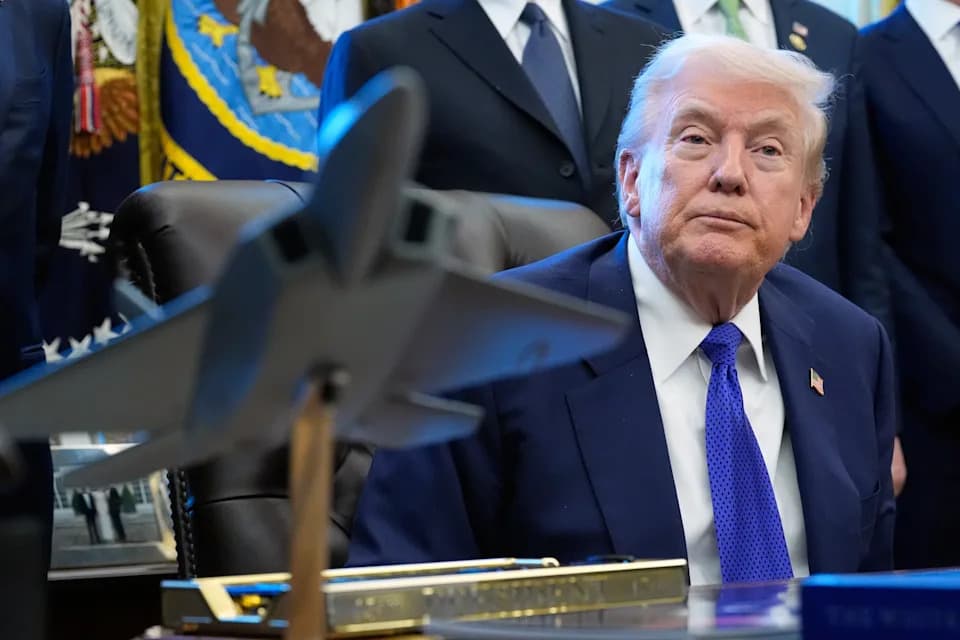
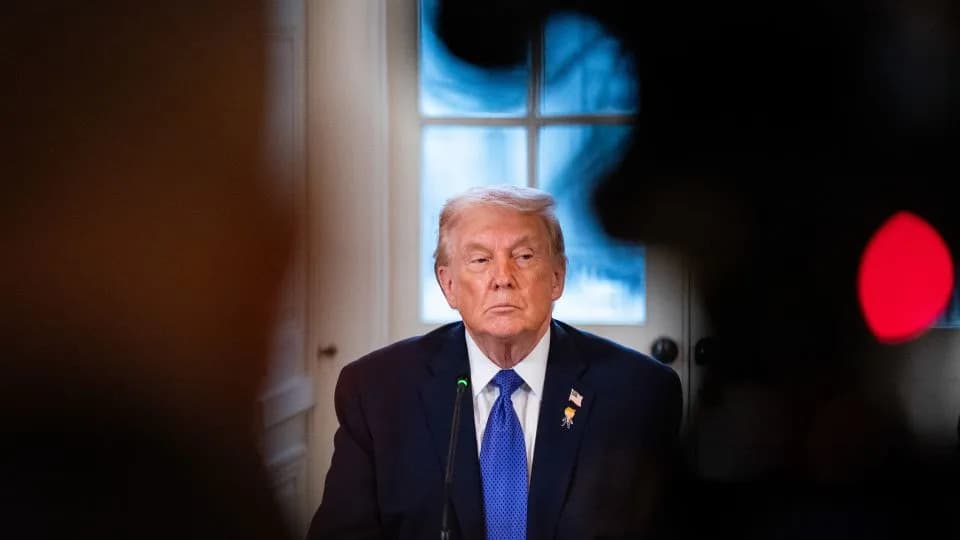
President Donald Trump listens to a question from a reporter as he speaks in the Oval Office of the White House, Monday, Feb. 2, 2026, in Washington. (AP Photo/Alex Brandon)(ASSOCIATED PRESS)
MEXICO CITY — Historians and commentators say the Trump administration published an unsigned White House statement marking the anniversary of the Mexican–American War that many scholars consider a historically inaccurate portrayal intended to justify a tougher U.S. posture toward Latin America.
Sparking Criticism
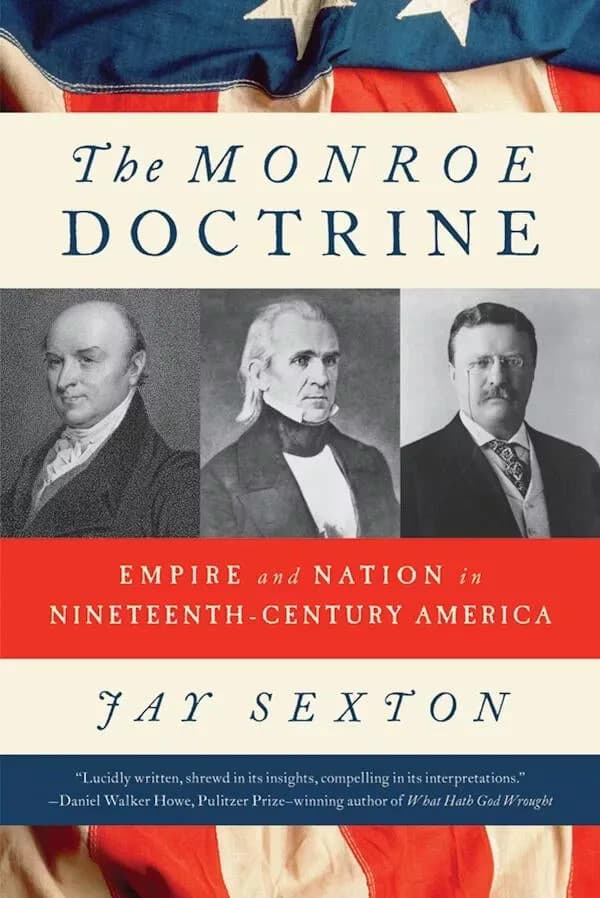
The Monday release described the 1846–1848 conflict as a "legendary victory that secured the American Southwest, reasserted American sovereignty, and expanded the promise of American independence across our majestic continent," and explicitly linked that 19th-century moment to the administration's more forceful approach to the region. The statement declared those policies would "ensure the Hemisphere remains safe."
"Guided by our victory on the fields of Mexico 178 years ago, I have spared no effort in defending our southern border against invasion, upholding the rule of law, and protecting our homeland from forces of evil, violence, and destruction,"
Critics say the release omits central facts — notably the role of slavery as a driving factor in the conflict — and celebratess the broader "Manifest Destiny" era that produced widespread dispossession and violence against Native American communities.
Voices From the Academy and Abroad
Alexander Aviña, a Latin American history professor at Arizona State University, said the White House language "underplays the massive amounts of violence that it took to expand" the United States to the Pacific coast. Aviña and others noted the timing of the release as the administration has pursued interventions in Latin America, including high-profile pressure on regional governments and suggestions of military options in neighboring countries.
Stanford historian Albert Camarillo called the text a "distorted, ahistorical, imperialist version" of the war and tied it to a broader effort, he said, to reshape federal language and public history to fit a political agenda.
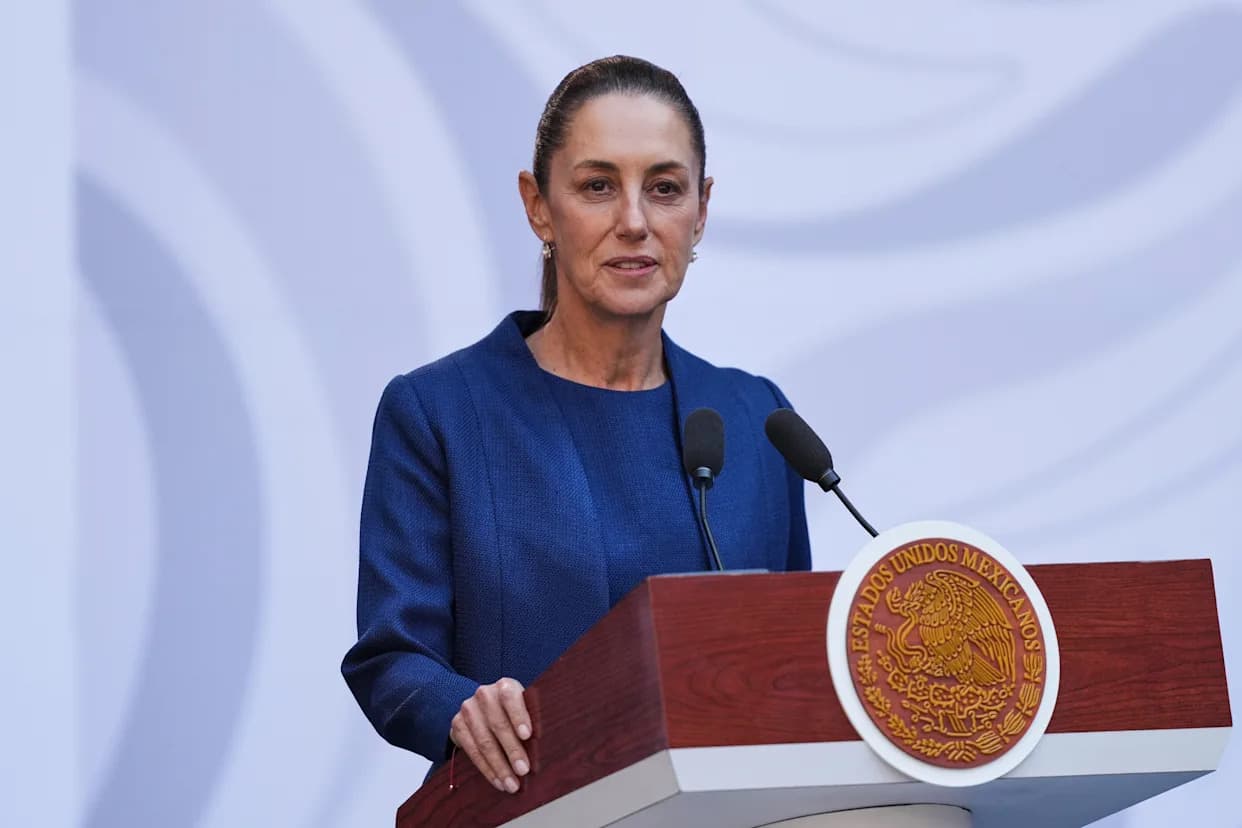
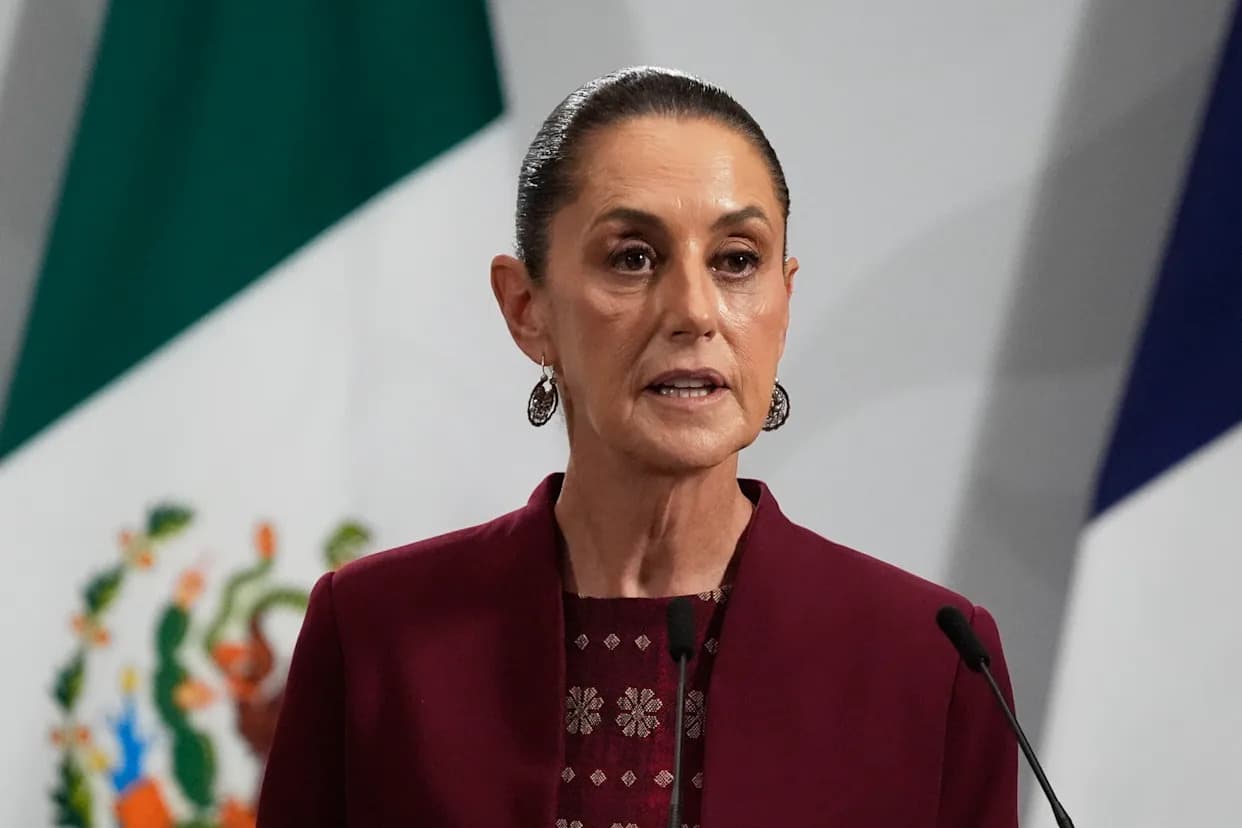
On the diplomatic front, Mexican President Claudia Sheinbaum responded to the White House release with a pointed reaction at a morning briefing, laughing and saying that "we have to defend sovereignty," underscoring Mexico's insistence on independence when Washington publicly contemplates military options or other pressure.
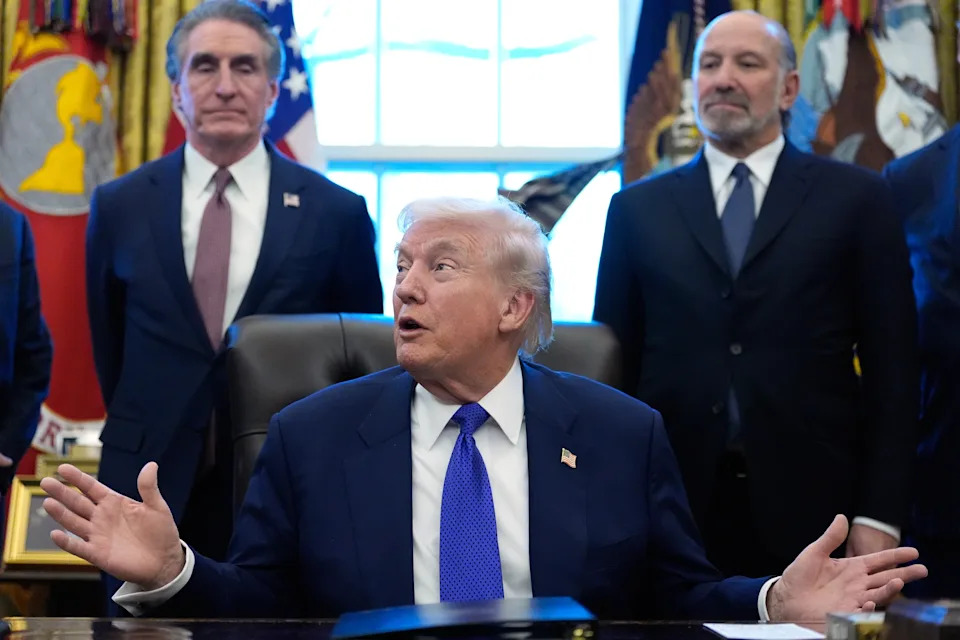
President Donald Trump speaks in the Oval Office of the White House, Monday, Feb. 2, 2026, in Washington, as Interior Secretary Doug Burgum and Commerce Secretary Howard Lutnick, right, listen. (AP Photo/Alex Brandon)(ASSOCIATED PRESS)
Historical Context
The Mexican–American War (1846–1848) was sparked by long-standing border disputes and the 1845 U.S. annexation of Texas. American settlers had moved for years into territory then controlled by Mexico. Mexico had banned slavery, and U.S. expansion stirred fears among abolitionists that the land grab aimed to create additional slave states.
After a series of U.S. military victories, Mexico ceded more than 525,000 square miles of territory — territory that would later become parts of Arizona, California, western Colorado, Nevada, New Mexico, Texas and Utah. The territorial gains had long-term consequences: they reshaped the map of North America, affected the politics that led to the U.S. Civil War, and prompted figures such as Ulysses S. Grant to later call the conflict "one of the most unjust ever waged by a stronger against a weaker nation."
A related historical footnote: the Associated Press traces part of its origins to that era, when five New York newspapers funded a fast pony-express route through Alabama to carry news of the war north faster than the U.S. Post Office could.
Rewriting History?
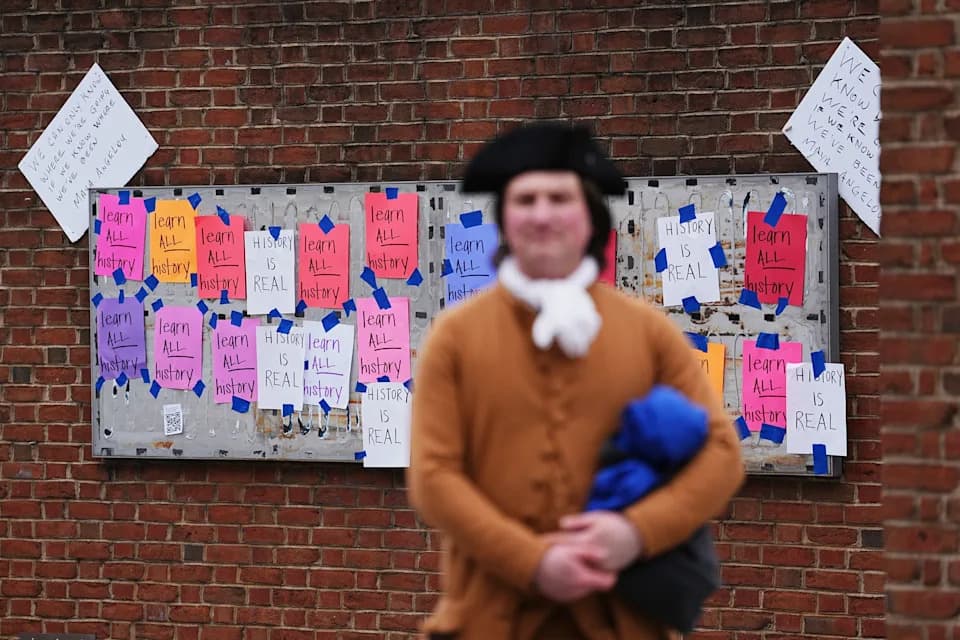
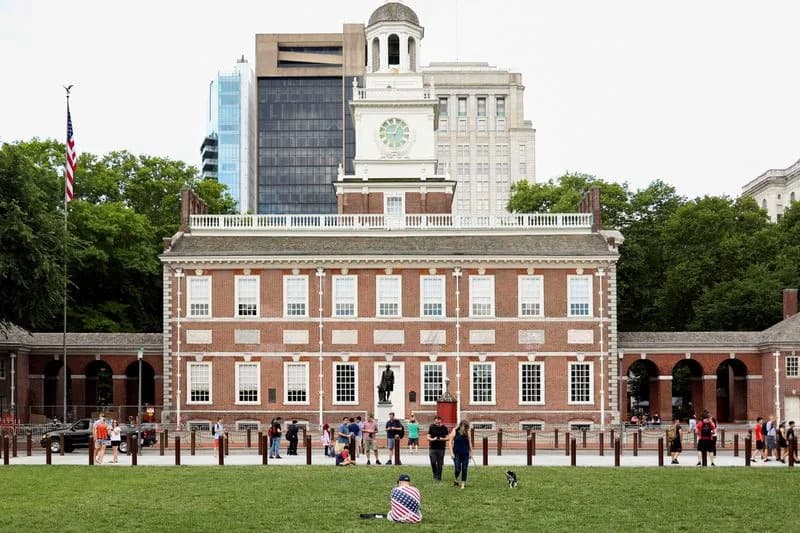
Observers say the statement is consistent with other administration actions to alter how federal institutions present history. Officials have ordered edits to museum displays and federal websites, citing a desire to "restore truth and sanity to American history," while critics argue those moves amount to whitewashing — removing or downplaying references to slavery, the destruction of Native American cultures, and other contested topics.
"This statement is consistent with so many others that attempt to whitewash and reframe U.S. history and erase generations of historical scholarship," Camarillo said.
What remains clear: the release has reopened a sensitive chapter in U.S.–Mexico relations, prompted sharp academic criticism, and highlighted ongoing debates over how public institutions and governments should present contested historical events.
Help us improve.