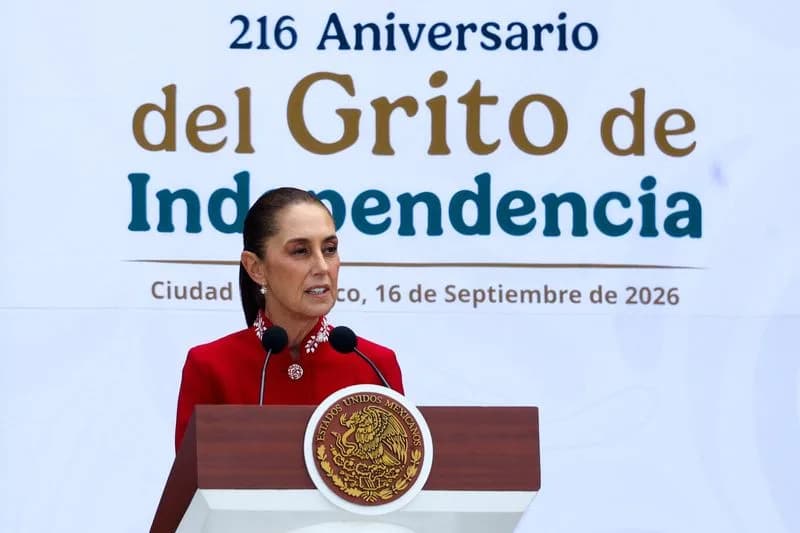
President Claudia Sheinbaum told President Trump in a 15-minute call that Mexico rejects U.S. military intervention against drug cartels, citing the constitution and national sovereignty. Sheinbaum said the two leaders agreed to continue security cooperation, while Mexico pointed to lower homicides and declines in fentanyl seizures and overdose deaths. Washington has pressed for "tangible results," but analysts say direct U.S. intervention in Mexico is unlikely even as strong rhetoric may continue.
Mexico Rejects U.S. Military Intervention; Sheinbaum and Trump Pledge Continued Security Cooperation
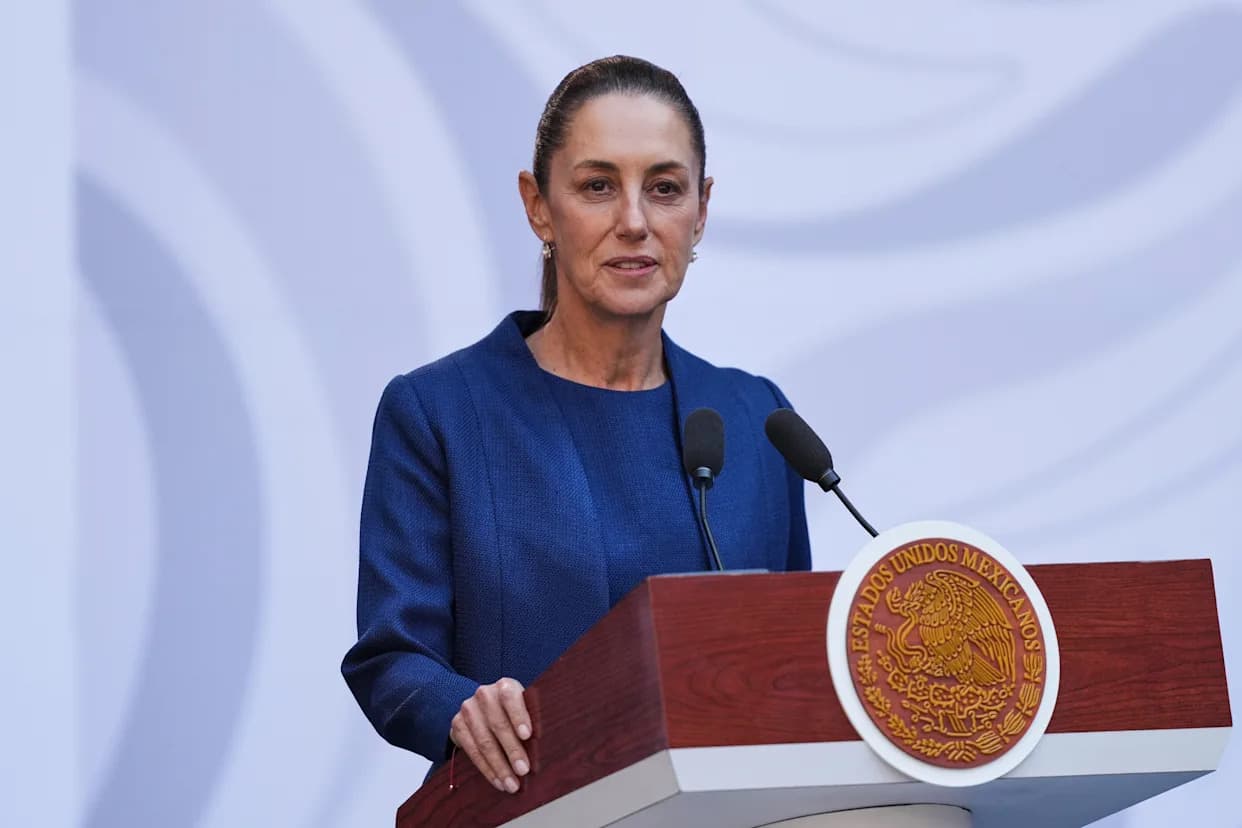
FILE - Mexican President Claudia Sheinbaum presents a new security strategy against violence for Michoacan state, at the National Palace, in Mexico City, Nov. 9, 2025. (AP Photo/Claudia Rosel, File)
Mexico City — President Claudia Sheinbaum said she had "a very good conversation" with U.S. President Donald Trump on Monday, and that both governments will continue working together on security issues without the need for U.S. military intervention against drug cartels.
The roughly 15-minute phone call followed Sheinbaum's request for dialogue after a week in which Trump said he was prepared to confront cartels on Mexican soil and again asserted that cartels were "running Mexico." Sheinbaum reiterated that Mexico's constitution and sovereignty rule out foreign intervention.
"Our constitution is very clear, that we do not agree with interventions," Sheinbaum said, describing the exchange with Trump as direct and respectful.
Sheinbaum said Trump asked her opinion about recent U.S. actions in Venezuela. According to Sheinbaum, Trump "still insisted that if we ask for it, they could help" with military forces — an offer she declined, saying Mexico did not need such assistance and emphasizing national sovereignty and territorial integrity.
Trump has also claimed, in media interviews, that the U.S. has "knocked out 97% of the drugs coming in by water" and said the next focus would be land routes. Sheinbaum and Mexican officials highlighted the country's own metrics as evidence of progress, pointing to a significant drop in homicides and declines in U.S. fentanyl seizures and fentanyl-related overdose deaths.
Diplomacy And Expectations
Mexico’s Foreign Affairs Secretary, Juan Ramón de la Fuente, held talks with U.S. officials as Washington sought "tangible results" and greater cooperation to dismantle criminal networks, according to the U.S. State Department. Both governments agreed to continue collaborative efforts on security, law enforcement and information sharing.
Analysts say a full-scale U.S. military intervention in Mexico remains unlikely because Mexico is cooperating on key priorities and is a vital economic partner for the United States. However, experts expect that strong rhetoric from the U.S. president may be used as leverage to press Mexico for faster or more visible results.
Sheinbaum said the leaders did not discuss Cuba during the call. Mexico continues to maintain diplomatic ties and economic links with the island, including energy supplies that could be affected by U.S. policy toward Venezuelan shipments.
Help us improve.