A federal judge in Philadelphia sharply criticized Justice Department attorneys who argued the government may decide which parts of history are shown at National Park Service sites, calling that position "dangerous" and "horrifying." The dispute centers on the sudden removal of an exhibit about nine people enslaved at the President’s House on Independence Mall; the city says it contributed $1.5 million to the project. The judge plans to inspect the storage location and the site before ruling and ordered no further disturbance of the materials.
Judge Calls DOJ Claim That Government Can Pick Which History Is Shown 'Dangerous' and 'Horrifying'
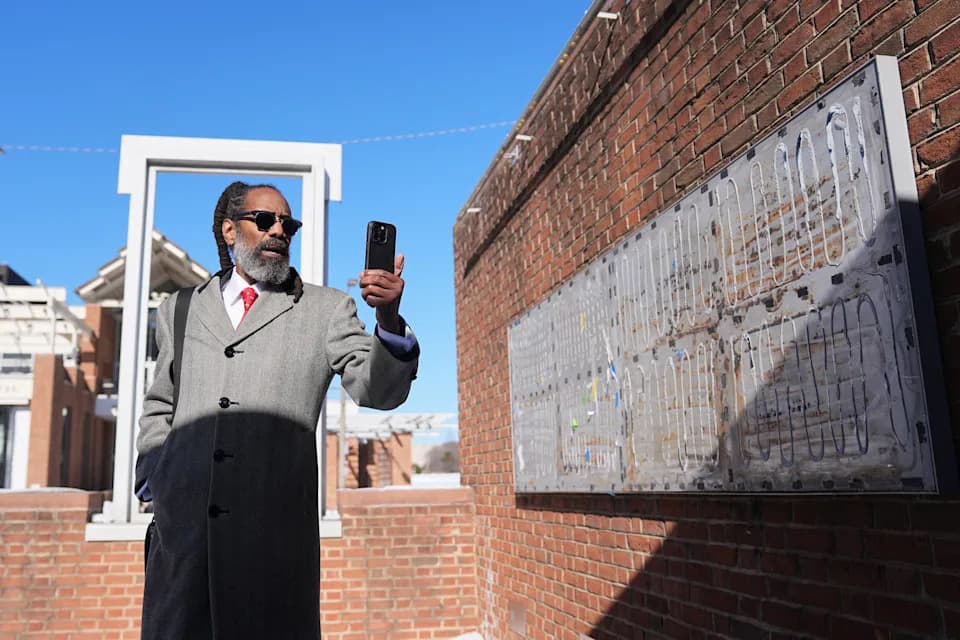
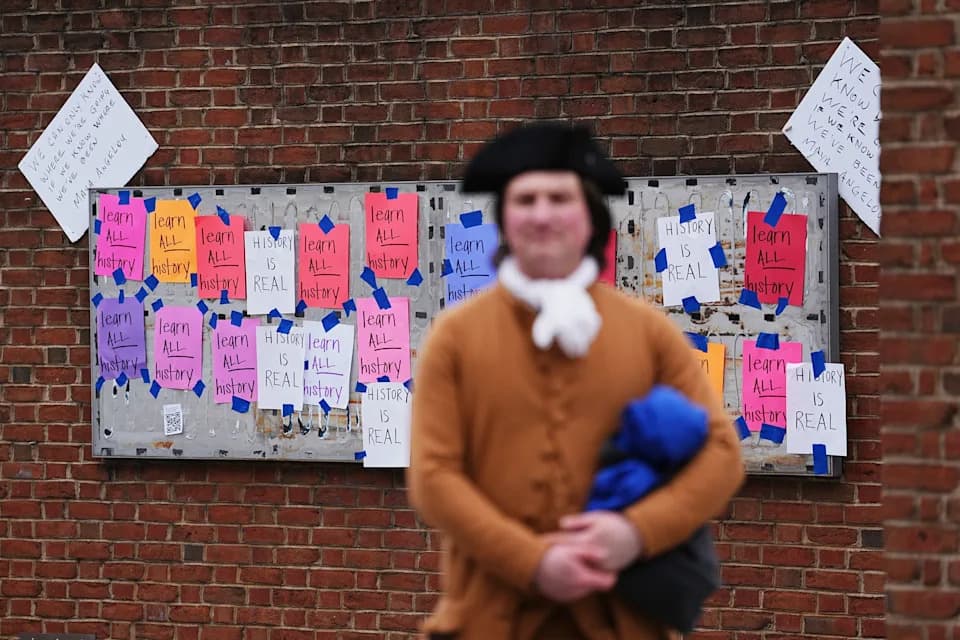
Attorney Michael Coard makes a social media post at the now removed explanatory panels that were part of an exhibit on slavery at President's House Site in Philadelphia, Friday, Jan. 30, 2026. (AP Photo/Matt Rourke)(ASSOCIATED PRESS)
PHILADELPHIA — A federal judge on Friday sharply rebuked Justice Department attorneys who argued the federal government may decide which parts of American history are displayed at National Park Service sites, calling that position "dangerous" and "horrifying." The exchange came during a hearing about the abrupt removal of an outdoor exhibit recounting the history of slavery at the President's House on Independence Mall.
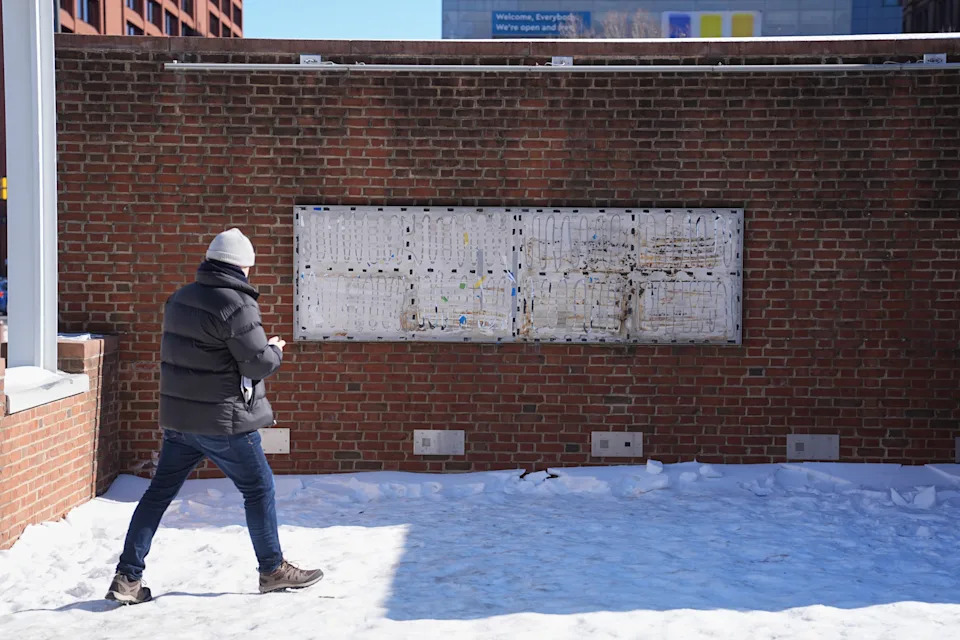
A person moves to photograph the location of the now removed explanatory panels that were part of an exhibit on slavery at President's House Site in Philadelphia, Friday, Jan. 30, 2026. (AP Photo/Matt Rourke)(ASSOCIATED PRESS)
Background
The city of Philadelphia — which worked with the Park Service on the exhibit roughly two decades ago and says it contributed $1.5 million to the project — said it was stunned this month to see workers using crowbars to remove plaques, panels and other interpretive materials. Workers then loaded the items into a pickup truck and moved them into storage, prompting concerns from the court about potential damage to historically important materials, some of which were uncovered only in recent decades.
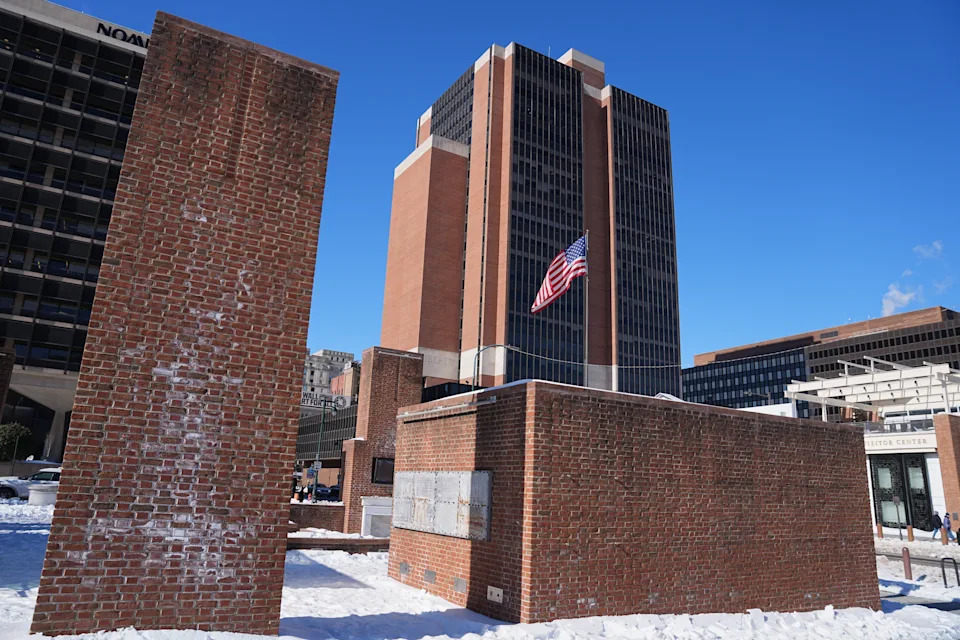
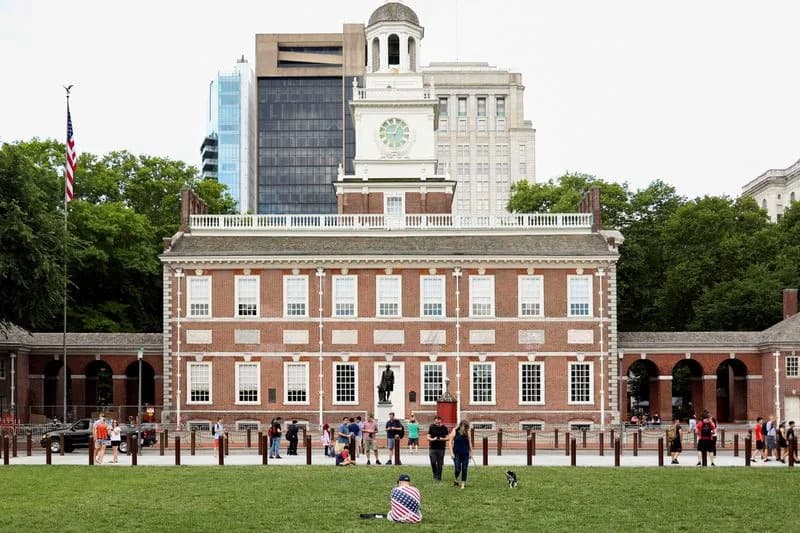
The Federal courthouse stands above the location of the now removed explanatory panels that were part of an exhibit on slavery at President's House Site in Philadelphia, Friday, Jan. 30, 2026. (AP Photo/Matt Rourke)(ASSOCIATED PRESS)
Courtroom Exchange
Assistant U.S. Attorney Gregory in den Berken told the court that the Park Service routinely alters exhibits and tours and argued that "ultimately, the government gets to choose the message it wants to convey."
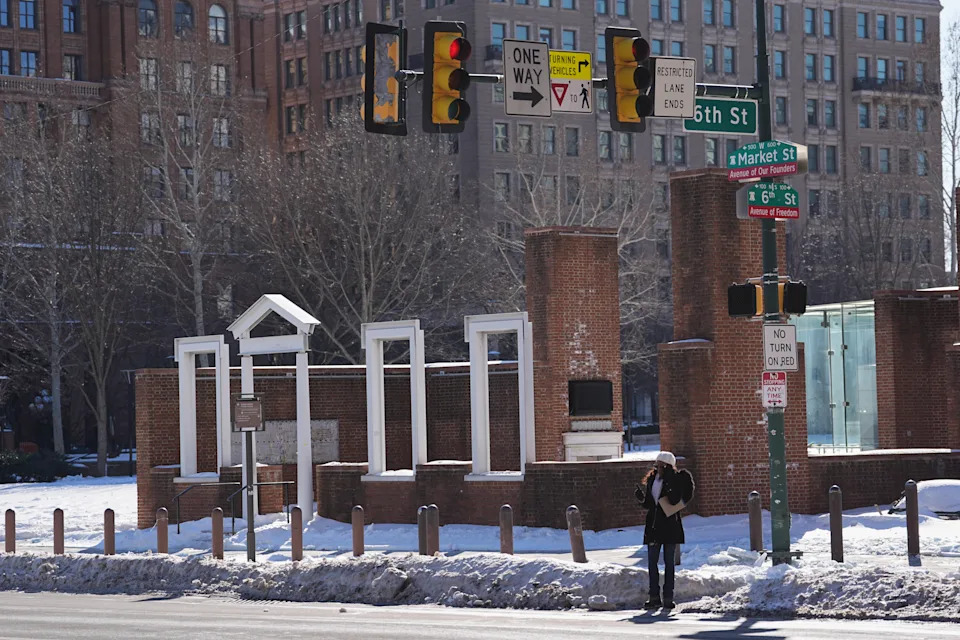
Shown is the President's House Site where explanatory panels that were part of an exhibit on slavery were removed, in Philadelphia, Friday, Jan. 30, 2026. (AP Photo/Matt Rourke)(ASSOCIATED PRESS)
"That is a dangerous statement you are making. It is horrifying to listen to," Senior U.S. District Judge Cynthia Rufe responded. "It changes on the whims of someone in charge? I’m sorry, that is not what we elected anybody for."
Rufe, an appointee of President George W. Bush, heard hours of testimony from former city officials who helped plan the exhibit and said the city had invested significant resources in its creation. She told lawyers she intends to inspect both the storage facility and the Independence Mall site before issuing a ruling on the city's request to have the exhibit restored, and she instructed Justice Department attorneys to ensure no further disturbance of the materials in the meantime.
Arguments and Reactions
Lawyers for Philadelphia and advocacy groups told the court the Park Service does not have unfettered authority to rewrite or erase historical interpretation, while the government maintained it cannot be compelled to present a particular narrative. Michael Coard, an attorney for one of the advocacy groups supporting the exhibit, criticized the government's courtroom argument as an alarming claim of unilateral power.
Names Remembered: The exhibit had included biographical details about nine people who were enslaved by George and Martha Washington at the presidential mansion. After the removal, only the individuals' names remain engraved on a cement wall: Austin, Paris, Hercules, Christopher Sheels, Richmond, Giles, Oney Judge, Moll and Joe.
Rufe said she plans to issue a prompt ruling, noting the likely surge in visitors this year as the nation marks its 250th anniversary. Local residents who visited the site after the removal left flowers, handmade signs reading "Slavery was real," and were visibly emotional at the loss of the interpretive materials.
Help us improve.