The Trump administration ordered National Park Service staff to remove panels from the President’s House in Philadelphia that identified nine people George Washington enslaved. The displays were not taken down for factual errors but because they conflicted with a sanitized, hero-centered version of American history the administration has promoted. Historians highlight practices — such as Washington’s circumvention of Pennsylvania’s six-month manumission rule — that underline the complexity and moral failings of the founding era. Preserving truthful, inclusive history is vital to understanding America’s past and present.
Trump’s Removal Of Philadelphia Exhibit Is Part Of A Broader Effort To Whitewash History
George Washington — commander of the Continental Army and the nation’s first president — legally owned other human beings and denied them freedom and dignity. While historians debate aspects of Washington’s personal views and legacy, the basic fact remains: he enslaved African people and exercised absolute control over their lives.
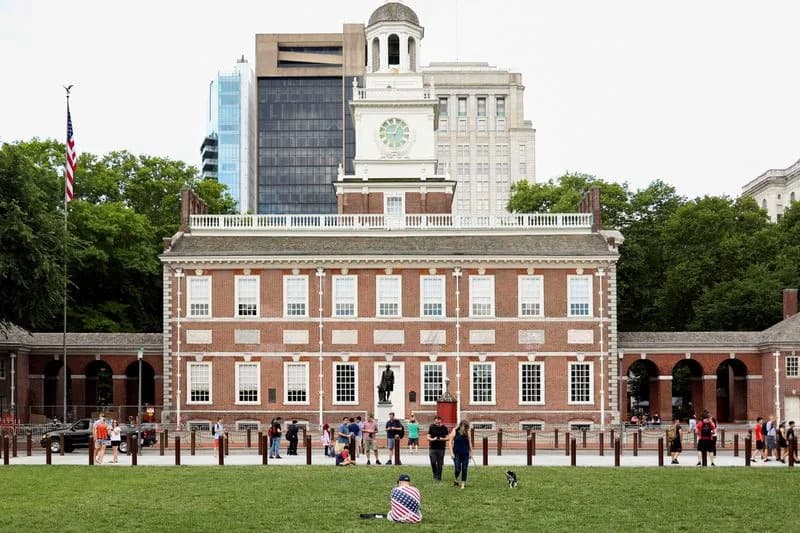
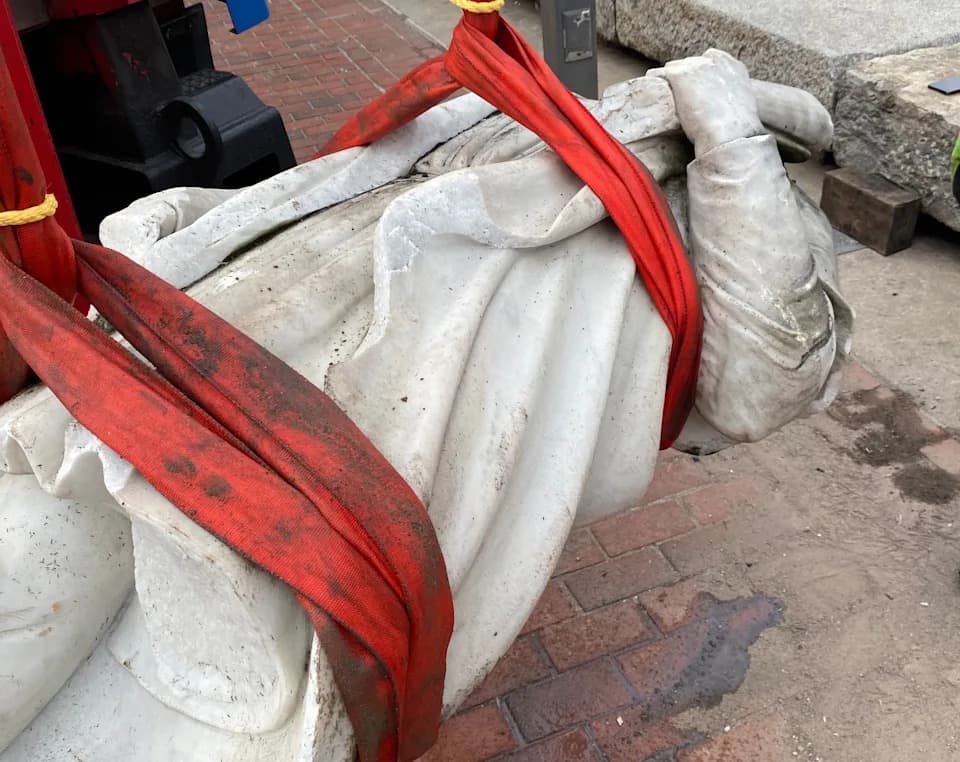
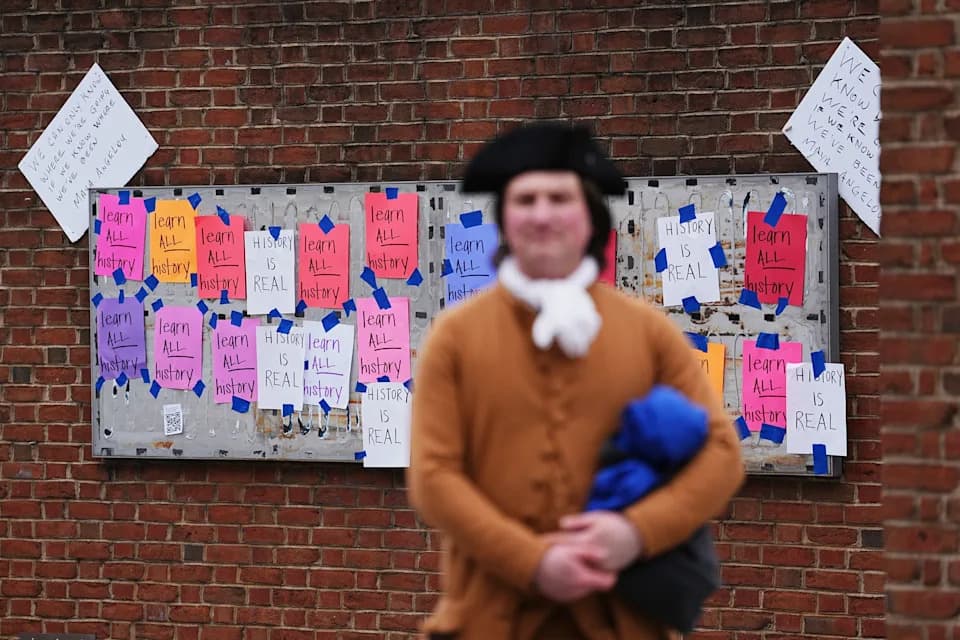
Last week, employees of the National Park Service removed panels from the President’s House in Philadelphia that identified and gave brief biographies of nine people Washington brought to the house and kept enslaved. According to multiple reports, workers used crowbars to pry the displays from the walls.
Why The Panels Matter
The panels were not removed because they contained factual errors or celebrated unworthy people. They were taken down because they clashed with a sanitized, hero-focused narrative of American history that the current administration has promoted as the nation approaches its 250th anniversary.
Historian John Garrison Marks notes that Washington routinely circumvented Pennsylvania’s six-month residency rule — which allowed enslaved people who lived in the state for six months to claim freedom — by sending the people he enslaved out of the state every six months. Marks’s book Thy Will Be Done: George Washington’s Legacy of Slavery and the Fight for American Memory explores this history in depth.
Part Of A Larger Pattern
The removal is consistent with other moves from the administration to shape public memory. Officials have signaled hostility toward cultural institutions and pushed for a version of schooling described in the executive order Ending Radical Indoctrination in K-12 Schooling, which frames “patriotic education” as an “accurate, honest, unifying, inspiring, and ennobling” presentation of the nation’s founding. Critics argue that such prescriptions can become a directive to conceal uncomfortable truths.
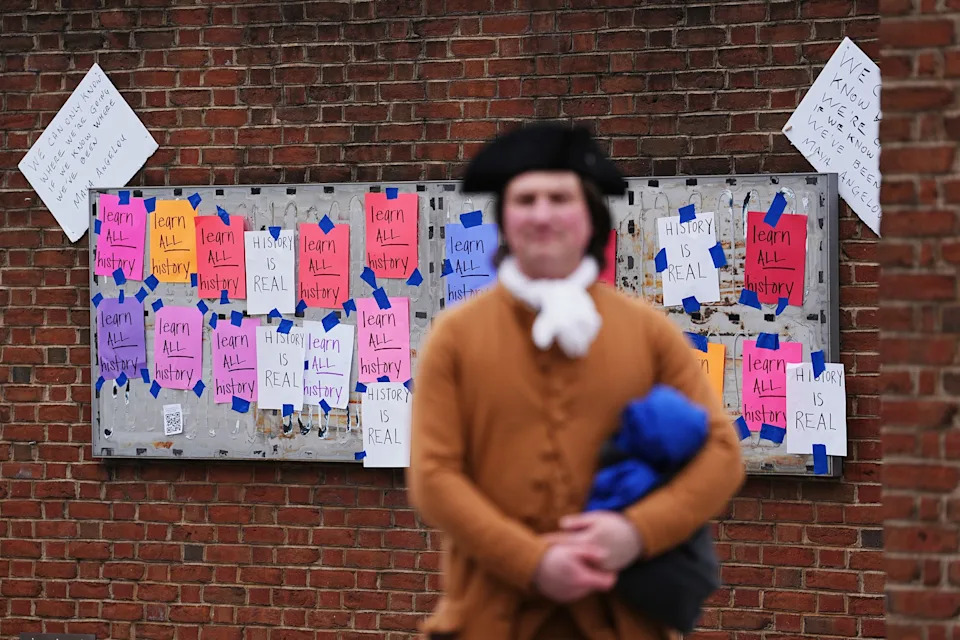
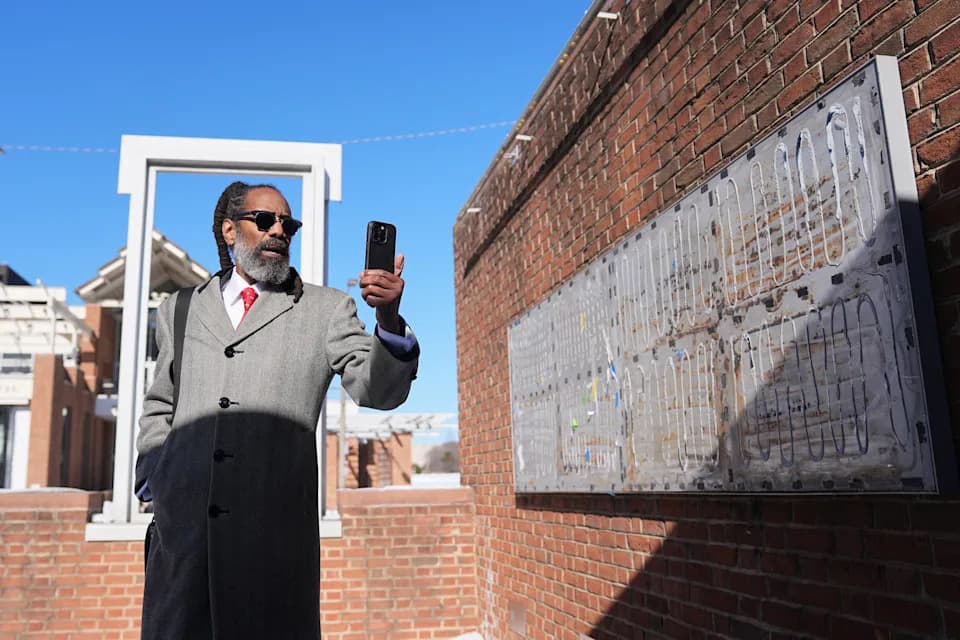
Tour guide Stephen Pierce surveys posted signs on the locations of the now removed explanatory panels that were part of an exhibit on slavery at President's House Site in Philadelphia, Friday, Jan. 23, 2026. (AP Photo/Matt Rourke)(Matt Rourke / AP Photo)
Observers also view the takedown as political pushback against efforts like Nikole Hannah-Jones’s 1619 Project, which emphasizes slavery’s central role in shaping the United States, and in line with the administration’s earlier creation of a 1776 Commission as an alternative national narrative.
Human Stories Remain Central
One of the people named on the removed panels was Ona (Oney) Judge, who escaped from the President’s House in 1796. Erica Armstrong Dunbar’s Never Caught documents Washington’s attempts to recapture her; she remained legally the property of Washington’s heirs and died a fugitive in 1848. Stories like hers give concrete human dimension to the larger historical issues at stake.
Erasing or hiding such accounts does not change the past; it merely narrows public understanding of it. If the aim of public history is to inspire, it should do so by confronting truthfully both the nation’s achievements and its injustices.
What This Means
Removing the exhibit panels sends a message about who counts in American memory and who can be omitted. Defending an honest, inclusive public history — even when it unsettles traditional reverence for founding figures — is essential to civic maturity. The public and scholars should push back against efforts to silence or sanitize the stories of the people who were enslaved and whose lives shaped the nation’s history.
Help us improve.