Marine darkwaves are episodes of unusually intense underwater darkness caused by storms, sediment runoff, algal blooms and other sources of turbidity. These events, lasting days to months, sharply reduce photosynthesis in macroalgae, seagrasses and phytoplankton and cascade through food webs. Darkwaves also disorient species that use light cues, can trigger hypoxia, and reduce ocean carbon sequestration. Scientists warn these events are rising due to climate change and human activities, and are working to improve detection and mitigation.
Marine Darkwaves: The Rising Threat of Underwater Darkness and Its Toll on Sea Life
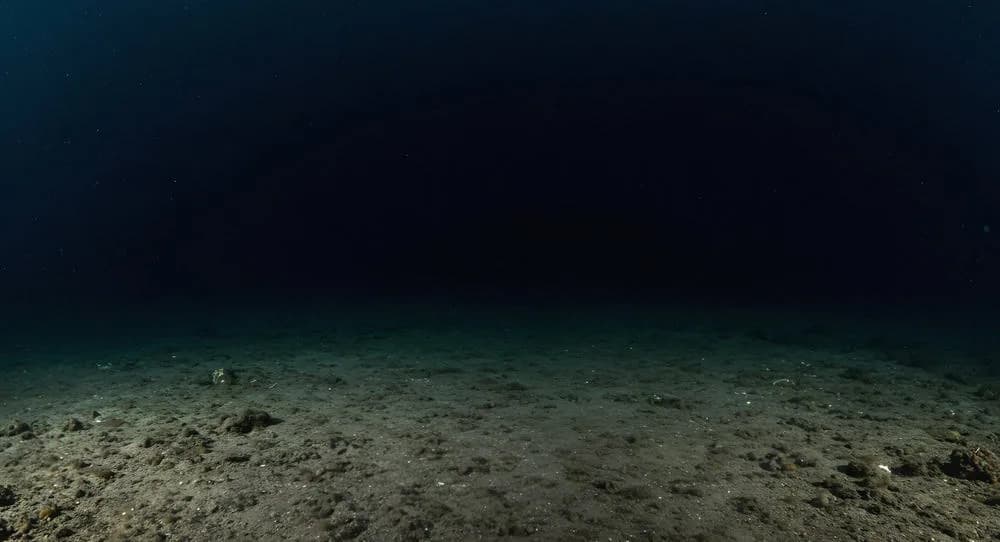
Low-angle view of a dark, deep ocean floor at night, showing a seabed of rocks and sediment under a very dark water column.© Yetugraphic/Shutterstock.com
Scientists have identified a growing and concerning ocean phenomenon called a marine darkwave — an episode of unusually intense underwater darkness that can last from days to months and harm many light-dependent marine species.
What Is a Marine Darkwave?
A marine darkwave is a sudden, large-scale reduction in underwater light caused when water clarity declines sharply. These events are driven by storms, sediment runoff, nutrient-driven algal blooms and other processes that increase turbidity. Although often invisible from shore, darkwaves can sharply reduce photosynthesis and disrupt behaviors that rely on light cues.
Dr. Tiara Moore, Founder and CEO of Black In Marine Science (BIMS): “A marine darkwave is a process for quantifying unusual underwater darkness. Researchers are developing ways to identify and measure periods of reduced underwater light in environments that are typically well-lit.”
How Darkwaves Form
- Storms and Wave Action: Resuspend sediments, increasing turbidity.
- Land-Based Runoff: Rain and rivers carry soil, nutrients and pollutants to coastal waters.
- Algal Blooms: Dense blooms reduce clarity and, when they decay, can further lower oxygen.
- Human Activities: Dredging, coastal erosion and poor water management worsen clarity declines.
Ecological and Biological Impacts
Marine darkwaves have wide-ranging effects on organisms, habitats and biogeochemical cycles:
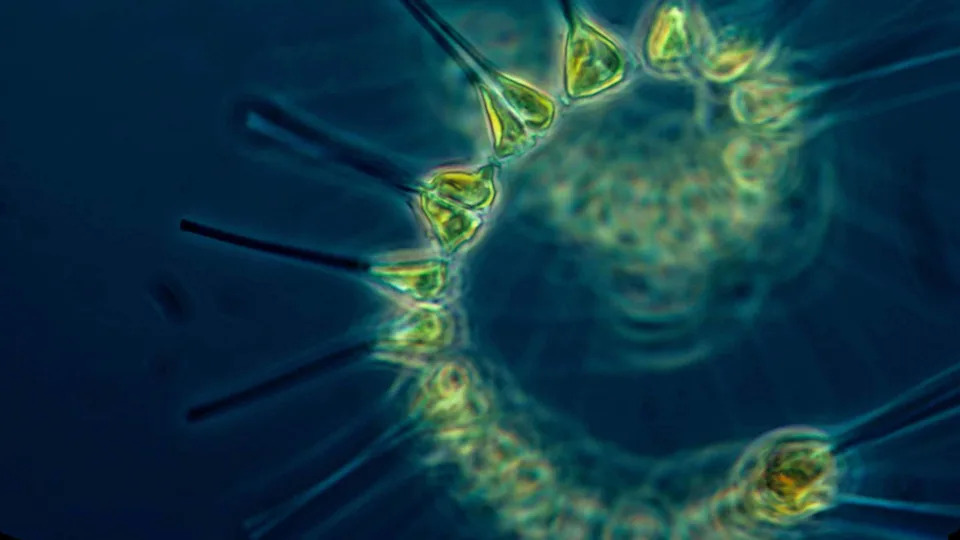
Various forms of marine life, primarily zooplankton, feed on phytoplankton.©Porco_Rosso/Shutterstock.com(Porco_Rosso/Shutterstock.com)
Primary Producers and Food Webs
Macroalgae, seagrasses and phytoplankton — the ocean’s primary producers — need sunlight to photosynthesize. Reduced light lowers primary productivity, which cascades up the food web: grazers such as zooplankton lose food, and predators that depend on those grazers are affected.
Behavior, Physiology and Life Cycles
Many species use light cues for migration, feeding and reproduction. Sudden or prolonged darkness can disorient animals, disrupt timing of life-cycle events, cause physiological stress and, in extreme cases, lead to mass mortality among light-dependent species.
Biogeochemical Consequences
Lower photosynthesis reduces the ocean’s capacity to sequester carbon, weakening a key natural sink for atmospheric CO2. Darkwaves associated with sediment and algal overgrowth can also reduce oxygen production and contribute to hypoxic zones (“dead zones”), harming fish and benthic communities.
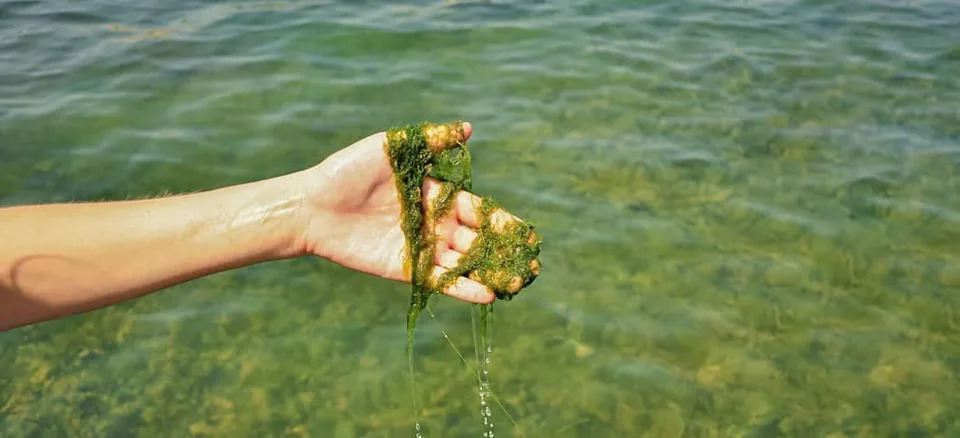
Algal overgrowth within the ocean can lead to hypoxia (low oxygen).©Elif Bayraktar/Shutterstock.com(Elif Bayraktar/Shutterstock.com)
What Research Shows
Laboratory and field studies demonstrate rapid impacts: only a few days of intense darkness can impair macroalgae and seagrass physiology, while simulated prolonged events (for example, a 35-day darkening experiment cited by Thoral et al., 2026) produced decreased phytoplankton biomass and community shifts. These findings indicate that even short dark episodes begin to disrupt habitats quickly, and longer events can cause wide-ranging ecological change.
Outlook And Management
Scientists report that marine darkwaves are becoming more common as water clarity declines globally. Climate change (stronger storms and altered precipitation), increased runoff, coastal erosion, dredging and nutrient pollution all make darkwaves more likely and severe.
While some drivers — large storms and regional climate patterns — are difficult to control, others are manageable. Reducing nutrient runoff, improving coastal land-use practices, restoring wetlands and seagrasses, and limiting damaging dredging can help reduce frequency and severity locally. Researchers are also developing detection and monitoring methods to better quantify darkwaves and their impacts.
Why It Matters
Marine darkwaves threaten the foundation of many marine ecosystems by dimming the sunlight that sustains primary production, disrupting food webs and life cycles, and exacerbating hypoxia and carbon-cycle changes. Improved monitoring, better coastal management and reduced emissions are needed to limit future impacts.
Help us improve.