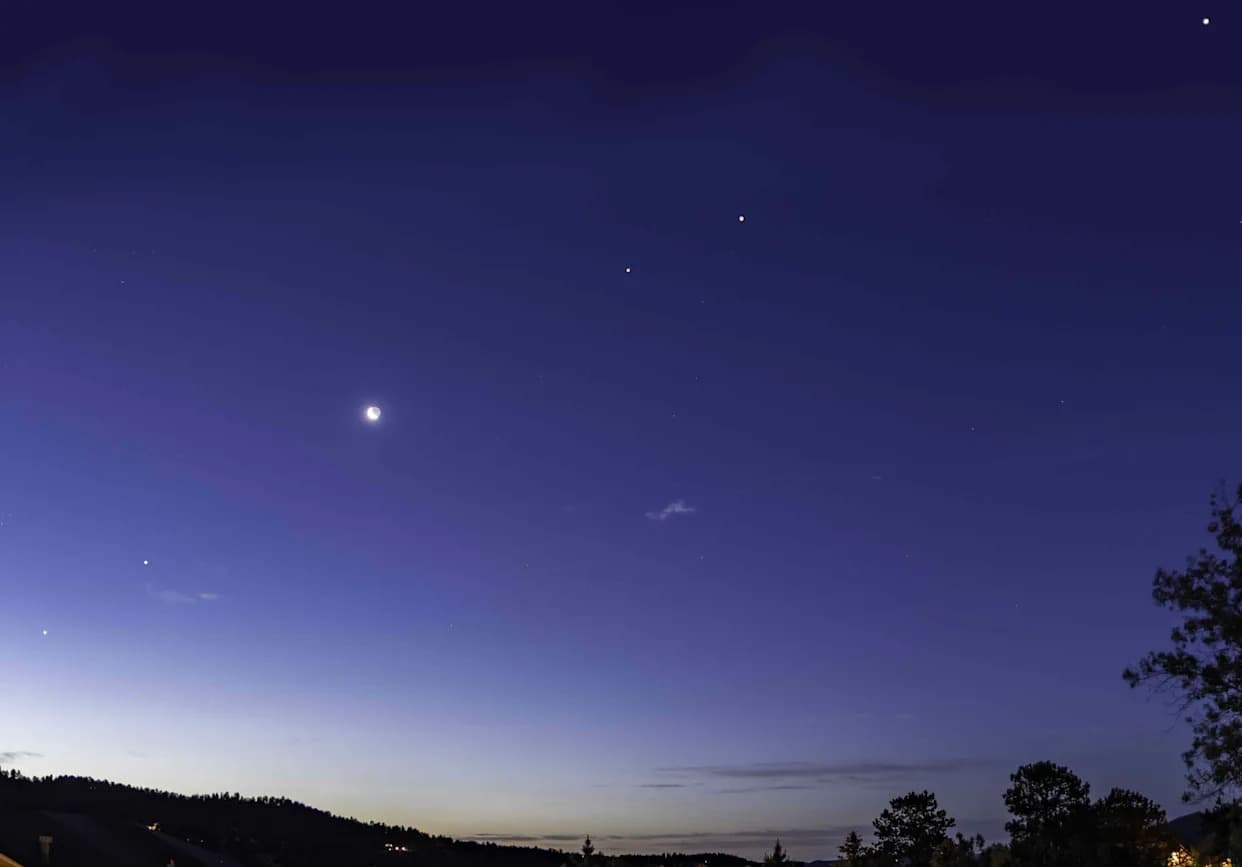
February 2026 delivers prime evening views for contrasting worlds: giant Jupiter dominates the night sky while tiny Mercury offers its best post-sunset apparition beginning Feb. 6. Venus becomes steadily easier to spot through the month, Saturn sinks low in the west and becomes harder to see late in February, and Mars remains hidden in the Sun’s glare. Notable close pairings include Mercury with a very thin crescent Moon on Feb. 18 and Jupiter near a waxing gibbous Moon on Feb. 26.
From Jupiter to Mercury: February 2026's Best Planetary Views — What To See And When
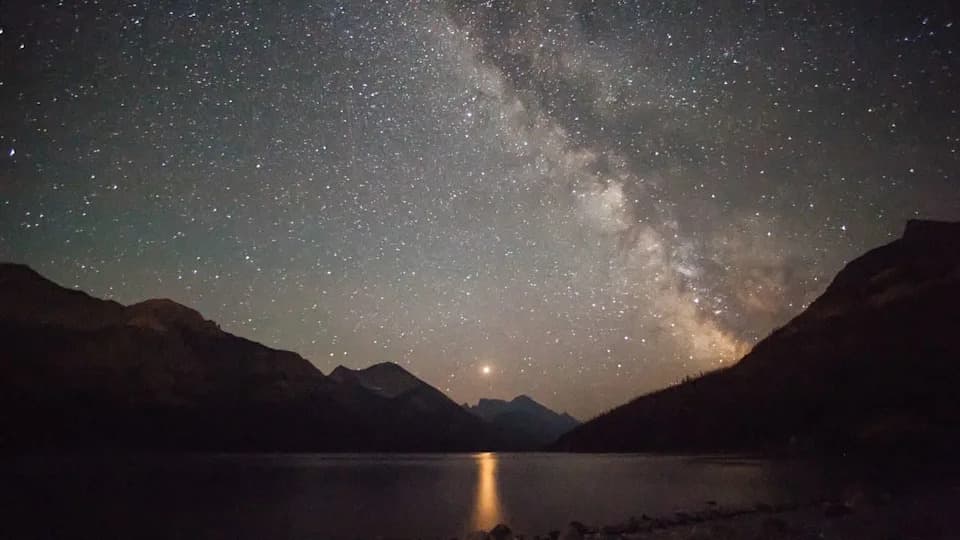
Jupiter rising over Waterton Lakes, Alberta, Canada. . | Credit: Nonac_Digi for the Green Man/Getty Images
February 2026 offers several excellent opportunities for skywatchers to observe a mix of bright planets at convenient evening times. Jupiter dominates the late-evening sky while tiny Mercury stages its best post-sunset apparition beginning the night of Feb. 6. Venus grows rapidly more prominent through the month, Saturn sinks lower toward the horizon, and Mars remains hidden in the Sun’s glare.
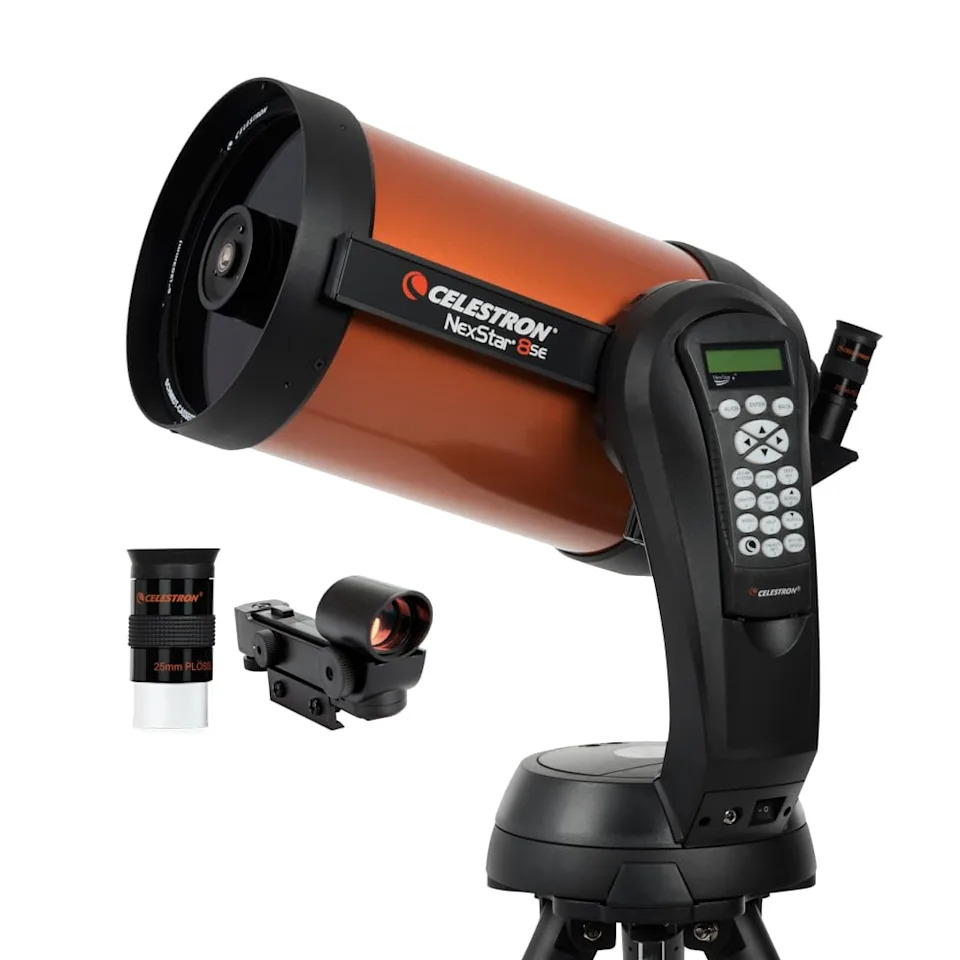
The Celestron NexStar 8SE Computerized Telescope side view with accessories details
Top Telescope Pick: The Celestron NexStar 8SE is a solid choice for beginners seeking reliable, high-quality views and straightforward operation. It performs well on bright planets such as Jupiter and can reveal details on Saturn when atmospheric conditions allow.
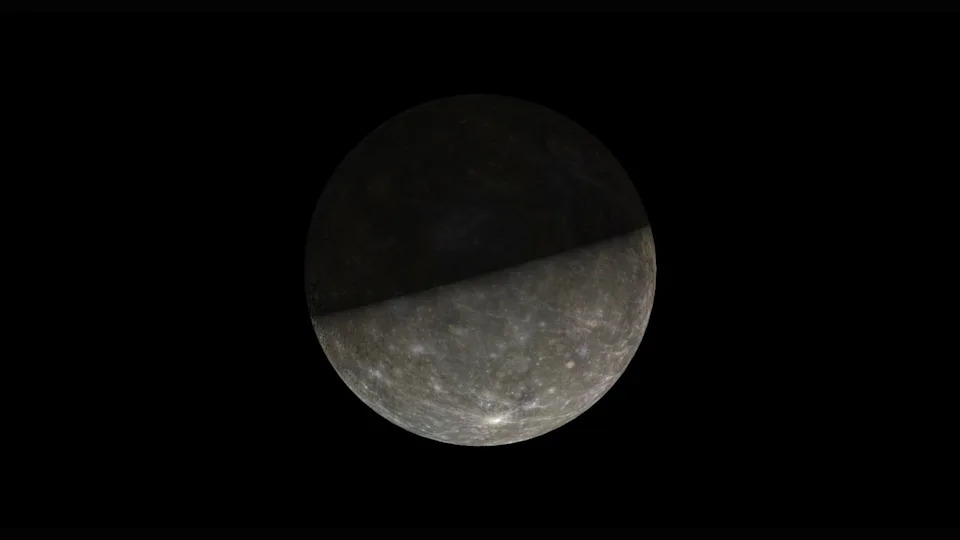
Mercury is visible in February. | Credit: Starry Night/Chris Vaughan
How To Use This Guide
A useful rule of thumb: a clenched fist held at arm’s length spans roughly 10 degrees of sky. Times below are approximate and assume mid-northern latitudes; local sunset times and horizon obstructions will affect visibility.
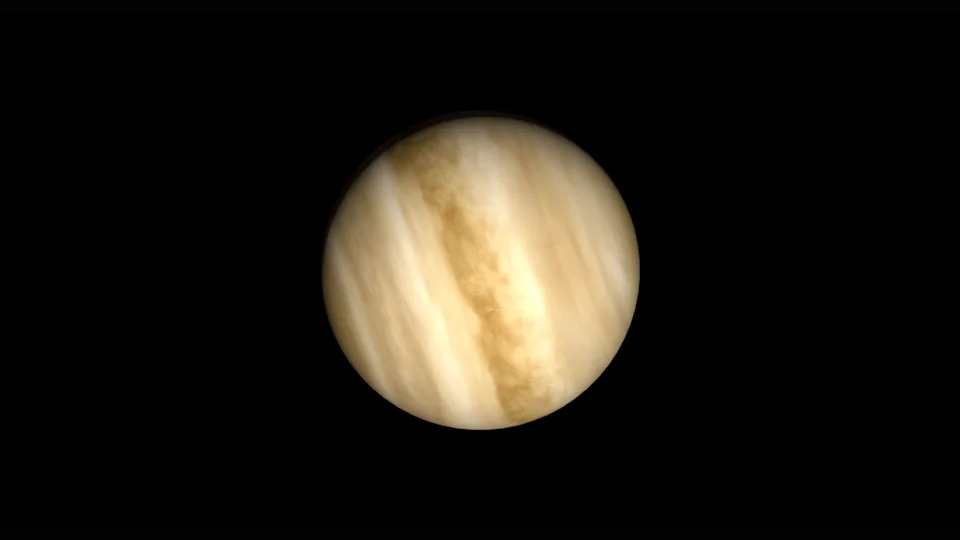
You might be able to see Venus with the naked eye in February. | Credit: Starry Night/Chris Vaughan
Planet-by-Planet Viewing Guide
Mercury
Mercury moves out of superior conjunction and begins a favorable evening apparition on Feb. 6, appearing low in the west-southwest about 45–75 minutes after sunset for roughly three weeks. Early in the run it shines near magnitude -1.1 and sits about 12° east of the Sun, setting about an hour after sundown.
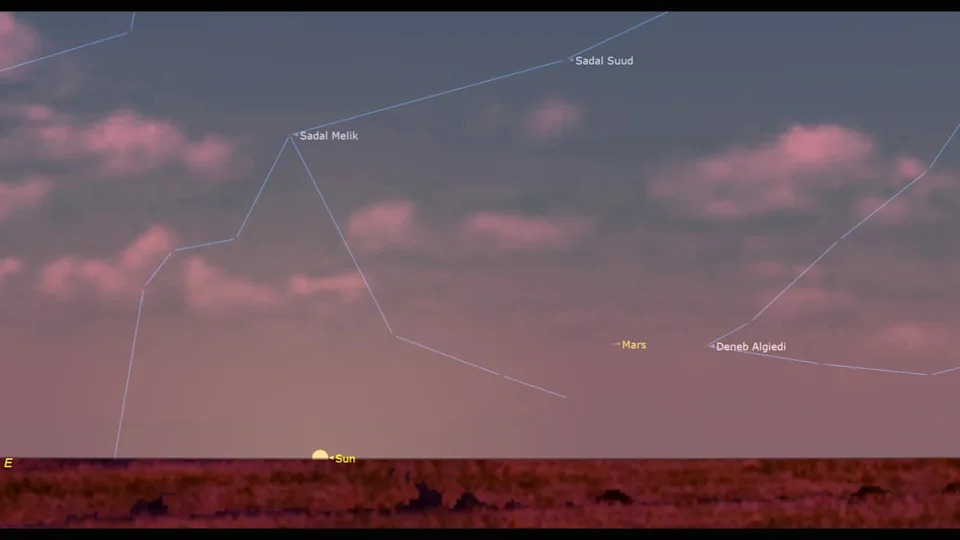
Unfortunately, Mars is not so visible in February. | Credit: Starry Night/Chris Vaughan
On the evening of Feb. 18 (~45 minutes after sunset) look low toward the west-southwest for a hairline-thin waxing crescent Moon (about 2% illuminated). Mercury will lie less than one degree above that thin moon — an especially tight pairing from the western U.S., and very close for Midwest observers. Binoculars will make the view spectacular; observers in parts of Texas, Arkansas, Louisiana, Mississippi, Alabama, Georgia and Florida may see the Moon pass directly in front of Mercury.
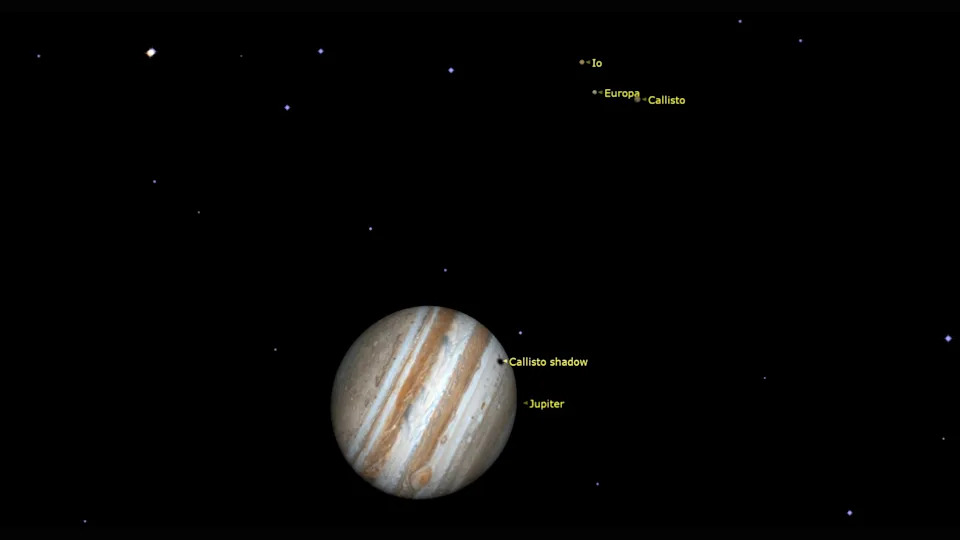
Jupiter can be seen at higher latitudes. | Credit: Starry Night/Chris Vaughan
On Feb. 19 (the night after the Moon pairing) Mercury reaches its greatest eastern elongation of about 18.1° — an unusually small elongation angle for an evening maximum that won’t be matched until 2039. Around greatest elongation the planet brightens to roughly magnitude -0.4 and appears half-illuminated through a telescope. Over the following week Mercury fades by nearly a factor of five and sinks from view; inferior conjunction occurs on Mar. 7.
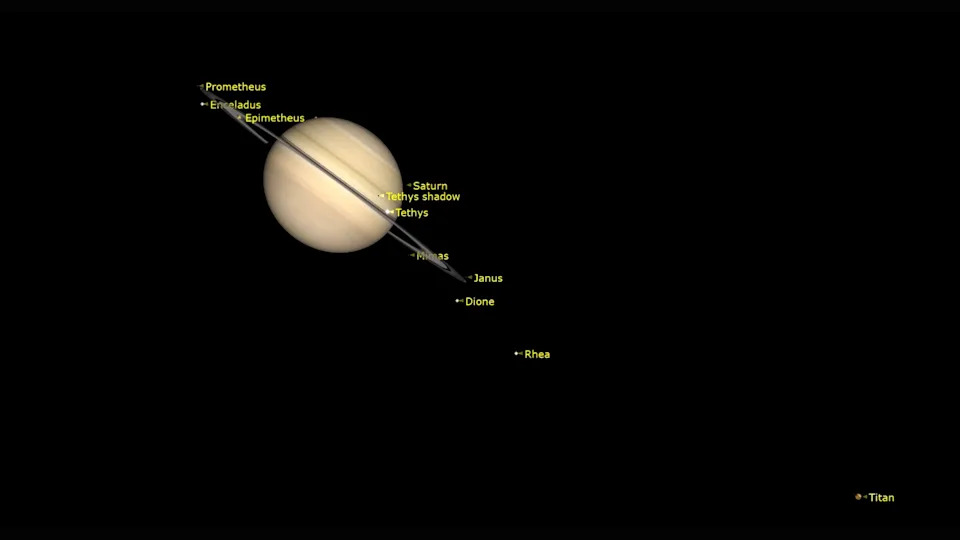
Saturn will be seen at lower positions in the night sky. | Credit: Starry Night/Chris Vaughan
Venus
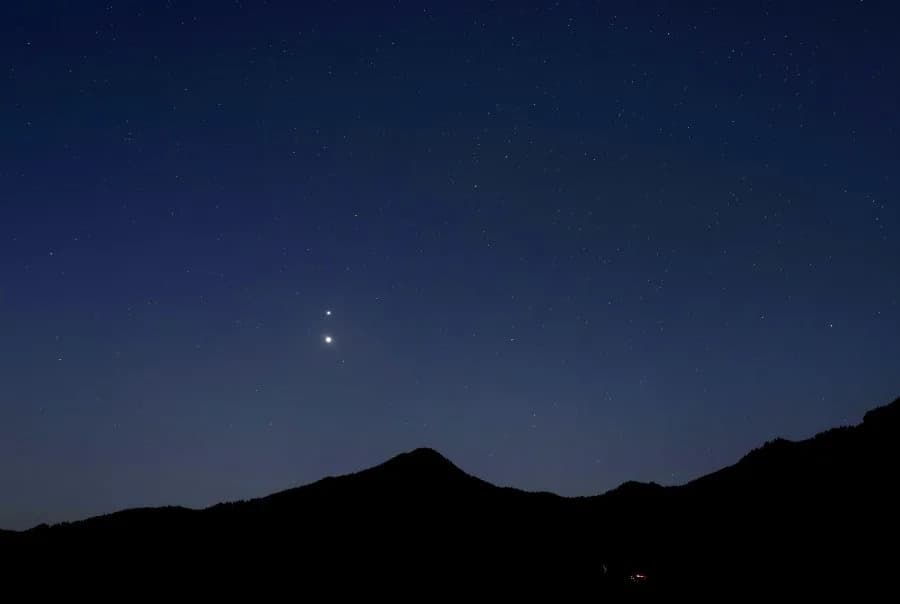
Venus was at superior conjunction on Jan. 6 and at aphelion on Jan. 22. At the start of February it is very low at sunset (less than 4° altitude) and sets in under 30 minutes. By about Feb. 15 Venus may be visible to the unaided eye roughly 15 minutes after sunset near the west-southwest horizon; if not, binoculars will reveal it. By month’s end Venus will sit around 10° high at sunset, shine at about magnitude -3.9, and set roughly an hour after sundown.
Mars
Mars remains lost in the Sun’s glare throughout February, lingering only about 6–12° west of the Sun and thus not visible this month.
Jupiter
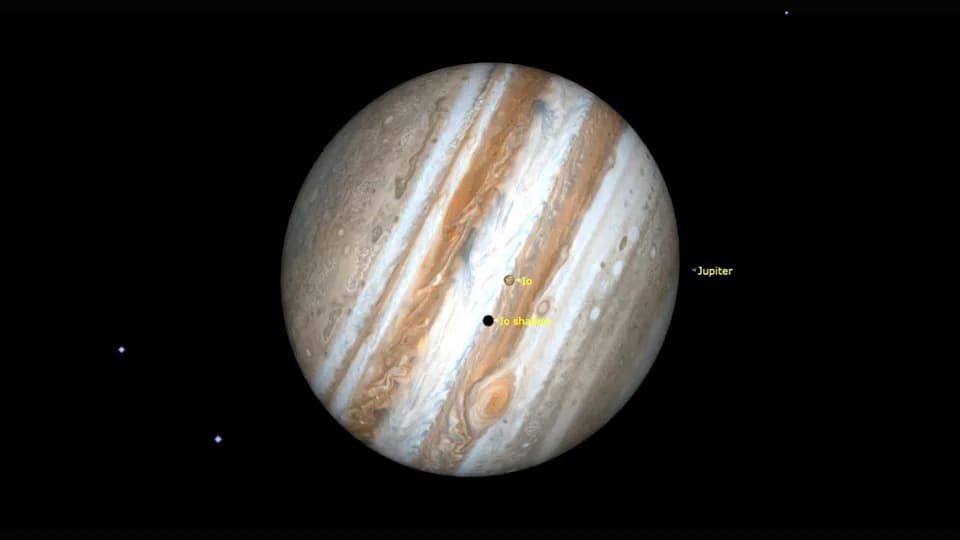
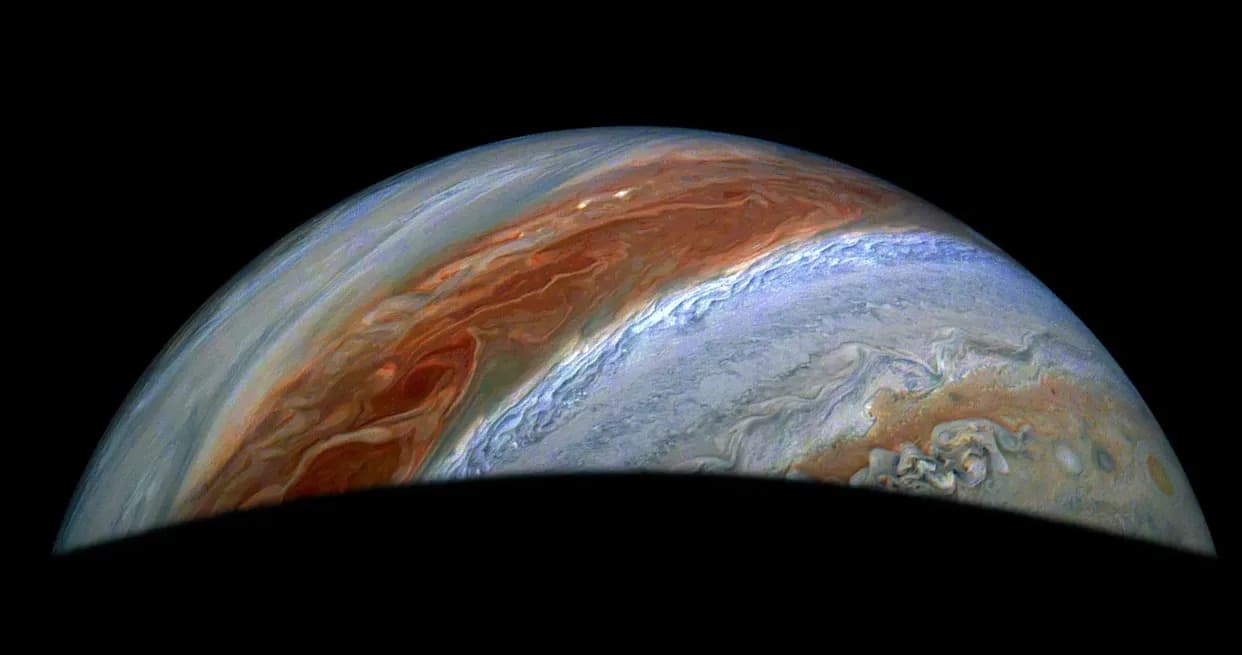
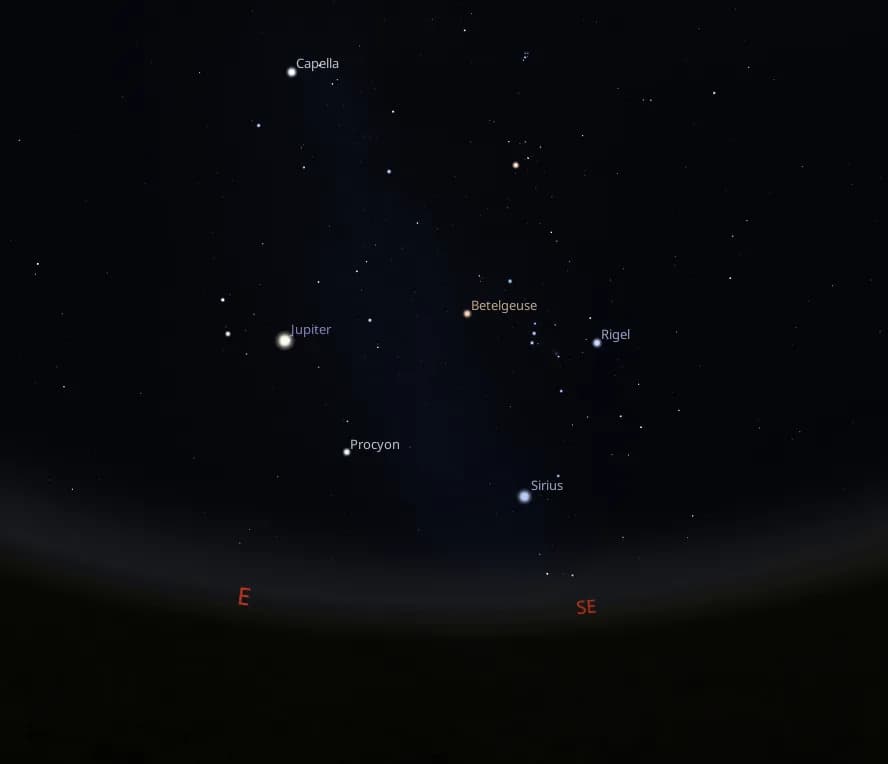
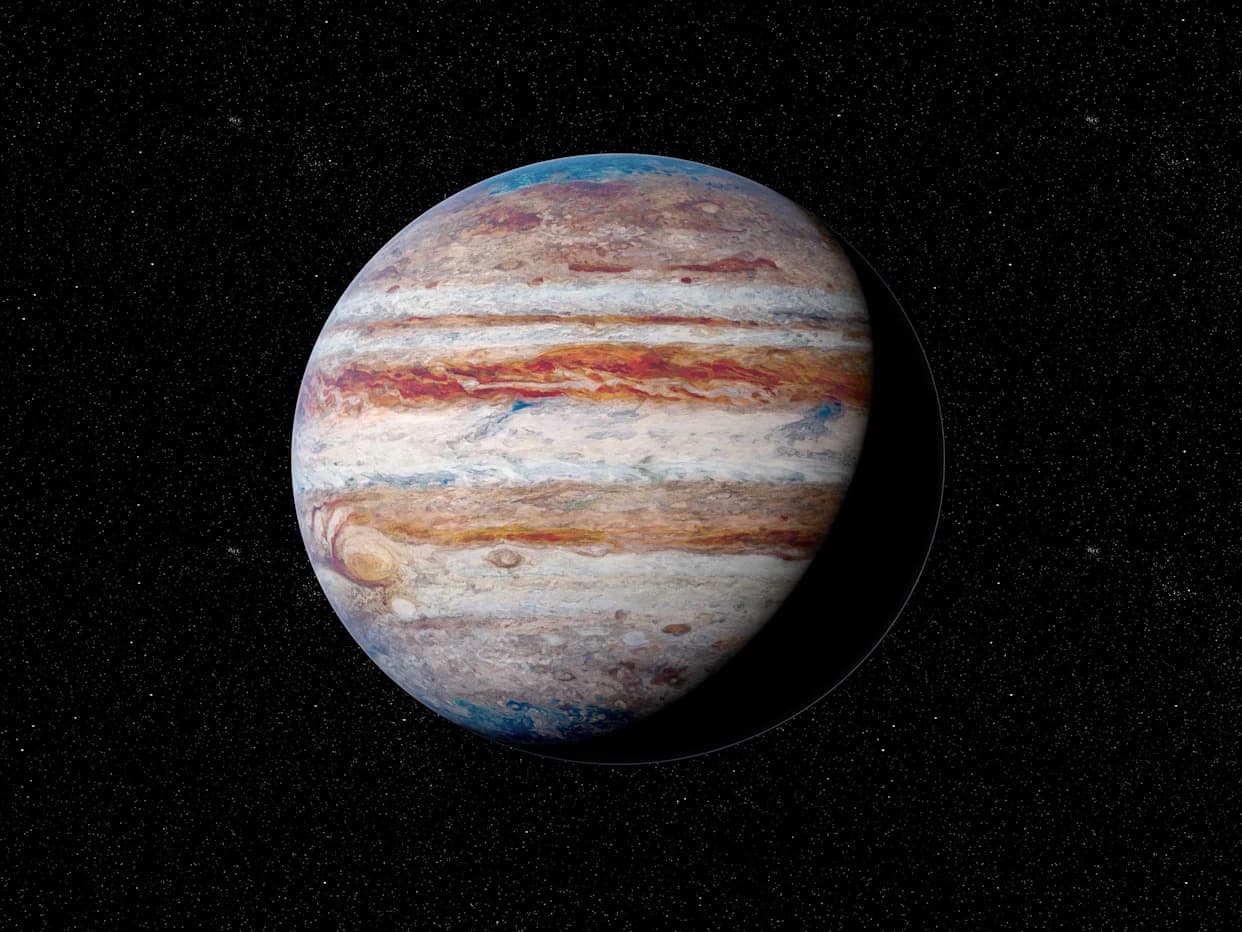
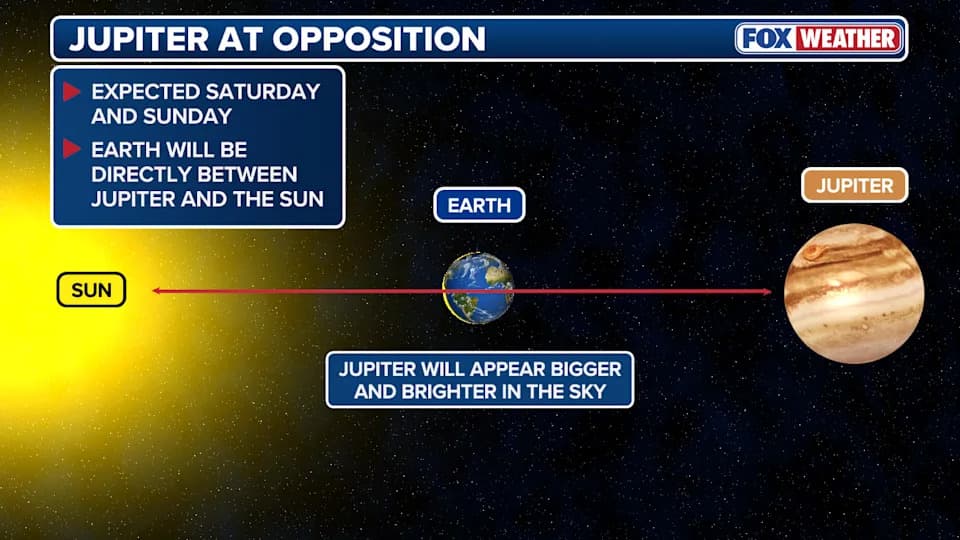
Jupiter reached opposition on Jan. 10, so it is already high in the eastern sky as darkness falls. Located in Gemini, it slowly dims from about magnitude -2.6 to -2.4 during February as it retrogrades against the stars, and its apparent disk shrinks by roughly 6% over the month. From mid-northern latitudes it is high for much of the night — near its highest around ~10:20 p.m. local time at the beginning of February and near ~8:30 p.m. by month’s end.
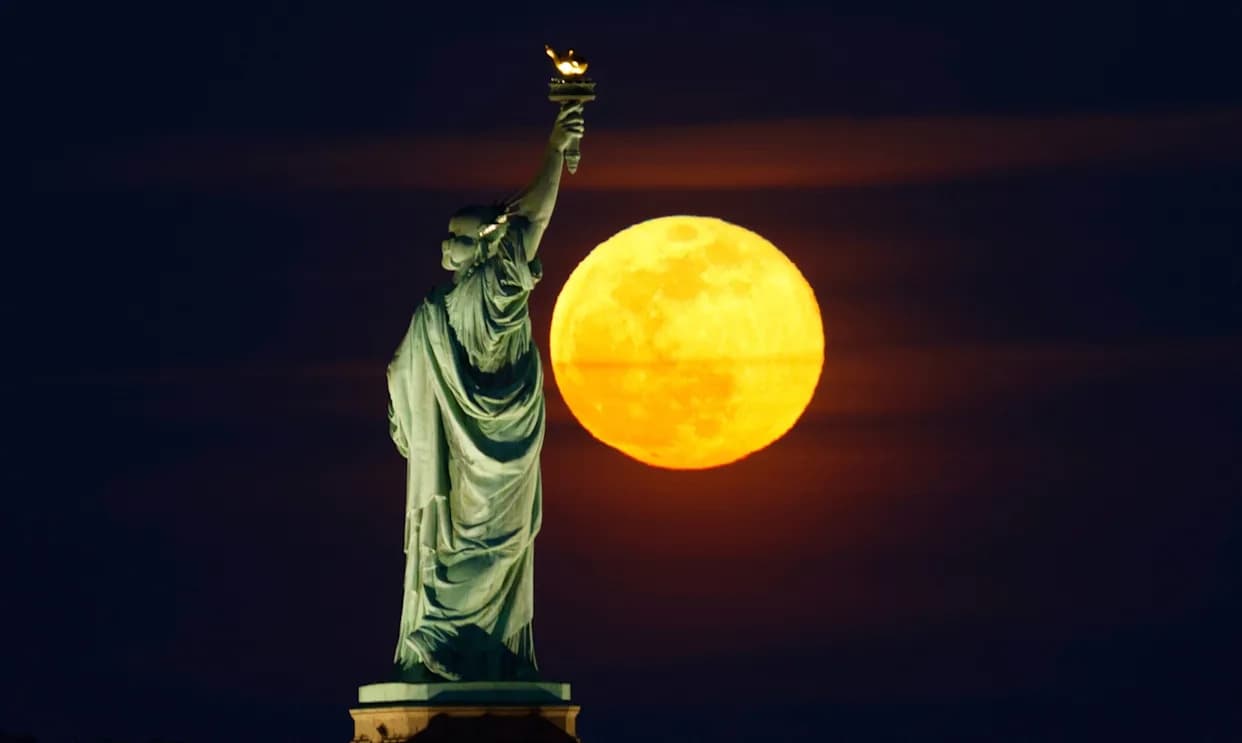
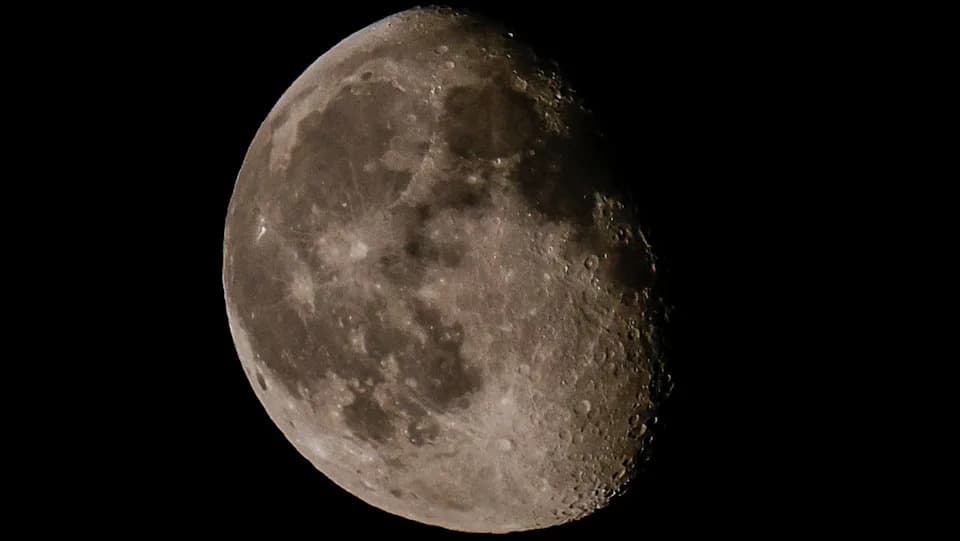
On the night of Feb. 26 look high in the eastern sky for a waxing gibbous Moon with Jupiter about six degrees below it — a striking sight in binoculars or a small telescope. When the atmosphere is steady a medium-sized scope will reveal substantial cloud detail and banding on Jupiter.
Saturn
Saturn is slowly sinking in the west-southwest and will become increasingly difficult to spot in bright twilight late in the month. Use the Moon as a guide while it remains usefully placed. Through a telescope the rings are still relatively narrow but gradually opening; by late February atmospheric turbulence near the horizon may limit crisp views. On Feb. 19 the thin crescent Moon (about 7% illuminated following its close approach to Mercury) will lie roughly 4° to the right of first-magnitude Saturn.
Observation Tips
- Scan the low west-southwest horizon with binoculars about 15–75 minutes after sunset to catch Mercury and Venus during their evening apparitions.
- Find Jupiter high in the east after dark — a bright, unmistakable object that’s ideal for small telescopes and binoculars.
- Watch for close pairings with the Moon (Mercury on Feb. 18; Saturn on Feb. 19; Jupiter on Feb. 26) — these make locating faint or low objects much easier.
- Horizon clarity matters: clear, unobstructed western horizons and stable air (steady seeing) yield the best views for low planets and ring detail on Saturn.
Happy observing — clear skies!
Help us improve.