Late February presents a rare planetary parade: Venus, Jupiter, Saturn, Mercury, Uranus, and Neptune will appear in a line across the evening sky, with February 28 the date they look closest together from Earth. Four planets (Venus, Jupiter, Saturn, Mercury) are visible to the naked eye; Uranus and Neptune need binoculars or a telescope. Best viewing is 15–30 minutes after sunset in the last week of February, looking toward a clear, low western horizon; a bright Moon on Feb. 28 may make the faint planets harder to see.
How to See a Rare Six‑Planet Parade This Month — Peak on Feb. 28
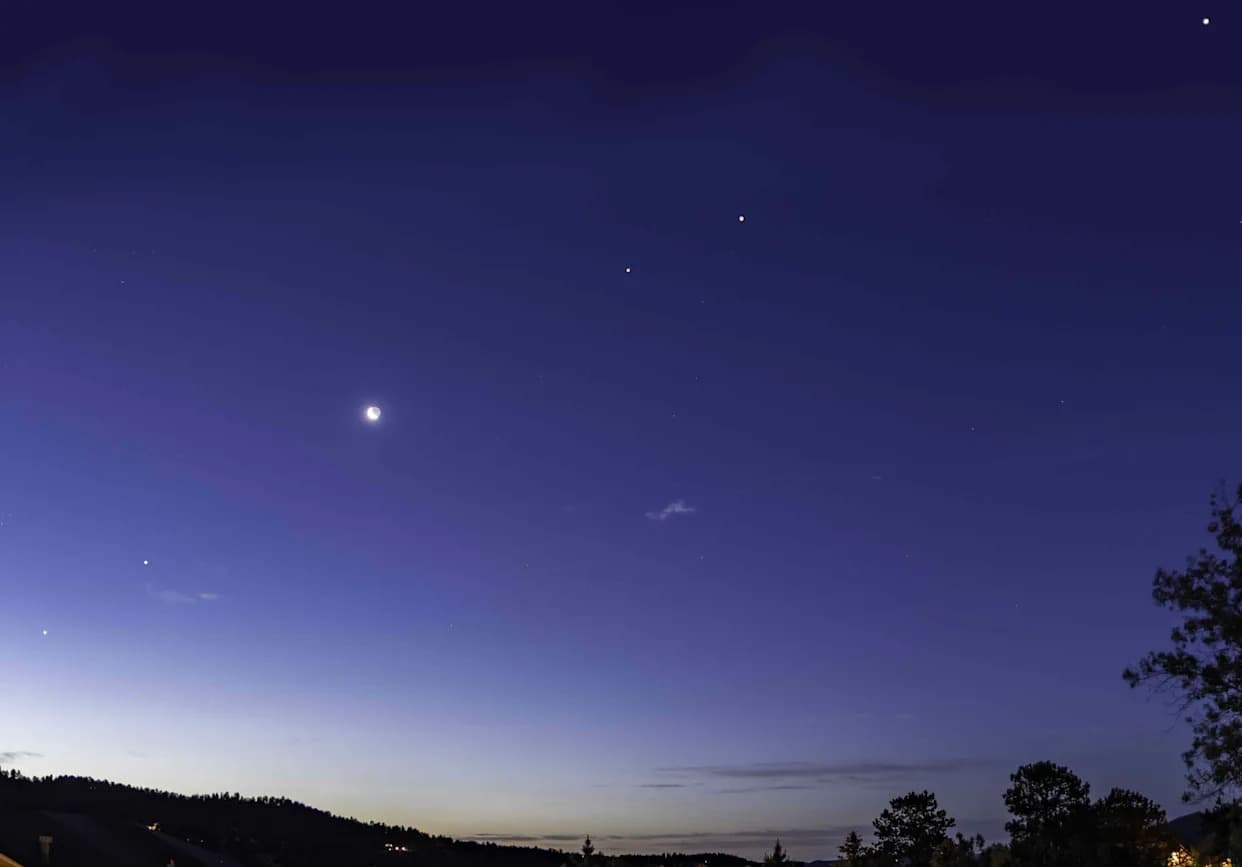
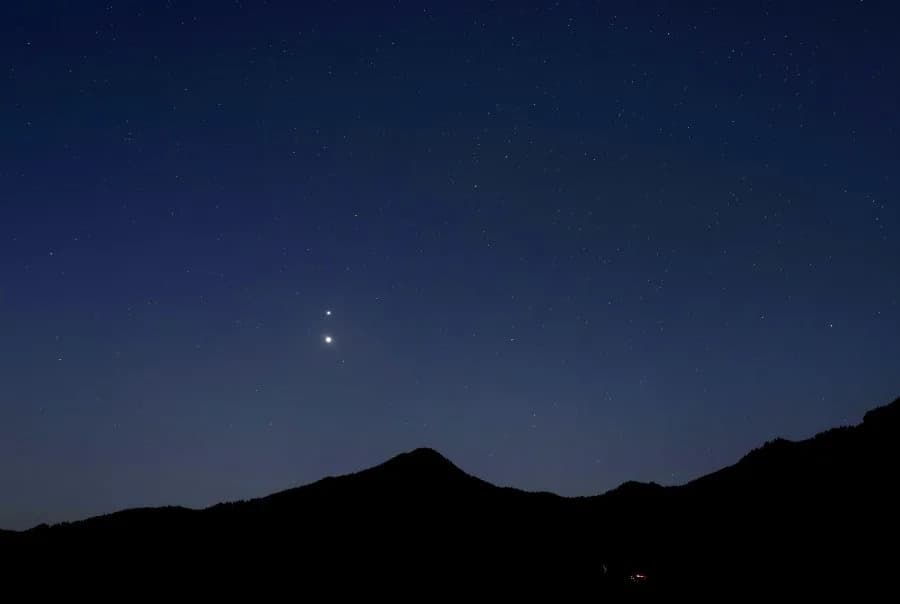
A planetary alignment featuring Venus, Mars, Saturn, Jupiter, and the moon in 2022.Brad McGinley Photography / Getty Images
Skywatchers have a rare chance this month to see six planets appear in a neat lineup across the evening sky. On February 28 the planets will look closest together from Earth, an event often called a "planetary parade." From brightest to faintest, the six are: Venus, Jupiter, Saturn, Mercury, Uranus, and Neptune.
From our viewpoint these planets will form an apparent line across the western and southern skies. This is a visual alignment only — the planets are not physically in a straight line in space, but they will fall along a similar direction from Earth’s perspective, making them an excellent target for backyard observers and beginners.
When And Where To Look
The best viewing window is about 15–30 minutes after sunset during the last week of February. Face the western horizon and find a spot with a low, unobstructed view of the sky. Exact timing and how tightly the planets appear together will vary with your location; in some places the closest appearance may be a few days earlier or later than February 28.
What You’ll See
- Venus — The brightest planet in the evening sky (after the Moon). It will be the easiest to spot and will sit lowest, nearest the horizon.
- Mercury — Low near Venus; can be tricky because it sets quickly after the Sun.
- Saturn and Neptune — Will appear near each other higher above Mercury and Venus; Neptune will be very faint and needs optics.
- Uranus — Higher in the sky near the constellation Taurus; visible with binoculars or a small telescope.
- Jupiter — Furthest east among the six and bright enough to see without optical aid.
On the night of Feb. 28 the Moon will be about 90% illuminated and may brighten the twilight sky, making faint planets like Uranus and Neptune harder to spot. If possible, try a date a few days before or after to reduce lunar interference.
Equipment And Tips
- Bring binoculars (7x–10x) or a small telescope for Uranus and Neptune.
- Allow your eyes several minutes to adjust to twilight; avoid looking at bright screens or lights.
- Check local sunset times and the app or a star chart for exact planet positions from your location (the Star Walk app and NASA resources are good references).
- Pick a clear night and a location with a low western horizon to maximize your view.
Why It Matters
Planetary parades are visually striking observational opportunities that let you see multiple worlds in a single evening without specialized planning. They’re great for introducing friends, family, and young observers to the night sky.
Safety note: Never look toward the Sun with binoculars or a telescope. This viewing is strictly after sunset.
Help us improve.