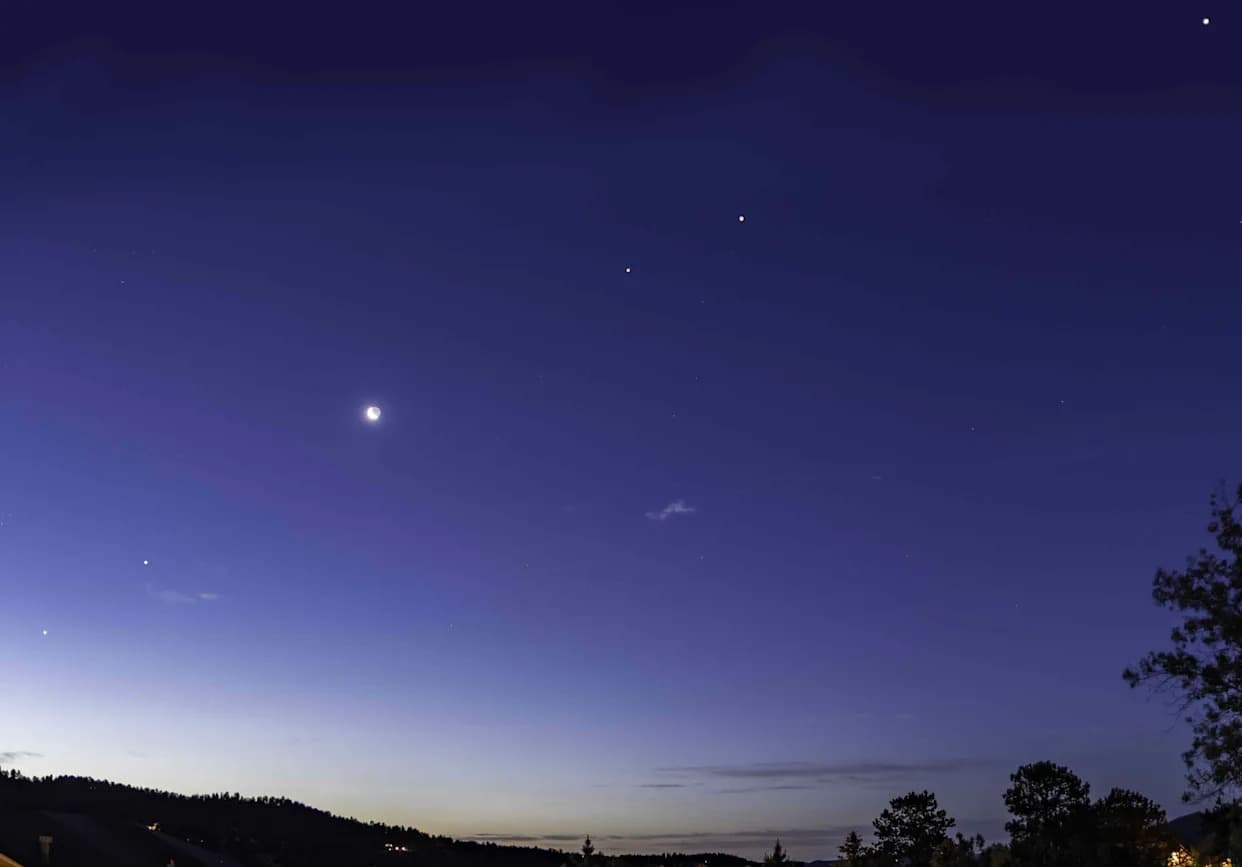
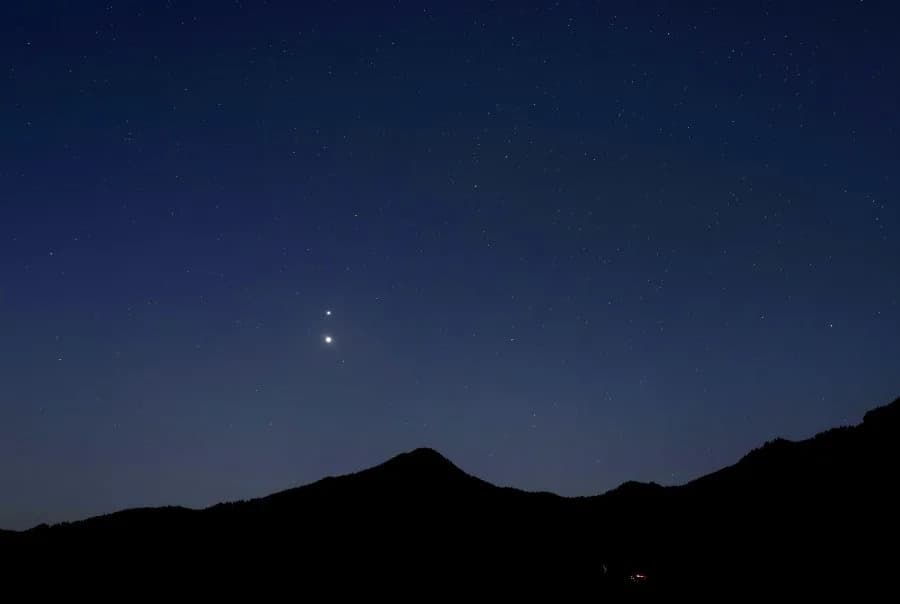
Tonight (Jan. 22), a thin crescent Moon (~22% illuminated) will pass near Saturn just after sunset, offering a brief but striking pairing low in the western sky. The optimal viewing window is about 30–60 minutes after sunset; the Moon sets before midnight. The event is visible across most of North America with the naked eye; binoculars highlight Earthshine and a small telescope may reveal Saturn’s rings.
Tonight: See a Slender Crescent Moon Slide Past Saturn — Best Viewing 30–60 Minutes After Sunset
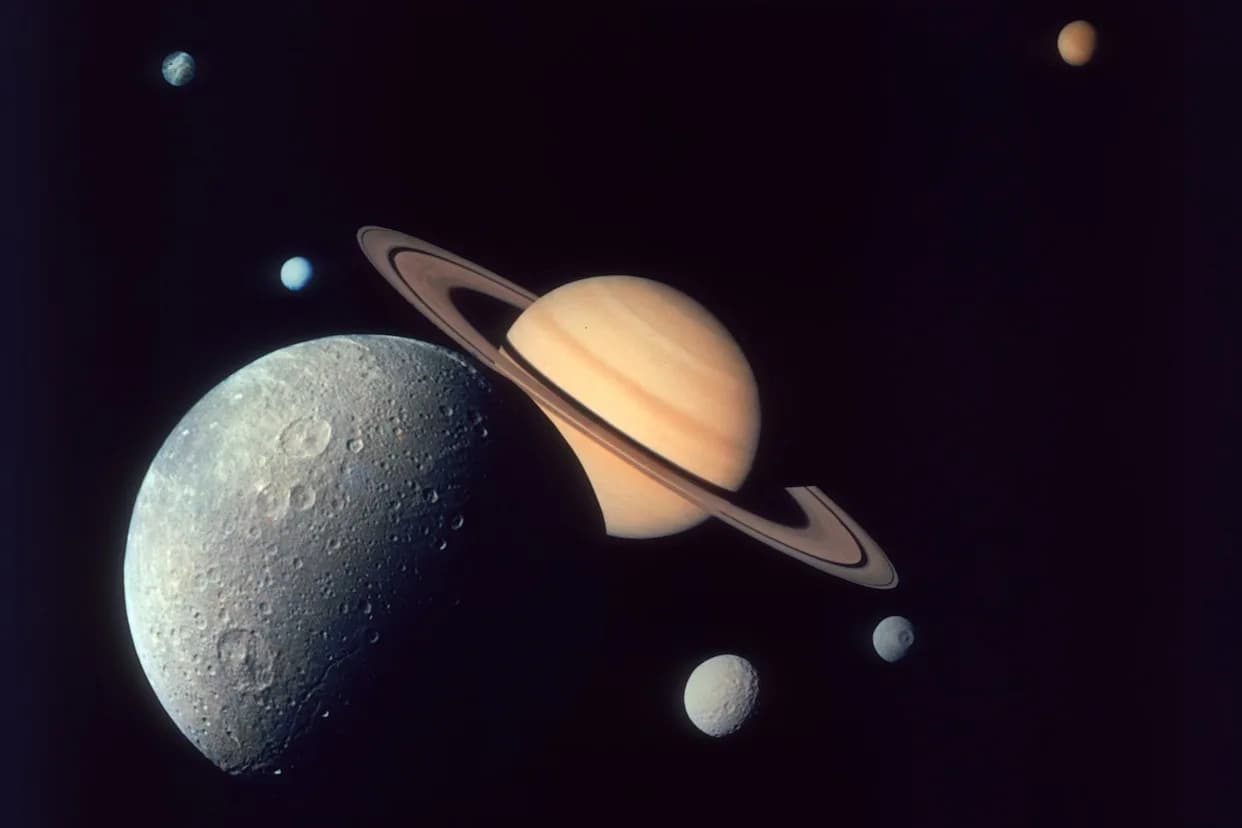
Space Frontiers/Hulton Archive/Gettymontage of Saturn and its moons
Tonight (Jan. 22), a thin crescent Moon will pass close to Saturn just after sunset, creating a short-lived but beautiful low-western-sky pairing visible across much of North America.
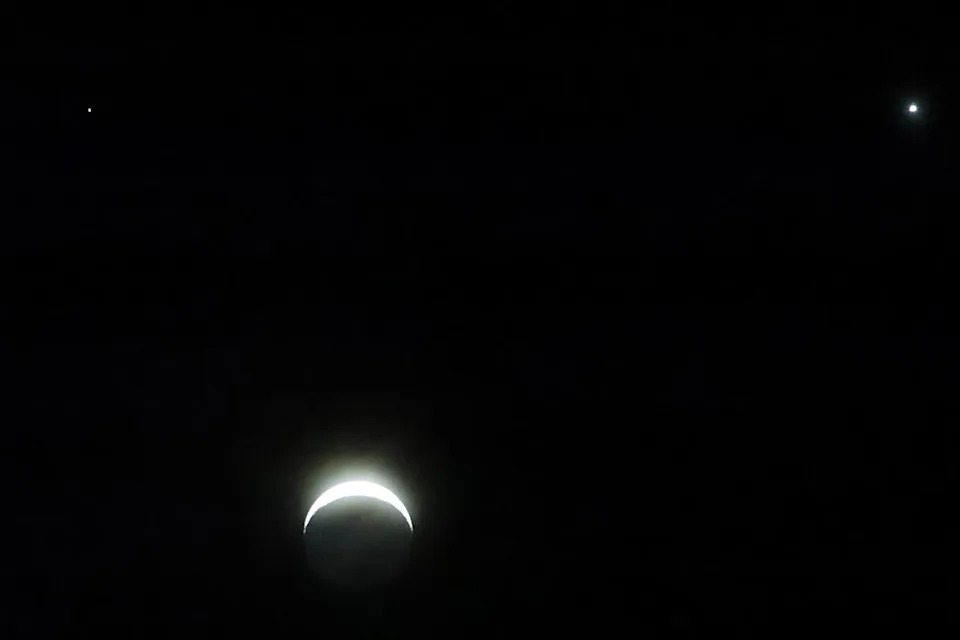
Adi Prima/Anadolu via GettyMoon and Venus
What to Expect
The Moon will show only about 22% illumination, appearing as a delicate crescent while faint Earthshine softly lights its dark hemisphere. Saturn will sit less than 7° to the Moon’s upper-left and will appear as a steady, bright “star” in twilight.
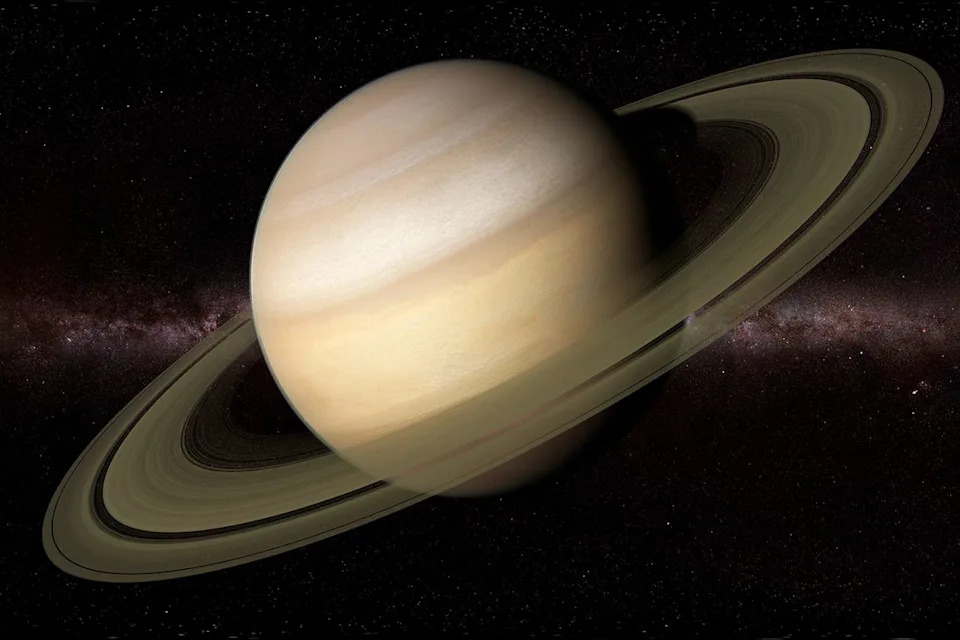
Science Photo Library RF/GettySaturn
When and Where To Look
Look toward the southwest roughly 30–60 minutes after sunset — that window offers the best balance between twilight and darkness so both the slim lunar crescent and Saturn are easily visible. The Moon will be about 30° above the horizon, and it will set well before midnight, so you’ll want to find a clear, unobstructed western horizon.
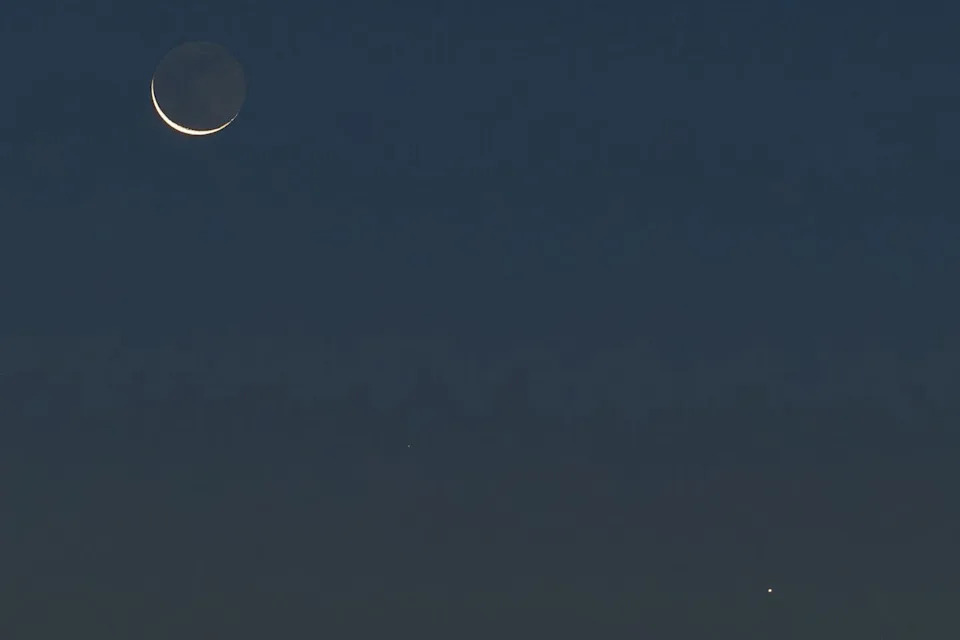
Davide Pischettola/NurPhoto via GettyThe crescent of the moon
Who Can See It
Observers across most of North America should be able to spot the pairing with the unaided eye if skies are clear and the western horizon is unobstructed. The scene will lie beneath the constellation Pisces, with the Great Square of Pegasus nearby for extra context.
Do You Need Equipment?
No special gear is required, but binoculars will enhance the view and make Earthshine easier to detect. A small telescope can still reveal Saturn’s rings, although contrast and detail decline as the planet sits lower in the sky.
Why This Night Matters
This is the most photogenic of three consecutive nights in which the Moon passes Saturn; by the next evening the Moon will have moved past the planet and will appear thicker as it approaches first quarter on Jan. 25. It’s also one of the last convenient evening views of Saturn before the planet shifts closer to the Sun’s glare for a while.
Set an alarm and find a clear view of the southwestern horizon during the 30–60 minute window after sunset for the best chance to see this delicate celestial pairing.
Timing and viewing guidance compiled from public astronomy coverage and skywatching resources.
Help us improve.