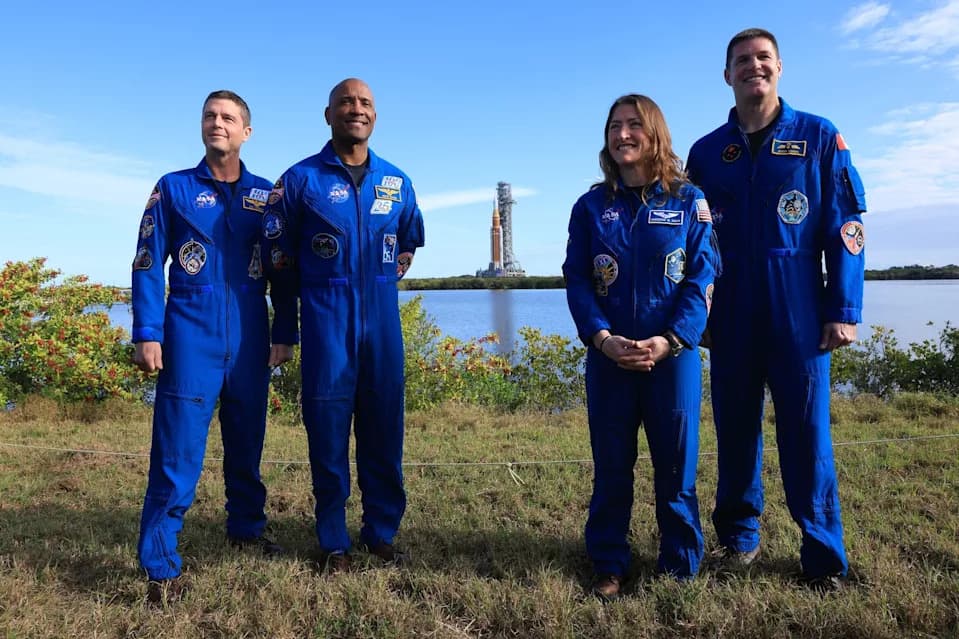
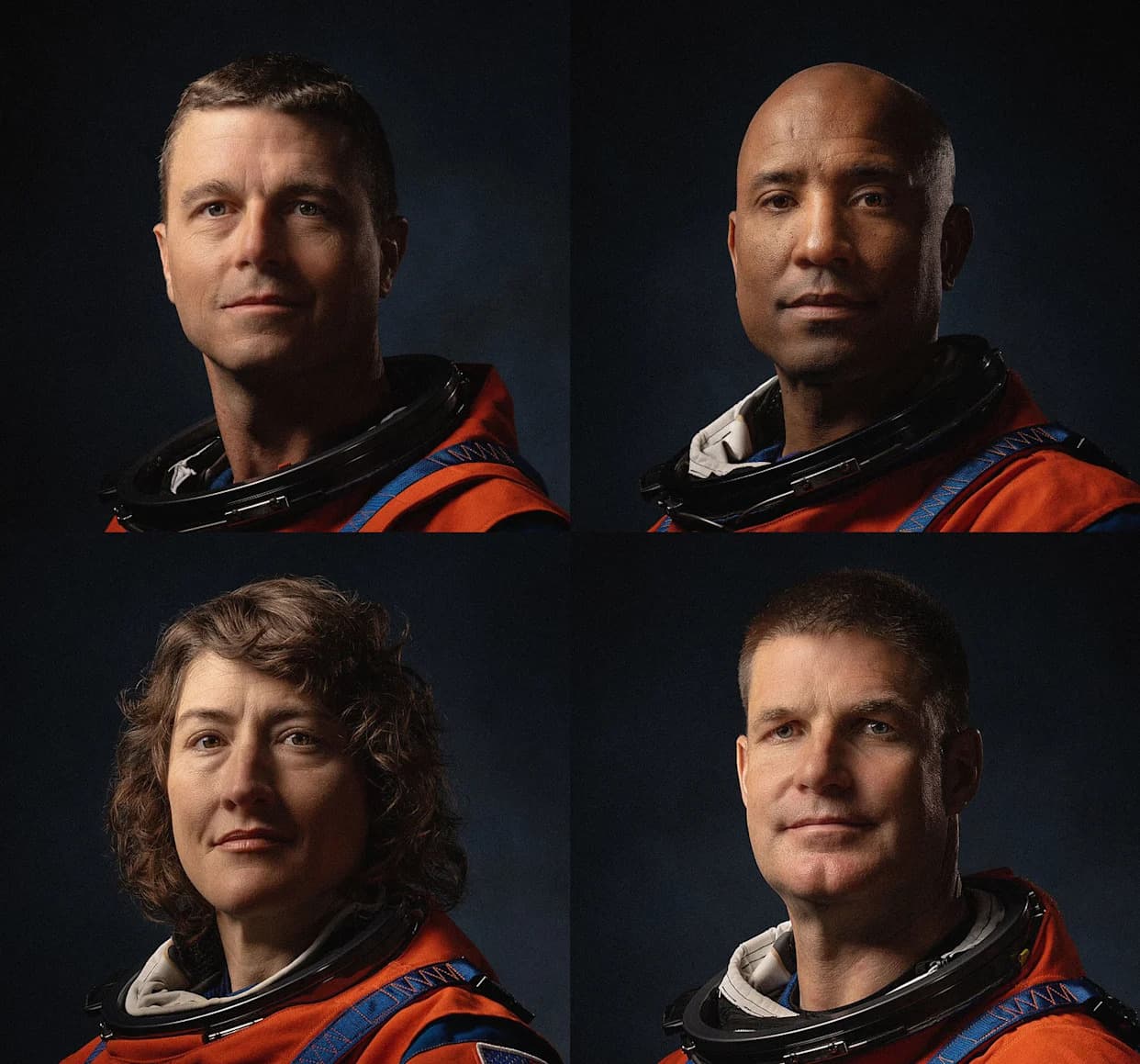
Time magazine released a special commemorative cover and feature, "Back to the Moon," ahead of NASA’s Artemis 2 mission, which could launch as soon as Feb. 8 for a 10-day lunar flyby carrying Reid Wiseman, Jeremy Hansen, Victor Glover and Christina Koch. Jeffrey Kluger’s feature places Artemis 2 alongside historic missions like Apollo 8 and highlights the mission’s potential to be a unifying global moment. Artemis 2 will travel roughly 4,700 miles (7,560 km) beyond the far side of the Moon — farther than any humans have gone — and is framed as a critical step toward returning astronauts to the lunar surface and building a sustainable lunar presence by the end of the decade.
Time Honors Artemis 2 Crew with 'Back to the Moon' Commemorative Cover Ahead of Feb. 8 Launch Window
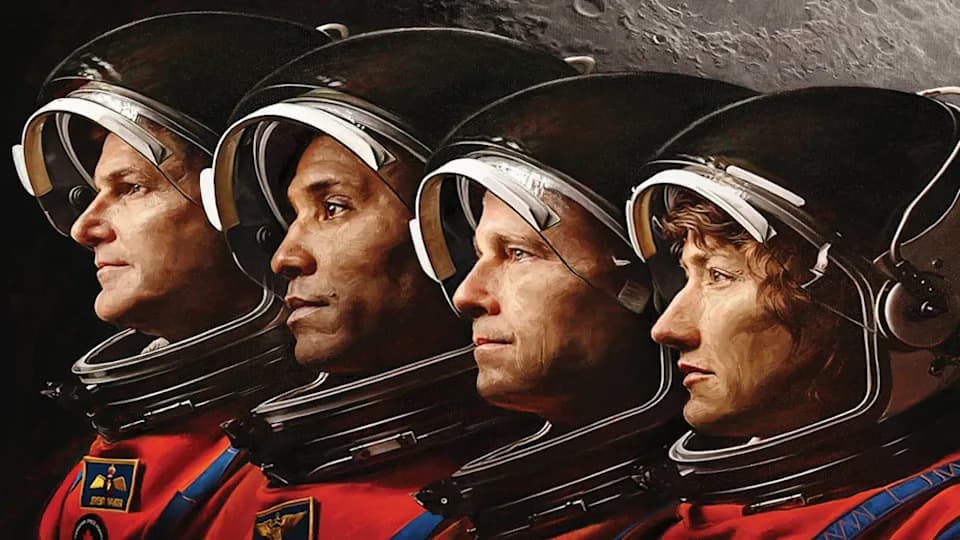
Artemis 2 astronauts (from left) Jeremy Hansen, Victor Glover, Reid Wiseman and Christina Koch, as seen on the cover of Time magazine. | Credit: Time Magazine
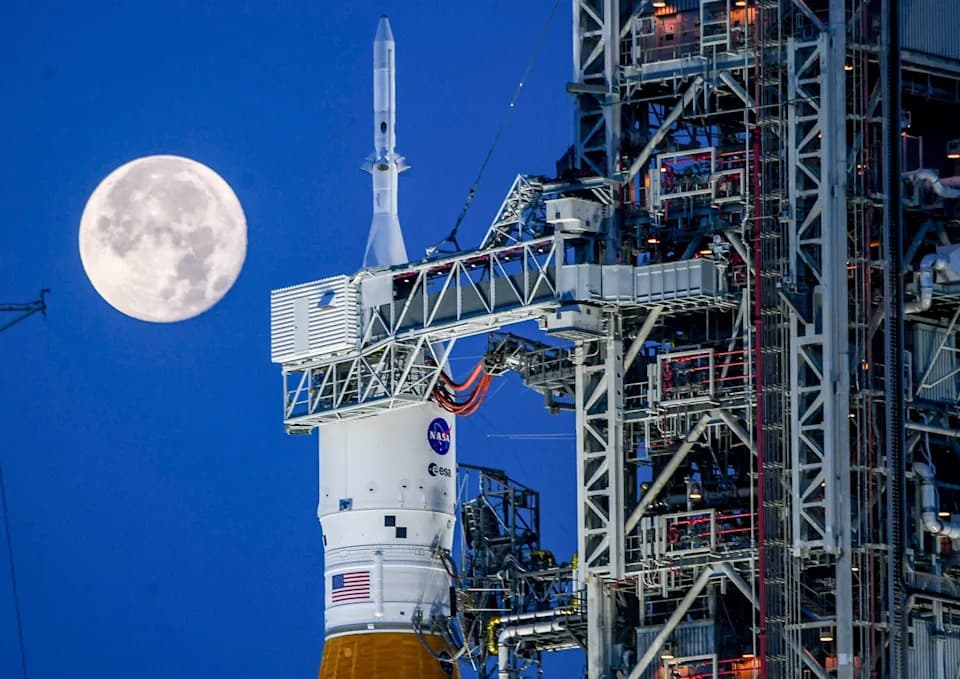
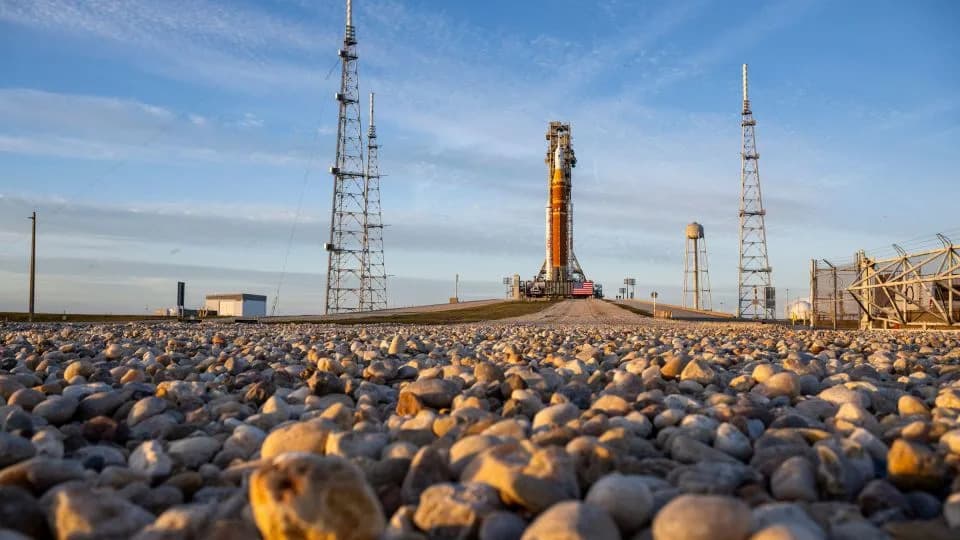
Perched on Launch Pad 39B at NASA’s Kennedy Space Center, the Artemis 2 Space Launch System and Orion spacecraft are poised for liftoff as early as Feb. 8 for a planned 10-day lunar flyby carrying Reid Wiseman, Jeremy Hansen, Victor Glover and Christina Koch.
Time’s Special Issue Marks a Historic Moment
Time magazine published a special commemorative cover issue on Jan. 30 that pairs portraits of the four Artemis 2 astronauts with an in-depth feature by Time Executive Editor Jeffrey Kluger, author of books such as Apollo 13 and The Apollo Murders. The edition is positioned as a collector’s item for space fans worldwide as attention turns to humanity’s return to the Moon after more than half a century.
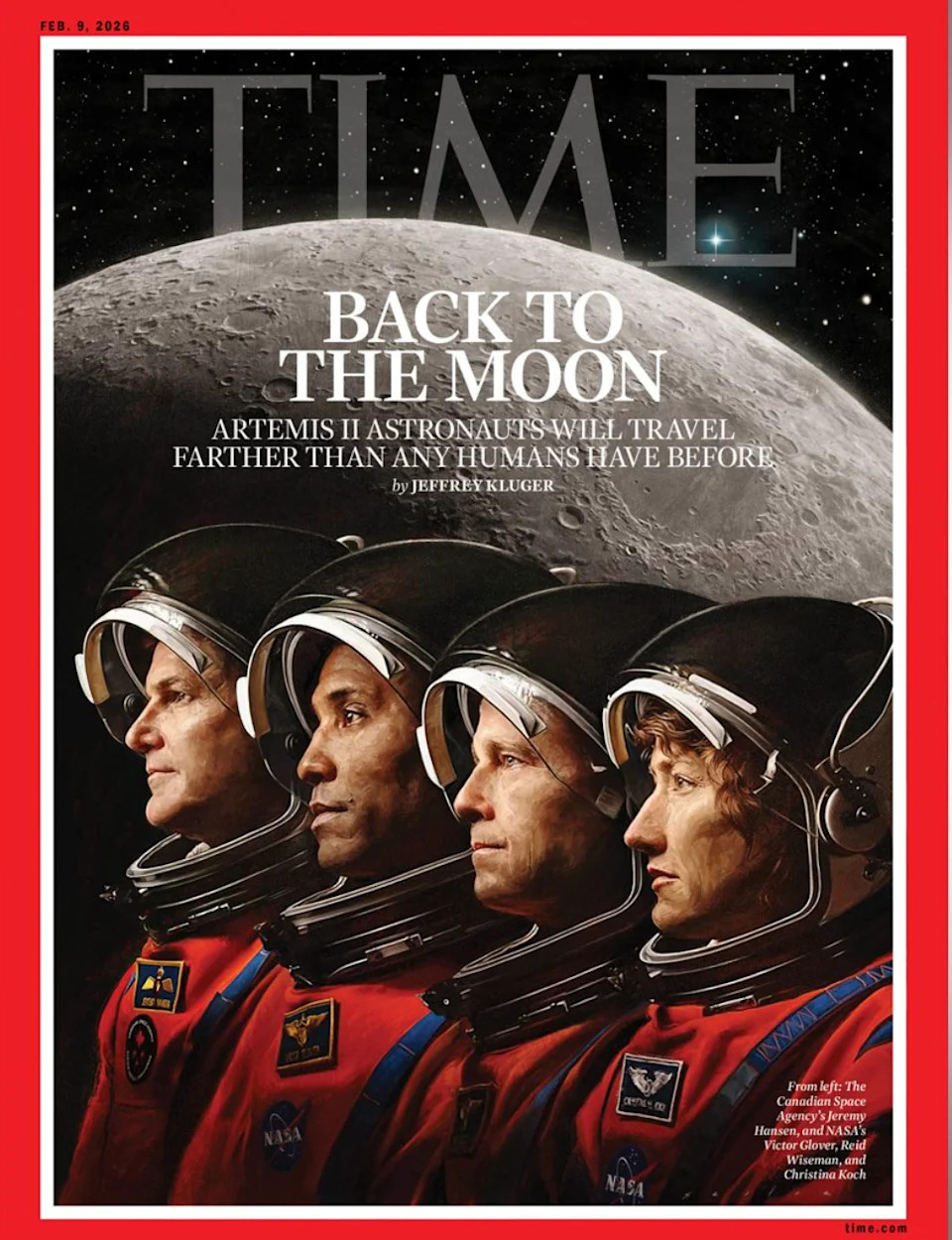
The Artemis 2 crew lands on the new cover of Time magazine. | Credit: Time Magazine
Context and Historical Parallels
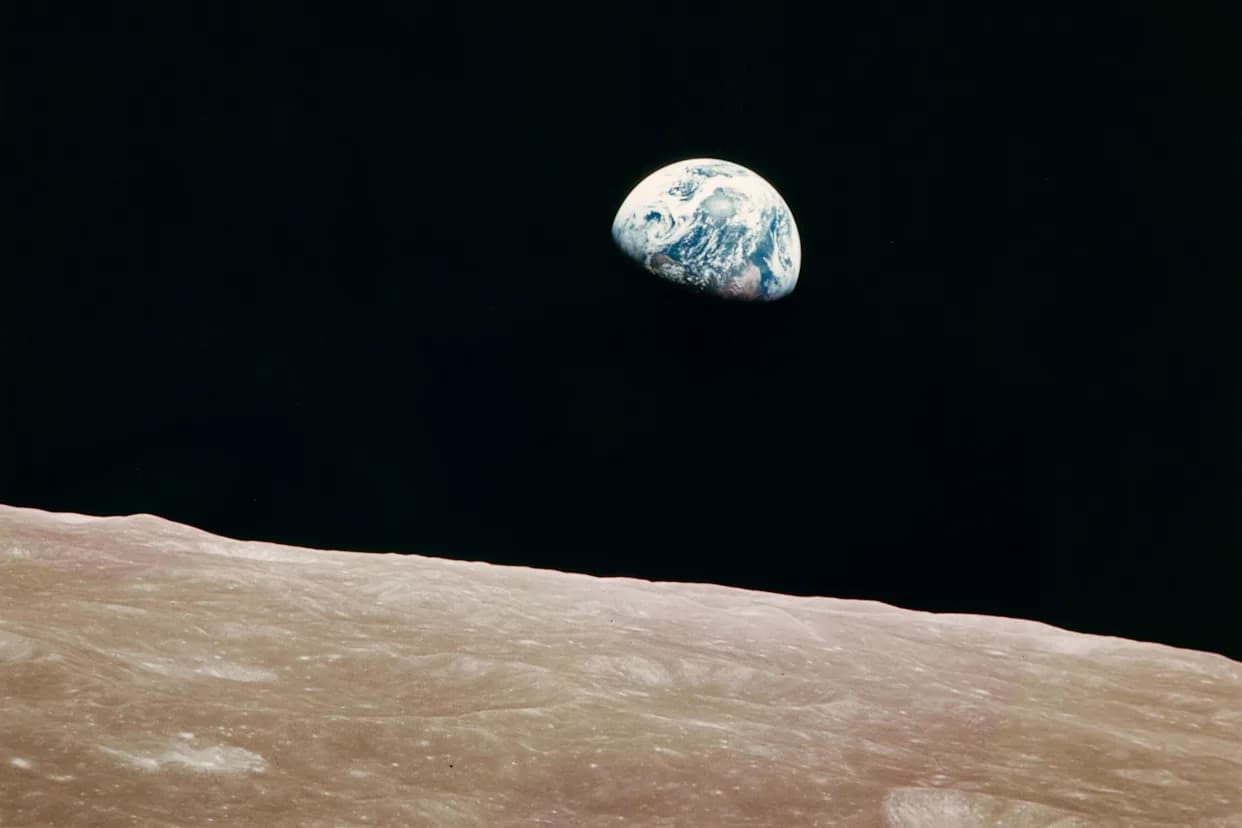
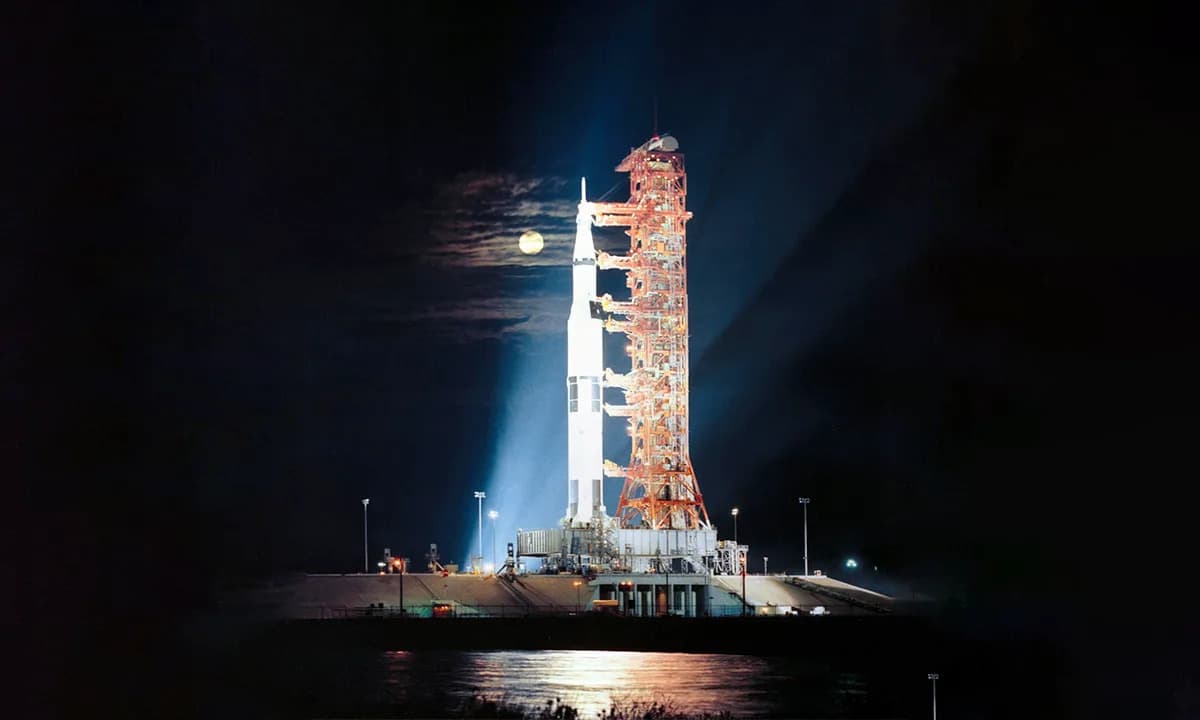
Kluger’s cover story, titled Back to the Moon, places Artemis 2 in the context of NASA’s earlier lunar milestones, especially Apollo 8 — the 1968 mission that was the first crewed flight to orbit the Moon and return safely. Kluger draws contrasts and comparisons that underline how missions beyond Earth orbit have often served as unifying, uplifting moments in turbulent times.
“With Artemis 2, the lunar ledger will at last be reopened and four more names inscribed — a fine and fit crew who will be sent into the cosmic deep as emissaries of the 8.3 billion of us who will remain forever earthbound,” Kluger writes, suggesting that the mission could offer a public uplift similar to Apollo 8’s cultural impact.
Mission Details and the New Distance Record
NASA’s planned trajectory for Artemis 2 will carry astronauts roughly 4,700 miles (7,560 kilometers) beyond the far side of the Moon — farther from Earth than humans have ever traveled. This will surpass the previous human distance record of about 158 miles (254 kilometers) past the Moon, set during the Apollo 13 mission in 1970.
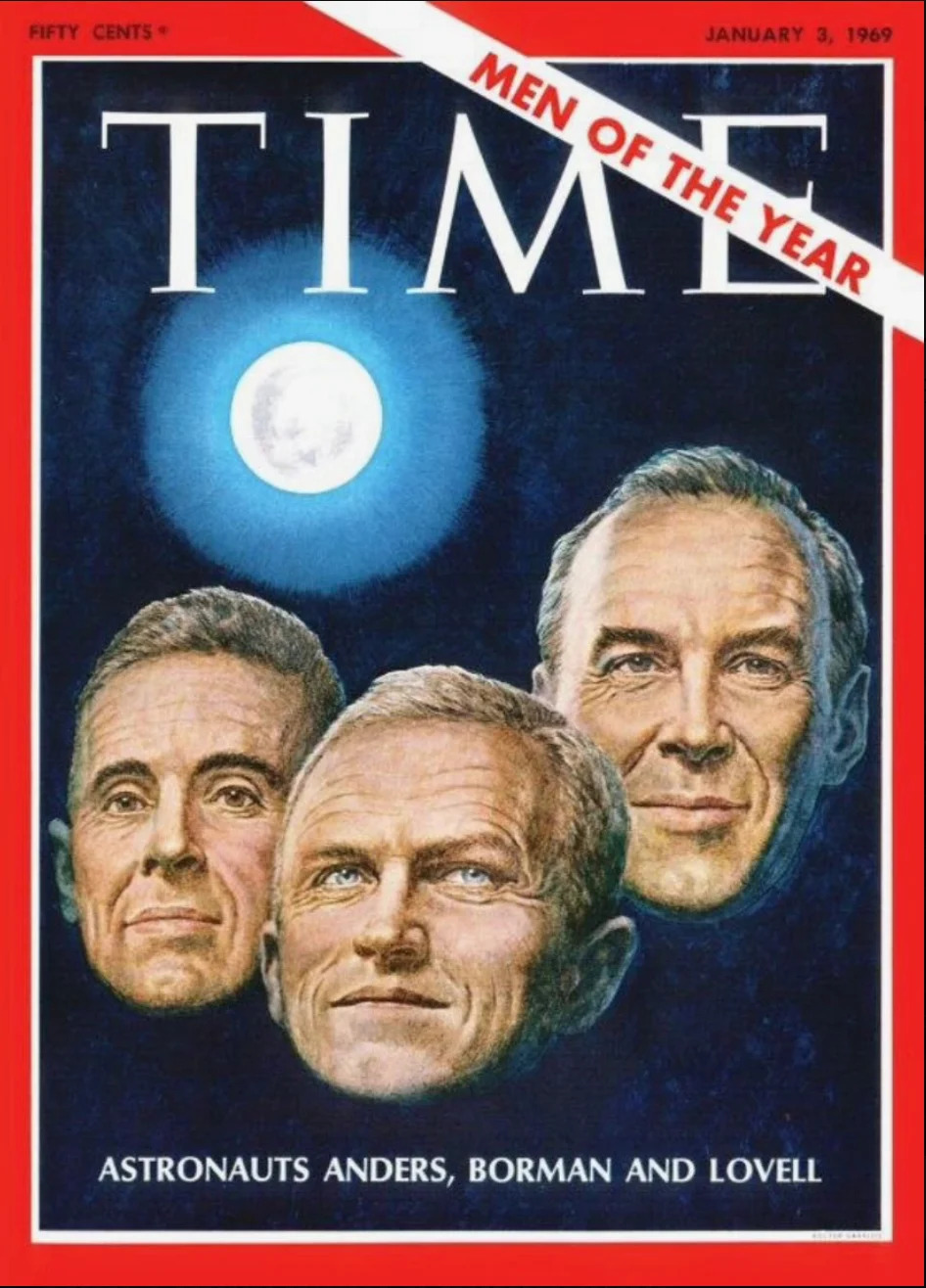
The Apollo 8 astronauts graced the cover of Time magazine in 1968. | Credit: Time Magazine
NASA and its partners describe Artemis 2 as the next step in a broader Artemis campaign aimed at returning humans to the lunar surface and building a sustainable presence on and around the Moon in the coming years.
Public Reception and Broader Significance
The Time feature and the commemorative cover frame Artemis 2 as more than a technical milestone: a potential global moment. The story and related coverage argue that certain spaceflights — from John Glenn’s orbits to Apollo 8’s Christmas Eve transmission, Apollo 11’s landing and Apollo 13’s tense return — transcend national boundaries and become shared human experiences. Artemis 2 may have the potential to play that role today.
Why this matters: Beyond records and publicity, Artemis 2 is intended to test the systems and operations needed for future crewed lunar landings and for building a long-term lunar infrastructure scheduled by NASA and partners in the latter half of the decade.
Note: Social posts and commentary accompanying the Time release referenced the continuity between 1968’s Apollo 8 coverage and the 2026 Time issue, underscoring the historical resonance many observers see in the upcoming mission.
Help us improve.