Face the Nation (Feb. 1, 2026) featured an exclusive interview with Venezuelan opposition leader María Corina Machado, who said U.S. pressure persists and that more than 700 political prisoners remain detained. The show examined nationwide protests over ICE tactics and a congressional debate on DHS funding, including calls for a full DOJ probe after the Minneapolis shooting. Gary Cohn provided an economic update (GDP ~5%, inflation in the high 2s, unemployment ~4–4.5%), and a bipartisan panel of mayors raised humanitarian and zoning concerns about mass detention sites and warned of TPS expirations affecting essential workers.
Face the Nation — Feb. 1, 2026: Machado on Venezuela, ICE Protests, Economic Snapshot, and Mayors' Worries
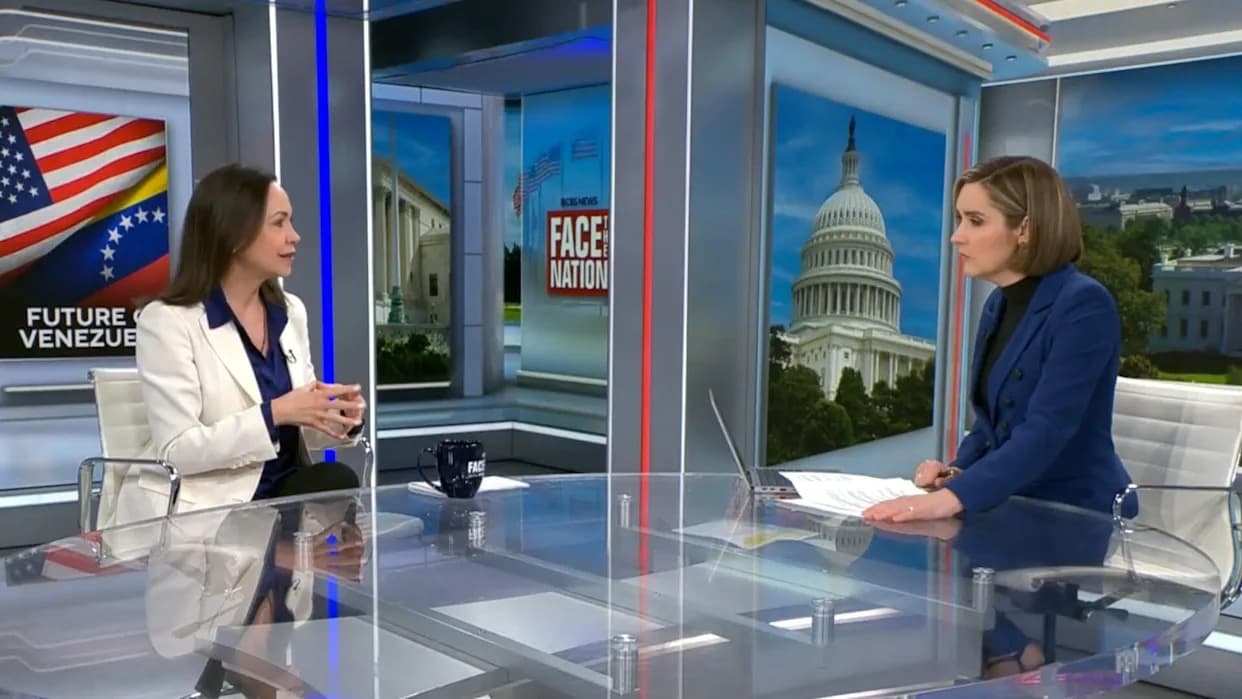
Face the Nation with Margaret Brennan (Feb. 1, 2026) covered four major beats: Venezuela and an exclusive interview with Nobel laureate and opposition leader María Corina Machado; nationwide protests and congressional debate over ICE and DHS funding; an economic update with former White House adviser Gary Cohn; and a bipartisan mayors' panel on local responses to federal policy.
Venezuela — Machado’s Interview
The broadcast opened with an extended interview with Venezuelan opposition leader María Corina Machado. The program reported recent U.S. military action and diplomatic moves in the hemisphere, noting that U.S. forces had taken custody of Nicolás Maduro four weeks earlier and that U.S. officials continued operations intended to pressure the regime.
Machado said the pressure on the regime has not been lifted and argued that actions by acting president Delcy Rodríguez reflect compliance with international signals. She said her movement is not in direct contact with Rodríguez and recalled that after winning a nationwide election her party was blocked from taking office. Machado described a wave of repression, noting that more than 1,000 political prisoners were detained on Jan. 1 and that the number remained above 700 at the time of the interview.
"The transition is unstoppable," Machado said, adding that Venezuela needs rule of law, long-term guarantees for investment, and the return of skilled professionals who fled the crisis.
Machado declined to recognize the current National Assembly’s legitimacy and said privatization steps toward a market-based oil sector are positive in principle but require legal guarantees and human capital. Asked whether she would face imprisonment if she returned, she said the situation was evolving and that U.S. pressure reduced the risk of lethal reprisals. She also explained why she dedicated and ultimately gave her Nobel Peace Prize to President Trump as a gesture of gratitude and strategic solidarity.
Immigration, DHS Funding, and Minneapolis Incident
Congress faced a partial government shutdown as lawmakers debated short-term funding and Homeland Security provisions. Brennan interviewed Texas Republican Rep. Michael McCaul, who said he supports a stopgap funding package and urged reforms at DHS following the fatal Minneapolis shooting of an ICU nurse, Alex Pretti, during a Border Patrol operation.
McCaul called for a full Department of Justice civil-rights investigation and backed a shift away from roving street patrol tactics toward targeted immigration enforcement. He defended longstanding administrative warrants but acknowledged concerns about warrantless "collateral" arrests, use of force, and mistaken arrests of U.S. citizens. The episode also noted a federal judge’s order to release five-year-old Liam Ramos and his father from ICE custody, citing child trauma.
Justice Department Files On Epstein
The Justice Department said it released more than three million additional pages related to the Jeffrey Epstein investigation, claiming compliance with a congressional law. Authors of the law on the House Judiciary Committee countered that many pages remain withheld or heavily redacted and submitted a formal inquiry.
Economy With Gary Cohn
Former White House economic adviser Gary Cohn described a mixed macro picture: GDP growth running near 5%, inflation in the high-2% range, and unemployment around 4–4.5%. He noted broad gains concentrated at the top and affordability strains for many households. Cohn explained recent corporate layoffs as part of a post‑COVID "right‑sizing" after labor hoarding, combined with rising input costs, including tariffs.
On policy proposals floated by the White House — from temporary credit-card rate caps to limits on institutional purchases of single-family homes and cash checks — Cohn warned some measures could backfire (for example, rate caps potentially reducing credit access for higher‑risk borrowers). He praised President Trump's pick of Kevin Warsh for Fed chair, calling Warsh experienced and likely to pursue normalization of the Fed’s balance sheet and measured policy adjustments.
Bipartisan Mayors Panel
Brennan convened a bipartisan panel of mayors — Eileen Higgins (Miami), Quinton Lucas (Kansas City), David Holt (Oklahoma City), and Mark Freeman (Mesa, Arizona) — to discuss how local governments are balancing public safety, humanitarian concerns, and federal authority.
- Mayor Freeman described a long-standing, limited cooperation agreement with ICE focused on civil infractions and emphasized local community outreach efforts in Mesa.
- Mayor Holt urged de‑escalation and restraint by federal agents and warned that tactics seen in recent operations threaten local trust in law enforcement.
- Mayor Lucas described local zoning and permitting efforts to block conversions of industrial warehouses into large-scale detention centers, arguing such sites are unsuitable and inhumane for mass detention.
- Mayor Higgins explained Miami’s constrained position under state requirements to cooperate with ICE, described fear in immigrant communities, and warned that the imminent expiration of Haitian Temporary Protected Status (TPS) could remove critical health‑care workers from the workforce overnight.
Closing
The program closed with Brennan directing viewers to the program website and YouTube channel for the full interviews. The broadcast covered high-stakes national debates — foreign policy in the Western Hemisphere, immigration enforcement and civil‑rights questions, economic stress at the consumer level, and how local officials are responding on the ground.
Help us improve.