Utah Gov. Spencer Cox signed a law expanding the Utah Supreme Court from five to seven justices; because the Legislature passed it with a supermajority, the change took effect immediately. Supporters say the expansion will improve efficiency and align Utah with similar states; critics call the timing politically suspect because the court may soon rule on a redistricting appeal that could affect a congressional seat. Legal experts and the Utah State Bar warn the change could slow decisions and weaken judicial independence, while the governor could soon appoint a majority of the court.
Utah Expands State Supreme Court To Seven Justices Amid Redistricting Fight
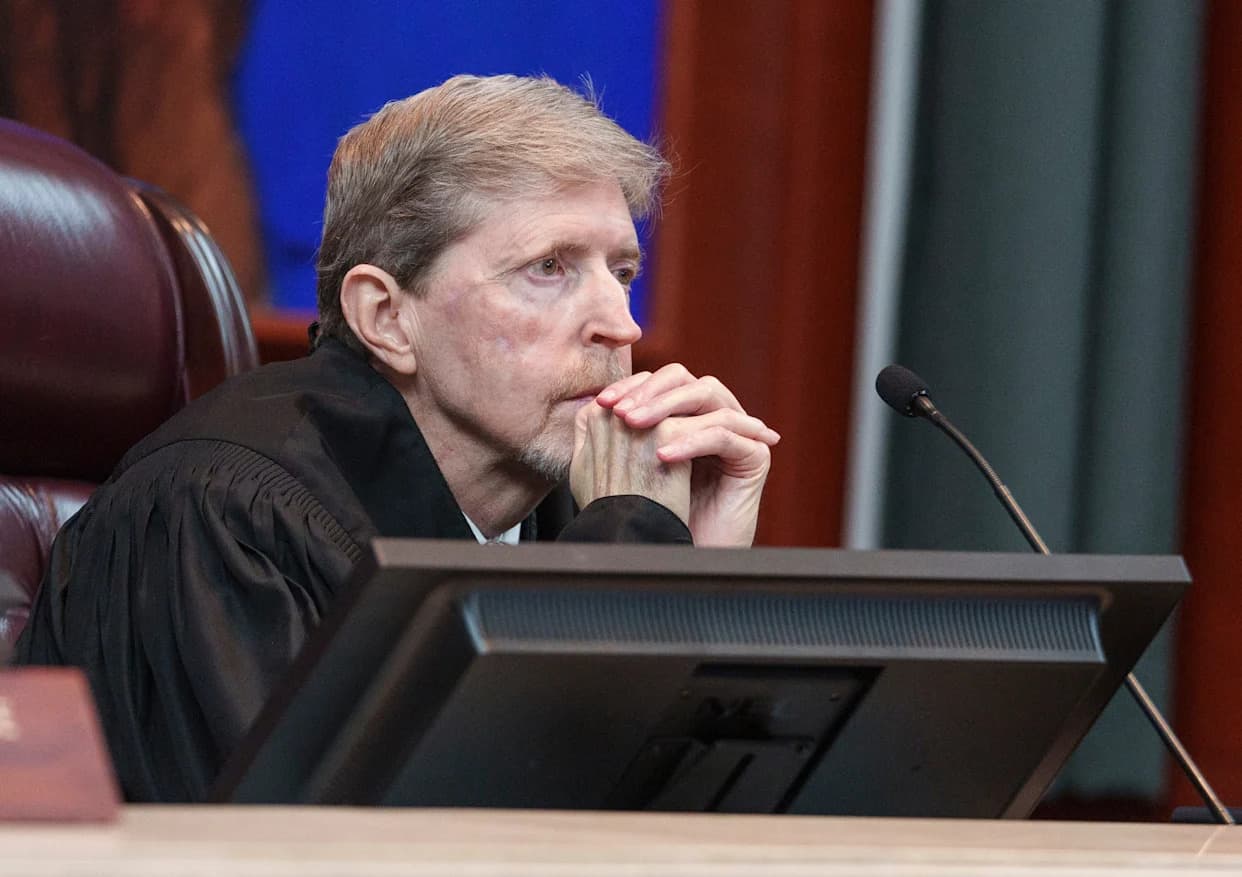
FILE - Utah Supreme Court Chief Justice Matthew B. Durrant listens to oral arguments for a case challenging the state's congressional districts before the Utah Supreme Court in Salt Lake City, Tuesday, July 11, 2023. (Leah Hogsten/The Salt Lake Tribune via AP, Pool, File)(ASSOCIATED PRESS)
Utah Gov. Spencer Cox on Saturday signed legislation that increases the Utah Supreme Court from five justices to seven, a move driven by Republican frustration over recent rulings and timed as the court prepares to consider a key redistricting appeal.
What Changed: Because the bill passed with more than a two-thirds majority in the Legislature, it took effect immediately when the governor signed it, allowing the state to begin filling the two new seats without the usual waiting period. Justices in Utah are nominated by the governor and confirmed by the state Senate.
Why Supporters Say It Helps: GOP backers, including House Majority Leader Casey Snider, argued that adding two justices will improve the court's capacity and bring Utah in line with other states of similar size. Gov. Cox has rejected suggestions the move is politically motivated and said the expansion will make the court more effective.
Why Critics Are Concerned: Democrats and legal experts warned the timing is suspicious because the court may soon rule on a redistricting case that could give Democrats a strong chance to flip one of Utah's four congressional seats. The Utah State Bar and former judges have raised alarms that the change could weaken judicial independence, slow decision-making and set a troubling precedent at a time of heightened tension between branches of government.
"The more sets of comments you have to take into account, the longer the process takes," said John Pearce, a recently retired associate chief justice, questioning the expansion's efficiency benefits.
Supporters point to other states such as Arizona and Georgia, which expanded their high courts in the past decade with similar efficiency arguments. Early reactions in Arizona suggested the change initially slowed opinion production because more justices reviewed drafts, though annual output there now is slightly higher than before; Georgia's output is slightly lower.
Earlier this year, the Legislature also removed the court's power to choose its own chief justice and transferred that authority to the governor. If Gov. Cox fills the two new seats, he will have appointed five of the seven justices on the court.
Broader Context: The Utah State Bar has warned that the expansion, together with other proposals under consideration, could erode judicial independence. One bill under discussion would create a new trial court with exclusive jurisdiction over constitutional challenges, potentially limiting other courts' ability to issue injunctions blocking state laws.
Separately, Republicans in Utah are gathering signatures for a November ballot initiative that would restore legislative control to draw voting districts that intentionally favor a political party — a practice known as gerrymandering.
What To Watch: New justices could be seated before the high court issues a decision on the redistricting appeal. Observers will watch how quickly the governor and Senate move on appointments and whether the expansion affects the court's workload, independence and public confidence in the judiciary.
Reporting by The Associated Press. Lee reported from Santa Fe, New Mexico.
Help us improve.