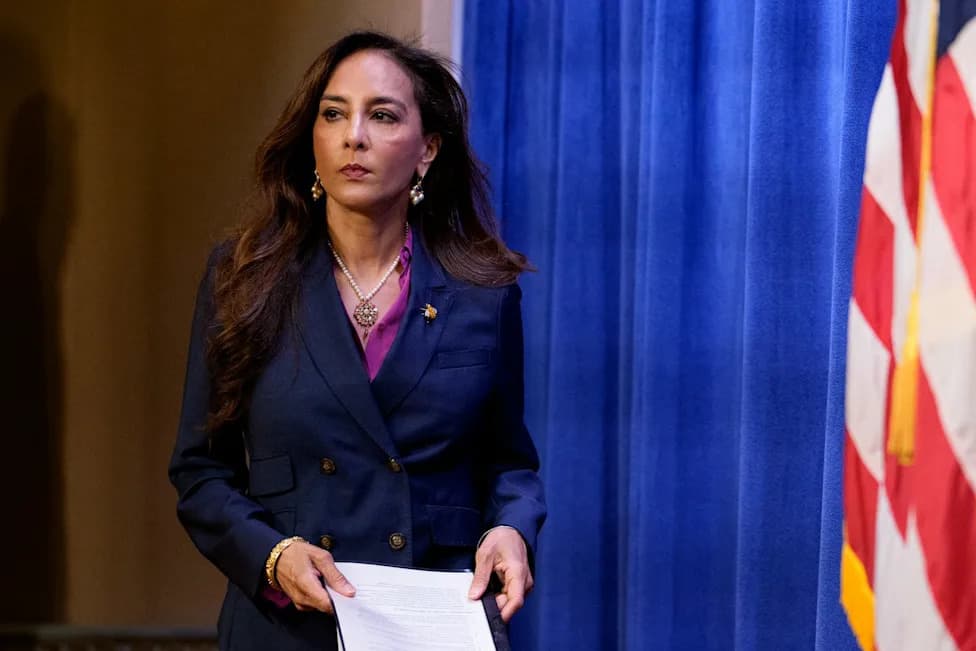
Two Utah Republican representatives, Celeste Maloy and Burgess Owens, filed a federal lawsuit seeking to block a judge-imposed congressional map that concentrates Democratic-leaning Salt Lake County into a single district and could make one Salt Lake-area seat more competitive for Democrats. The suit argues redistricting power rests with the state legislature and asks that the 2021 legislative lines be restored unless lawmakers draw new maps. The dispute is part of a broader series of redistricting battles across the U.S., and Utah's postponed filing deadline gives candidates until March 13 to declare.
Utah GOP Reps Sue to Block Judge-Imposed Map That Could Boost Democrats
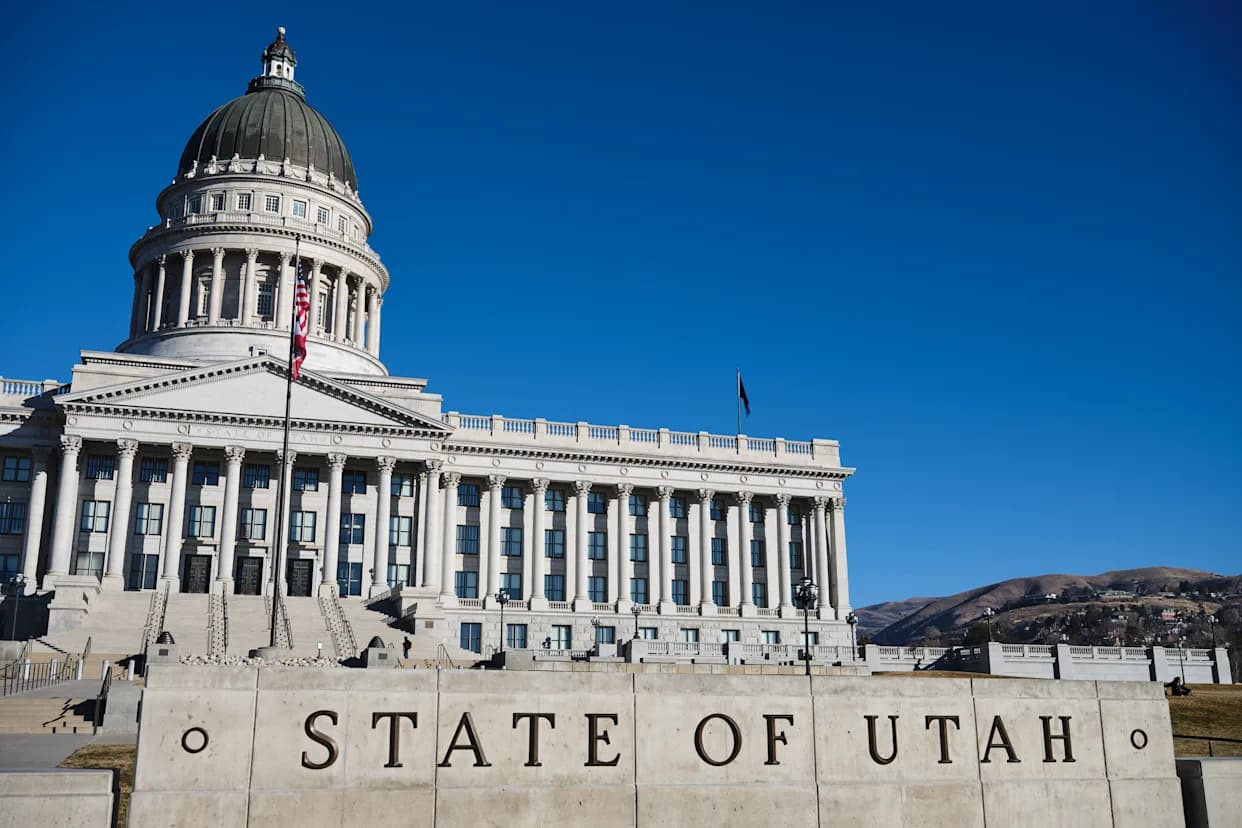
FILE - Flags fly at the Utah State Capitol, Jan. 18, 2026, in Salt Lake City. (AP Photo/Sydney Schaefer, File)(ASSOCIATED PRESS)
Two Utah Republican members of Congress filed a federal lawsuit Monday asking a judge to block the use of a court-imposed congressional map that could increase Democrats' chances of winning a Salt Lake City–area seat this November.
The complaint, brought by U.S. Reps. Celeste Maloy and Burgess Owens and joined by nearly a dozen local officials, argues that both the U.S. Constitution and the Utah Constitution vest redistricting authority in the state legislature and that "courts have no authority to draw a congressional map." The plaintiffs ask a federal court to restore the congressional lines approved by the Utah Legislature in 2021 unless lawmakers adopt new maps.
Background
State Judge Dianna Gibson ruled in August that the 2021 legislative map violated anti-gerrymandering provisions approved by Utah voters. In November, after rejecting a replacement plan passed by the Legislature, Gibson imposed an alternative map submitted by the lawsuit plaintiffs — the League of Women Voters of Utah and Mormon Women for Ethical Government.
The court-imposed map concentrates Democratic-leaning Salt Lake County largely within a single district instead of dividing it among all four congressional districts as under the 2021 plan. That change could make one Salt Lake-area seat significantly more competitive for Democrats.
"The map currently in place is fair and legal," said Katharine Biele, president of the League of Women Voters of Utah, responding to the new federal lawsuit.
Wider Context
Utah's dispute is one of several high-profile redistricting battles unfolding nationwide. Recent and ongoing cases include a New York judge ordering a redraw of a New York City district for unlawfully diluting minority votes, the U.S. Supreme Court reviewing a California congressional map approved by voters, and multiple challenges to a Missouri map passed by that state's legislature.
Redistricting tensions escalated after former President Donald Trump urged Texas Republicans to reconfigure districts for political advantage, triggering mid-decade map fights in multiple states. These disputes continue to shape the 2024 midterm landscape.
Timing And Stakes
Utah candidates typically must file for congressional races by Jan. 8, but state lawmakers postponed this year's filing deadline to March 13 for congressional hopefuls. Neither Maloy nor Owens has yet filed for reelection; the lawsuit states their districts "have been shifted to a point where the Representatives do not know which district to choose." The federal court's decision could affect filing choices, campaign strategies and the competitiveness of at least one Utah seat this fall.
The case is likely to proceed alongside other redistricting litigation across the country as courts and, potentially, the U.S. Supreme Court weigh how much authority judges should have in drawing congressional maps.
Help us improve.