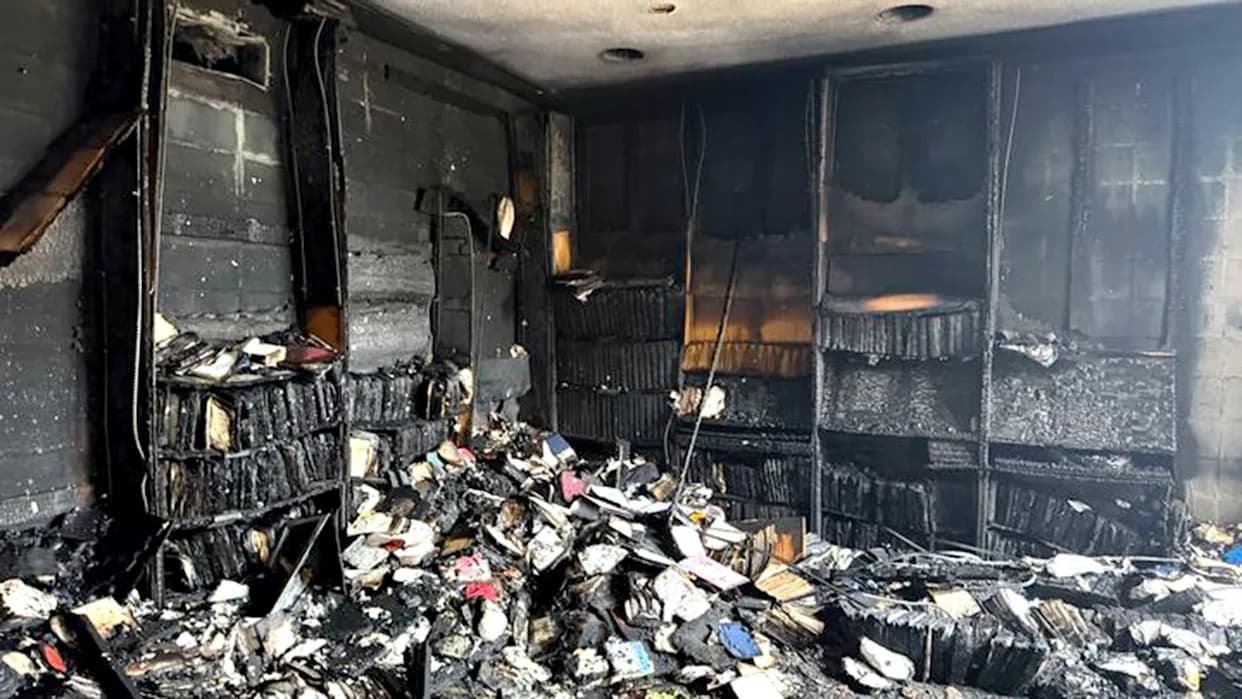
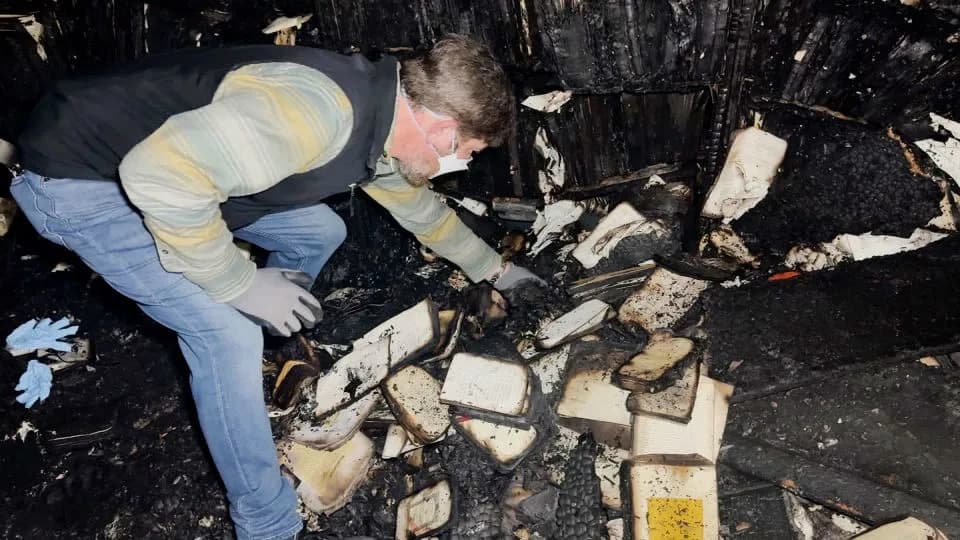
The arson of Beth Israel in Jackson, Miss., recalls the state’s long history of violent opposition to racial equality. In 1964, the Mississippi Freedom Summer — driven by SNCC, COFO, CORE, SCLC and the NAACP — brought Northern volunteers like Dick Landerman and Nick Fels to register Black voters amid intimidation and deadly attacks. The murders of James Chaney, Andrew Goodman and Michael Schwerner galvanized national outrage and helped propel the Voting Rights Act of 1965. Their legacy underscores that sustained, organized resistance can produce lasting change.
Lessons From Mississippi’s 1964 Freedom Summer — Why It Still Matters
The recent arson that destroyed Beth Israel, Jackson, Mississippi’s only synagogue, recalls the state’s long and violent history toward people who supported racial equality — a legacy stretching back more than six decades. That history helps explain why episodes of hate and intimidation still resonate so strongly today.
In the spring of 1964, two young college students from the North answered the call of the civil rights movement and went to Mississippi. Dick Landerman, a 19-year-old Duke University sophomore from Connecticut, and Nick Fels, a 21-year-old Harvard senior from New York, joined what became known as Mississippi Freedom Summer and unwittingly walked into a pivotal moment in American history.
Landerman described a largely apolitical family background; his commitment grew from personal relationships forged at an integrated YMCA camp and on Hartford basketball courts. He told me his joining the movement was driven by shame for not speaking up after a racist incident early in college. Fels said his interest in civil rights predated 1964; growing up in New York and idolizing Jackie Robinson as a devoted Brooklyn Dodgers fan helped shape his convictions.
Freedom Summer was organized by the Student Nonviolent Coordinating Committee (SNCC) and the Council of Federated Organizations (COFO), which united groups including the Congress of Racial Equality (CORE), the Southern Christian Leadership Conference (SCLC), and the NAACP with its Legal Defense Fund. By 1961, SNCC organizers had begun moving into Mississippi towns to register Black voters, but they faced poll taxes, literacy tests and widespread violence and intimidation.
Escalating Violence and a National Wake-Up Call
In 1963, Herbert Lee, a Black farmer working with organizers in Liberty, Mississippi, was shot and killed by a white politician. That same year a white sniper murdered NAACP field secretary Medgar Evers. Activists such as Fannie Lou Hamer and Lawrence Guyot were beaten and jailed. Churches were bombed, homes were burned and families suffered economic retaliation. Yet national media coverage and federal protection were limited.
SNCC strategist Robert Moses warned: "It is not possible for us to register Negroes in Mississippi... There is reason to believe that authorities in Mississippi will force a showdown over the right to vote in large numbers." Moses and local leaders decided to recruit mostly white, Northern, middle-class volunteers to attract national attention and to act as a tripwire against local white terrorism.
Like many volunteers, Landerman and Fels were Jewish; the movement also drew people of different races and faiths united by conviction. Many volunteers described their motivation in almost religious terms — a moral urgency to confront injustice that outweighed their personal risk.
The Murders That Changed the Nation
On June 21, 1964, three civil rights workers — James Chaney, a Black Mississippian, and two white volunteers, Andrew Goodman and Michael Schwerner — disappeared while traveling from Philadelphia, Mississippi, to Jackson. Neshoba County and Philadelphia city police officers, several with Ku Klux Klan ties, stopped the men on a traffic charge. After their release, Klan members working with law enforcement followed the trio, beat Chaney, shot all three men, and buried their bodies in an earthen dam.
Fels later recalled a terrifying encounter with a local sheriff who had a reputation for harassing civil-rights volunteers: "After directing us to get out of the car and show our IDs, he paused for a moment and then let us go. I have never forgotten the sense of panic." Visiting the dam where the bodies were hidden made the threat vivid and immediate for many volunteers.
The murders galvanized national opinion, intensified media attention, and helped build momentum for federal voting-rights legislation. The Voting Rights Act of 1965 followed, eliminating poll taxes and literacy tests and leading to a dramatic increase in Black voter registration across Mississippi and the broader South.
Lives After Freedom Summer
Despite the trauma, many volunteers stayed in Mississippi or continued public-service work afterward. Fels joined Friends of SNCC, participated in the Berkeley free-speech movement, graduated from Harvard Law School, clerked for U.S. Circuit Judge John Minor Wisdom — a noted opponent of segregation — and worked in legal aid. Landerman returned to Duke that December, organized on campus, confronted segregationist students in debate, and later spent years community organizing in a predominantly white, working-class neighborhood in Durham, North Carolina.
Landerman today reflects: "When Bob Moses entered Mississippi in 1961, Black people had lived for decades under a brutal and oppressive system where change seemed inconceivable... Together with local Black people, a [SNCC] staff of 41 built a movement capable of making Freedom Summer happen and bringing voting rights to Black people across the South."
Why It Still Matters
Fels, now retired and serving on the board of Lawyers Defending American Democracy, notes that the threats faced in Mississippi — violence and overt suppression — differ from some modern tactics. Still, he believes the core lesson remains: organized resistance and sustained legal and civic work can produce long-term change. Recent acts of hate, like the synagogue arson in Jackson, remind us that the past is not remote. Vigilance, solidarity and civic engagement are necessary to defend rights gained through struggle.
Mark I. Pinsky is a journalist and author based in Durham, N.C.
Help us improve.