The interruption of a Sunday service at Cities Church in St. Paul by anti-ICE protesters — and the subsequent federal arrests — is notable because in-church demonstrations remain rare. Legal experts say such disruptions can violate worshippers' religious freedom and may trigger serious federal charges under a post–Civil War statute. The episode joins a long history of protest intersecting with religious life and raises fresh questions about buffer zones, security and how to balance free speech with sanctuary protections.
Rare In-Church Protest in St. Paul Highlights Legal, Historical Tensions Over Worship Disruptions
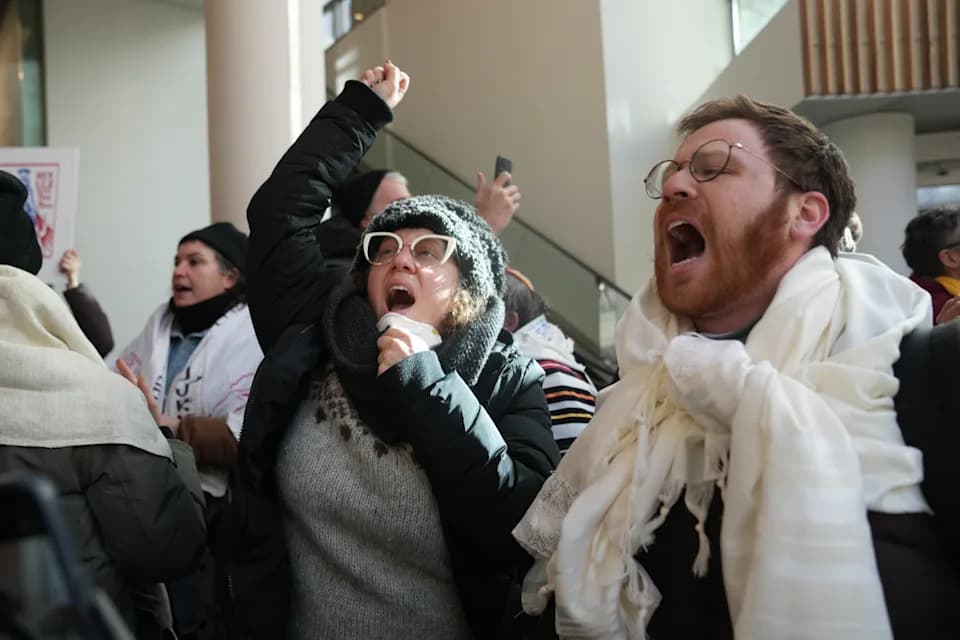
Protesters against Federal immigration agents gather at Target, Friday, Jan. 23, 2026, in Minneapolis. (AP Photo/Abbie Parr)(ASSOCIATED PRESS)
Anti-ICE protesters who interrupted a Sunday service at Cities Church in St. Paul, Minnesota — a Southern Baptist congregation with a pastor employed by U.S. Immigration and Customs Enforcement — were arrested on federal charges, drawing renewed attention to a rare but consequential form of civil disobedience: demonstrations inside houses of worship.
What Happened
About three dozen demonstrators entered Cities Church during a Sunday service. Some approached the pulpit and chanted loudly, invoking the name of Renee Good, a woman recently fatally shot by an ICE officer in Minneapolis. Three protesters were later arrested on federal charges under a post–Civil War statute originally enacted to combat vigilante violence; the law can carry penalties of up to 10 years in prison, and longer if the offense involves injury or property destruction.
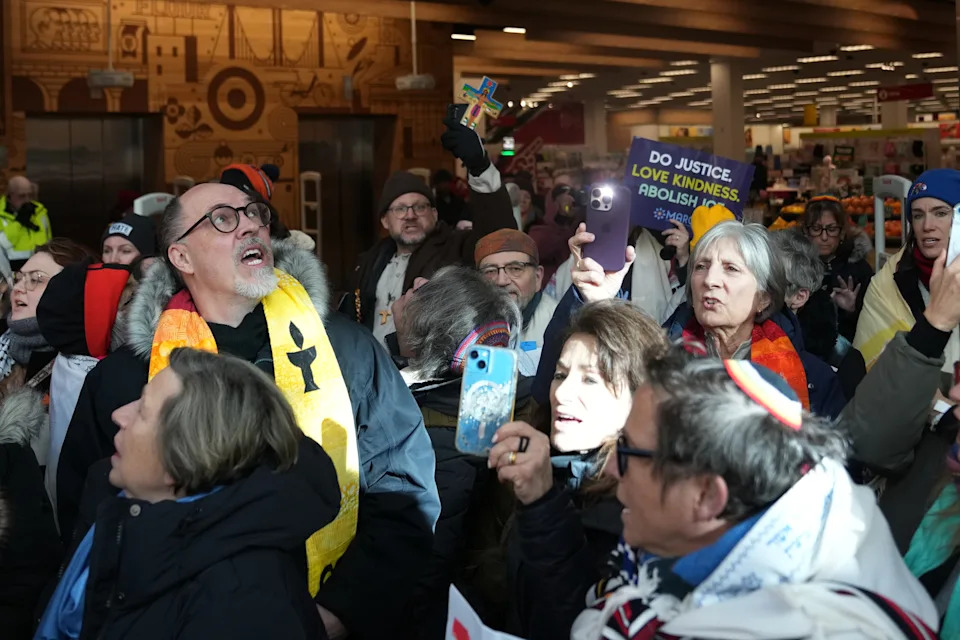
Protesters gather at Target, Friday, Jan. 23, 2026, in Minneapolis. (AP Photo/Abbie Parr)(ASSOCIATED PRESS)
Legal and Constitutional Questions
Charles C. Haynes, a senior fellow for religious liberty at the Freedom Forum, said disrupting a worship service is unlawful and likely intended to provoke enforcement and public attention. "Civil disobedience by definition involves breaking the law to draw attention to a cause," he noted, but added that civil rights law should protect worshippers from interference in their houses of worship.
Legal scholars caution that rules aimed at protecting houses of worship — such as protest-free buffer zones — need careful drafting. Vikram Amar and Alan Brownstein observed that the "devil will be in the details" when lawmakers try to balance free-speech protections with the safety and religious liberty of worshippers.
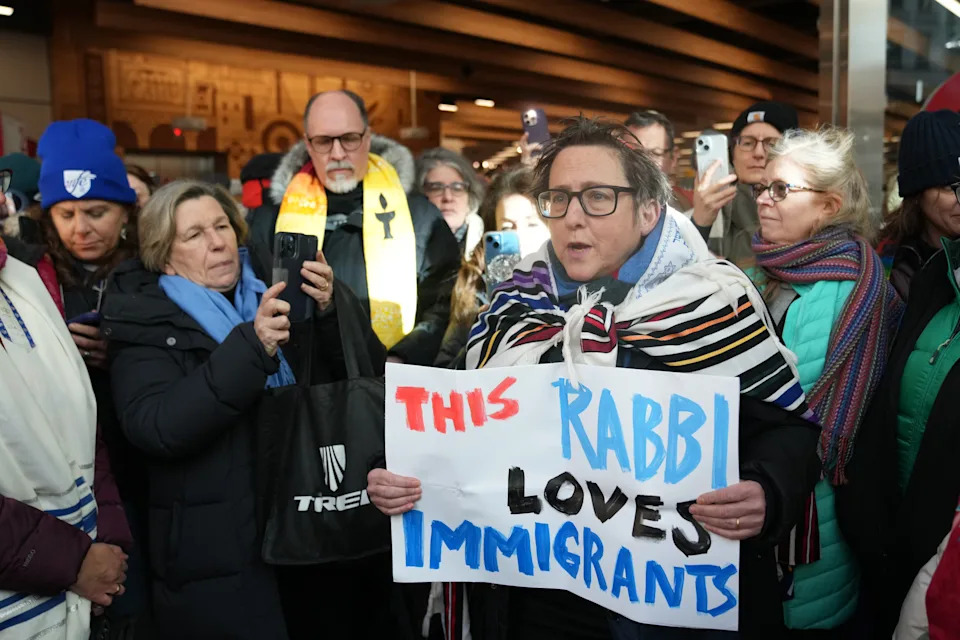
CORRECTS NAME SPELLING: Rabbi Sharon Kleinbaum and protesters put on their talents as they gather at Target, Friday, Jan. 23, 2026, in Minneapolis. (AP Photo/Abbie Parr)(ASSOCIATED PRESS)
History of Worship Disruptions
Interruptions of religious services are uncommon but long-standing in American history. Examples include radical Quakers who challenged established churches in colonial times, the eighteenth-century walkout that helped found the African Methodist Episcopal Church, the civil-rights era "kneel-ins" at segregated churches, and the 1989 "Stop the Church" demonstration by ACT UP at St. Patrick's Cathedral.
Groups such as Westboro Baptist Church have mounted highly controversial protests outside sanctuaries and at funerals; the U.S. Supreme Court has protected some of those protests, while states have restricted their timing and location. More recently, anti-Israel demonstrations outside New York synagogues prompted proposals for 25-foot buffer zones around houses of worship.
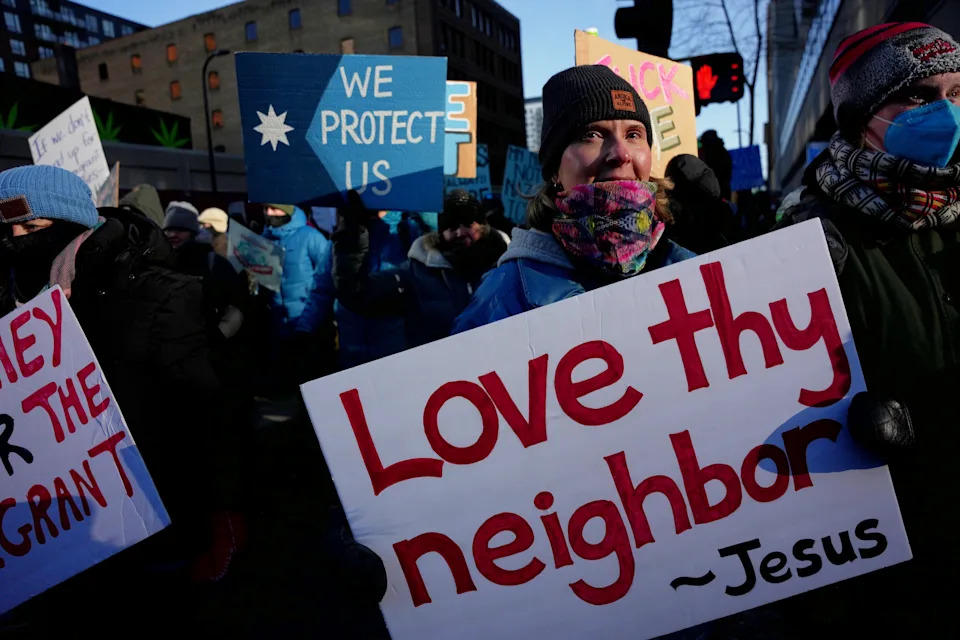
A protester holds a sign reading "Love thy neighbor - Jesus" during a rally against federal immigration enforcement on Friday, Jan. 23, 2026, in Minneapolis. (AP Photo/Angelina Katsanis)(ASSOCIATED PRESS)
Reactions From Religious Leaders
Many faith leaders condemned the in-church protest. Kevin Ezell, president of the Southern Baptists' North American Mission Board, called the action a "desecration of a sacred space" that intimidated families. Other clergy who oppose current immigration enforcement expressed discomfort with the tactic, fearing it could become widespread across the political spectrum.
Bishop Mariann Budde of the Episcopal Diocese of Washington, D.C., who traveled to Minnesota to protest ICE, stressed that "no one should fear for their safety or security in a house of worship" and urged protection for the sanctity of sacred spaces. The Minnesota Council of Churches, which supported a separate boycott action, declined to comment on the arrests.
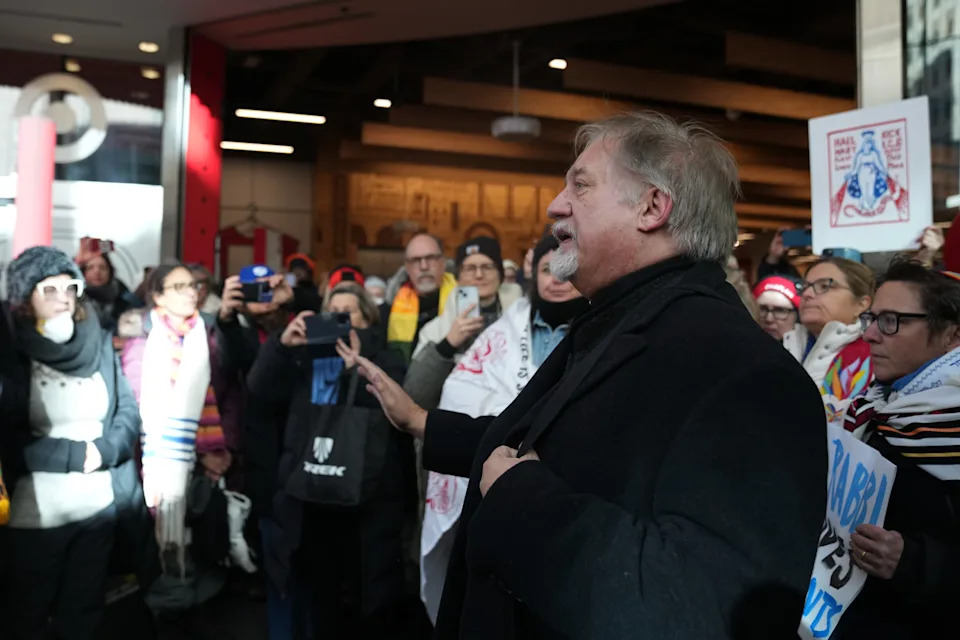
Paster Grant Stevenson joins other protesters against Federal immigration agents Target, Friday, Jan. 23, 2026, in Minneapolis. (AP Photo/Abbie Parr)(ASSOCIATED PRESS)
Security Concerns and Enforcement Context
Religious congregations have tightened security after a rise in deadly attacks and other threats. Many faith leaders were alarmed when federal authorities said last January that immigration officials could make arrests in churches, schools and hospitals — removing an informal barrier that had long discouraged enforcement in sensitive places. So far, no immigration raids during church services have been reported.
The Cities Church case underscores broader tensions: how to protect free speech and protest rights while preserving the safety, security and religious freedom of worshippers. For some activists, deliberately provoking arrest inside a sanctuary is a calculated tactic to dramatize what they view as urgent injustices; for many religious leaders, the sanctity of worship must be preserved.
Note: Federal charges in this case were brought under a statute originally designed to counter post–Civil War vigilante violence; reporting on legal outcomes and court proceedings is ongoing.
Help us improve.