Elon Musk told the "Moonshots with Peter Diamandis" podcast that humans are 'pre‑programmed to die,' but argued that extending healthy lifespan is likely an engineering problem tied to a body‑wide timing mechanism. He suggested identifying that internal 'clock' could enable longer lifespans and predicted AI and robotics will improve surgical outcomes and broaden access to care within roughly five years. Musk also cautioned that extreme longevity without preserved cognition would be undesirable.
Elon Musk: 'We're Pre‑Programmed To Die' — But Extending Lifespan Is An Engineering Challenge
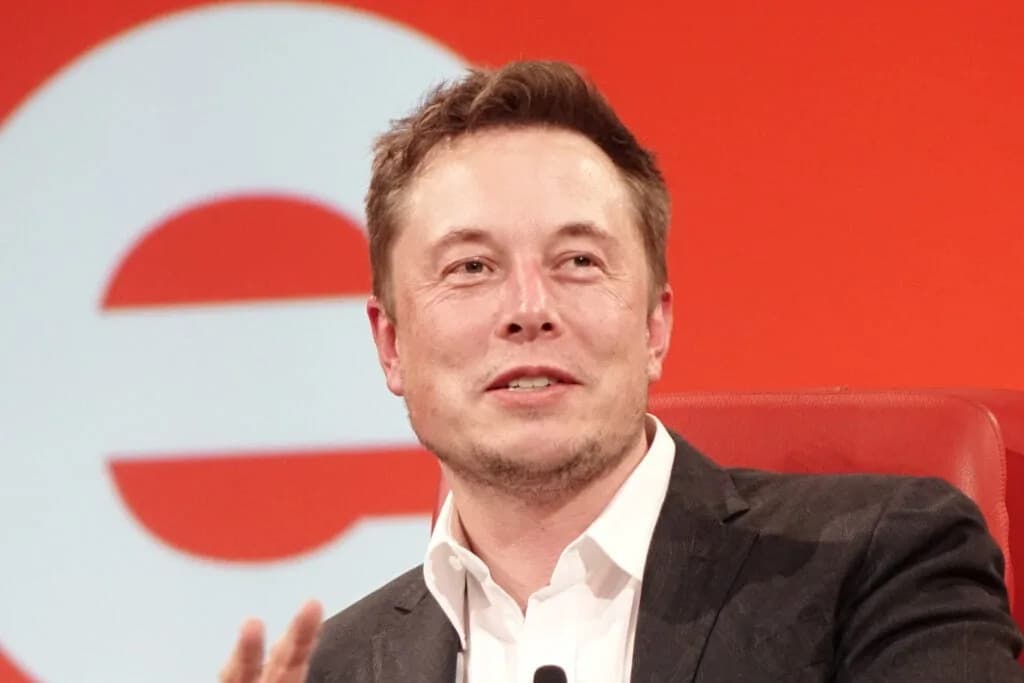
Elon Musk, the 54-year-old CEO of Tesla (NASDAQ: TSLA), told the "Moonshots with Peter Diamandis" podcast that humans appear to be biologically "pre‑programmed to die," but that extending healthy lifespan is more an engineering challenge than an unsolvable medical mystery.
What Musk Said
Musk argued that aging behaves like a coordinated, body‑wide process rather than a random accumulation of isolated failures. He pointed to the uniformity of physical aging — for example, we rarely see an old left arm and a young right arm — as evidence that a central timing mechanism could regulate decline across tissues.
'You're pre‑programmed to die. And so if you change the program, you will live longer,' Musk told host Peter Diamandis.
He suggested that identifying that internal "clock" might unlock ways to extend lifespan, and said rapid advances in artificial intelligence and robotics could accelerate progress in medicine.
AI, Robotics and the Future of Surgery
Musk predicted that AI-driven automated systems combined with robotic precision will soon outperform many human surgeons and meaningfully improve outcomes. He cited laser-assisted in situ keratomileusis (LASIK) as an example of a procedure already made safer and more consistent by automation.
'I wouldn't want the best ophthalmologist with the steadiest hand out there with a hand laser on my eyeball,' Musk said, arguing that automated systems will deliver better consistency and potentially broaden access to high-quality care.
He added that, in his view, automation could democratize care: 'Everyone will have access to medical care that is better than what the president receives right now.'
Reservations About Extreme Longevity
Musk also warned that very long lives would not be desirable if cognitive function is not preserved. On the same podcast he said he would not want to live to 100 if dementia left him unaware or dependent: 'I don't think I'd want to live to be 100 if I had dementia or didn't know what was going on. I don't want to be a burden … I'd prefer to be dead.'
Scientific Context
Researchers have explored how body-wide timing mechanisms — including circadian clock genes — interact with age-related pathways. An October report in the peer-reviewed journal Frontiers in Aging described interactions between circadian clocks and molecular aging processes, highlighting systemic timing mechanisms that coordinate biological functions across cells and tissues.
That said, most gerontology experts emphasize that aging is multifactorial: genetics, metabolism, cellular damage, immune function, and environmental factors all play roles. The idea of a single, easily identified 'master clock' remains a hypothesis that would require extensive experimental validation.
Why It Matters
Musk frames longevity as solvable engineering work rather than an inscrutable biological mystery, linking long-term aging research with near-term technological gains in AI and robotics. His comments underscore both the promise of new tools to improve health care and the ethical, social, and clinical questions that come with efforts to extend human life—especially if cognitive health cannot be preserved.
Source: Remarks on the "Moonshots with Peter Diamandis" podcast; reporting originally published by Benzinga.
Help us improve.