ALMA's ARKS survey used all 66 antennas to image 24 faint debris discs around young stars, revealing a chaotic "teenage" stage of planetary systems marked by rings, halos, arcs and clumps. These structures indicate a collision-dominated era when orbits were rearranged and large impacts shaped system architecture — processes that likely also influenced the Kuiper Belt and the Moon-forming impact in our Solar System. The results, published Jan. 20 in Astronomy & Astrophysics, bridge the observational gap between bright protoplanetary discs and mature planetary systems.
ALMA Captures the Chaotic 'Teenage' Years of Planet Formation — New Images Reveal Collision-Driven Evolution
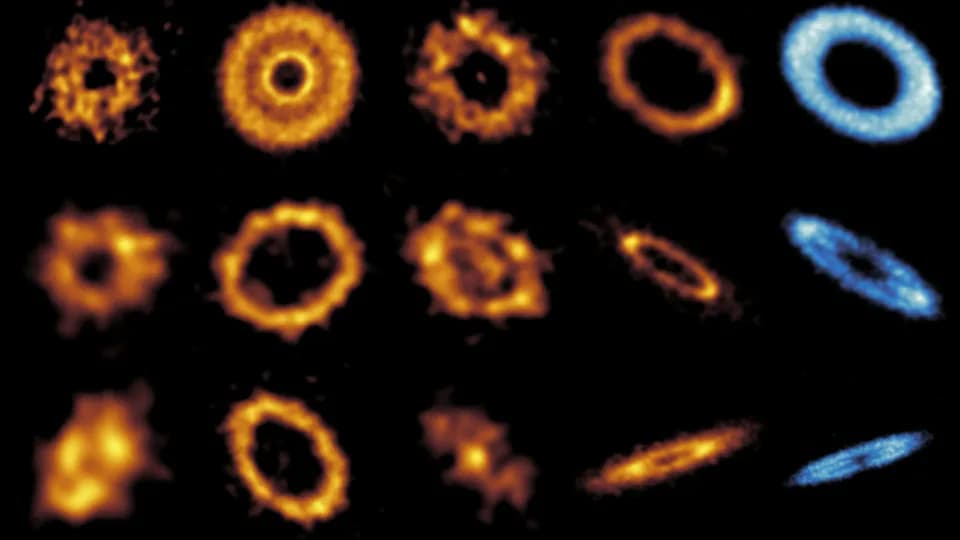
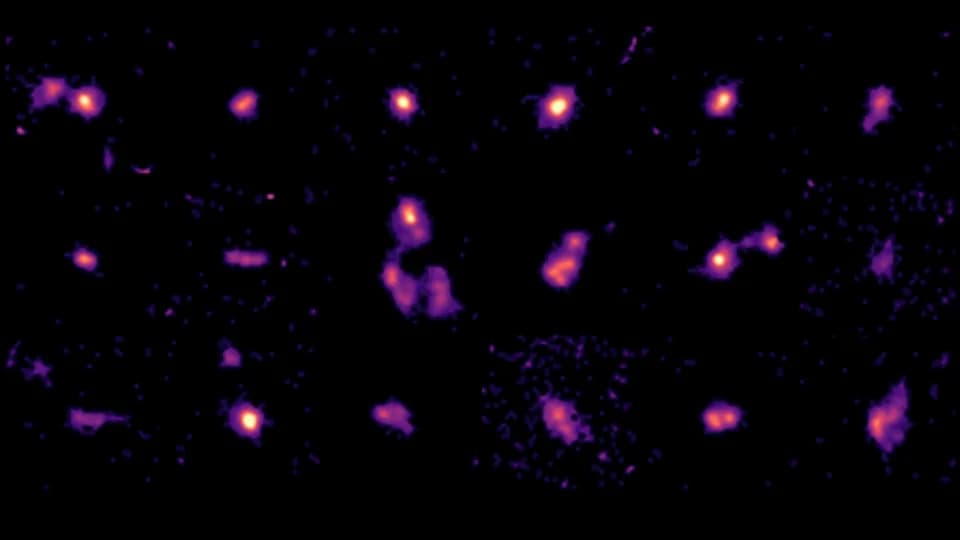
Protoplanetary disks seen by ALMA as part of the ARKS project. | Credit: Sebastian Marino, Sorcha Mac Manamon, ARKS collaboration
Using the Atacama Large Millimeter/submillimeter Array (ALMA), astronomers have for the first time captured high-resolution snapshots of the turbulent "teenage" phase of planetary systems — a collision-dominated era when young planets and leftover debris violently reshape orbits and build larger bodies.
The images come from the Resolve ExoKuiper Belt Substructures (ARKS) survey, which targeted 24 faint debris discs around young stars with ALMA's 66 radio antennas in Chile's Atacama Desert. These discs represent a later stage of planetary evolution, after the bright, gas-rich protoplanetary phase, when collisions between planetesimals, migrating planets and other dynamical processes dominate.
What ALMA Saw
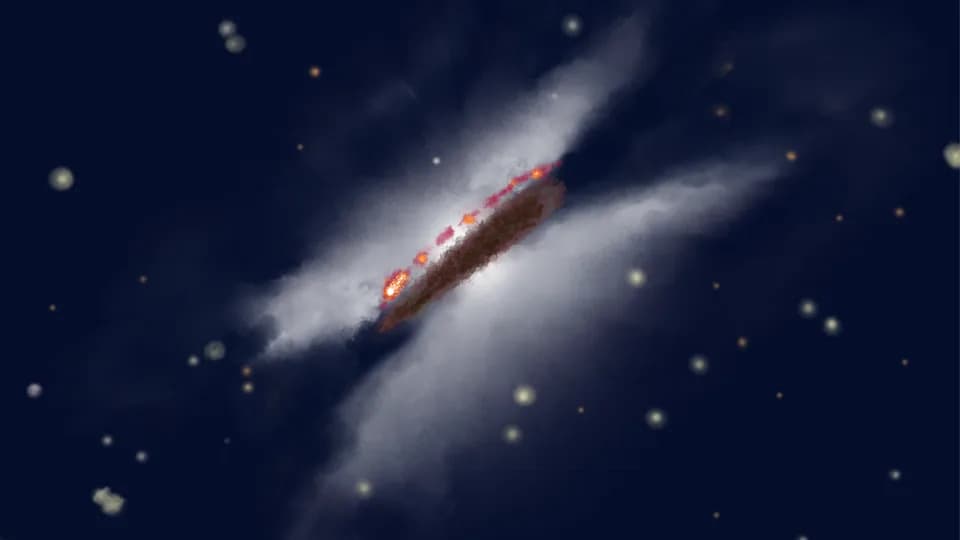
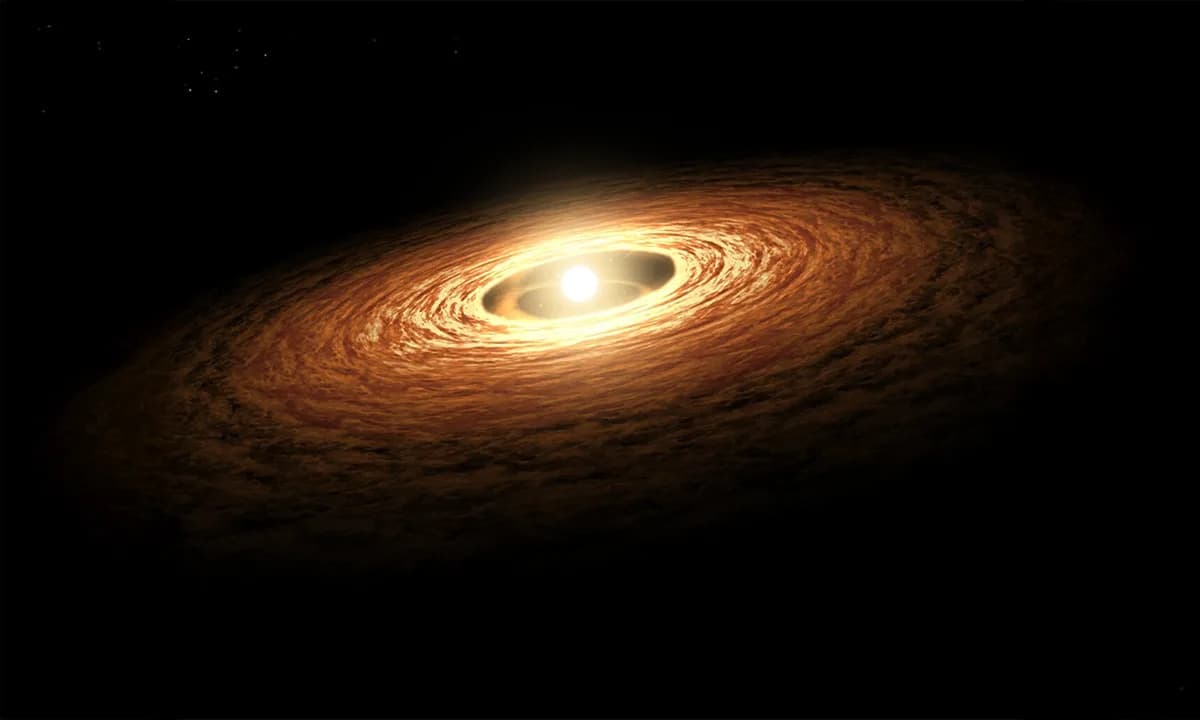
By collecting radio-wavelength emissions from dust grains and molecular gas, ALMA's interferometry reconstructed detailed disc architectures that would be invisible to single dishes. The maps reveal a wide variety of structures: multiple concentric rings, broad smooth outer halos, and surprising asymmetric features such as arcs and clumps.
"We've often seen the 'baby pictures' of planets forming, but until now the 'teenage years' have been a missing link," said Meredith Hughes, co-leader of the ARKS project and professor at Wesleyan University. "This work gives us a new lens for interpreting lunar cratering, the dynamics of the Kuiper Belt, and how planets both large and small grow."
Scientific Significance
Debris discs are typically thousands of times fainter than protoplanetary discs, which made them difficult to image until ALMA's sensitivity and interferometric capabilities matured. The variety of substructures observed supports the idea that the period after planet formation is dynamically active — with migrating planets, scattered orbits, and energetic collisions sculpting the system.
These findings have direct relevance to our own Solar System. The Kuiper Belt — the icy region beyond Neptune — and the giant impact thought to have formed Earth's Moon are both signatures of a similarly violent early epoch. The ARKS results help fill the observational gap between young, gas-rich systems and the mature planetary systems we see today.
"These discs record a period when planetary orbits were being scrambled and huge impacts, like the one that forged Earth's Moon, were shaping young solar systems," said Luca Matrà of Trinity College Dublin.
ARKS team members also emphasize that some features may point to as-yet-unseen young planets. "With ALMA we can characterise structures that hint at planets' presence, and we are combining these data with direct imaging and radial-velocity searches to find those worlds," said Thomas Henning of the Max Planck Institute for Astronomy.
The team's results were published on Jan. 20 in the journal Astronomy & Astrophysics.
Help us improve.