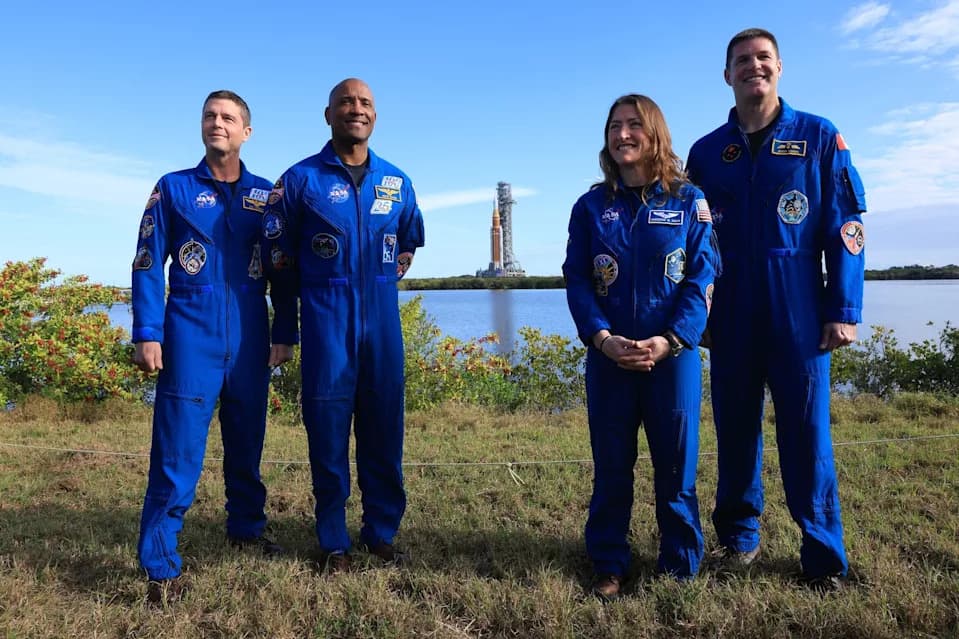
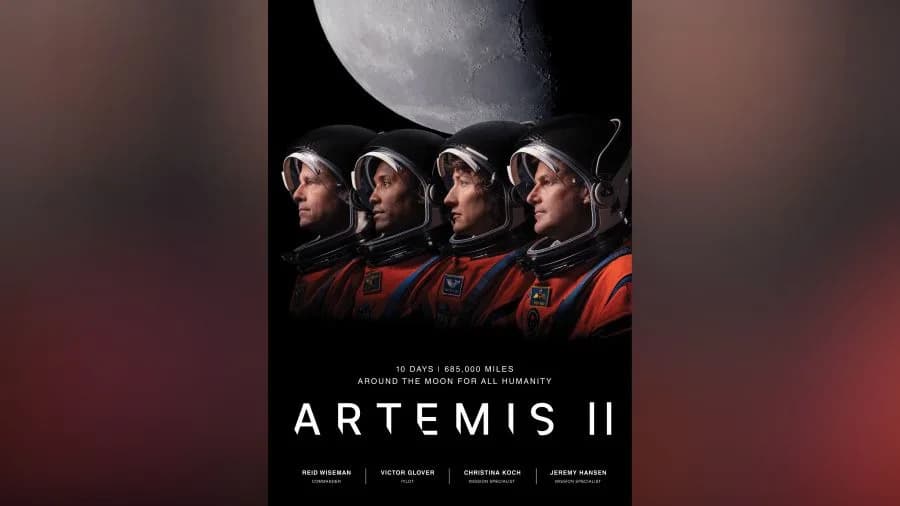
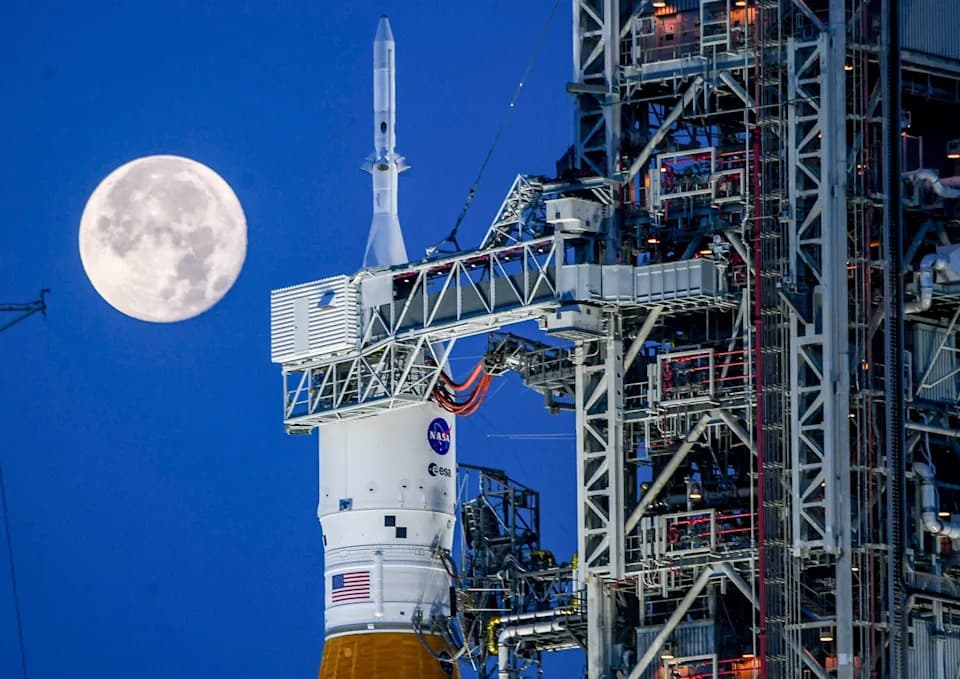
NASA's Artemis II will carry four astronauts — Reid Wiseman, Victor Glover, Christina Hammock Koch and Jeremy Hansen — on a flyby that may let humans see large regions of the lunar far side in direct sunlight for the first time. The mission could reveal roughly 60% of the far side previously unseen, including the nearly 600-mile-wide Mare Orientale basin. Crew members will spend about three hours on focused visual and photographic observations, using geology training and science checklists to identify targets for future missions.
Artemis II Could Reveal the Moon’s Hidden Face — Mare Orientale and Far-Side Regions May Be Seen by Humans for the First Time
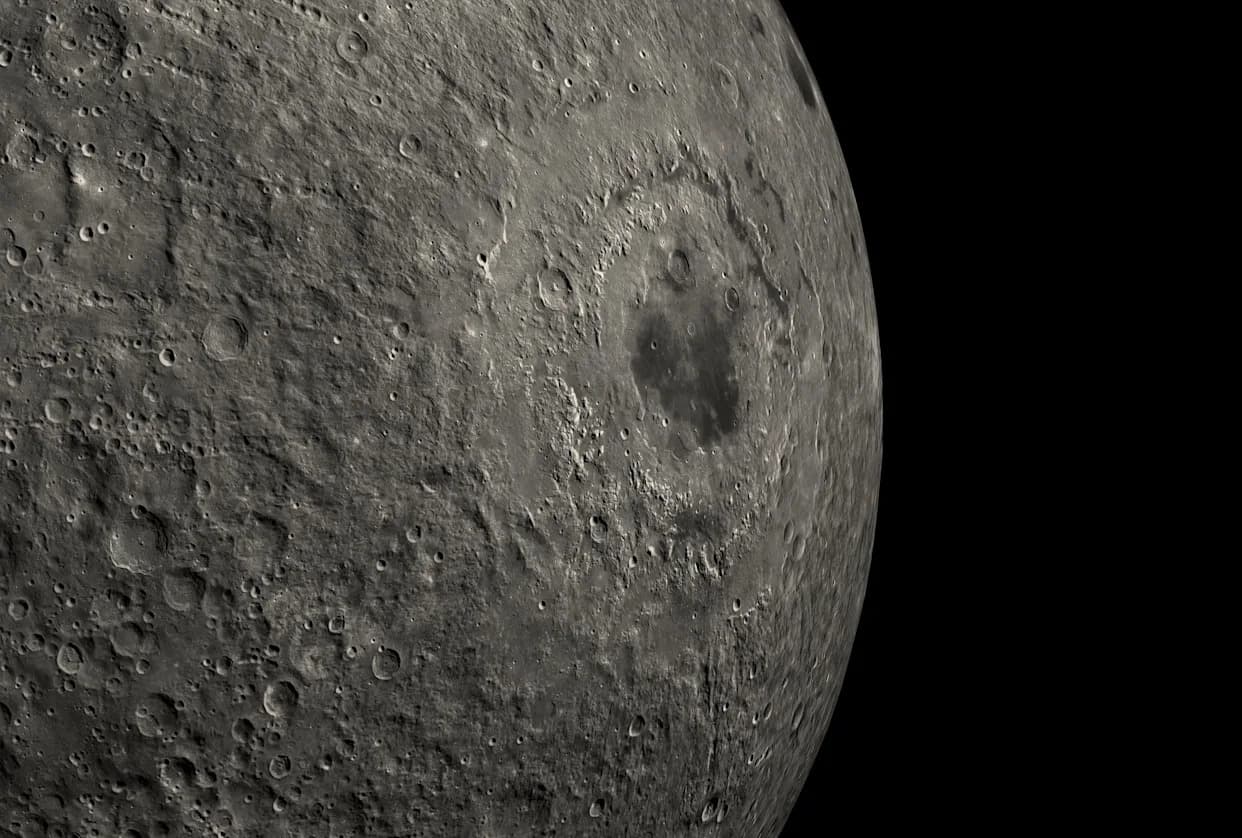
The Lunar Reconnaissance Orbiter, an uncrewed NASA probe, captures images of Mare Orientale, a lunar site never seen directly with human eyes. - NASA GSFC / Arizona State University / Getty Images
NASA's Artemis II mission could give humans their first direct, sunlit view of large swaths of the lunar far side — including the nearly 600-mile-wide Mare Orientale basin — when the Orion capsule carrying four astronauts loops around the Moon.
What to Expect on Artemis II
Astronauts Reid Wiseman (commander), Victor Glover, Christina Hammock Koch and Jeremy Hansen will travel beyond low Earth orbit and swing past the Moon’s far side. Pending final checks and favorable weather, NASA had targeted a possible launch date as early as Feb. 6. During the flyby, mission planners expect the crew to spend roughly three hours focused on visual and photographic observations through Orion’s windows.
Why the Far Side Matters
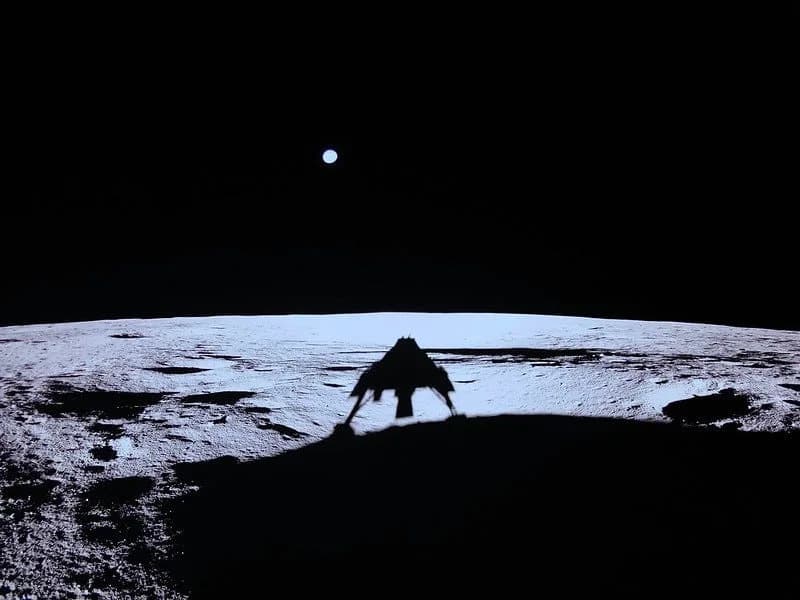
The lunar far side — long mislabeled the "dark side" — receives the same sunlight as the near side but remains hidden from direct Earth view because the Moon rotates once per orbit, so the same face always points to Earth. That synchronous rotation left the far side largely unexplored by human eyes until probes and orbiters provided images.
Mare Orientale: A Hidden Bullseye
One of the far side’s most dramatic features is Mare Orientale, a concentric ringed basin nearly 600 miles across. Formed by a massive impact early in the Moon’s history, Orientale’s rings and flooded basin are best appreciated from above — a viewpoint that Artemis II may provide to human observers for the first time.
"Orientale has never been seen by human eyes," said Reid Wiseman, commander of NASA's Artemis II.
Science From Sight
Although robotic missions have mapped the far side in high detail, NASA emphasizes that unaided human observation can reveal subtle color and grayscale variations that cameras and automated surveys might miss. Astronauts trained in geology will scan for differences in brightness, texture and crater density to help identify rock types, relative ages and priority targets for future missions.
Artemis II astronauts Jeremy Hansen, left, Christina Koch, center, and Jenni Gibbons, a backup crewmate, get hands-on geology training on a field trip to Iceland.
During observations, the crew will alternate between looking with their own eyes, photographing features with onboard cameras and relaying real-time impressions to flight controllers in Houston. Science teams will provide checklists and target suggestions, but crew members will also have latitude to investigate surprising or interesting details they spot.
Why This Could Be Unique
Mission planners estimate Artemis II has a high likelihood of exposing roughly 60% of the far side to direct human observation for the first time — a much larger fraction than Apollo-era flybys, which typically saw only slivers of the hemisphere in sunlight. Those earlier missions were timed to keep Apollo landing sites on the near side in daylight, leaving the far side often in shadow.
Context: Communications and Prior Landings
Historically, the Moon’s far side presented a communications barrier: it blocks direct radio contact with Earth. In 2018 China launched the Queqiao relay satellite into a halo orbit beyond the Moon to enable communications, and in January 2019 the Chang’e 4 mission achieved the first robotic landing on the far side. These advances made robotic exploration possible and provide context for future human-enabled missions.
Looking Ahead
Beyond immediate scientific value, Artemis II’s observations could help identify promising landing sites and science targets for later Artemis missions. By turning the familiar gray disk of the Moon into a more detailed and varied world, this mission could reshape how we prioritize future exploration.
"We hope it's not 'the dark side,'" said Christina Hammock Koch. "We hope it's the lit far side."
Help us improve.