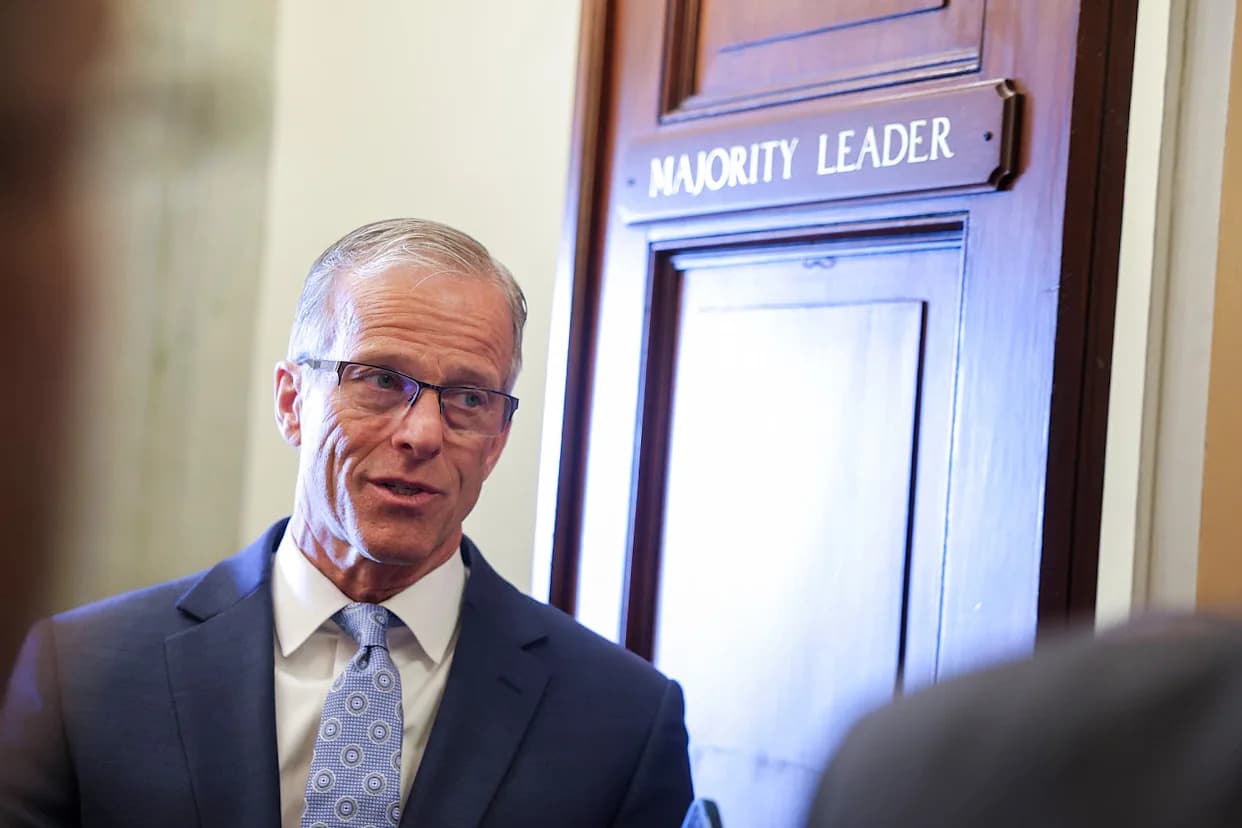
The Bureau of Land Management has reversed a 2022 decision and now rules that bison are not "domestic livestock" under federal grazing regulations, blocking American Prairie’s plan to graze bison on certain BLM allotments. American Prairie manages 603,657 acres through purchases and leases and aims to build a 5,000-square-mile reserve to support up to 5,000 bison and other prairie species. The new rule limits permits to animals used for production purposes and has drawn support from state ranching interests and criticism from conservation advocates, raising questions about public-lands policy and property rights.
BLM Reverses Course: Rules Bison Aren't Domestic Livestock, Stalls Massive Private Prairie Reserve
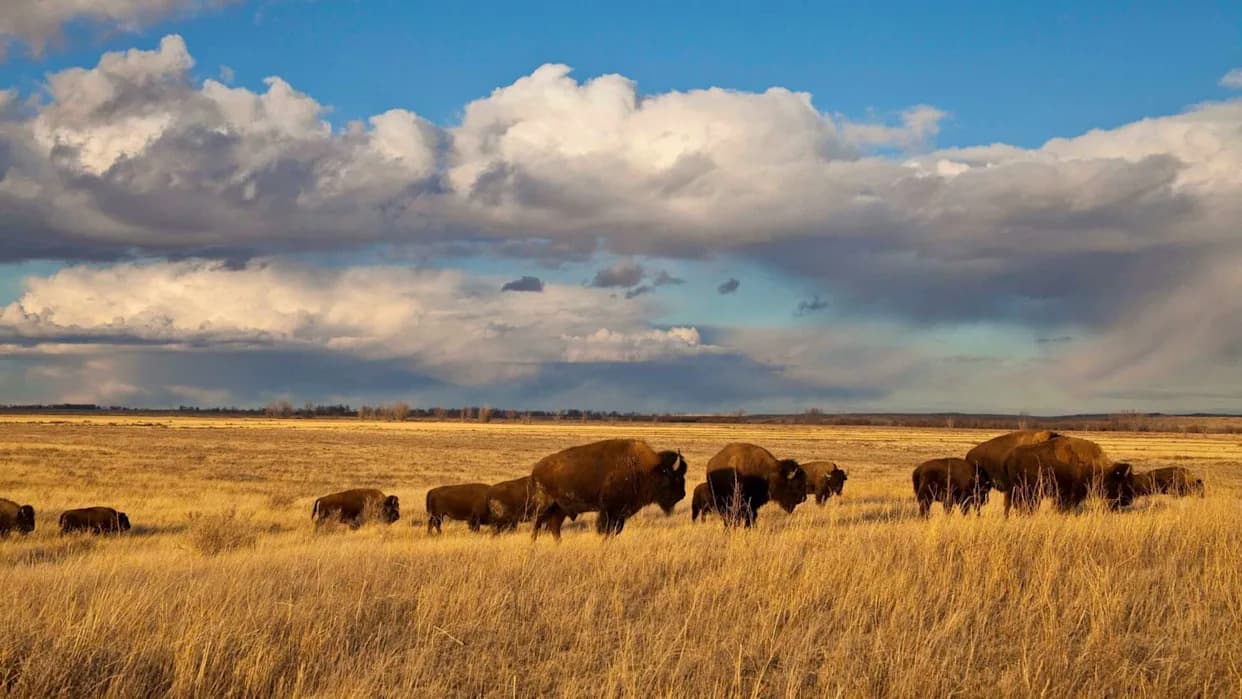
Bureau of Land Management Says Bison Are Not Livestock, Obstructing Plans for a Huge Private Prairie Reserve
An ambitious, privately funded effort to assemble a 5,000-square-mile prairie reserve in eastern Montana — roughly one-and-a-half times the size of Yellowstone National Park — has been set back by a new Bureau of Land Management (BLM) ruling that finds bison are not "domestic livestock" under federal grazing regulations. The nonprofit American Prairie hopes the reserve will support a free-ranging herd of up to 5,000 bison and help restore habitat for elk, pronghorn, sage grouse, prairie dogs and, potentially, large predators.
Background
American Prairie builds contiguous habitat by combining voluntary agreements with local ranchers and strategic land purchases. The group pays ranchers for wildlife-friendly practices on private parcels and acquires private lands to link habitat. Since 2004, American Prairie has purchased 167,070 acres and leased 436,587 acres of public land, giving it a current habitat base of 603,657 acres.
Montana contains extensive federally managed lands. The BLM oversees more than 8 million acres in the state and issues more grazing permits there than in any other state. Across Montana and the Dakotas the agency authorizes about 1.1 million animal unit months (AUMs) — roughly the equivalent of grazing for 90,000 cows and their calves for a year.
Policy Change and Timeline
In 2022 the BLM approved American Prairie's request to change the class of grazing animals on certain allotments from cattle to "domestic indigenous livestock (bison)," concluding there was no resource-based reason to bar bison so long as owners met regulatory requirements. That approval was contested by the Montana Stockgrowers Association and backed by state leaders including Governor Greg Gianforte and Attorney General Austin Knudsen.
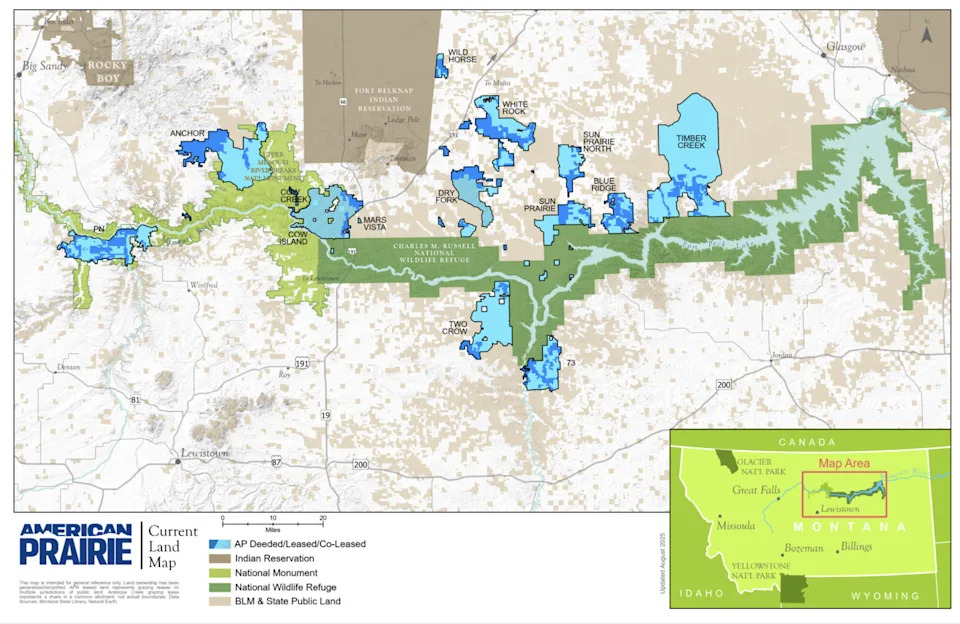
American Prairie(American Prairie)
Interior Secretary Doug Burgum ordered the BLM in December 2025 to reconsider the 2022 decision. The new BLM ruling issued the following week reverses the earlier position, concluding that bison are not cows, sheep, horses, burros or goats and therefore do not qualify as domestic livestock under the agency's rules. The agency said it will issue grazing permits only where the animals are raised for production-oriented purposes such as meat, milk, fiber or other animal products.
Legal and Historical Context
The question is not straightforward. A recent Congressional Research Service report cites a 1976 Department of the Interior Office of Hearings and Appeals decision that found bison may be treated as "livestock" under the Taylor Grazing Act when they are managed in ways substantially similar to livestock and share key characteristics. American Prairie argues it meets those criteria: it actively manages its herd and authorizes annual harvests to support herd health and fund conservation work.
Reactions
Austin Knudsen, Montana Attorney General: "Canceling the American Prairie Reserve's bison grazing permit will help to protect the livestock industry and ranching communities in Northeastern Montana."
Alison Fox, CEO, American Prairie: "We've had permission to graze bison on some of these allotments for 20 years, complied with the law and prioritized transparency. This creates uncertainty for livestock owners across Montana who depend on public lands for grazing."
Supporters of the BLM reversal say the decision protects traditional ranching economies and clarifies regulatory boundaries. Opponents argue the nonprofit is operating through voluntary, market-based transactions that respect private-property rights and provide conservation benefits to public rangelands.
Implications
The ruling complicates American Prairie's plans to expand free-ranging bison across leased public lands and adds legal uncertainty for other private conservation efforts seeking to use federal allotments. The dispute raises broader questions about how federal grazing rules classify animals, how public land use decisions are made, and what balance should be struck between large-scale conservation projects and the interests of local ranching communities.
Bottom line: The BLM's reversal narrows the circumstances under which bison can graze on federal allotments and puts a major private prairie restoration project on uncertain footing while setting up potential legal and policy battles over public-land grazing and conservation.
Help us improve.