The Supreme Court's conservative majority showed unusual reluctance to endorse President Trump’s attempt to remove Federal Reserve Governor Lisa Cook, raising alarms about the potential harm to the Fed and the Court's reputation. The removal was announced via a Truth Social post and Cook had no prior chance to respond, prompting questions about process and motive. Solicitor General D. John Sauer faced sharp skepticism as justices highlighted economic risks, the unprecedented nature of the action, and the danger to institutional independence. The dispute arrives amid broader battles over expansive presidential power at the Court.
Supreme Court Conservatives Push Back on Trump’s Bid to Oust Fed Governor, Warning of Risk to Fed Independence
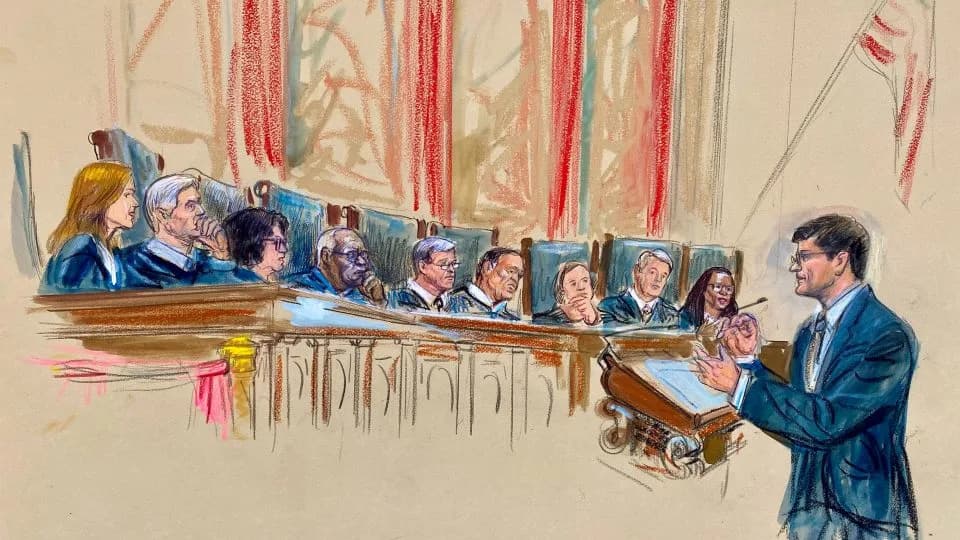
Supreme Court arguments on Trump's effort to fire Fed Governor Lisa Cook on January 21, 2026. US Solicitor General and former Trump personal attorney D. John Sauer argues before the justices. - Dana Verkouteren
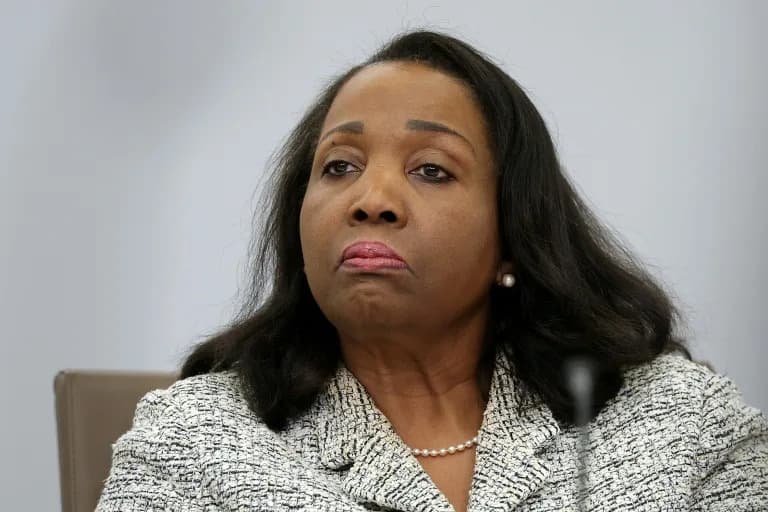
The Supreme Court's conservative majority, which has often been deferential to President Donald Trump, signaled unusually strong concern during arguments over his effort to remove Federal Reserve Governor Lisa Cook. Justices from across the ideological spectrum warned that endorsing the removal could damage the Fed's institutional independence and the Court's own standing.
A Removal Announced on Social Media, With No Opportunity to Respond
The dispute began after a Truth Social post last August announced the president's intent to remove Governor Cook. The announcement, and Cook's lack of a chance to answer the allegations beforehand, drew sharp questions from the justices about process and motive. Lower courts have temporarily blocked the removal and allowed Cook to remain on the Board while litigation proceeds.
Solicitor General Faces Unusual Skepticism
D. John Sauer, once a personal attorney to Mr. Trump and now the U.S. solicitor general, advanced an expansive view of presidential removal power and met uncommon pushback. Sauer argued that alleged deceit or gross negligence by a financial regulator can justify removal for cause, pointing to questions in mortgage paperwork submitted by Cook in 2021 as evidence of unfitness.
Justice Amy Coney Barrett warned that economists had predicted the removal could 'trigger a recession,' and said she did not want to be put in the position of quantifying market risk.
Sauer sought to minimize market concerns by noting that stocks rose for three days after the August announcement. But multiple justices tested whether a president's unilateral declaration of cause, without process or meaningful review, would effectively eliminate the Fed's longstanding insulation from political pressure.
Historic and Institutional Concerns
Justices repeatedly returned to the unprecedented nature of the case: since the Fed's creation in 1913, no officer had been removed in this fashion. Chief Justice John Roberts pressed whether an inadvertent paperwork error should suffice as cause, while Justice Brett Kavanaugh warned that the administration's standard would 'weaken, if not shatter, the independence of the Federal Reserve.' Justice Sonia Sotomayor emphasized that the unprecedented action was a function of what the president did, not what Governor Cook had done.
Broader Context: A Wave Of Expansive Executive Claims
The dispute over Cook sits amid a string of high-profile Supreme Court cases in which the Court has been asked to define the scope of presidential power. Recent rulings and pending cases — including those involving immunity claims, limits on nationwide injunctions, challenges to independent agencies, and emergency tariffs — have shaped an expanded view of executive authority that the administration has consistently advanced.
Cook's Defense and the Stakes for the Fed
Cook's lawyers say any inconsistencies in mortgage paperwork were inadvertent, predate her 2022 appointment, and do not amount to cause for removal. Paul Clement, arguing for Cook, told the Court that permitting the president's approach would render the Fed's carefully constructed insulation meaningless, exposing monetary policy to political pressure at a time when stable central-bank decision making is critical to the economy.
As the arguments ended, justices on the conservative bench who often side with the administration expressed unease about the lack of procedural safeguards and the larger implications for institutions meant to be independent of partisan politics. The case will have consequences not only for one governor but for the future of agency independence and presidential reach.
Help us improve.