A new study in Science Advances reexamines century-old Prototaxites fossils—towering, tube-filled spires from the Devonian—and finds they likely represent a previously unknown branch of life. Although their interwoven tubes superficially resemble fungal tissue, the tubes branch chaotically and chemical tests show no chitin. The findings deepen the mystery of how these giants obtained enough energy to grow over 25 feet tall in a world of low vegetation.
Ancient Spires Reconsidered: Prototaxites May Be a Previously Unknown Branch of Life
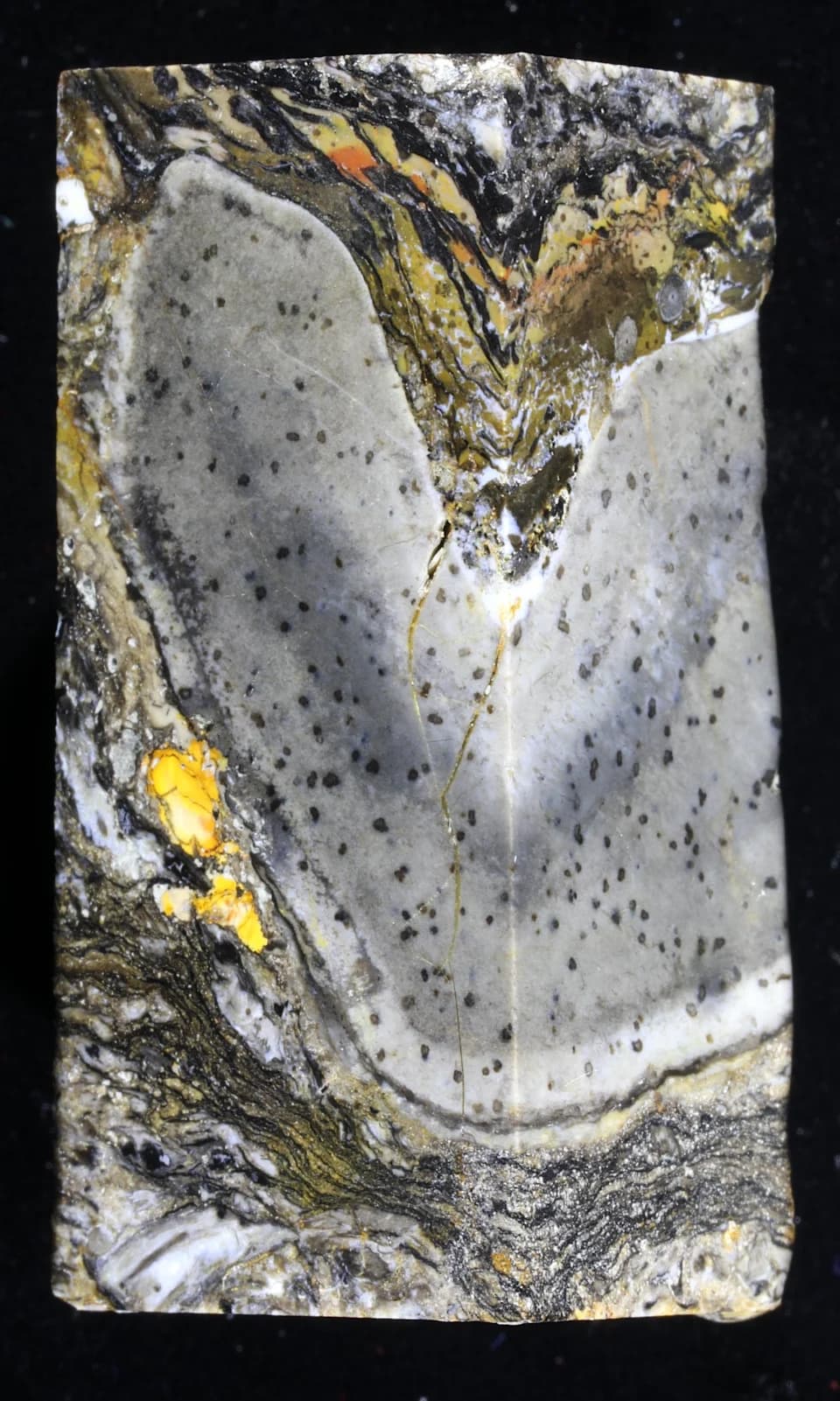
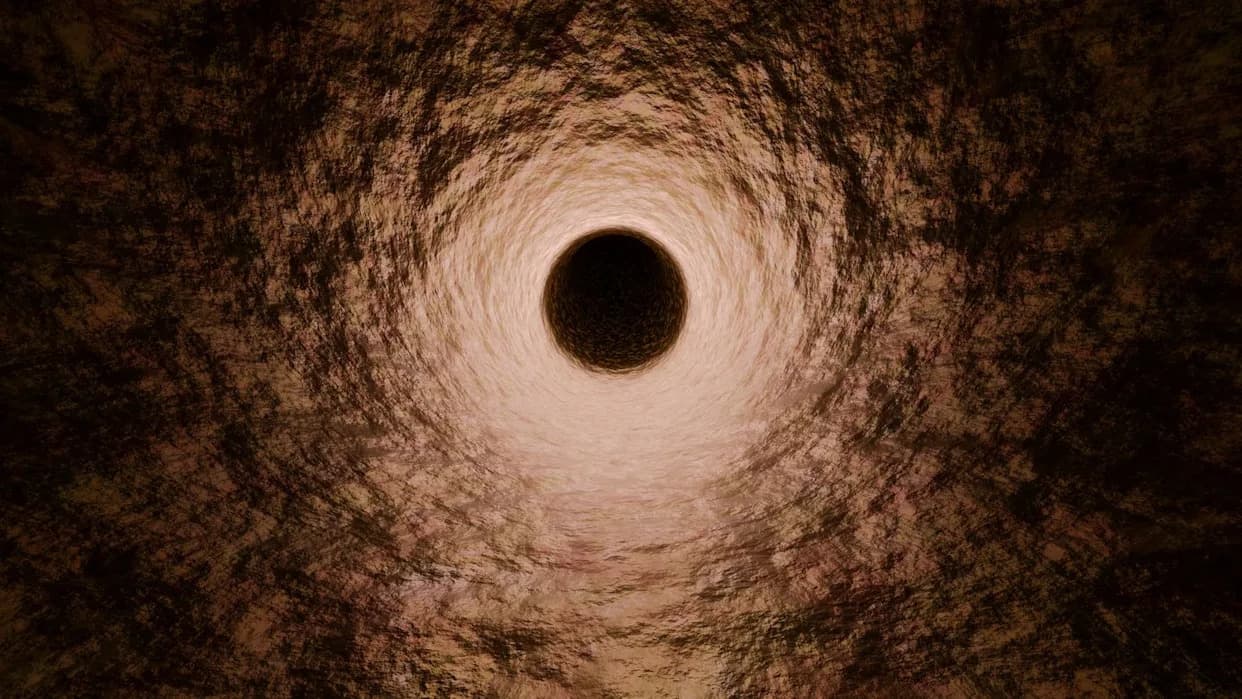
A fossil specimen ofPrototaxites taitishows its spotty internal structure.Laura Cooper, University of Edinburgh
Long before trees spread across land roughly 400 million years ago, Earth’s landscapes were punctuated by mysterious, spire-shaped organisms that rose more than 25 feet above the ground. The trunklike fossils of these giants, called Prototaxites, were first discovered in 1843 and have puzzled scientists ever since: what kind of life were they?
A new study published in Science Advances offers a striking possibility: Prototaxites may represent a previously unrecognized branch of life rather than belonging to any modern fungal group.
What the Fossils Reveal
The specimens consist of densely interwoven tubes, superficially resembling fungal tissue. But detailed anatomical and chemical analyses reveal key differences. The tubes branch in an irregular, chaotic pattern—unlike the more orderly hyphal branching of living fungi—and targeted chemical tests detected no trace of chitin, the polymer that reinforces fungal cell walls and was present in contemporaneous fossil fungi from the same deposits.
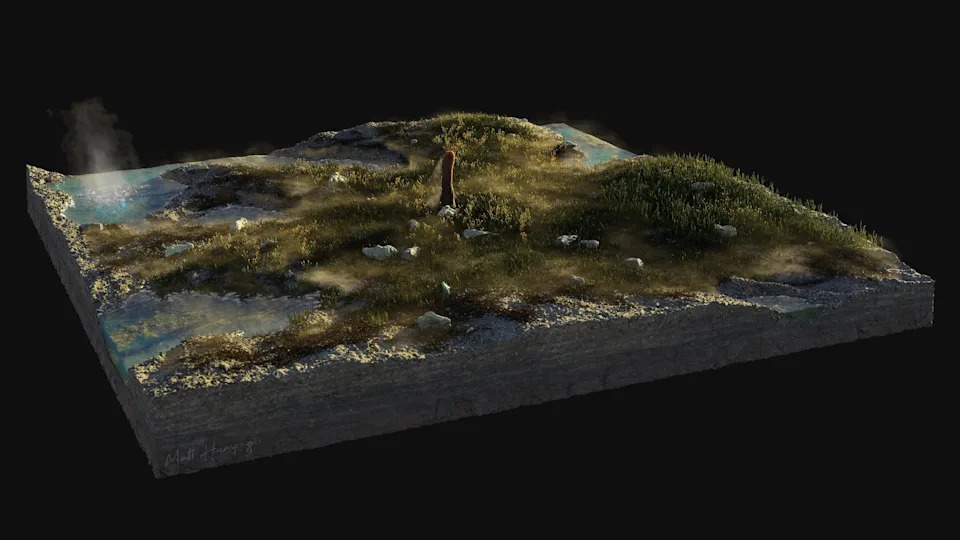
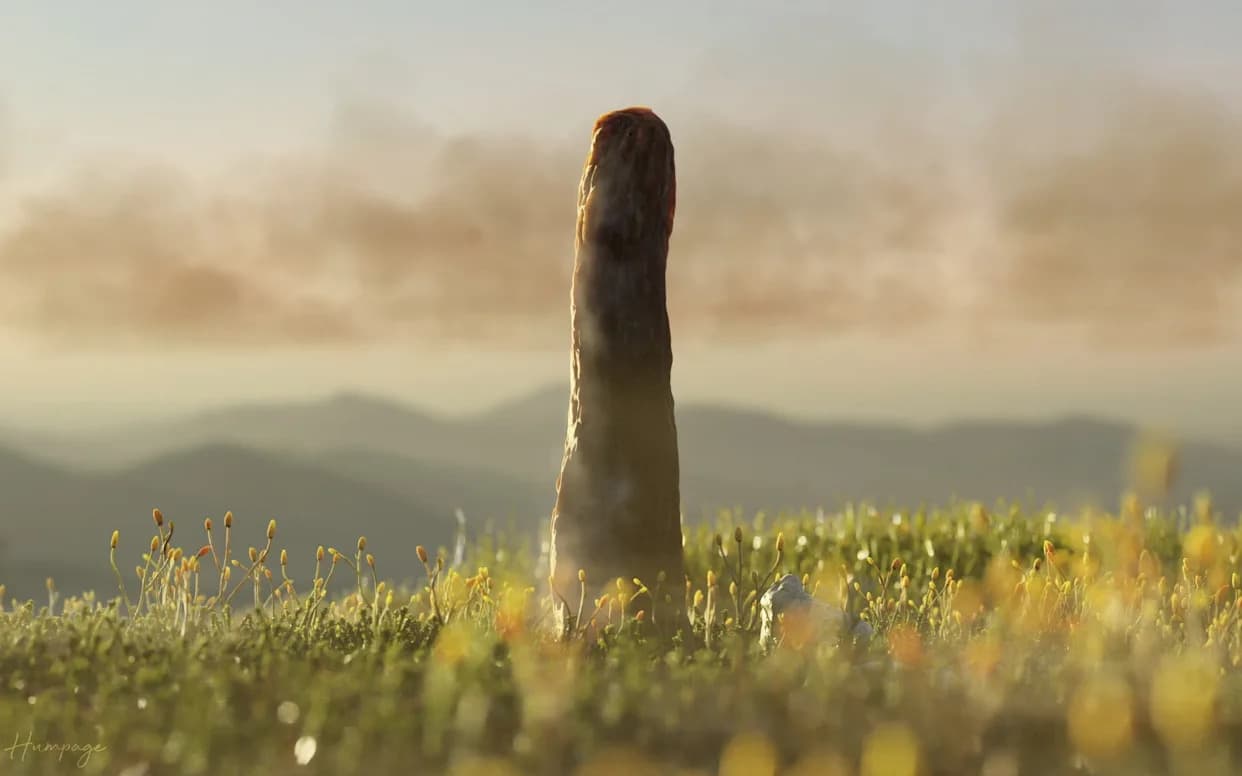
Prototaxites taititowers over the surrounding landscape in a paleoenvironment reconstruction of the 407-million-year-old Rhynie chert hot spring ecosystem.Matt Humpage, Northern Rogue Studios
“It doesn’t seem to have any of the characteristic features of the living fungal groups,” says Laura Cooper, a co-lead author and Ph.D. student at the University of Edinburgh.
How This Fits With Earlier Work
Earlier researchers proposed two main ideas: that Prototaxites was an ancient fungus, or that it represented an isolated organismal category. Some previous studies allowed the possibility that it could be an extinct offshoot of fungi. The new comparison of Prototaxites fossils with fossil fungi from the same rock layers strengthens the case that these spires may instead belong to a distinct lineage—one that evolved complex multicellularity independently.
Ecological Mysteries Remain
Fossil reconstructions from places like the 407-million-year-old Rhynie chert hot-spring ecosystem show Prototaxites towering over ankle-high plants. Isotopic and comparative evidence suggests these organisms likely consumed decaying organic matter, playing a decomposer-like role. But in a landscape with very little plant biomass, how such giants supplied the energy required to grow so tall remains an open and intriguing question.
Whether Prototaxites ultimately joins the fungal kingdom as a highly unusual member or is reclassified as an entirely separate branch, the fossils reveal a form of life quite unlike most modern organisms. The study reopens fundamental questions about early terrestrial ecosystems and the diversity of multicellular life in the Devonian.
Help us improve.