Melvin Vopson proposes that information may have mass and that gravity could act like an information-organizing process, reducing entropy much as data compression does. Popular Mechanics examined the idea and its implications in a feature, and editors Andrew Daniels and John Gilpatrick discussed the proposal on "The Astounding Pop Mech Show." Vopson frames his claim as a testable hypothesis and invites other scientists to challenge the mathematics and assumptions. While imaginative and potentially far-reaching, the idea is speculative and requires rigorous mathematical and experimental validation.
Could Gravity Be Proof We Live in a Simulation? A Controversial Physicist Thinks So

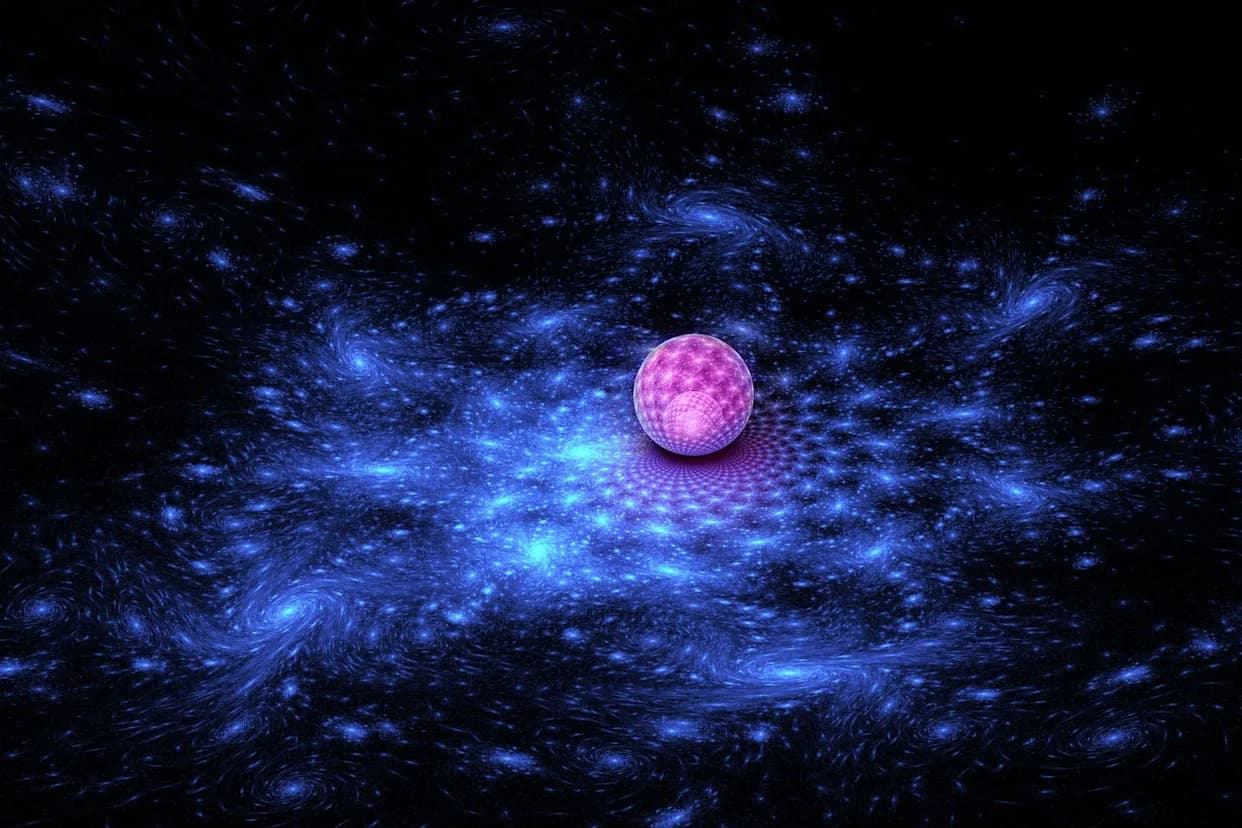
Does Gravity Suggest We Live in a Simulation?gremlin - Getty Images
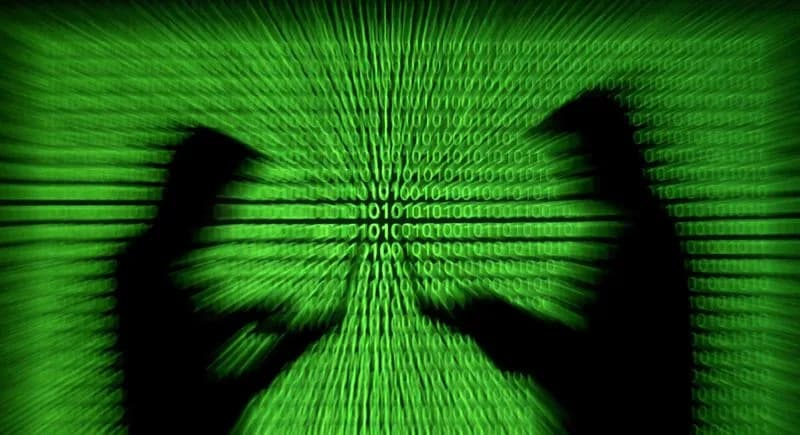
What if gravity—the force that keeps your feet on the ground and binds galaxies together—is more than a basic law of physics? What if it’s a signature of an underlying computational structure, a clue that our universe is, in some sense, constructed?
What the Proposal Says
Physicist Melvin Vopson has advanced a provocative hypothesis: information itself may carry mass, and gravity could operate as a mechanism that organizes that information. In his view, gravity reduces entropy in ways analogous to how computers compress data, meaning gravitational behavior might reflect information-processing rules rather than solely geometric properties of spacetime.
How Popular Mechanics Covered It
Popular Mechanics recently published a feature exploring Vopson’s ideas and their implications. Editors Andrew Daniels and John Gilpatrick discussed the work on "The Astounding Pop Mech Show," presenting the hypothesis, its theoretical motivations, and the questions it raises for both physics and philosophy.
Scientific Context and Skepticism
Vopson presents his proposal not as a finished theory but as a testable conjecture. He invites peers to scrutinize the mathematics and assumptions and to suggest calculations or experiments that could confirm or falsify his model. Daniels and Gilpatrick do the same in their discussion: they highlight intriguing elements of the idea while also pointing out conceptual and empirical challenges.
Why This Matters
If information were shown to have mass or if gravity were demonstrated to function like an information-organizing process, the implications would be profound: they could reshape how physicists think about entropy, black holes, and the relationship between information and physical law. However, extraordinary claims require extraordinary evidence, and Vopson’s proposal remains highly speculative until it produces clear, testable predictions and experimental support.
In short: The idea is imaginative and grounded in a physics-flavored analogy to computation, but it remains controversial and awaits rigorous mathematical scrutiny and empirical testing.
Where To Go Next
Readers curious about the debate can watch Daniels and Gilpatrick’s full episode on "The Astounding Pop Mech Show" and read the full Popular Mechanics feature for more detail. The scientific community will need to propose concrete tests—numerical checks, thought experiments, or observational searches—to determine whether Vopson’s claims can survive closer scrutiny.

Photo credit: Hearst Owned
Photo credit: Hearst Owned

Photo credit: Hearst Owned
Photo credit: Hearst Owned

Photo credit: Hearst Owned
Photo credit: Hearst Owned
Help us improve.