China recorded its lowest birth total in more than 75 years as the population shrank for a fourth straight year in 2025, with births falling to 7.92 million and deaths rising to 11.31 million. Beijing has rolled out measures such as a 13% tax on condoms and an annual 3,600 yuan subsidy per child under three, while President Xi calls for cultural change around marriage and childbearing. Experts and citizens say small price tweaks or modest cash handouts are unlikely to offset high child‑rearing costs identified in a 2024 YuWa study. Despite the demographic decline, China posted 5% economic growth in 2025.
China Records Lowest Birth Toll in Over 75 Years as Population Shrinks for Fourth Year
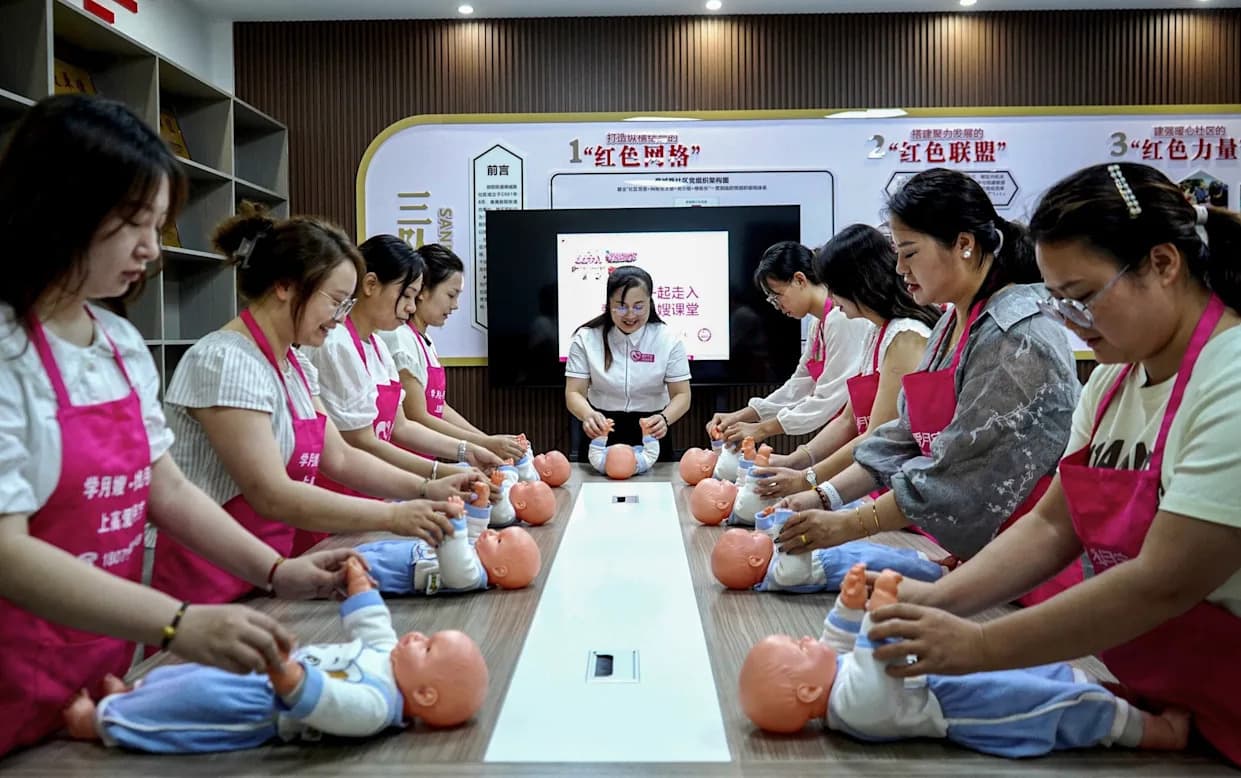
China’s birth rate fell last year to its lowest level on record - AFP via Getty Images
China recorded its lowest number of births in more than 75 years as the population contracted for a fourth consecutive year in 2025. Births fell to 7.92 million last year, down from 9.54 million in 2024, while deaths rose to 11.31 million from 10.93 million.
Legacy of Past Policy and Modern Pressures
The decline follows decades of population control under the one‑child policy and has accelerated since 2022. Faced with an ageing population and a shrinking workforce, Beijing has moved to introduce a variety of measures intended to reverse or slow the trend, but social and economic pressures remain strong drivers of individual choices.
Government Measures
From Jan 1, condoms in China became subject to a 13% sales tax, while childcare services remain exempt. The government also announced an annual subsidy of 3,600 yuan (£383) for each child under three. President Xi Jinping has publicly urged a cultural shift, calling for a
'a new type of marriage and childbearing culture'and asking local officials to influence young people's attitudes toward marriage and fertility.
Public Reaction and Expert Views
Many citizens and experts say modest price changes or cash handouts are unlikely to change decisions about family formation. Dudley L. Poston Jr., a sociology professor at Texas A&M University, noted that an average pack of condoms costs about 50 yuan (£5.35) in China, so the new tax adds only a small monthly cost. When the levy was announced, a man from Henan compared it to a minor subway-fare increase: 'When they go up by a yuan or two, people who take the subway don’t change their habits. You still have to take the subway, right?'
More broadly, the high cost of childrearing — including education and the challenges faced by working mothers — is a major deterrent. A 2024 study by the YuWa Population Research Institute in Beijing found China to be among the world's most expensive countries in which to raise a child.
Economic Implications
For policymakers, a falling population threatens long-term domestic consumption and broader economic stability. That said, demographic headwinds have not erased short-term growth: despite population decline and other economic pressures, including tensions with the United States, Beijing recorded 5% economic growth in 2025.
Outlook: Short-term growth provides breathing room, but analysts warn that sustained low birth rates and an ageing population will increasingly shape China's labour market, consumption patterns and long-term fiscal outlook unless deeper social and economic reforms address the underlying costs of family formation.
Help us improve.