Vendors at Suzhou’s Huqiu Bridal City say an 8.5% rise in marriage registrations during the first nine months of 2025 has lifted hopes of a market rebound. The increase follows a May 2025 policy allowing couples to register marriages anywhere in China and cultural tailwinds like the Year of the Horse. Sellers warn that long-term recovery depends on stronger economic confidence and further government incentives as young people grapple with high childcare and education costs.
Suzhou Wedding-Dress Sellers Bet on Marriage Rebound After 8.5% Rise in Registrations
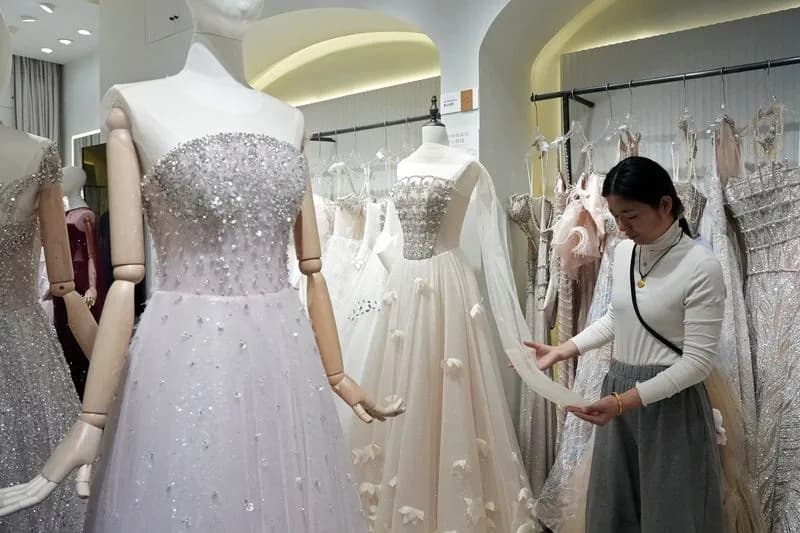
Wedding dress seller Zhu Jiaomei inspects a gown's fabric at Huqiu Bridal City in Suzhou, Jiangsu province, China January 16, 2026. REUTERS/Nicoco Chan
Vendors at Huqiu Bridal City in Suzhou — one of China’s largest wedding-dress markets — say they are cautiously optimistic after an 8.5% rise in marriage registrations in the first nine months of 2025. The increase comes amid a broader demographic backdrop: China’s birth rate fell to a record low last year and the total population declined for a fourth consecutive year.
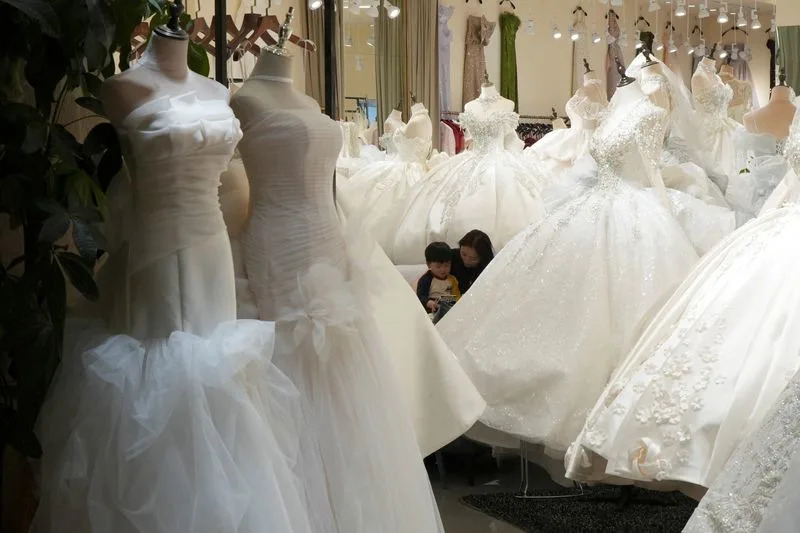
A shopkeeper reads with a child at Huqiu Bridal City in Suzhou, Jiangsu province, China January 16, 2026. REUTERS/Nicoco Chan
Market Rebound and Policy Changes
Data from the Ministry of Civil Affairs show marriage registrations rose 8.5% in Jan–Sep 2025, a rebound vendors attribute to recent policy shifts and cultural factors. A nationwide change in May 2025 allowing couples to register marriages anywhere in China — not only in their place of residence — helped boost registrations. Local governments raced to attract couples, setting up registration desks at scenic sites, music festivals, subway stations, shopping centres and parks.
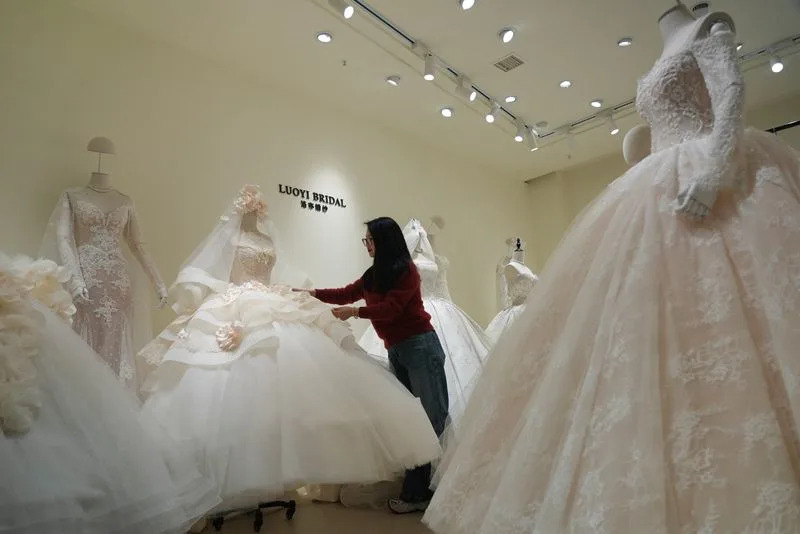
Chen Juan, co-owner of wedding dress shop Luoyi Bridal, adjusts a gown on display at the shop in Huqiu Bridal City in Suzhou, Jiangsu province, China January 16, 2026. REUTERS/Nicoco Chan
Voices From Huqiu Bridal City
Chen Juan, co-owner of Luoyi Bridal, which sells gowns priced roughly from 1,000 to 4,000 yuan, said many couples postponed weddings in 2024 because it was considered an inauspicious year, pushing ceremonies into 2025. Chen also cited the Year of the Horse — traditionally associated with success — as a cultural tailwind for this year.
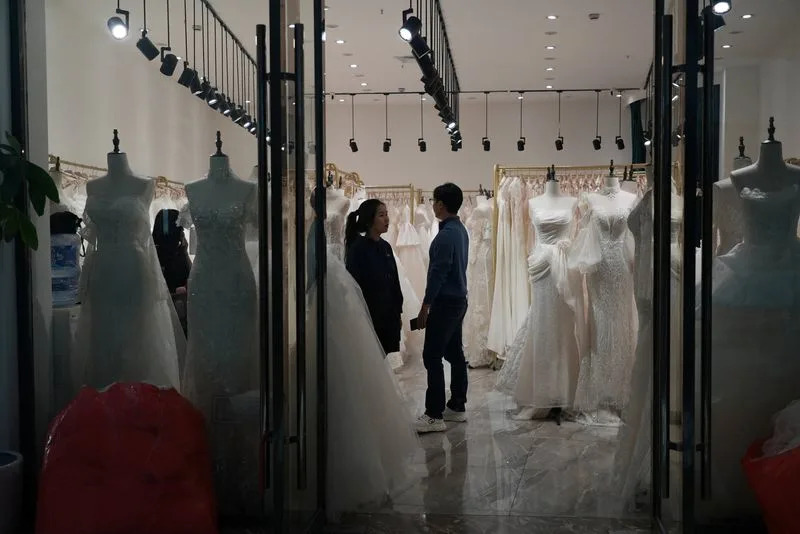
A couple shops for a wedding gown at Huqiu Bridal City in Suzhou, Jiangsu province, China January 16, 2026. REUTERS/Nicoco Chan
"If the government can introduce some relevant incentive policies, this would be very good, because young people's attitudes (to marriage) have changed," Chen said.
Zhu Jiaomei, 31, who sells made-to-measure gowns, said broader economic confidence matters most for decisions about marriage and spending: job instability and economic uncertainty have led many couples to halve wedding budgets compared with the pre-COVID period.
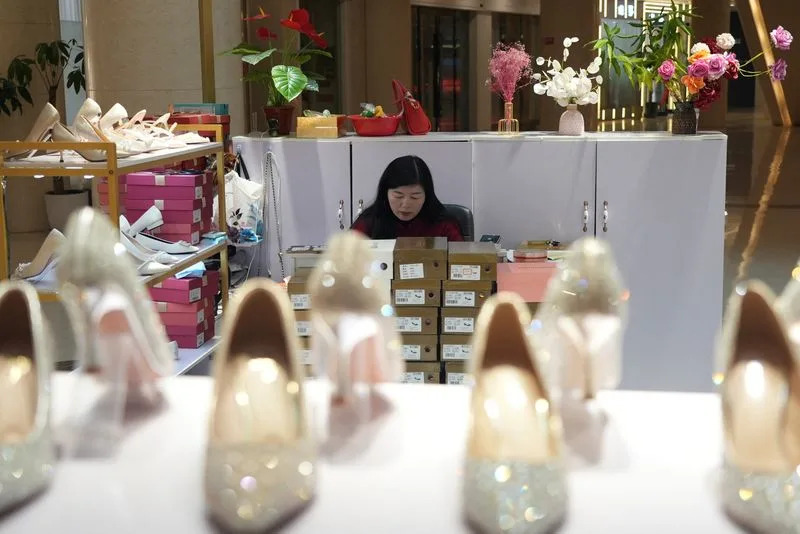
Wedding shoe seller Cheng Yonggui waits for customers at Huqiu Bridal City in Suzhou, Jiangsu province, China January 16, 2026. REUTERS/Nicoco Chan
For 48-year-old wedding-shoe seller Cheng Yonggui, a potential upswing in marriages has personal urgency. With two sons nearing marrying age, Cheng said she and her husband worry about the cost and competitiveness of finding brides in a society where men outnumber women due to historical son preference. In China it is common for groom's parents to help with buying a home and car — and sometimes a dowry — before marriage. Cheng estimates these costs at "at least a million" yuan per son.
Outlook
Vendors say policy tweaks and cultural factors have helped restore some demand, but most believe sustained improvement will require stronger economic confidence and targeted incentives from authorities. Some cities have already begun offering cash vouchers to newlyweds to ease the financial burden associated with marriage and childrearing.
Exchange rate: $1 = 6.9681 Chinese yuan
Help us improve.