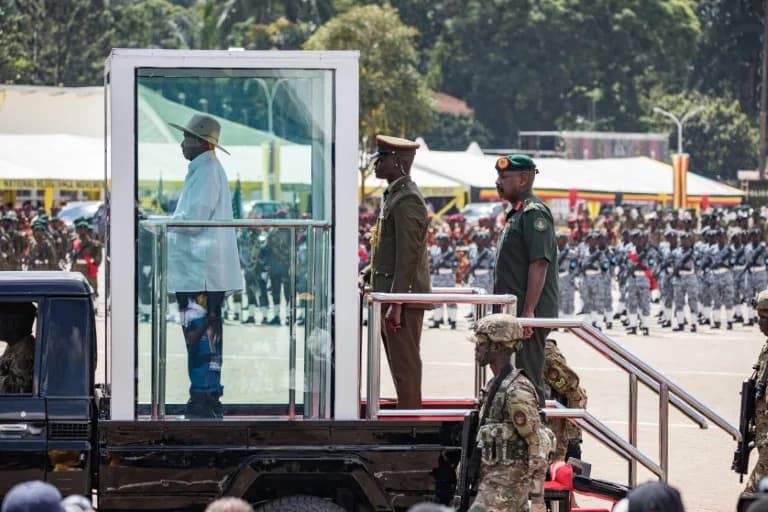
This article examines how Africa’s longest-serving leaders — Yoweri Museveni of Uganda, Paul Biya of Cameroon and Denis Sassou Nguesso of the Republic of the Congo — retain power through violence, patronage, ethnic politics, manipulated elections and strategic foreign alliances. It highlights recent events: Museveni’s contested re-election and appointment of his son as army chief, Biya’s eighth term and selective repression in Cameroon, and Sassou Nguesso’s reliance on oil patronage and external backers. Analysts warn that elections have become ritualized and call for sustained legal and civic resistance rather than abandoning the ballot.
How Long-Serving African Leaders Stay in Power: Violence, Patronage and Managed Elections
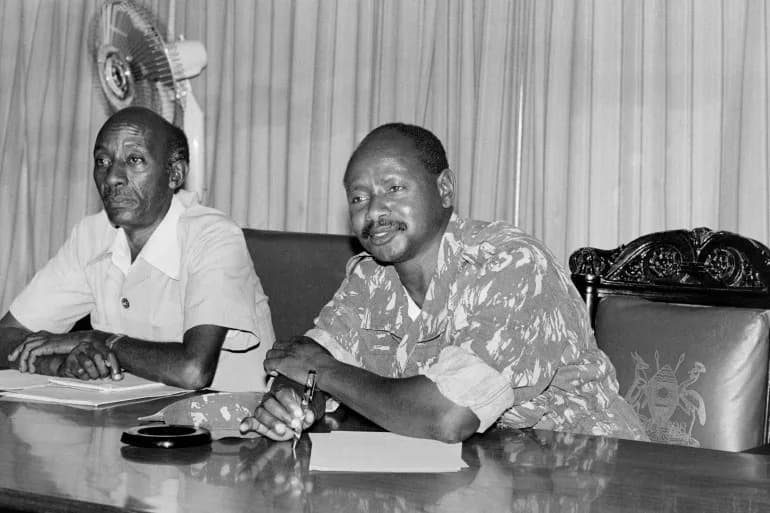
In a picture taken on January 29, 1986, in Kampala, then National Resistance Army (NRA) leader Yoweri Museveni, right, holds his first cabinet meeting after being sworn in as president of Uganda [File: AFP]
The official residence of every Ugandan president, State House, sits on the hills of Nasakero in Kampala. For nearly four decades it has been occupied by Yoweri Museveni, who has extended his rule again after a contested vote that the electoral commission said he won with 72% of the ballots.
Uganda: Repression, Patronage and Succession Concerns
Museveni, 81, first took power in 1986 after leading the National Resistance Army to victory in the Ugandan Bush War. Analysts say his control combines the use of security force, cultivated patronage networks and institutional changes that removed term limits in 2005. The 2024 appointment of his son, General Muhoozi Kainerugaba, as army chief has intensified fears of dynastic succession.
Opposition figures and their supporters have faced harsh crackdowns in recent years. Popular challenger Robert “Bobi Wine” Kyagulanyi and his supporters have been targeted at rallies; rights groups, including Amnesty International, have documented excessive force, arbitrary arrests and reports of torture. Veteran opposition politician Kizza Besigye has been detained since November 2024 and faces treason charges.
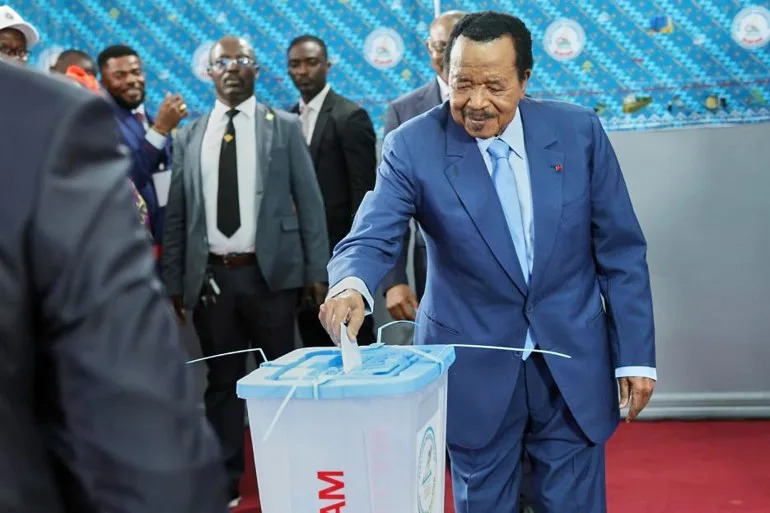
Cameroon’s President Paul Biya casts his ballot in Yaounde, Cameroon, on October 12, 2025, in a presidential election that extended his rule for an eighth term [File: Angel Ngwe/AP]
“He allows people around him to dip their hands in state coffers, so that they are soiled, and then he uses that against them,” says Kampala-based analyst Job Kiija, describing Museveni’s tactic of using corruption and patronage to bind allies.
Despite significant natural resources, Uganda remains dependent on development aid — the United States has been a major donor — and Museveni leverages the country’s role as a regional security partner and host to roughly two million refugees to bolster international ties.
Cameroon: Electoral Autocracy and Selective Repression
Paul Biya, 92, who has ruled since 1982, secured an eighth term in October. Cameroon removed presidential term limits in 2008. Observers describe Biya’s system as an "electoral autocracy" that uses the mechanics of voting, state-aligned electoral institutions and well-funded information campaigns to preserve an ethnic coalition that supports him.
Political repression in Cameroon is often described as selective: criticism sometimes goes unanswered, creating uncertainty about where the boundaries lie and encouraging self-censorship. Protests after the 2024 vote were violently suppressed — reports indicate dozens were killed during demonstrations challenging the result — and the Anglophone regions have been engulfed in a prolonged and violent separatist crisis since 2016.
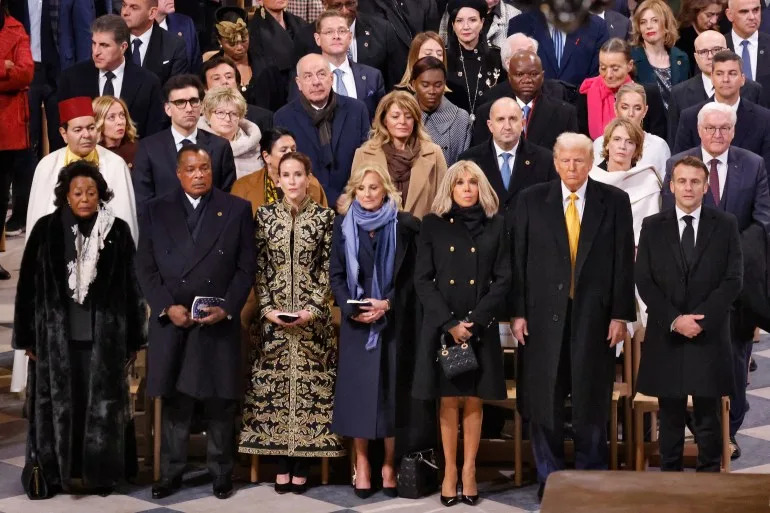
From left, Republic of the Congo’s First Lady Antoinette Sassou Nguesso and President Denis Sassou Nguesso stand beside US former First Daughter Ashley Biden, former First Lady Jill Biden, France’s First Lady Brigitte Macron, US President Donald Trump, and French President Emmanuel Macron during a ceremony at Notre-Dame Cathedral, in Paris, on December 7, 2024 [File: Ludovic Marin/AFP]
Congo-Brazzaville: Oil, Patronage and External Backing
Denis Sassou Nguesso, 81, who has dominated the Republic of the Congo for decades, plans to run again in March 2026. He removed term limits via a 2015 referendum and rebuilt his rule after a bloody return to power in 1997. Critics say oil wealth has been captured by patronage networks, leaving basic infrastructure underdeveloped.
Sassou Nguesso’s resilience has been strengthened by international ties — historically with France and more recently with China, which provides loans, investment and diplomatic cover. Investigations by European authorities into the Nguesso family’s assets have reduced some Western support, while ties to Beijing offer new avenues of economic and diplomatic backing.
Why Elections Persist but Mean Little
Analysts argue these leaders use a combination of coercion, divide-and-rule tactics, patronage and foreign alliances to entrench power — yet they maintain elections because ballots confer a veneer of legitimacy. "Elections have become a ritual," says Tendai Mbanje, an elections expert at the University of Pretoria. Electoral bodies are often politicised, and institutions lack the independence required for genuinely competitive contests.
Despite the bleak picture, experts caution against abandoning electoral engagement. Mbanje and others urge continued civic mobilisation, legal challenges and coordinated protest as ways to press for reforms and hold leaders accountable.
Key Sources and Observations
This article draws on reporting and commentary from regional analysts, rights groups such as Amnesty International, and interviews with political figures and experts. Governments contacted for comment did not respond to requests.
Help us improve.