
The U.N. Human Rights Office warns that Uganda’s Jan. 15 presidential election is likely to be conducted amid 'widespread repression and intimidation,' citing new military-style laws, the use of live ammunition against peaceful assemblies and abductions by unmarked vans. The report highlights the detention of opposition figures including Kizza Besigye and civic leader Sarah Bireete, who was arrested Dec. 30 and remanded until Jan. 21. U.N. human rights chief Volker Türk urged authorities to allow safe, full participation and to avoid disproportionate force.
U.N. Warns Of Widespread Repression Ahead Of Uganda’s Jan. 15 Presidential Election

An Electoral Commission officer organises voter registrations at the Electoral Commission office in Kampala, Uganda, Wednesday, Jan. 7, 2026. (AP Photo/Hajarah Nalwadda)(ASSOCIATED PRESS)
The U.N. Human Rights Office (OHCHR) warned Friday that next week’s presidential election in Uganda is likely to take place amid 'widespread repression and intimidation' directed at the political opposition, journalists, human rights defenders and others, according to a new Geneva-based report.
The OHCHR says Ugandan authorities have employed 'lawfare' — including recent military-style legislation — to curtail political activity and civic engagement in the run-up to voting scheduled for Jan. 15. The report documents numerous allegations that security forces used live ammunition to disperse peaceful assemblies and that unmarked vans, locally known as 'drones,' have been used to abduct opposition supporters.
Calls For A Safe, Inclusive Vote
Volker Türk, the U.N. high commissioner for human rights, urged Ugandan authorities to uphold international obligations and ensure all citizens can participate fully and safely in the election. He emphasized that 'no unnecessary or disproportionate force, including lethal force, should be used to disperse peaceful protests.'
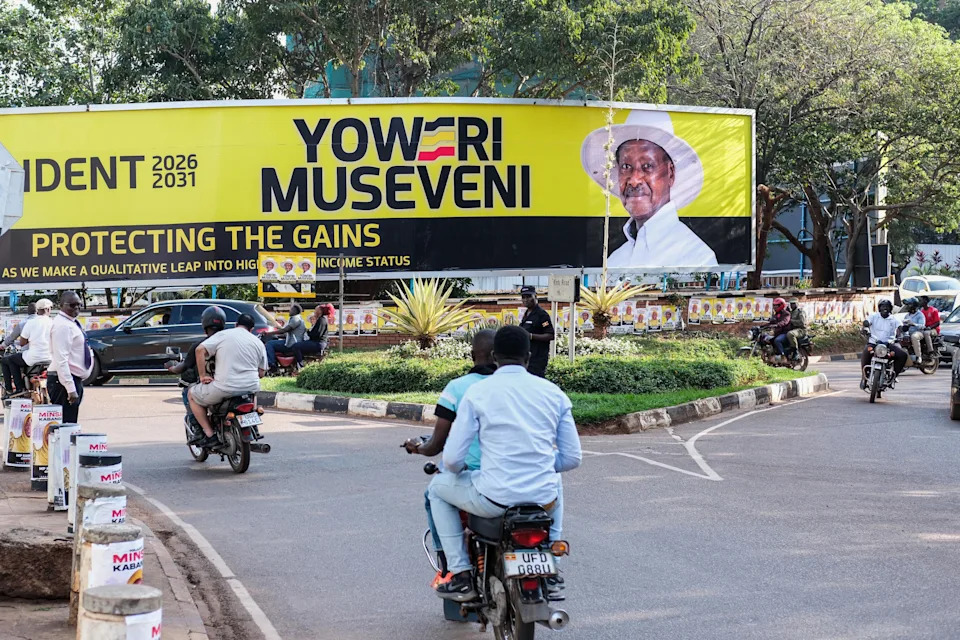
A campaign billboard for President Yoweri Museveni is displayed in Kampala, Uganda, Wednesday, Jan. 7, 2026. (AP Photo/Hajarah Nalwadda)(ASSOCIATED PRESS)
Volker Türk: 'The Ugandan authorities must ensure all Ugandans can participate fully and safely in the election, as is their right under international law.'
Police spokesman Kituuma Rusoke did not immediately respond to requests for comment on the allegations cited in the U.N. report.
Detentions And Political Context
The report highlights the detention of prominent opposition figures, including Kizza Besigye, who faces treason charges, and civic leader Sarah Bireete, accused of unlawfully accessing the national voters' registry. Both are being held in a maximum-security prison in Kampala. Bireete, who leads the Center for Constitutional Governance, was arrested on Dec. 30 and remanded until Jan. 21 — a move criticized by civic groups as politically motivated because it silenced a visible public critic in the run-up to the vote.
Human Rights Watch described Bireete’s arrest as 'a demonstration of the Uganda government’s continuing intolerance of dissent.' Critics say the charges against her and other activists stem from their roles as outspoken public commentators critical of President Yoweri Museveni.
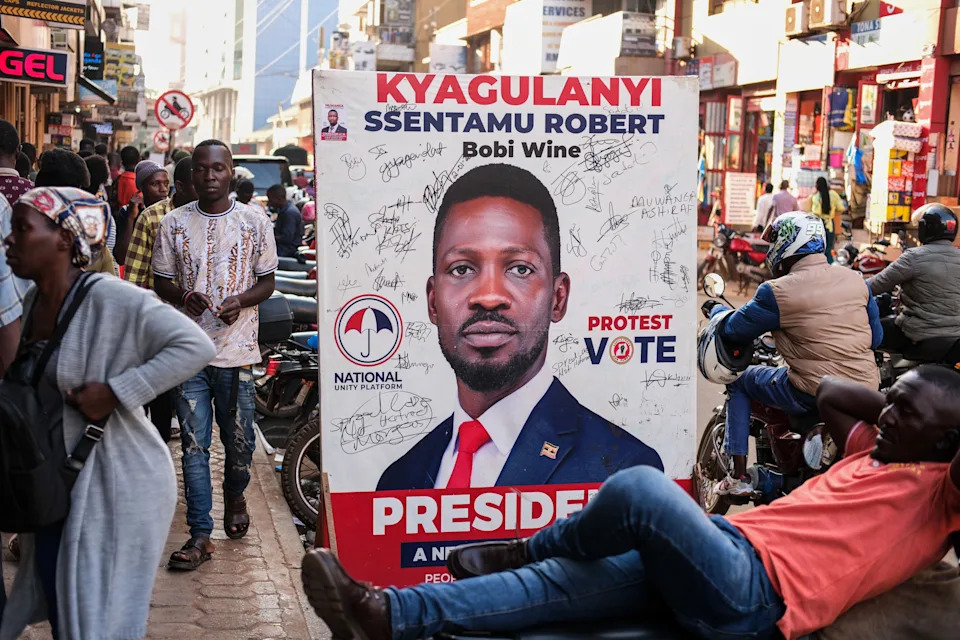
A man lies in front of a campaign poster for leading opposition presidential candidate Bobi Wine in downtown Kampala, Uganda, Wednesday, Jan. 7, 2026. (AP Photo/Hajarah Nalwadda)(ASSOCIATED PRESS)
Museveni, 81, who is seeking a seventh term, has ruled since 1986. He rose to power as leader of a guerrilla movement that overthrew a period of brutal dictatorship and instability, but critics say he has steadily eroded democratic checks by removing term and age limits, sidelining opponents and using security forces to intimidate dissent.
Museveni’s principal challenger is musician-turned-politician Bobi Wine (Kyagulanyi Ssentamu). Wine has told The Associated Press that he and his supporters have been repeatedly targeted by the military, which he accuses of dominating election preparations.
Uganda has not experienced a peaceful transfer of presidential power since independence from British colonial rule roughly six decades ago, a fact that shapes concern over the integrity and safety of the upcoming vote.
Help us improve.


