Hundreds protested in London against plans for a new 20,000 sq m Chinese embassy on the former Royal Mint site as ministers face a Tuesday deadline to decide. Conservative leader Kemi Badenoch accused Beijing of abusing MPs and British nationals, while Prime Minister Keir Starmer has emphasised the need to balance security with continued diplomatic engagement. U.K. security services are reported to have cleared the project, but critics warn it could be used for espionage and to intimidate dissidents.
London Protest Over Planned China 'Mega Embassy' as Government Faces Tuesday Deadline

Britain's opposition leader Kemi Badenoch speaks during a protest against the proposed Chinese embassy, in London, Saturday, Jan. 17, 2026. (AP Photo/Alberto Pezzali)(ASSOCIATED PRESS)
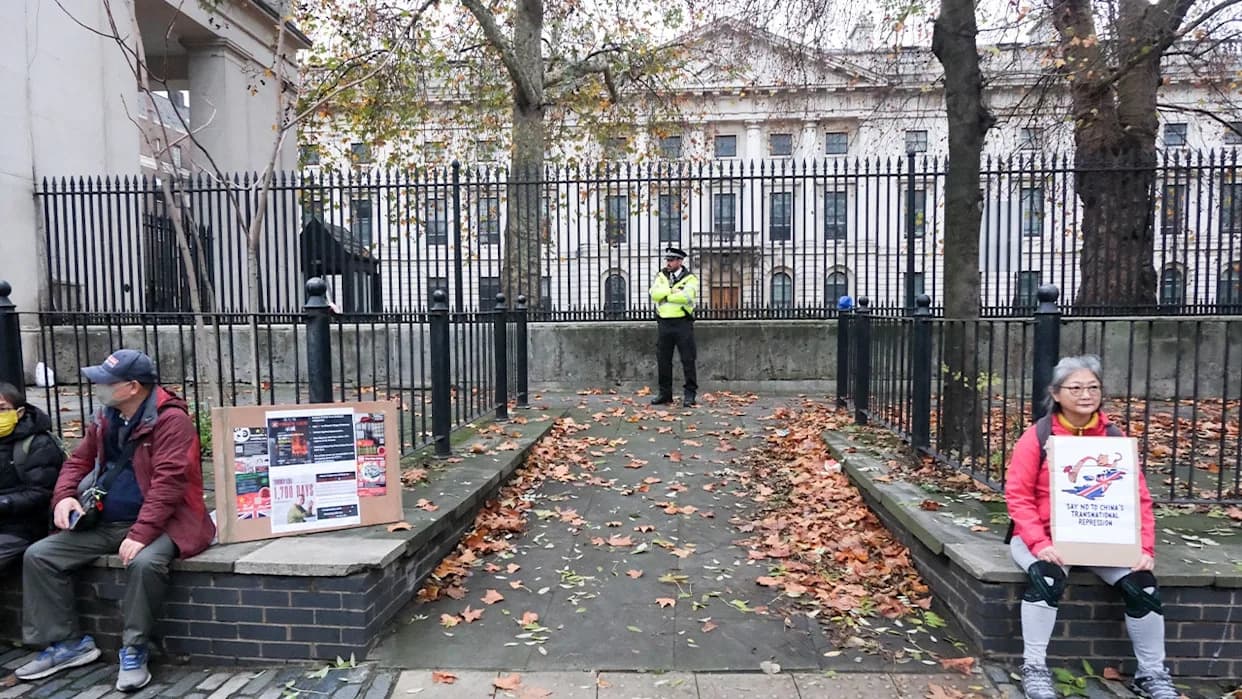
London — Hundreds of demonstrators and opposition politicians gathered Saturday at the former Royal Mint site near Tower Bridge to protest plans for a new, 20,000-square-metre Chinese embassy, days before ministers must decide whether to approve the development.
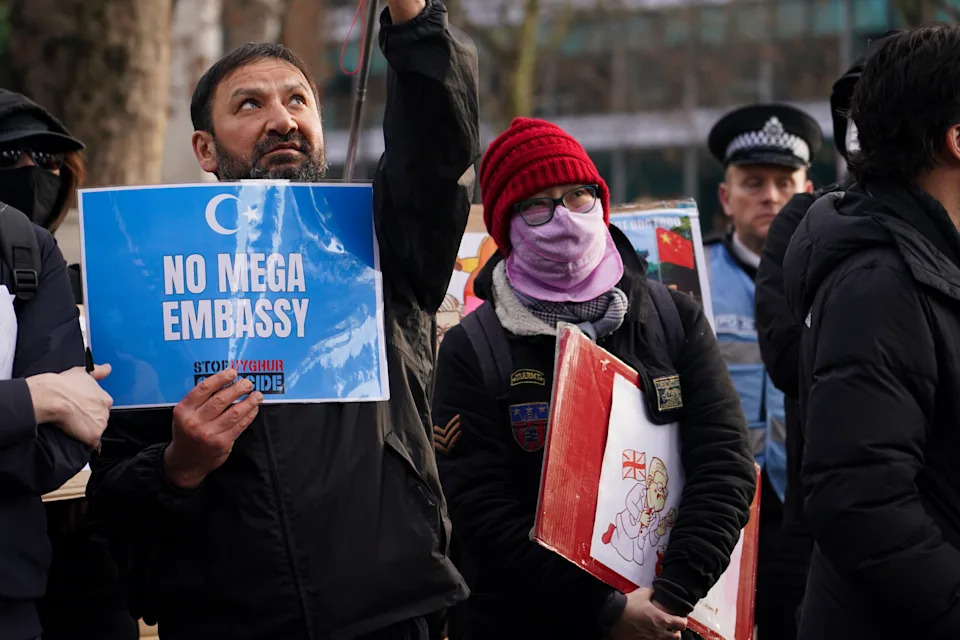
Demonstrators hold placards and flags as they attend a protest against the proposed Chinese embassy, in London, Saturday, Jan. 17, 2026. (AP Photo/Alberto Pezzali)(ASSOCIATED PRESS)
Key Voices at the Rally
Conservative leader Kemi Badenoch urged the Labour government to block the project, accusing the Chinese state of having “harassed and sanctioned” some members of Parliament and “abused British nationals connected to China.” Addressing the crowd, she warned:
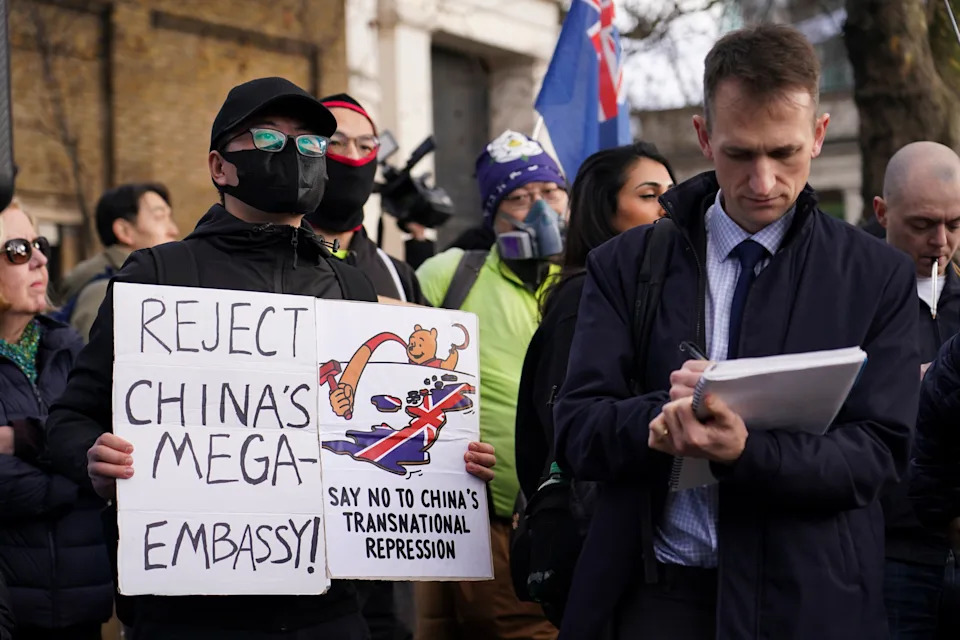
Demonstrators hold placards and flags as they attend a protest against the opening of the new Chinese embassy, in London, Saturday, Jan. 17, 2026. (AP Photo/Alberto Pezzali)(ASSOCIATED PRESS)
"We know that we have to stand up to the abuses of China. What worries me is that we have a government right now that seems to be scared of China."
Speakers from several opposition parties also addressed the rally as demonstrators chanted “No China mega embassy.”
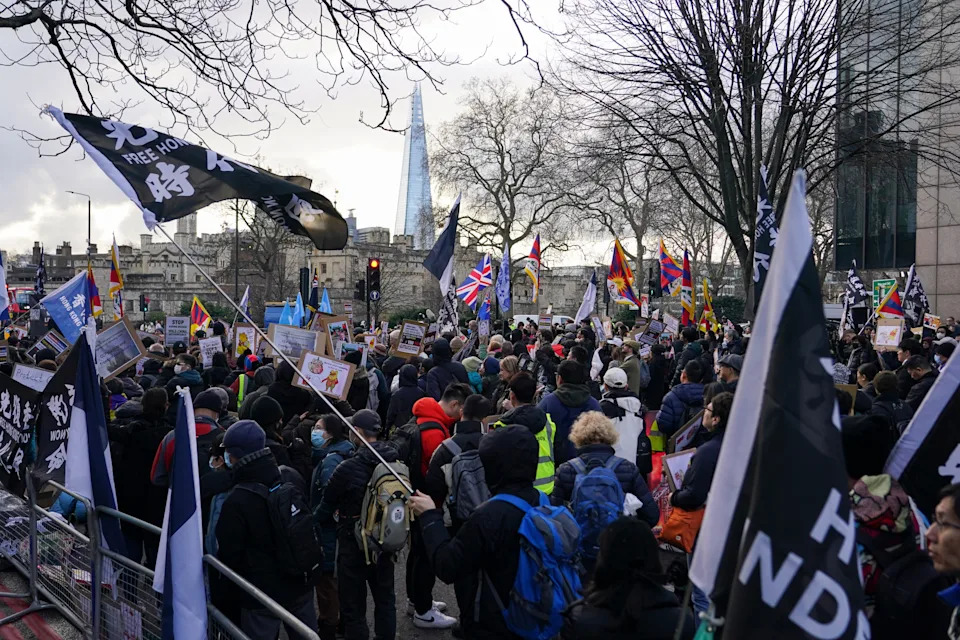
Demonstrators hold placards and flags as they attend a protest against the opening of the new Chinese embassy, in London, Saturday, Jan. 17, 2026. (AP Photo/Alberto Pezzali)(ASSOCIATED PRESS)
Security Concerns and Official Assessments
Opponents say the proposed 20,000 sq m (215,000 sq ft) complex — located close to London’s financial district and to critical undersea data cables — could be used for espionage, surveillance and intimidation of Chinese dissidents living in the U.K. Britain’s intelligence and security agencies have repeatedly warned about Chinese espionage activity.
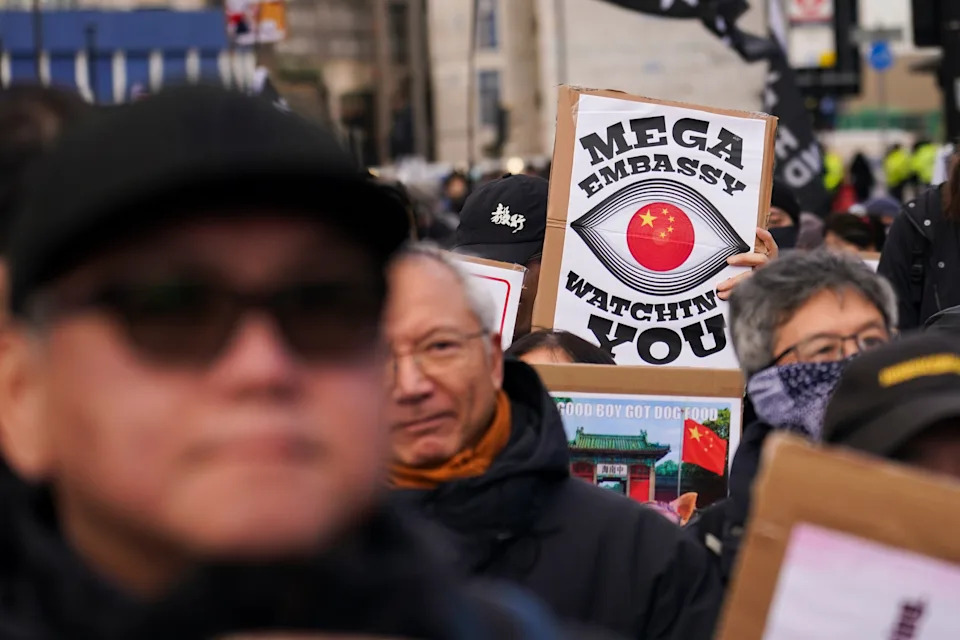
Demonstrators hold placards and flags as they attend a protest against the proposed Chinese embassy, in London, Saturday, Jan. 17, 2026. (AP Photo/Alberto Pezzali)(ASSOCIATED PRESS)
In November, MI5 issued an alert to MPs saying Chinese agents were making “targeted and widespread” efforts to recruit and cultivate lawmakers using LinkedIn and cover companies. Despite these warnings, U.K. security services are reported to have cleared the embassy development, and some security analysts say the risks can be managed.
Political Stakes and Diplomatic Context
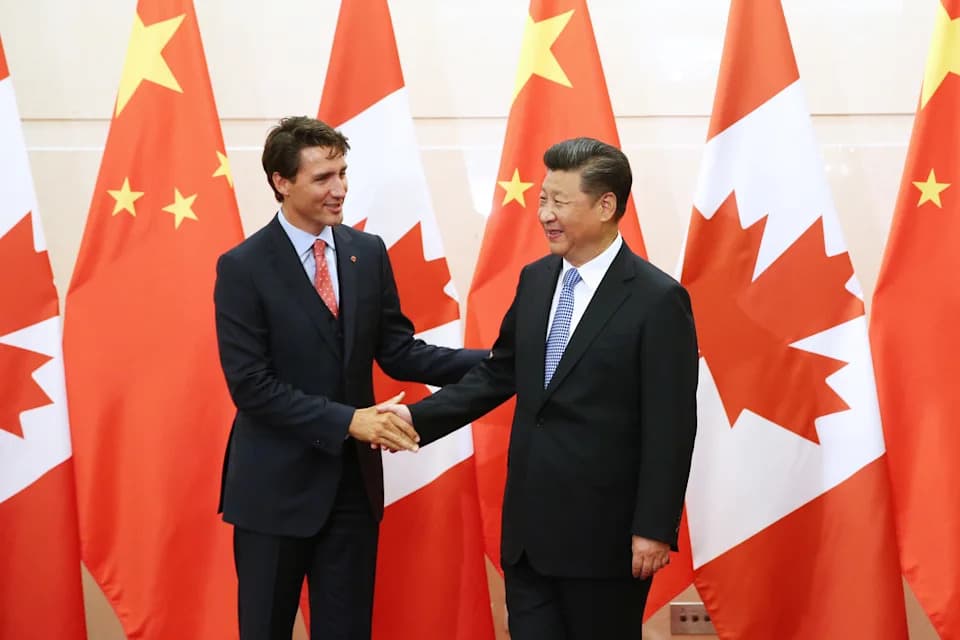
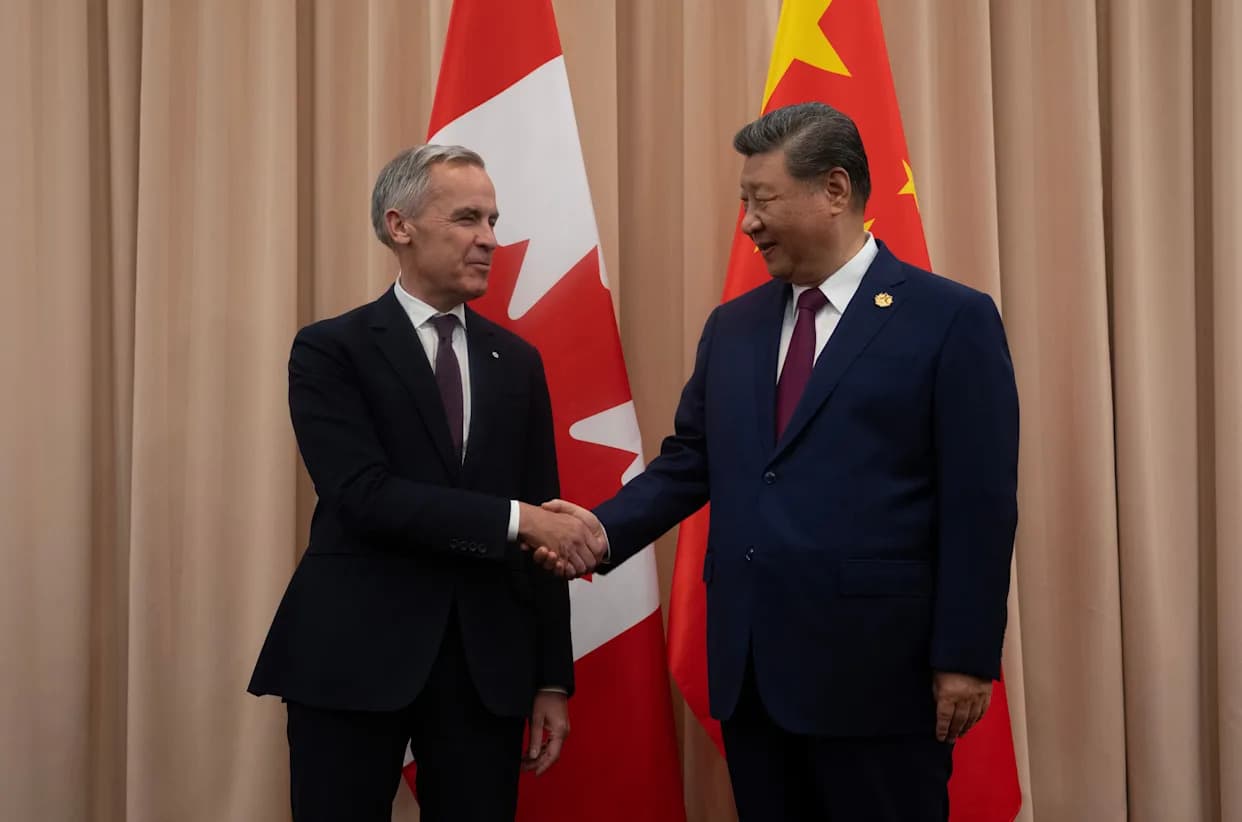
China has criticised a seven-year delay in approving the project, accusing the U.K. of “constantly complicating and politicising the matter.” Prime Minister Keir Starmer has stressed that while national security is non-negotiable, Britain must preserve diplomatic dialogue and cooperation with China.
Approval of the site would likely clear the way for a long-anticipated visit by Mr Starmer to China and could lead to an expansion of the U.K. embassy in Beijing. Ciaran Martin, former head of the National Cyber Security Centre, wrote that no British government would ignore the security services’ assessments and that the location decision ultimately involves “practicalities, security assessments and counterintelligence operations.”
What Happens Next
The government has set a deadline of Tuesday to grant or refuse planning permission. Officials are widely expected to approve the development, but the decision is likely to fuel further debate about balancing diplomatic engagement with national security risks.
Help us improve.