
The appearance of Palestinian flags on civic buildings in cities such as Sheffield, Preston and Bradford has reignited a national debate over symbols, identity and social cohesion in the U.K. Commentators like Colin Brazier have urged that the Union flag be prioritised on taxpayer-funded sites, while grassroots campaigns encourage citizens to display national flags. Prime Minister Keir Starmer sought to present patriotism as inclusive, but opposition figures and polling show deep divisions across party and ethnic lines about what flag displays signify.
UK Flag Rows Deepen As Palestinian Banners Fly On Civic Buildings, Sparking Debate Over Identity And Cohesion

UK flag clash as foreign banners fly, citizens push back against woke policies reshaping Britain
LONDON — A renewed battle over national identity and the display of flags on public buildings has reopened political fault lines across the United Kingdom in 2025. The debate intensified over the summer after several councils flew the Palestinian flag to mark the United Nations International Day of Solidarity with the Palestinian People, prompting a wider conversation about integration, free speech and the symbols that represent Britain.
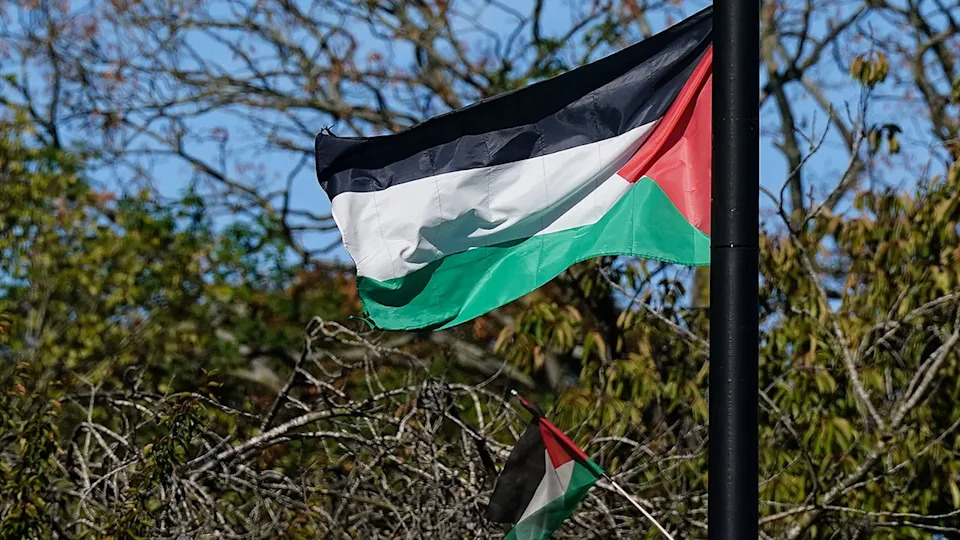
Palestinian flags on display in Sparkhill, Birmingham, after the UK took the largely symbolic step of recognizing a Palestinian state.
Background
Anti-Israel demonstrations that followed Hamas' mass attack on Israel on Oct. 7, 2023, saw Palestinian flags appear in towns and cities across Britain. The use of the Palestinian flag on civic buildings — including sites in Sheffield, Preston, Bradford and others — has divided opinion: some residents and commentators view the gesture as legitimate solidarity with Palestinians, while others say it undermines traditional British symbols and reflects wider cultural tensions.
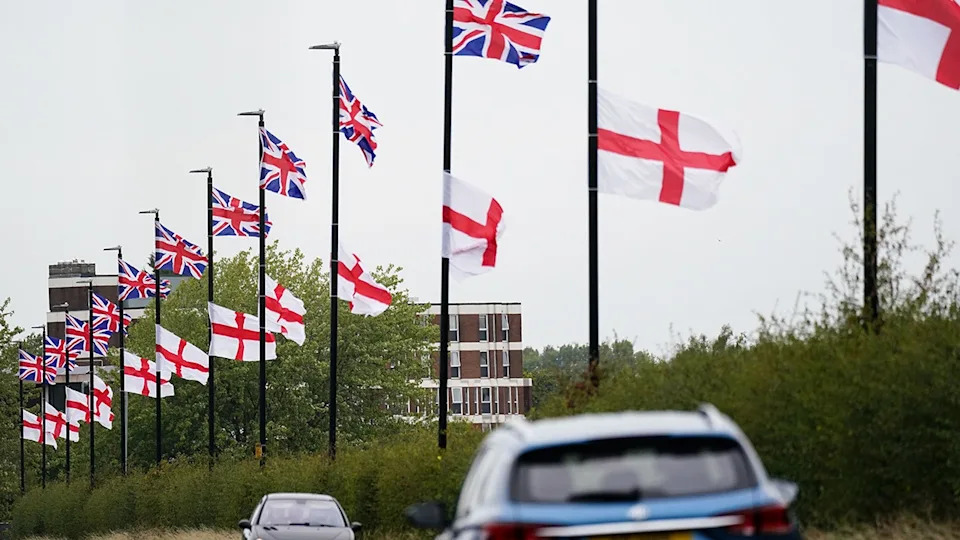
The flag of the United Kingdom and the Flag of St George hang from lamposts in Birmingham. Operation Raise the Colours has been flying and painting Union and St George's Cross flags as part of a U.K.-wide campaign. Sunday Sept. 14, 2025.
Calls For A Single Flag
Commentator Colin Brazier told Fox News Digital that 'there's only one flag that should be flying on public buildings in the U.K. ... and that's the Union flag.' He urged a 'strategy of national cohesion' and proposed banning foreign flags from taxpayer-funded sites, arguing that common symbols help unite communities.
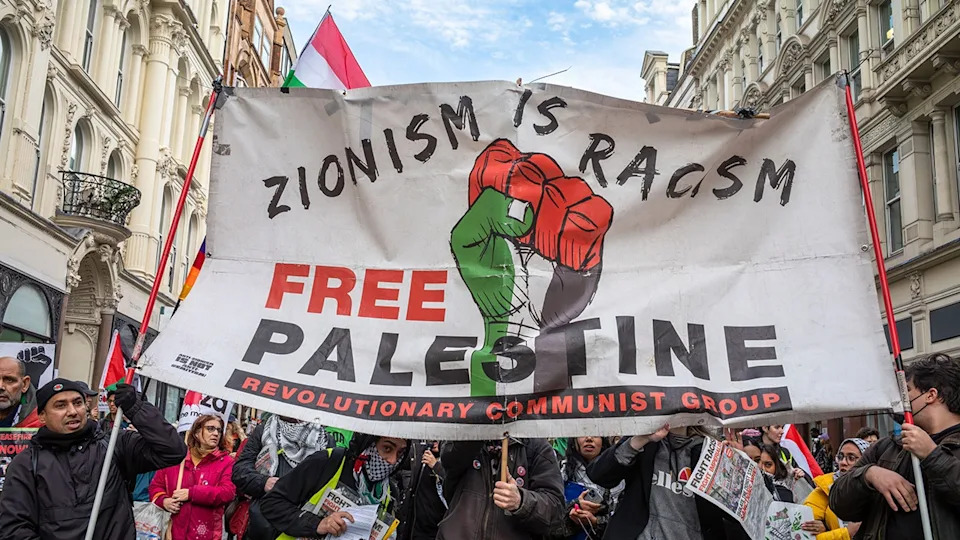
Anti-Israel protesters hold a banner at a protest against the Jewish state in London in December 2023.
CurrentGov.uk guidance cited by some commentators recommends that councils prioritise the Union flag on civic buildings, though councils have interpreted national guidance differently in practice.
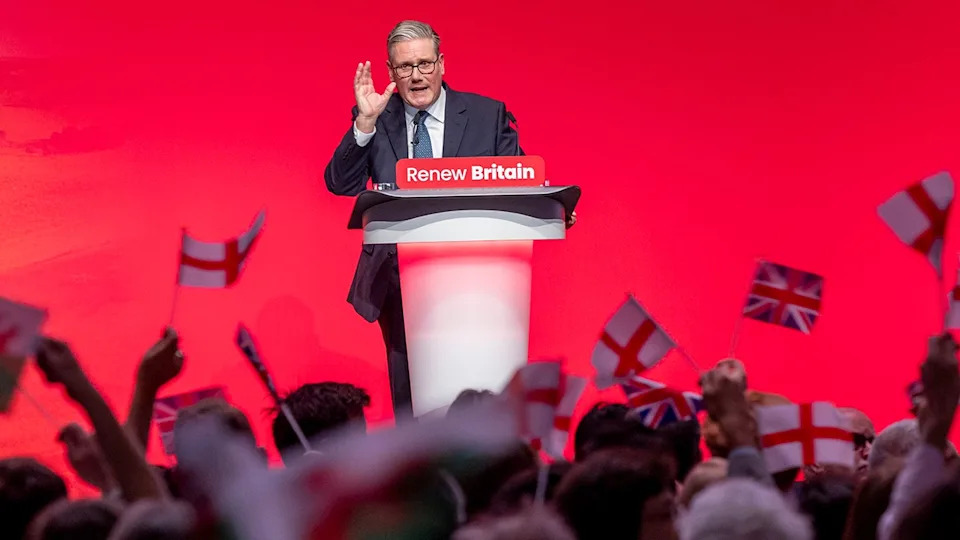
Delegates wave flags as Sir Keir Starmer, the British Prime Minister and leader of the Labour Party delivers his speech to several standing ovations at the 2025 Labour Party Conference on Sept. 30, 2025, in Liverpool, United Kingdom.
Grassroots Response And Political Reactions
Grassroots campaigns such as 'Operation Raise the Colours' encouraged citizens to display the Union Jack and St George's Cross in streets and at home as a show of national identity. The revival of British and English flags has been criticised by opponents who say the displays can be deployed to signal anti-migrant or far-right sentiment.
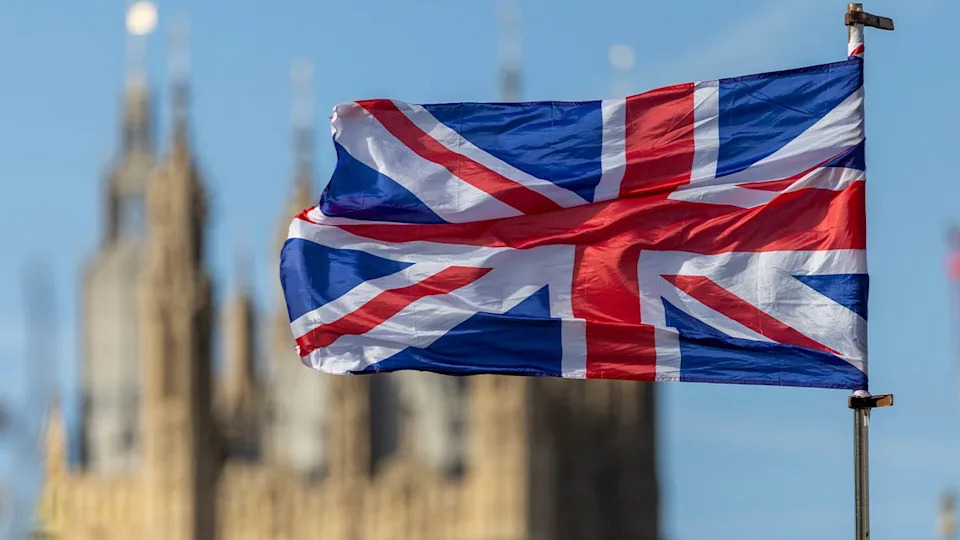
A British Union flag flies from a souvenir stall near the Houses of Parliament in London, UK, on Monday, Oct. 27, 2025.
At Labour's annual conference, Prime Minister Keir Starmer sought to recover a patriotic tone, urging supporters: 'Let's fly all our flags... because they are our flags, they belong to all of us.' He framed the flags as inclusive symbols, saying they can be 'flying proudly, as we celebrate differences and oppose racism.'
Opposition voices were swift to criticise Labour's record. Lee Anderson, chief whip for the Reform Party, said Labour activists were more likely to fly Palestinian flags than St George's Crosses — a comment used by critics to argue Labour has been ambivalent about traditional symbols.
Local Decisions And Official Justifications
Belfast City Council justified hoisting the Palestinian flag 'in recognition of the International Day of Solidarity with the Palestinian People' and said it would be raised above City Hall on the next available day. Several other councils either declined to comment or did not respond to requests for explanation.
Data And Public Opinion
Demographic and polling data feed into the debate. A March 2025 report from the Muslim Council of Britain noted the Muslim population increased by roughly 1.2 million between 2011 and 2021, representing about 6% of the U.K. population. A YouGov study cited in media reports found striking differences in how flags are perceived by party affiliation and ethnicity: for example, it reported 58% of 2024 Labour voters viewed the English flag as a racist symbol, while lower shares of Conservative and Reform voters said the same. The poll also found majorities of some ethnic-minority groups perceive certain flag displays as motivated by anti-migrant sentiment.
Why This Matters
At stake are questions about what civic symbols should represent in a multicultural democracy and who gets to decide how public spaces are used to express political or cultural solidarity. The controversy connects to broader tensions over migration, free speech, and how political parties present patriotism to voters.
Reporting for this piece relied on contemporaneous news coverage and polling information from Fox News Digital, YouGov, the Muslim Council of Britain and national media outlets. Several councils did not respond to requests for comment.


