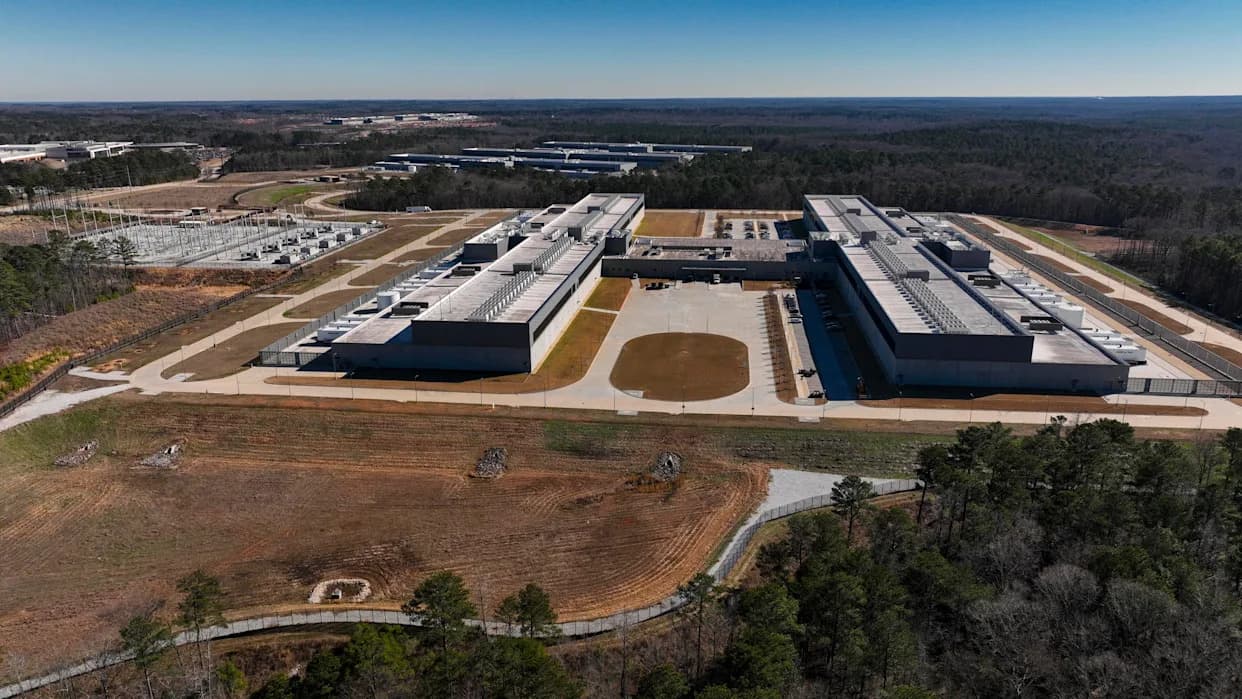
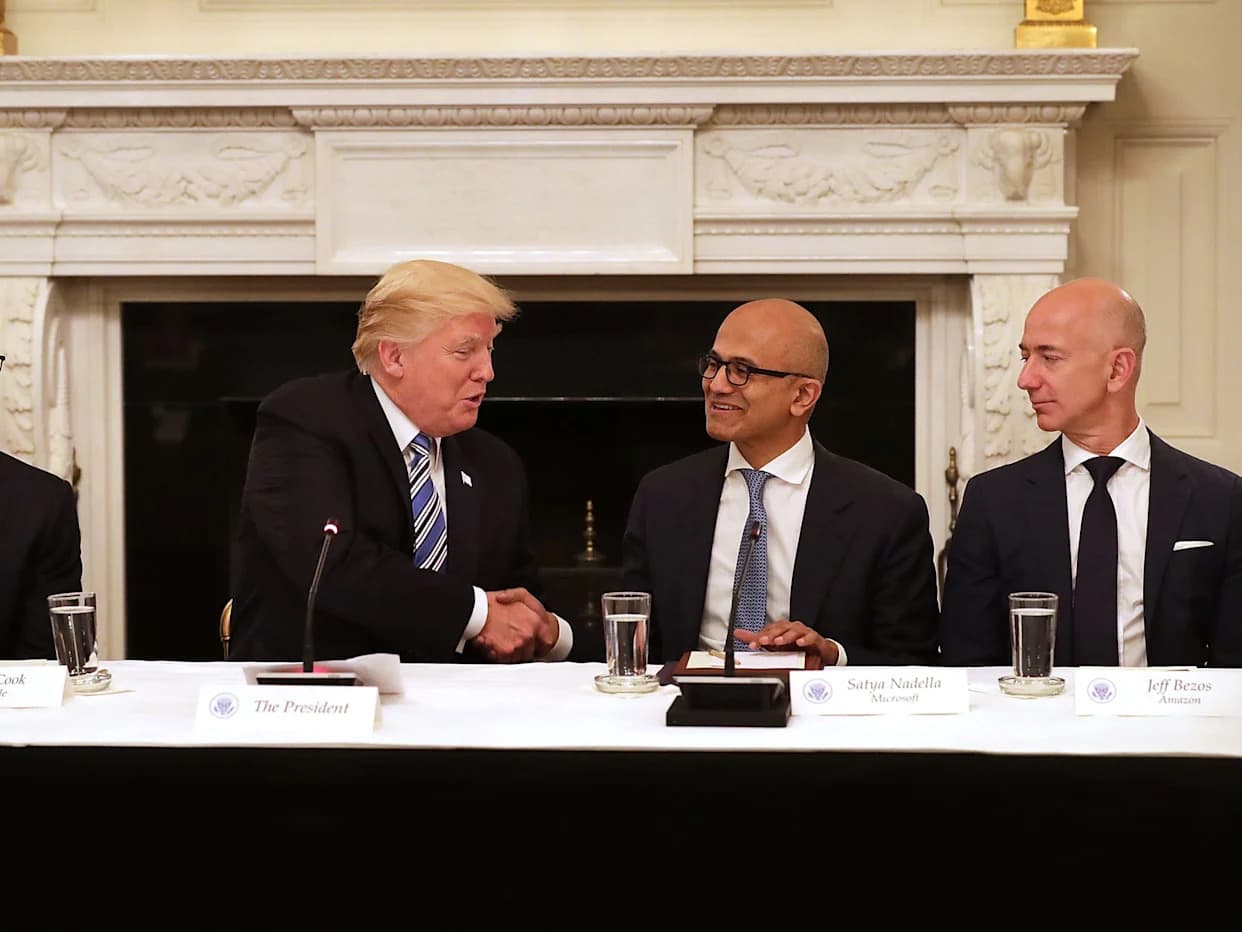
The White House urged PJM Interconnection to run an emergency capacity auction and consider price caps after a recent auction sent generator prices sharply higher. Officials proposed accelerating roughly $15 billion in new power projects and a BYOG ("bring your own generation") approach that would make large users like data centers help fund new capacity built for them. PJM says it is reviewing the ideas and was not invited to the White House event.
White House Pushes Emergency Auction on PJM Grid to Avert Rolling Blackouts as Data-Center Demand Surges
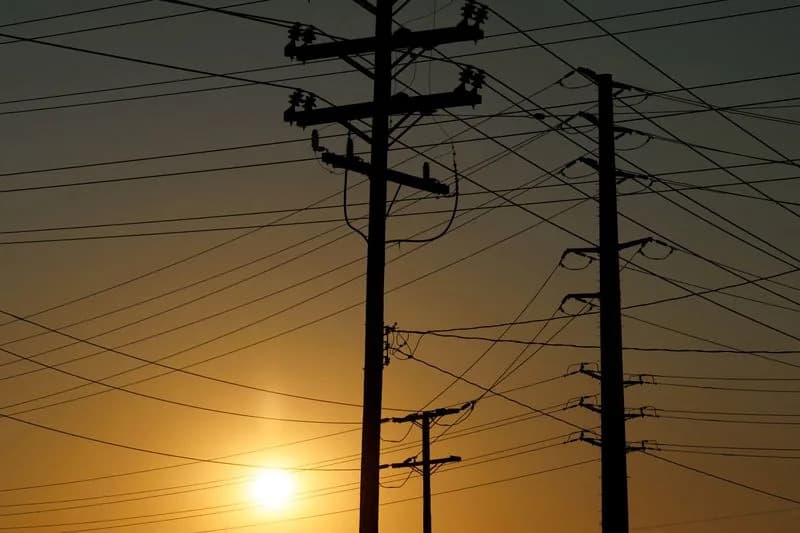
FILE PHOTO: Electrical transmission poles and lines are shown in the early morning of a hot summer day in Commerce, California, U.S, August 7, 2025. REUTERS/Mike Blake/File Photo
WASHINGTON, Jan 16 (Reuters) - The White House on Friday urged PJM Interconnection, the operator of the nation's largest electricity grid, to run an emergency capacity auction to help prevent rolling blackouts as fast-growing demand from data centers outpaces new generation construction.
The administration's proposal targets PJM, which serves about 67 million customers across 13 states and Washington, D.C., and calls for a special procurement to address sharply higher capacity prices and rising reliability risks across the Mid-Atlantic region. PJM is expected to announce its own response and plans later on Friday.
White House officials and state governors outlined steps to accelerate new generation. At a White House event, Energy Secretary Chris Wright and Interior Secretary Doug Burgum joined several governors to promote measures aimed at speeding construction of more than $15 billion in new power projects within the PJM footprint. Officials say the goal is to build a clearer cushion against rotating blackouts as demand grows.
The White House also proposed capping what existing power plants can charge in PJM's capacity market. A recent PJM capacity auction produced record-high generator clearing prices—reported to be more than 800% higher than the prior year—driving higher electricity bills for households and businesses.
The plan would also require large electricity consumers such as data centers to help pay for new generation built to serve them, whether they ultimately consume that power or not. Officials have dubbed the approach BYOG, or "bring your own generation," which aims to ensure new load does not simply bid up scarce capacity and existing supply.
PJM said it is reviewing the principles put forward by the White House and the governors; a PJM spokesperson told Reuters the grid operator was not invited to the event. PJM has previously warned that permitting, interconnection and construction timelines present constraints even as it processes a wave of new project requests.
Demand Outlook and Interconnection Backlog
PJM forecasts that summer peak demand on the grid will climb by about 70 gigawatts to roughly 220 gigawatts over the next 15 years; the record summer peak was 165 gigawatts in 2006. Since 2023, PJM says it has processed more than 170 gigawatts of new generation requests, and nearly 60 gigawatts of projects have completed PJM's study process and been offered or signed interconnection agreements.
Political Backlash Over Rising Bills
Spiking electricity costs across the PJM region have prompted political pressure, with some governors threatening to leave the regional grid. Last summer, nine state governors sent an open letter to the PJM board criticizing the operator for not doing enough to address growing affordability and reliability concerns.
“Unfortunately, what we have seen in our region is that PJM has been too damn slow to let new generation onto the grid at a time where energy demand is going up,” Pennsylvania Governor Josh Shapiro said at the White House event.
Burgum added that PJM has, so far, been fortunate to avoid widespread blackouts but warned that growing demand and tight supply margins increase long-term risk.
(Reporting by Jarrett Renshaw in Philadelphia, Tim McLaughlin in New York and Timothy Gardner in Washington; Editing by Liz Hampton and Matthew Lewis)
Help us improve.