
The Myanmar military has opened a controversial three-phase election while a civil war that followed the 2021 coup continues. Aung San Suu Kyi remains imprisoned and major opposition groups have been sidelined, with many critics calling the vote a move to cement military power. Large areas will not vote amid ongoing fighting, and the humanitarian crisis has deepened, with over 3 million displaced. International responses are split as observers warn the poll lacks conditions for free and fair participation.
Myanmar Junta Begins Controversial Three-Phase Election Amid Ongoing Civil War

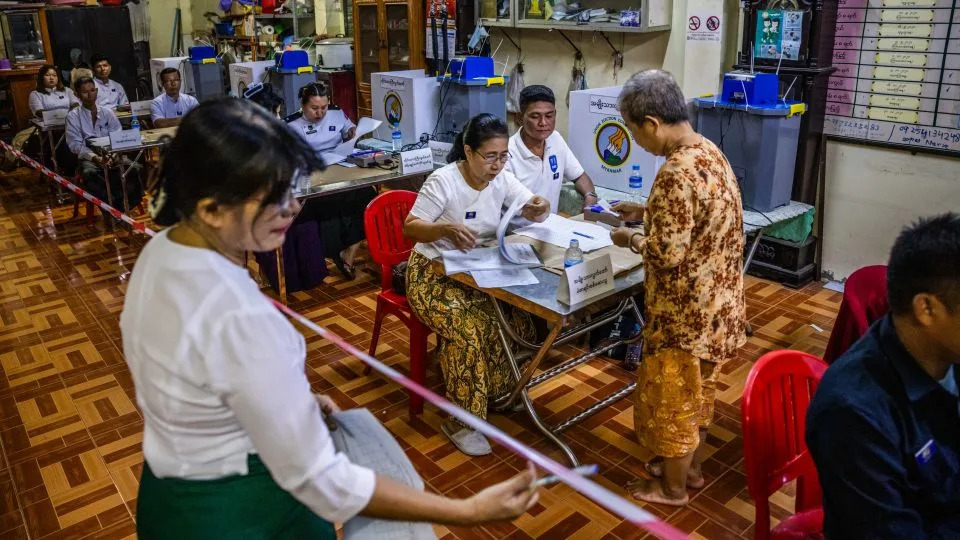
People line up to vote at a polling station during the first phase of Myanmar's general election in Yangon on December 28, 2025. - Lilian Suwanrumpha/AFP/Getty Images
Voters queued at polling stations across Myanmar on Sunday as the ruling military junta opened a three-stage election it says will restore democratic rule — nearly five years after ousting an elected government and triggering a brutal civil war that continues to ravage the country.
Ballot, Repression and Restricted Choice
The country’s most prominent political figure, Aung San Suu Kyi, remains imprisoned and her party has been dissolved. The ballot is dominated by parties widely viewed as aligned with the military, and hundreds have been detained under a recently enacted law that criminalizes obstruction, disruption and criticism of the vote.
People vote in downtown Yangon during the first round of the general election in Yangon, Myanmar on December 28, 2025 - Lauren DeCicca/Getty Images
Voters and observers report that some electronic vote-counting machines will only accept ballots marked for a party, effectively preventing blank or protest votes. An election commission stacked with junta appointees has approved the parties on the ballot, while critics say meaningful competition is severely constrained.
Areas Without Voting And The Security Situation
Large parts of Myanmar will not see voting at all as the junta battles a patchwork of ethnic armed groups and pro‑democracy "People’s Defense Forces" across mountainous borderlands and the central plains. A year ago, those anti‑junta forces won a series of notable gains; since then, analysts say the military — reinforced by tens of thousands conscripted under a new draft law and supported by fresh Chinese weaponry — has reclaimed territory, creating the conditions for the junta to stage the poll.
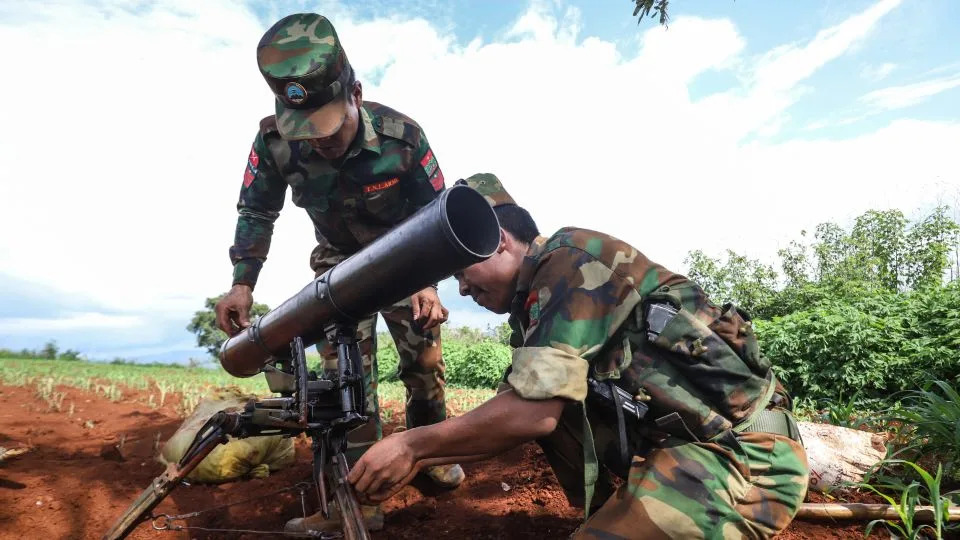
Members of the ethnic minority armed group Ta'ang National Liberation Army (TNLA) during clashes with Myanmar's military in Kyaukme in Myanmar's northern Shan state, on July 3, 2024 - Stringer/AFP/Getty Images
What The Junta Says And International Reaction
Senior Gen. Min Aung Hlaing, who led the 2021 coup, has urged voters to pick candidates who can "cooperate sincerely with the Tatmadaw" (the armed forces). The junta insists the election aims to build a "disciplined multiparty democratic system" and has dismissed international criticism as irrelevant.
Most Western governments, including the United States, have not recognized the junta as Myanmar’s legitimate government and have criticized the vote. Russia and China have been more supportive or neutral, while neighboring states such as Thailand and India have sought engagement to reduce cross‑border instability.
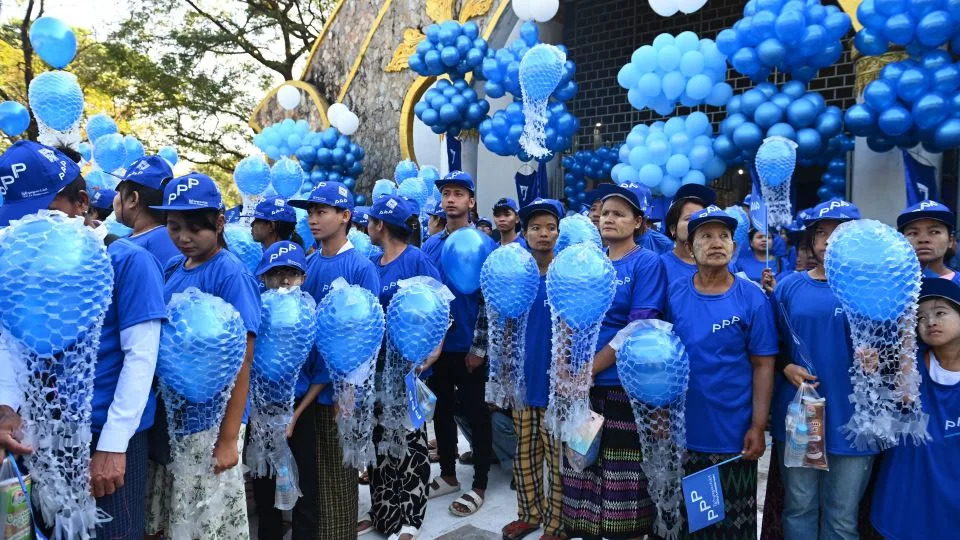
Supporters hold blue balloons as they attend an election campaign event by Thet Thet Khine, chairperson of the People's Pioneer Party (PPP), in Yangon on December 25, 2025. - Sai Aung Main/AFP/Getty Images
"Things are bad. Conditions have actually significantly worsened," Tom Andrews, the UN special rapporteur on Myanmar, told reporters, warning of a deteriorating humanitarian crisis and blocked aid access.
Humanitarian Toll And Wider Consequences
Nearly five years of conflict have devastated Myanmar’s economy and social fabric. The UN estimates more than 3 million people have been displaced. Tens of thousands of young men have fled conscription, and lawlessness has grown: the UN says Myanmar produces a large share of regional methamphetamine and illicit opium, and scam operations have proliferated in territories outside government control.
A severe earthquake in March compounded suffering by disrupting aid and displacing communities further.
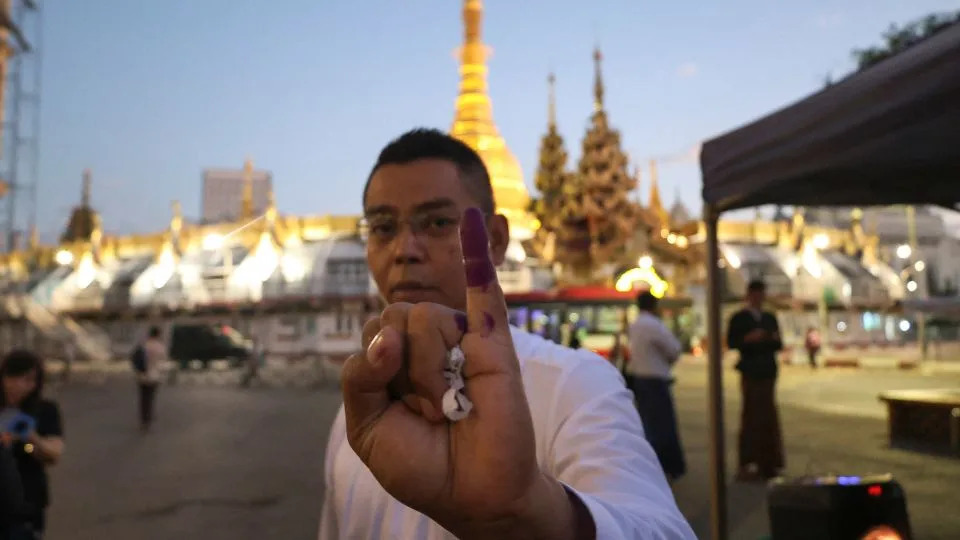
A man shows his ink-marked finger after voting at Kyauktada Township Polling Station No. 1, on the day of the general elections in Kyauktada, Myanmar on December 28, 2025. - Stringer/Reuters
What To Expect From The Vote
The election is scheduled in three phases: the first day of voting began on Sunday, with the second on January 11 and the third on January 25. The junta will have a guaranteed hold on power through constitutional mechanisms that reserve 25% of parliamentary seats for the military. Independent analysts warn any new administration is likely to produce only cosmetic change and will not threaten the military’s core hold on political and economic power.
Voices From The Ground
Many citizens say they see little point in voting. Some who previously took part in the 2015 and 2020 elections said the current vote lacks genuine choice; others voting in Yangon expressed guarded hope that the vote could help end instability, even as many displaced people and residents of conflict zones called the poll a sham.
Key Dates: Voting in three phases — initial day on Sunday, phase two on January 11, phase three on January 25. Outcome timeline remains unclear.


