GE and Lockheed Martin have demonstrated a rotating detonation engine in a ramjet configuration during ground tests, a milestone that could improve hypersonic missile efficiency. New high-speed inlets let the engine adapt between ramjet and scramjet regimes and operate across more altitudes. Engineers estimate roughly a 25% efficiency gain versus conventional rocket stages, which could shrink booster needs and allow lighter, cheaper missiles with greater range or payload. Further testing and scaling are still required before operational deployment.
GE and Lockheed Demo Rotating-Detonation Ramjet That Could Shrink and Extend Hypersonic Missiles
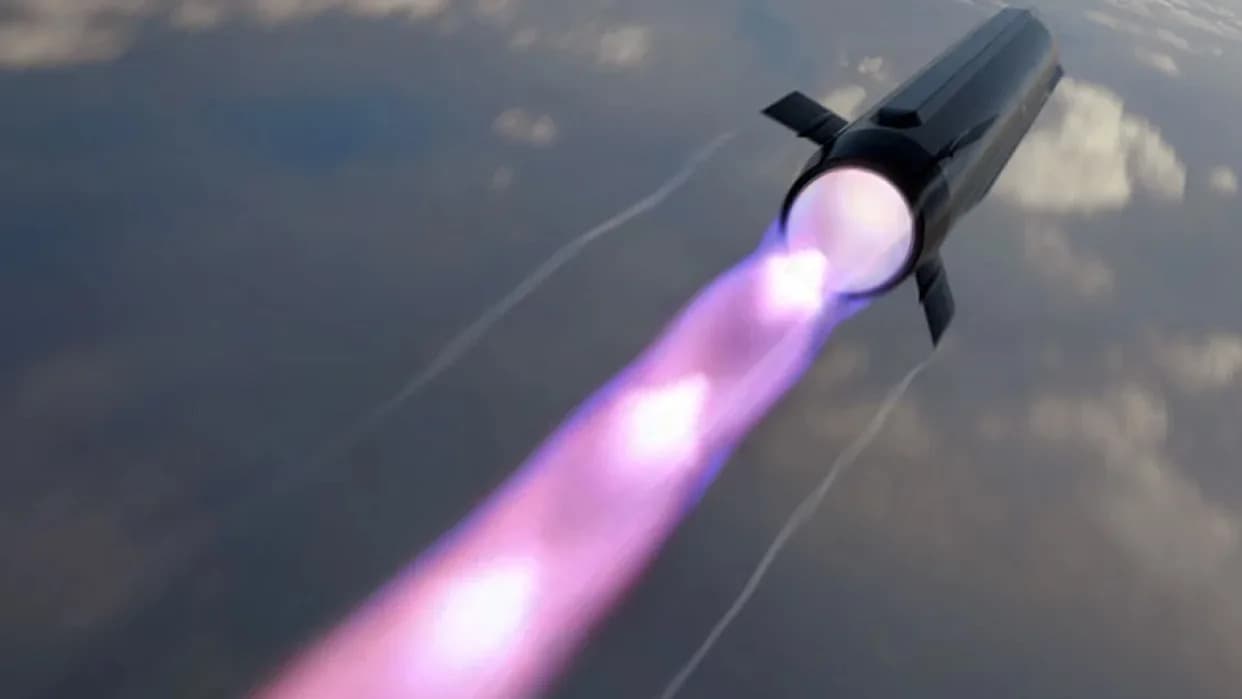
(Credit: Lockheed Martin)
GE and Lockheed Martin have publicly demonstrated a rotating detonation engine integrated into a ramjet layout in a series of ground tests. Engineers say the design could deliver meaningful efficiency gains and enable smaller, cheaper hypersonic missiles with greater range or payload capacity.
What Was Demonstrated
The teams showed a compact detonation-core ramjet working with new high-speed inlets that allow the engine to adapt between ramjet and scramjet flow regimes and operate effectively across a wider range of altitudes. The work follows roughly two years of internal investment by the partners.
Randy Crites, Vice President and General Manager at Lockheed Martin Advanced Programs: This demonstration reflects collaboration and innovation to get affordable capability into the hands of warfighters. The compact ramjet uses Lockheed Martin inlet expertise and offers extended range at extreme speeds.
Why It Matters
Traditional ramjets only become efficient once a vehicle is already travelling near Mach 3 (about 2,300+ mph), which usually forces designers to add a large rocket booster. A rotating detonation engine is estimated to be roughly 25% more efficient than conventional rocket stages, and that saving could reduce or shrink the booster requirement.
With lower booster mass and improved fuel efficiency, missiles could be redesigned to be lighter and leaner. Those weight and cost savings could be converted into longer range, larger payloads, or higher production volumes — making hypersonic weapons more versatile and less costly per unit.
Potential Applications and Caveats
The propulsion concept could be adapted to different airframes and ground-launched systems, broadening how hypersonic weapons might be deployed. However, the demonstration to date is a developmental milestone; further testing and scaling are required before an operational missile is certified. Technical, integration, and production challenges remain before the concept can be fielded.
Overall, the tests by GE and Lockheed Martin mark an important step toward more efficient hypersonic propulsion and could influence future missile architecture if the technical gains hold up in follow-on development.
Help us improve.