
The B‑2 Spirit’s radar‑absorbing skin and internal layout made it unusually vulnerable to water, reducing availability despite a per‑airframe cost above $2 billion. A GAO study found the jet would have been mission‑capable 66% of the time but actually flew about 26% of the time due to maintenance on low‑observable materials. Technicians routinely reapplied nearly 3,000 feet of specialized tape and performed 30–80 hour cures in climate‑controlled shelters, and moisture in port transducers contributed to the 2008 "Spirit Of Kansas" crash. Subsequent automation of tape/coating application and design changes in the B‑21 aim to prevent similar problems.
Why The B‑2 Stealth Bomber Struggled To Fly In The Rain — And What It Taught The Air Force

A B-2 Spirit stealth bomber, The Spirit of Hawaii, with its landing gear deployed and snow capped mountains in the background. - Northrop Gruman
The Northrop Grumman B‑2 Spirit has long been an icon for aviation fans: a flying‑wing stealth bomber whose price tag—over $2 billion per airframe in a 1997 estimate—suggested unmatched capability. Yet one of the most ordinary elements on Earth—water—proved uniquely disruptive to the B‑2’s mission readiness.
Why Water Was a Problem
The B‑2’s low‑observable outer skin was engineered to absorb and scatter radar energy, but those materials were relatively fragile and susceptible to environmental erosion. Rain, humidity and standing water could degrade coatings and adhesive tapes. At the same time, design choices allowed water to collect in ducts, valves and compartments, creating both corrosion and intermittent sensor failures.
Operational Impact and Maintenance Burden
The aircraft’s sensitivity had real operational consequences. A U.S. General Accounting Office (GAO) study estimated the B‑2 would have been mission‑capable about 66% of the time, but it actually flew only roughly 26% of the time because of low‑observable skin problems. Preserving the stealth signature was painstaking: technicians routinely removed and reapplied nearly 3,000 feet of specialized tape and caulking to seal panel gaps.
Many repairs required long cure times—typically 30 to 80 hours—in climate‑controlled shelters. Those needs forced the Air Force to accept that the B‑2 could not be widely deployed without protective infrastructure, leading to the fielding of Extra Large Deployable Aircraft Hangar Systems (XLDAHS).
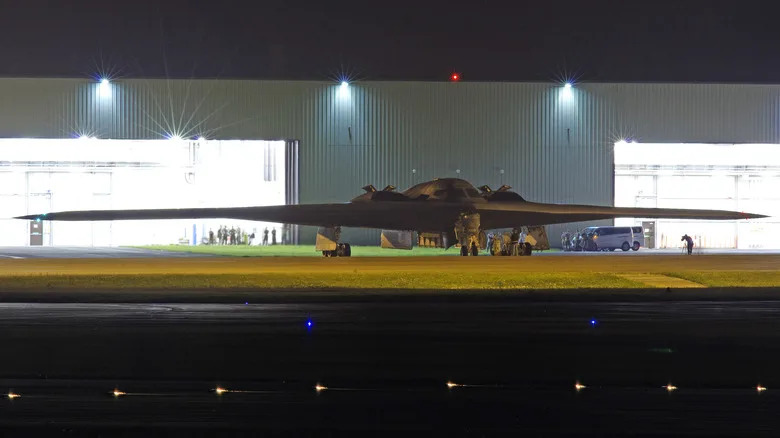
A B-2 Spirit outside of a hangar at night. - Gary Chalker/Getty Images
The 2008 "Spirit Of Kansas" Crash
Rain and moisture were not only logistical headaches; they also contributed to a fatal accident. In 2008 the B‑2 nicknamed Spirit Of Kansas crashed shortly after takeoff from Andersen AFB, Guam. The Air Force investigation concluded distorted air‑data — specifically, "moisture in the aircraft's port transducer units during air data calibration" — produced erroneous sensor readings that led to a stall.
The report also highlighted how maintenance communication gaps made the problem worse. A practical remedy—turning on heaters to dry the transducer units before flight—was known by some crews but was not consistently documented or shared, illustrating how informal, experience‑based fixes sometimes substituted for formal procedures.
Fixes, Lessons Learned, And The B‑21
Northrop and the Air Force took steps to reduce the B‑2’s labor intensity. Automated machines were developed to apply outer tapes and coatings more consistently, lowering reliance on slow manual taping. Reporting on the follow‑on B‑21 Raider suggests its coatings are applied as a final, controlled production step to avoid repeating the B‑2’s "tape‑and‑caulk" maintenance cycle.
Bottom line: The B‑2 combined cutting‑edge stealth technology with maintenance realities that made it vulnerable to something as mundane as moisture. The program’s experience produced engineering and procedural changes that shaped how the Air Force approaches low‑observable aircraft today.


