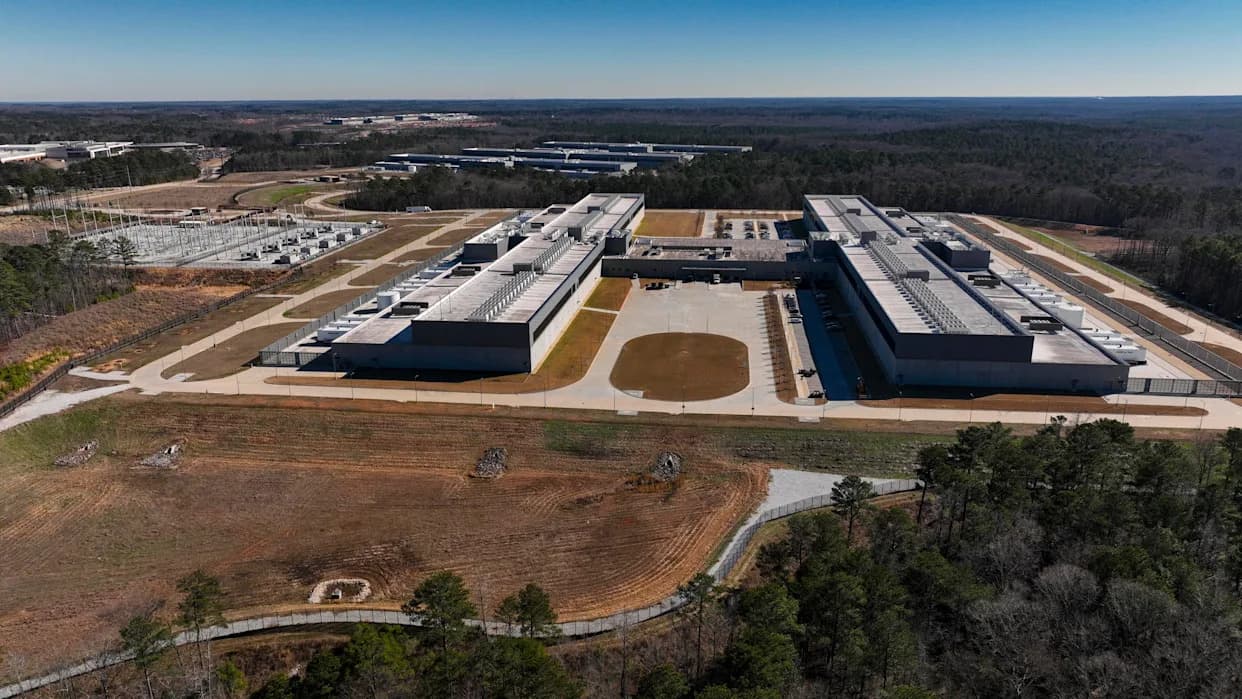
ICE’s budget has surged under recent appropriations and emergency legislation, potentially reaching nearly $30 billion and coinciding with about a 30% staff increase. Much of that growth traces to the OBBBA package, which allocated billions for detention expansion and staffing. Analysts estimate the added funds could have financed major portions of SNAP, school lunches, CHIP, Section 8 vouchers, or provided direct annual benefits to hundreds of thousands of Americans. Legislative rules and existing obligations make reallocation difficult, even as public polling shows substantial support for cutting ICE funding.
How ICE’s Enlarged Budget Could Have Funded Major Domestic Programs
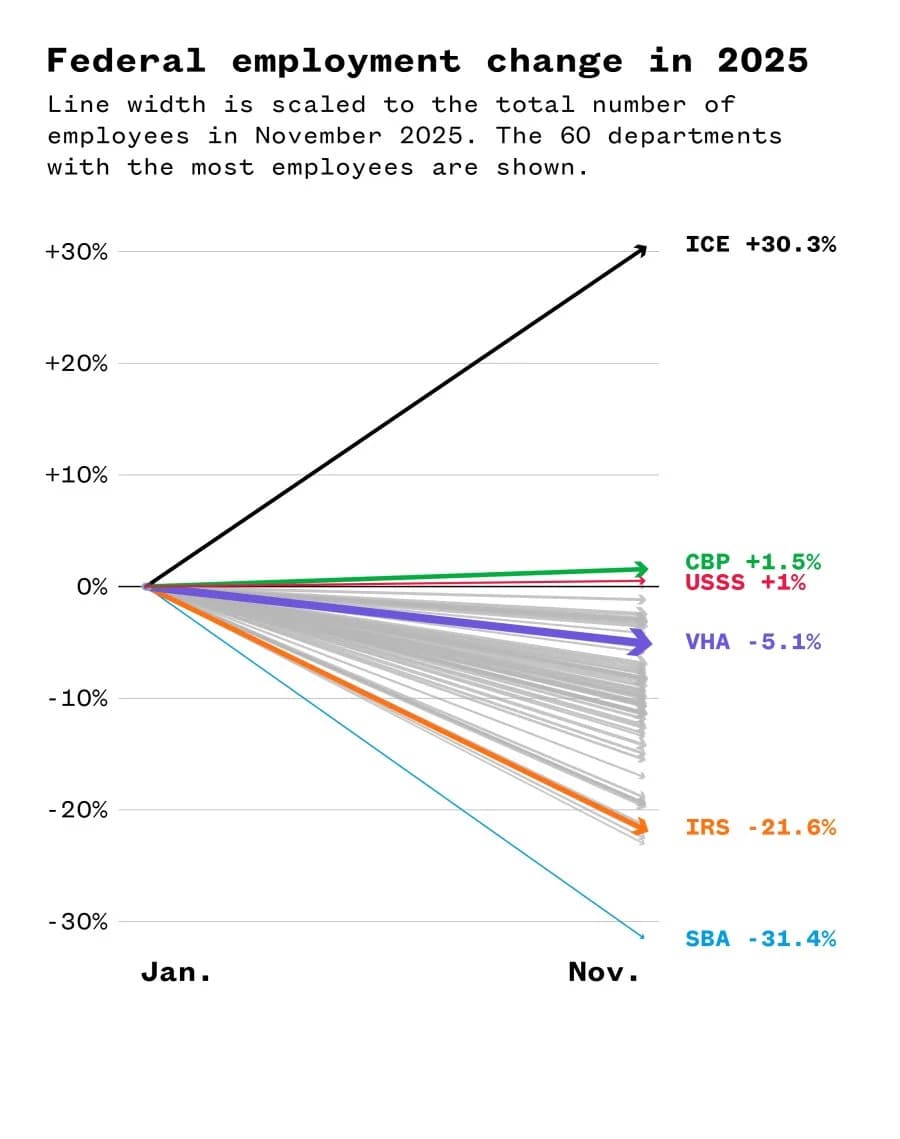
Analysis of data from the Office of Personnel Management.Philip Bump/MS NOW
President Donald Trump recently highlighted a roughly 200,000-person reduction in the federal workforce by the end of 2025, even leaking private jobs data about 12 hours before its public release. While the administration has cut jobs across many agencies, some components of the federal government have expanded — most notably Immigration and Customs Enforcement (ICE), which grew by about 30% over the year.
Where the Money Came From
ICE’s growth is tied in part to the so-called One Big Beautiful Bill Act (OBBBA), a funding package that bundled several priorities. ICE carried a roughly $10.4 billion baseline from last fiscal year into the current year, and OBBBA also earmarked roughly $45 billion over four years to expand detention capacity and about $30 billion for staffing and bonuses. Counting just those increases, ICE’s budget for the fiscal year that began in October could approach $30 billion.
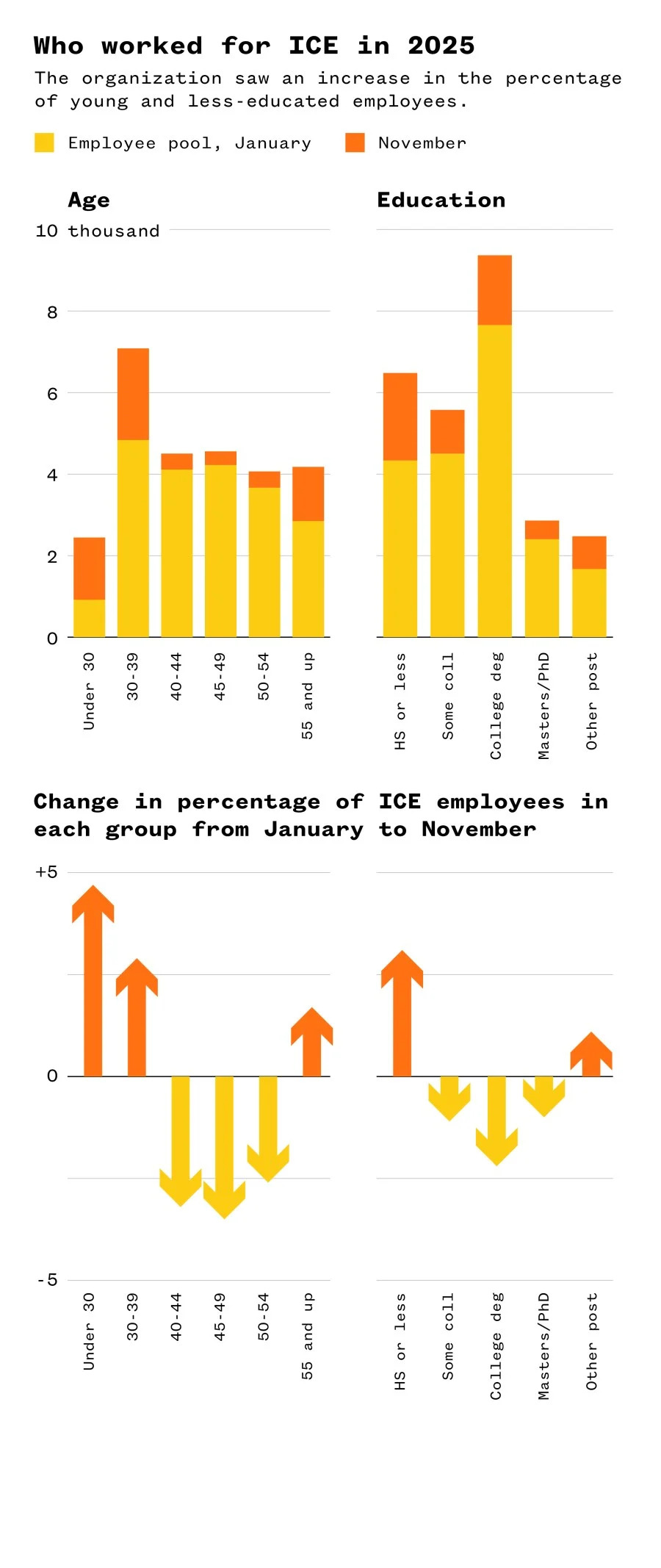
Analysis of data from the Office of Personnel Management.Philip Bump/MS NOW
How ICE Has Spent Its Budget So Far
Office of Personnel Management (OPM) data show that the agency’s recent hiring skewed younger and toward employees without college degrees: staff under 40 rose by roughly two-thirds, staff aged 40 and over increased by about one-sixth, employees without a college degree climbed ~36%, and the number of staff with degrees rose ~25%.
Scale: What $30 Billion Actually Means
Large dollar amounts are hard to visualize. Moving from just over $10 billion to nearly $30 billion raises ICE’s potential spending from about $330 per second to approximately $930 per second — a deliberate and material escalation. The administration has said it plans to hire 10,000 new agents and double detention capacity to 100,000 beds.
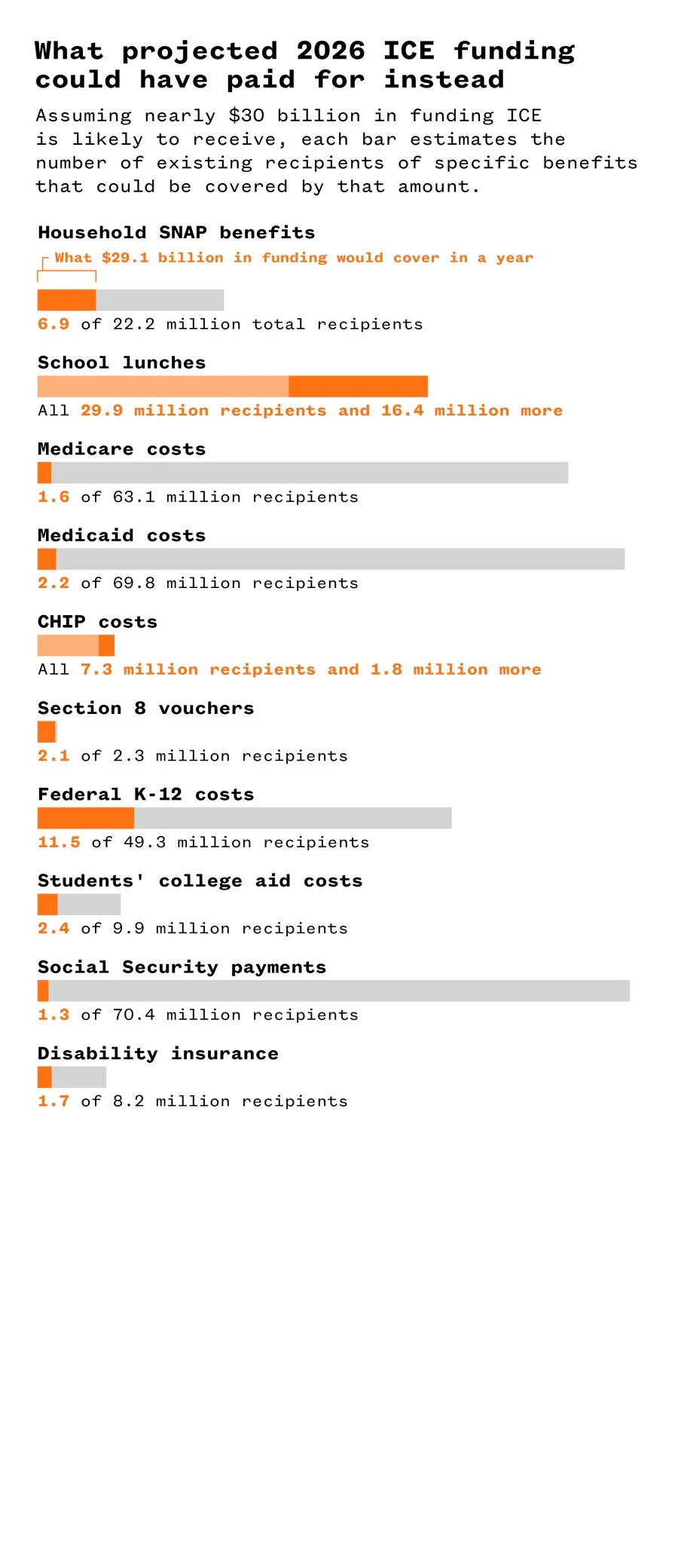
Analysis of data from the Department of Agriculture (SNAP and school lunch), USA Facts (Medicare), Medicaid.gov (Medicaid and CHIP enrollees), KFF (Medicaid and CHIP costs), Department of Housing and Urban Development (Section 8), USA Facts (K-12 costs), StudentAid.gov (student aid) and Social Security Administration (Social Security and disability).Philip Bump/MS NOW
What That Money Could Have Bought Instead
Using program enrollment and cost estimates (mixing recent enrollment data with available cost figures), just under $30 billion could have been redirected to a number of domestic priorities for a year. Roughly, it could fund:
- About one-third of SNAP (food stamp) benefits nationwide
- The entire national school lunch program
- Nearly all Section 8 housing vouchers
- The Children’s Health Insurance Program (CHIP), including state spending
- A quarter of federal K–12 education spending
- One-fifth of federal disability insurance costs
Or, spread across programs, just under $30 billion could provide annual benefits for roughly 275,000 recipients each across SNAP households, school lunch recipients, Medicare beneficiaries, Medicaid enrollees, CHIP children, Section 8 families, K–12 students, college borrowers, Social Security beneficiaries, and disability recipients — with about $390 million remaining.
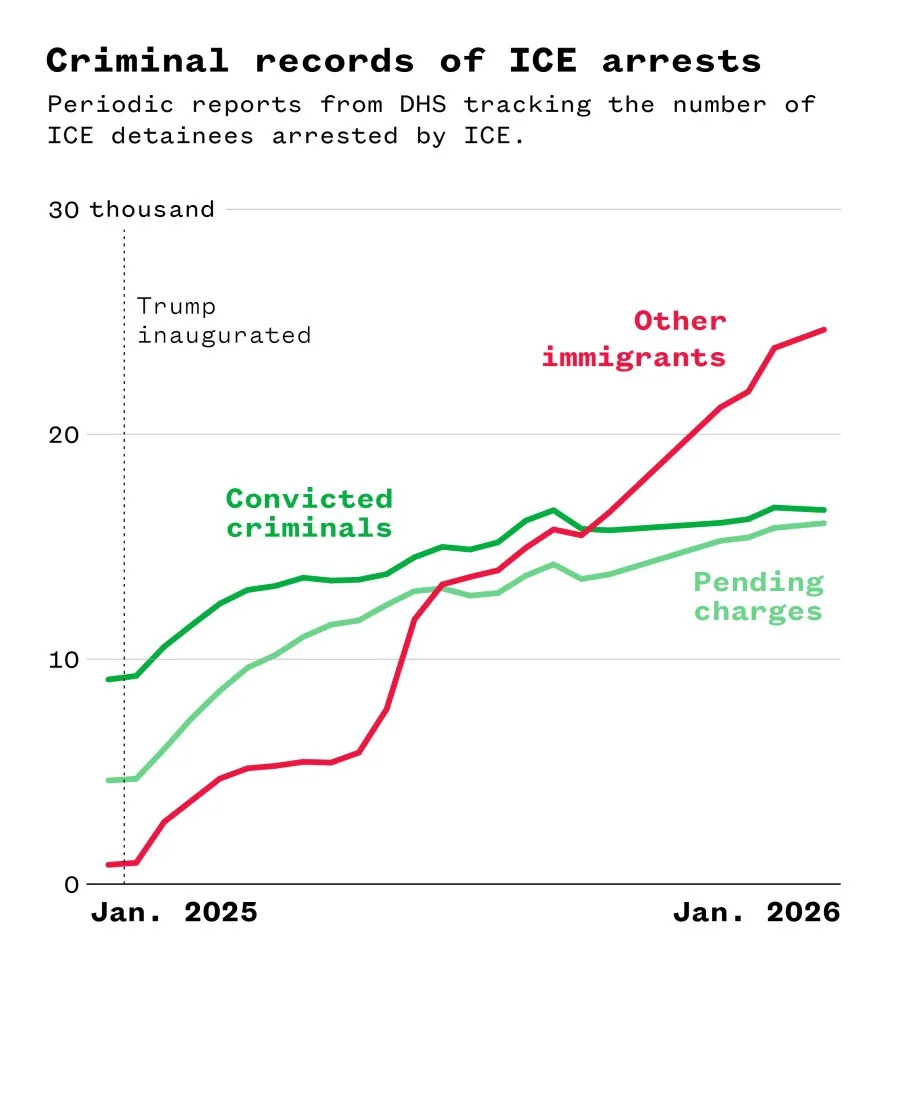
Analysis of data from the Department of Homeland Security.Philip Bump/MS NOW
Enforcement Outcomes And Who Was Affected
Last year, DHS and ICE operations resulted in about 605,000 deportations and tens of thousands of arrests. Analysis from Austin Kocher at Syracuse University indicates that 92% of the rise in ICE arrests and detentions was driven by people with no criminal history. Among those arrested and held in ICE detention, a majority had no criminal convictions.
Political And Legislative Constraints
Federal budgeting reflects congressional choices. The stopgap resolution that ended the government shutdown preserved prior-year funding levels but expires on Jan. 30, compelling Congress to decide whether to extend those levels or pass new appropriations. Meanwhile, ICE argues that roughly $19 billion from OBBBA is already committed to cover its expenses, creating practical and political obstacles to reallocating those funds.
Bottom line: Tens of billions of dollars now available to ICE are poised to expand enforcement and detention at a time when public polling shows substantial support for cutting the agency’s size and funding. Redirecting that money toward social programs would be politically challenging but could materially help hundreds of thousands of Americans.
Originally published on MS NOW.
Help us improve.