
Progressive Democrats want to use the Jan. 30 appropriations deadline to force limits on ICE after the fatal Minnesota shooting, even if it risks a government shutdown. Moderates and party leaders are resisting, worried about political fallout and the practical hurdles of securing changes — particularly in the Senate where 60 votes are typically required. The incident has also disrupted Republican plans for a bipartisan Homeland Security funding bill and intensified debate over whether accountability measures should be attached to appropriations or pursued through other committees.
Progressives Push Funding Showdown Over ICE After Fatal Minnesota Shooting — Democrats Split Ahead Of Jan. 30 Deadline

Members of US Immigration and Customs Enforcement (ICE) stand guard after a driver of a vehicle was shot in Minneapolis on Wednesday. - Tim Evans/Reuters
Progressive Democrats on Capitol Hill are pressing their party to use the looming appropriations fight to impose restrictions on Immigration and Customs Enforcement (ICE) after an ICE officer fatally shot a U.S. citizen in Minnesota. Some liberals say they are willing to risk a government shutdown to force reforms; moderates and party leaders warn that a shutdown would be politically fraught as Congress races toward a January 30 funding deadline.
Why The Split
Lawmakers on both sides of the intraparty debate say they want accountability, but differ on tactics. "I think it should be a red line," Rep. Jimmy Gomez (D-Calif.) told CNN, arguing that funding must come with limits. Sen. Chris Murphy (D-Conn.), a senior appropriator, has urged leaders to press for changes, saying he cannot support a bill that funds what he called "the extent of the depravity."
But many moderates caution that a shutdown — particularly in a midterm year and on an issue where Republicans often have the messaging advantage — would be risky. Sen. Angus King, who caucuses with Democrats, said he supports reform but added: "I never like shutdowns." Rep. Jeanne Shaheen (D-N.H.) echoed concerns about reopening a major funding fight.
Practical Limits In The Senate
Senate rules make pursuing appropriations leverage difficult: major funding measures typically need 60 votes to advance, meaning a handful of Democrats would have to join Republicans for a bill to pass. Senate Minority Leader Chuck Schumer declined to commit to making ICE restrictions a top Senate demand, saying key committees would hold an "important and serious discussion."
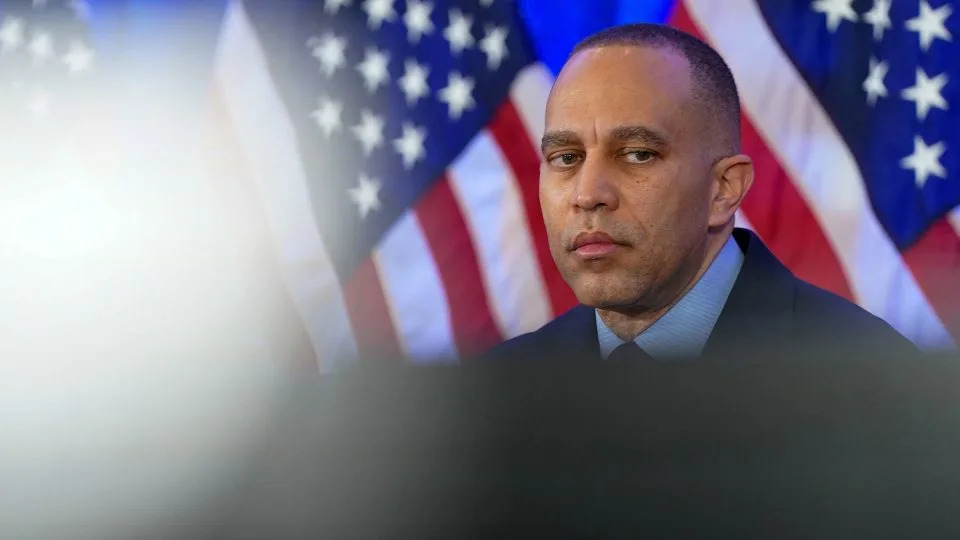
Democratic Leader Hakeem Jeffries on Capitol Hill in Washington, DC, on January 6. - Elizabeth Frantz/Reuters
How The Shooting Is Affecting Funding Talks
The Minnesota shooting has already complicated Republican plans for a bipartisan Department of Homeland Security (DHS) funding bill. House GOP leaders had planned to bring a DHS funding measure to the floor next week as part of a package, but two GOP sources told CNN the bill could be pulled amid fallout from the incident.
Some Democrats warn that falling short on a funding agreement now could give the administration more discretion over spending. Others note much of ICE's recent funding arrived through last year's GOP domestic agenda bill — roughly $170 billion for border security and ICE — compared with about $66 billion in the Senate's current proposal.
Proposals And Red Lines
Progressive lawmakers want concrete accountability measures tied to appropriations, including body cameras, enhanced training, and stricter use-of-force rules. Rep. Lou Correa (D-Calif.) has sent a letter to appropriators urging such controls. Rep. Mark Pocan, a senior member of the House appropriations panel, predicted the divide might derail a standalone DHS appropriations bill and lead lawmakers to pursue a longer-term funding extension instead.
"Nobody wants another government shutdown, but we have to force DHS and Kristi Noem to do the right thing," Rep. Robert Garcia (D-Calif.) told CNN.
Outlook
For now, House and Senate Democratic leaders appear cautious about turning the ICE dispute into an appropriations showdown. The coming days will test whether progressives can translate outrage into legislative leverage without triggering a politically risky shutdown — and whether Republicans will continue to press a bipartisan DHS funding path amid heightened scrutiny of ICE.
Reporting: This article synthesizes statements from Democratic lawmakers and multiple CNN sources about internal debates over funding strategy and the political ramifications of the Minnesota shooting.
Help us improve.


