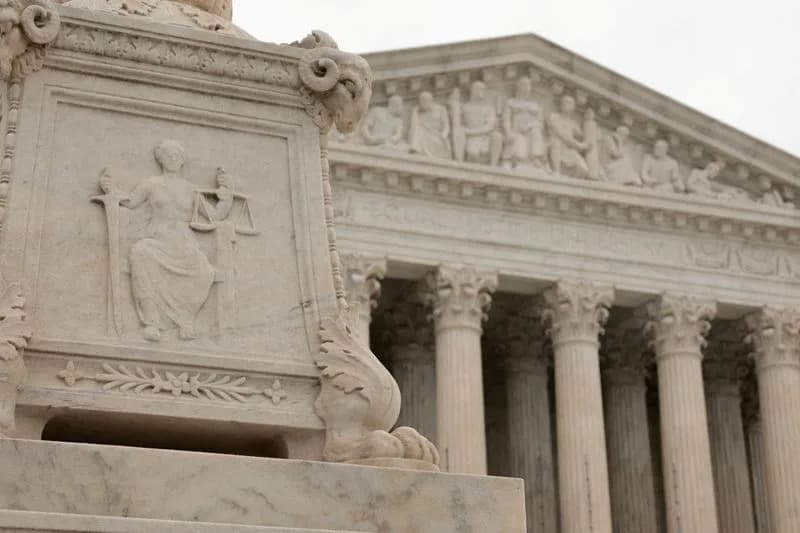
The deadly Minneapolis shooting involving an ICE agent has renewed calls from progressive Democrats to use appropriations to rein in ICE and DHS. With a government funding deadline of Jan. 30, 2026 looming, some activists suggest cuts or withholding funds as leverage, while party leaders favor oversight and avoiding another shutdown. The outcome will hinge on whether Democratic leaders resist base pressure or negotiate concessions if their votes become pivotal.
Congress Faces Funding Showdown Over ICE After Minneapolis Shooting

Residents confront federal agents and Border Patrol agents over their presence in their neighborhood on Atlantic Boulevard in the Los Angeles suburb of Bell. California last year passed a law banning authorities from wearing masks.
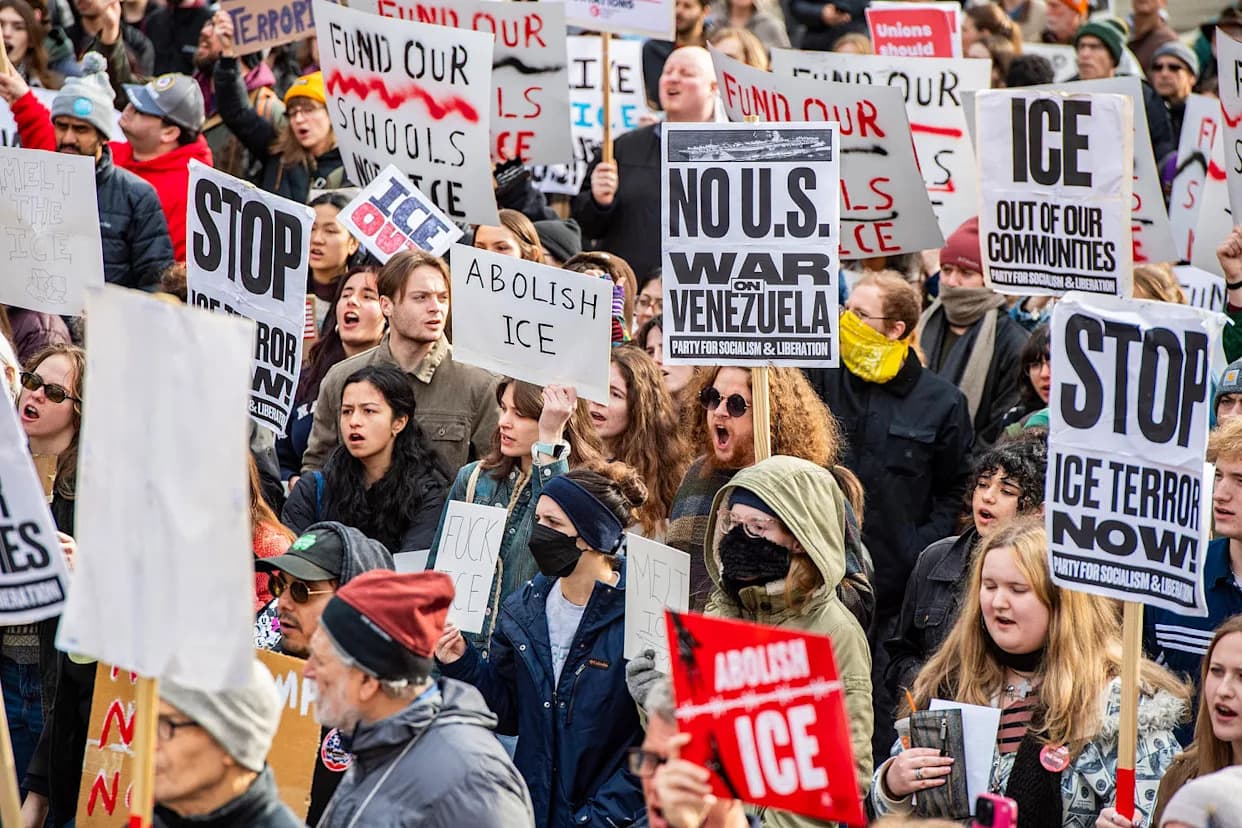
The Minneapolis shooting that killed Renee Nicole Good has reignited debate in Congress over whether to use appropriations to rein in Immigration and Customs Enforcement (ICE) and the Department of Homeland Security (DHS). Lawmakers and activists are weighing whether to press fiscal leverage — including funding cuts or restrictions — ahead of a major government funding deadline on Jan. 30, 2026.
Why Appropriations Matter
Article I, Section 9 of the Constitution declares: "No Money shall be drawn from the Treasury, but in Consequence of Appropriations made by Law." Control of spending is one of Congress’s most consequential powers: through appropriations, lawmakers can reduce funding, add restrictions on how money is used, or require agencies to act in specific ways.
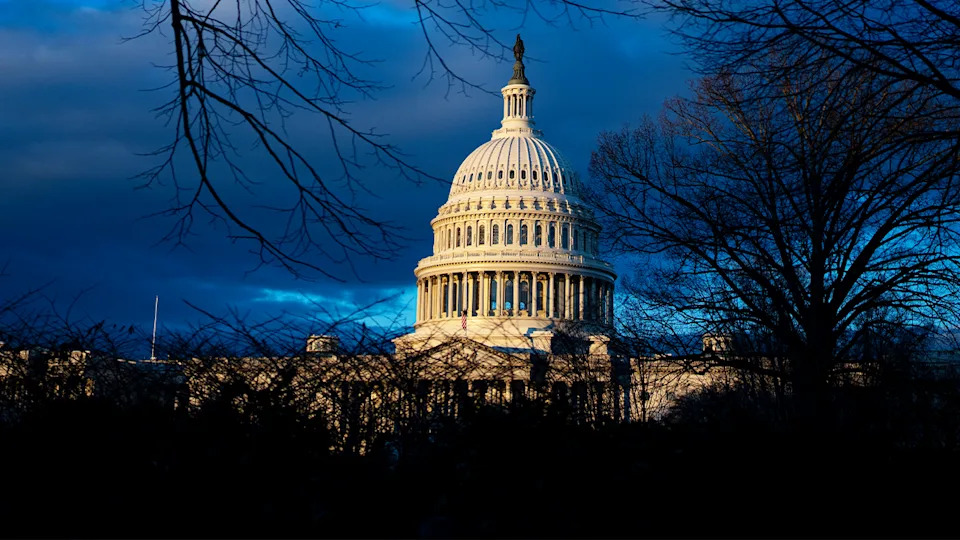
The U.S. Capitol dome Jan. 2, 2025
What’s Happening Now
Some progressive Democrats have proposed using the Jan. 30 funding deadline as leverage to curtail ICE operations or shrink the agency’s budget. Advocates say financial pressure is a legitimate tool to force policy change after what they call repeated abuses; leaders in their caucus emphasize oversight and hearings instead of immediate funding cuts.
"A child has lost her mom. And y'all want to pretend that it is OK," Rep. Jasmine Crockett (D-Texas) said, fighting back tears. "I am asking if there is anyone that will stand for the very people that elected us and sent us to Congress?"
Rep. Bennie Thompson (D-Miss.), the top Democrat on the House Homeland Security Committee, has urged oversight hearings. "A lot of people are talking about different reforms, and that's their prerogative," he said. By contrast, Rep. Jamie Raskin (D-Md.), the top Democrat on the House Judiciary Committee, argued that "we should use every means at our disposal to do it, including the appropriations process."
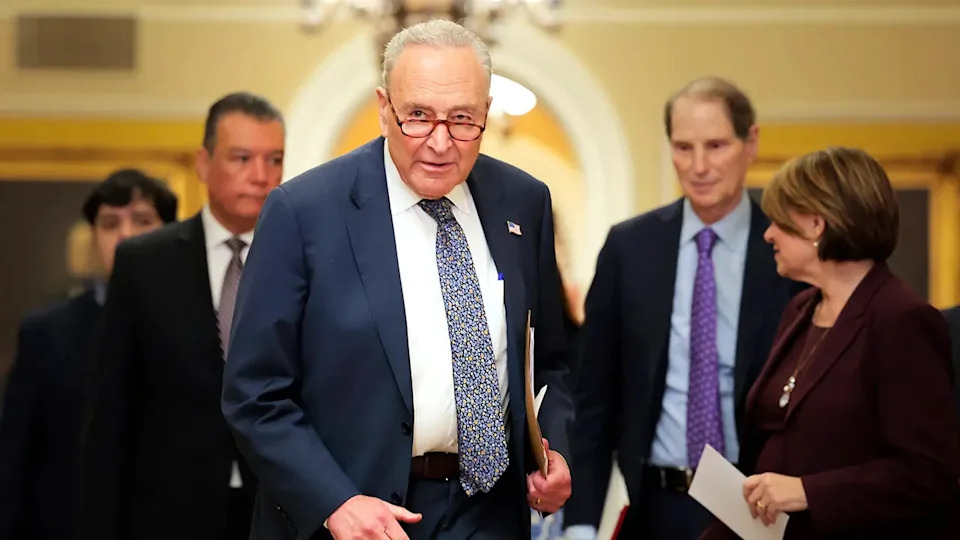
U.S. Senate Minority Leader Chuck Schumer, D-N.Y., walks to speak at a news conference after the weekly Senate Democratic policy luncheon at the U.S. Capitol June 17, 2025, in Washington, D.C.
Timing And Political Calculus
Funding for nine parts of the federal government, including DHS, expires at 11:59 p.m. EST on Jan. 30, 2026. The House recently passed a "minibus" covering several agencies, but lawmakers will likely need a continuing resolution (CR) to keep other programs funded unless full-year appropriations are enacted. A CR would maintain current funding levels and avoid a shutdown, but would also limit opportunities to change policy through the budget process.
House Minority Leader Hakeem Jeffries and Senate Minority Leader Chuck Schumer have signaled reluctance to risk another shutdown, emphasizing other priorities such as extending Affordable Care Act tax credits. Republicans also warn that another shutdown would be politically damaging after last fall’s 43-day closure.
Outlook
Whether Democrats use appropriations to press changes at ICE could depend on legislative arithmetic: if Republicans need Democratic votes to pass a DHS bill, Democrats could extract concessions. For now, party leaders appear focused on avoiding a funding crisis, while progressives continue to push for stronger action. The coming days will reveal whether leadership holds firm or the pressure from the base forces a broader fight.
Help us improve.