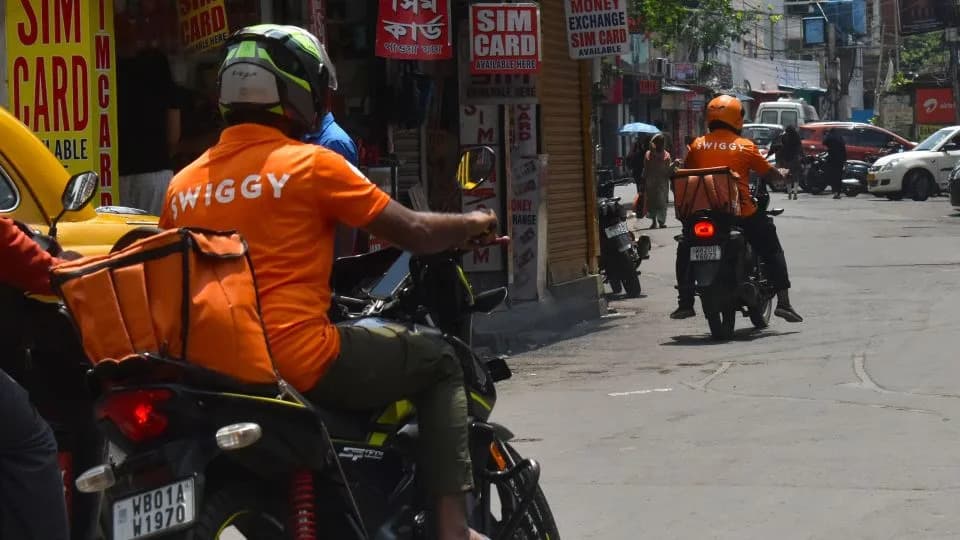
Hu Anyan, a former Beijing delivery rider, turned his grueling experiences into the bestselling memoir I Deliver Parcels in Beijing, which has sold about two million copies since 2023. The book chronicles 12-hour shifts, minimal breaks, no health insurance and piece-rate pay of two yuan per delivery — a pace that required a parcel every four minutes to survive. While the memoir passed Chinese censors and has increased public empathy, experts say most of China’s estimated 80 million gig workers still lack clear labour protections.
From Courier To Bestselling Author: One Man’s Wake-Up Call About China’s Gig Economy
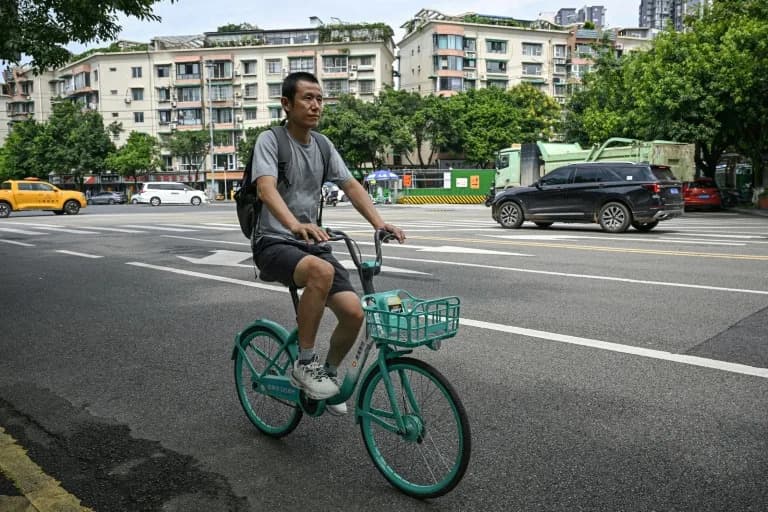
Author Hu Anyan was one of the millions of delivery drivers powering China's retail giants (Jade GAO)(Jade GAO/AFP/AFP)
Hu Anyan spent years racing through Beijing on a three-wheeled motorbike piled with parcels — one of millions of couriers who keep China’s vast e-commerce system moving. His 2023 memoir, I Deliver Parcels in Beijing, has become an unexpected bestseller and a rare personal account of the hardships faced by gig workers across China.
From Unstable Work To A Voice
The 46-year-old’s straightforward memoir has sold around two million copies across more than 20 countries. Translations into English and French have expanded its reach, giving a human face to the anonymous fleets of delivery riders who thread through China’s cities around the clock to deliver purchases that account for roughly a third of retail sales.
Hu’s life also traces broader social change: his parents worked in state-owned enterprises, while he entered a far more flexible and uncertain labour market after the 1990s reforms. After a series of unstable jobs, Hu — like many others — joined the gig economy in 2017.
Gruelling Conditions
He recalls gruelling nights in a massive parcel-sorting centre in Guangdong, working 12-hour shifts with only a 30-minute break and just four days off each month. Without health insurance or a fixed wage, his pay came largely from piece rates: about two yuan (roughly $0.29) per delivery.
“I was a walking corpse with blurred vision and a wavering consciousness,” Hu said, adding he sometimes drank alcohol to sleep during the day.
He calculated that at two yuan per delivery he needed to drop off a parcel every four minutes to make ends meet. If his pace slowed, supervisors would call to press him to speed up. “These rules lack humanity and rationality, and they oppress us every day,” he told AFP.
Publication, Censorship And Public Reaction
Laid off when his employer went bankrupt, Hu began posting memories on the social platform Douban. A young publisher encouraged him to expand those posts into a book. Hu’s manuscript passed Chinese censors with some edits; it focuses on social observation and avoids direct political criticism.
Even so, the book resonated with a generation facing job insecurity and rising competition for work. Readers on Douban and elsewhere said the memoir explained the short temper and stress they sometimes encounter from couriers: insecurity and exploitation take their toll on behaviour.
Voices calling for labour rights remain tightly constrained in China. Activists who publicly organised or protested have faced detention; one delivery driver and online campaigner, Chen Guojiang, was imprisoned for several months in 2021 and has since disappeared from social media, according to media reports and NGOs.
Legal Protections And Broader Context
Officials have introduced measures to improve conditions for couriers, but experts warn most of China’s estimated 80 million gig workers remain in an ambiguous employment status that leaves them with limited labour-law protections. Ou Lin, a labour law professor at Lancaster University, says ambiguous contracts and platform practices often keep gig workers outside traditional protections.
Aftermath And Impact
Now financially secure, Hu receives requests for proofreading and advice from aspiring writers. He acknowledged that without publishing his book, “it's quite possible that I would still be delivering orders today.” While sceptical about literature’s ability to spark a social movement, he hopes his work has at least nudged public empathy — he says customers say “thank you” more often now.
Why it matters: Hu’s memoir is not just a personal story — it highlights the human cost behind rapid technological and retail growth, raises questions about labour protections in the platform economy, and gives rare visibility to workers whose labour is essential but often overlooked.
Help us improve.