
A draft Pentagon assessment reviewed by Reuters says China has loaded more than 100 DF-31 ICBMs into three new silo fields near Mongolia and shows little appetite for comprehensive arms-control talks. The report estimates China’s warhead stockpile was in the low 600s in 2024 and could exceed 1,000 by 2030. Analysts warn the buildup and public displays complicate arms-control efforts and may strengthen Beijing’s ability to press claims over Taiwan by 2027.
Draft Pentagon Assessment: China Has Loaded 100+ DF-31 ICBMs Into New Silos Near Mongolia

China's rocket force has rapidly advanced.
A draft Pentagon assessment reviewed by Reuters concludes that China has placed more than 100 solid-fueled DF-31 intercontinental ballistic missiles (ICBMs) into three recently built silo fields near its border with Mongolia. The report frames this activity as part of a rapid and expansive modernization of Beijing’s nuclear forces and finds little sign that China is prepared to enter comprehensive arms-control negotiations.
The assessment, which could be revised before formal submission to Congress, says the Pentagon had previously disclosed the existence of the silo fields but had not publicly estimated how many missiles were emplaced. U.S. officials cautioned that the draft report does not specify targets for the newly loaded missiles.
According to the draft, China’s nuclear warhead stockpile was in the low 600s in 2024, reflecting a slower warhead production rate than in some earlier years. Nevertheless, the report projects that Beijing could surpass 1,000 nuclear warheads by 2030 if current trends continue.
Official Responses and Context
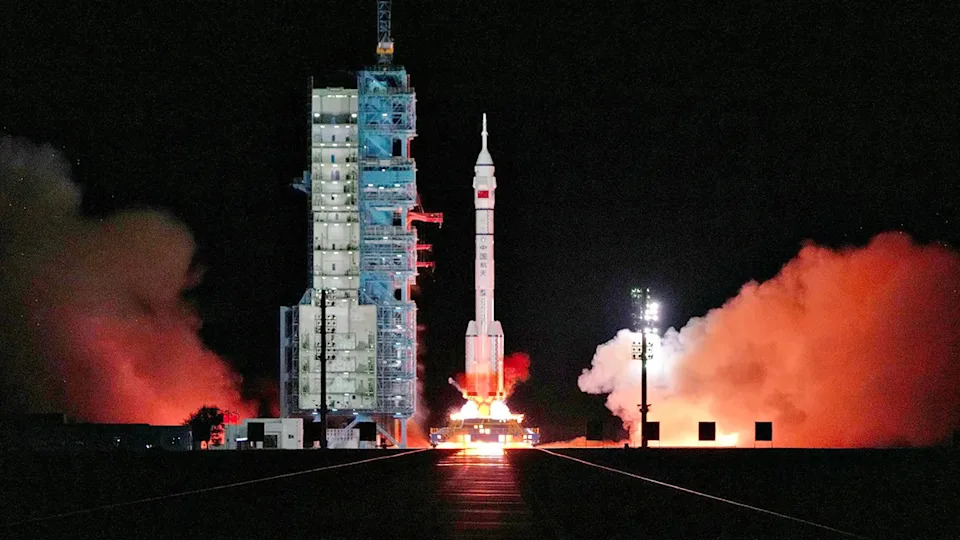
China's Long March 2F rocket, carrying three astronauts for the Shenzhou 21 manned space mission, blasts off at the Jiuquan Satellite Launch Center in Jiuquan, northwestern China, Friday, Oct. 31, 2025. (AP Photo/Andy Wong)
The Pentagon declined to comment to some media outlets about the Reuters review. China’s embassy in Washington did not immediately respond to requests for comment. Chinese officials have repeatedly rejected similar assessments as attempts to “smear and defame China and deliberately mislead the international community.”
Policy, Posture and Analyst Views
China officially maintains a no-first-use nuclear policy and describes its nuclear posture as defensive. However, outside analysts cited in the draft argue that public displays and recent developments suggest a growing willingness to showcase and expand Beijing’s nuclear capabilities. Jack Burnham, a senior research analyst in the China Program at the Foundation for Defense of Democracies, noted that China publicly paraded its nuclear triad together in September as an example of this shift:
"For a country that still advocates a policy of ‘no-first use,’ China has become increasingly comfortable showcasing its nuclear arsenal," Burnham said.
Other commentators highlighted strategic implications. Gordon Chang suggested that the number of loaded silos — roughly 100 — may reflect budgetary constraints and warned against extending U.S.-Russia arms-control agreements without China’s participation.
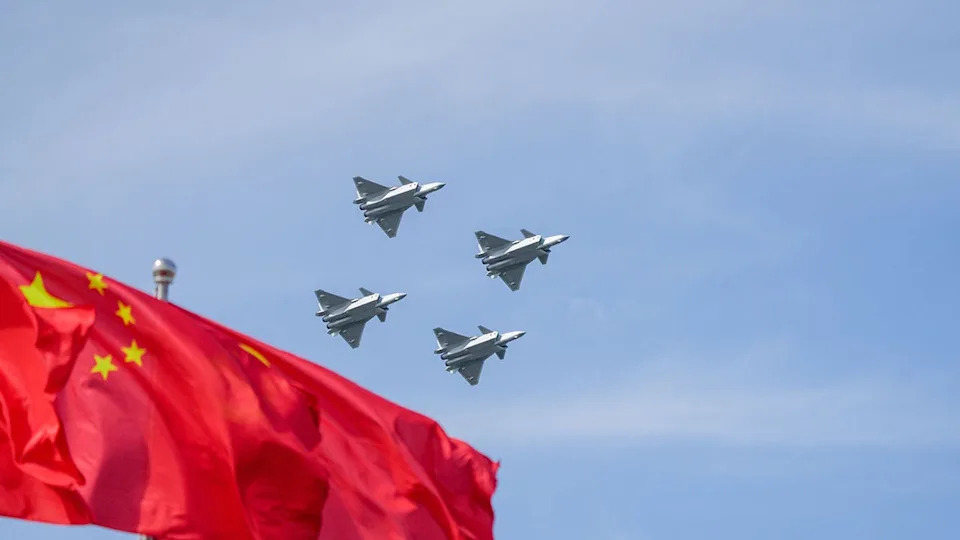
J-20 fighter jets fly in the sky during flight performance at the aviation open-day activities of the Chinese People's Liberation Army Air Force (PLAAF) and the Changchun Air Show 2025 on Sept. 19, 2025 in Changchun, Jilin Province of China. The event will be held from Sept. 19 to 23 in Changchun.
Regional Security and Taiwan
The draft also warns that China expects to be able to prevail in a conflict over Taiwan by the end of 2027. It describes Beijing as refining options to seize the self-governed island, including long-range strike capabilities of up to 2,000 nautical miles that could complicate U.S. and allied operations across the Asia-Pacific.
Treaty Context
The assessment appears as the 2010 New START treaty between the United States and Russia — which caps each side at 1,550 deployed strategic nuclear warheads — approaches its expiration. The report and analysts emphasize that China’s rapid force expansion complicates traditional bilateral arms-control frameworks and raises questions about how to incorporate Beijing into future negotiations.
Bottom Line
The draft Pentagon report, as reported by Reuters, portrays a fast-growing and increasingly visible Chinese nuclear force, limited Chinese interest in comprehensive arms-control talks, and a Beijing focused on capabilities that could alter regional military balances, particularly with respect to Taiwan and U.S. power projection in the Indo-Pacific.


