
Despite funding and political setbacks in 2025, researchers reported several breakthroughs with clinical promise: a shingles vaccine associated with a ~20% lower dementia risk, the first real-time 3D footage of embryo implantation, and a nonhormonal male contraceptive passing early safety tests. Other highlights include new insights into GLP-1 drugs, H5N1 spread in U.S. animals, microbiome links to coffee, genetic findings in severe pregnancy sickness, and a Nobel-winning discovery about immune tolerance.
10 Transformative Health Discoveries of 2025 That Could Change Medicine

An embryo compacting and invading the uterine tissue.Sign up for Today in Science, a free daily newsletter from Scientific American and join a community of science-loving readers.Sarah Moreira Castro
Despite political and funding headwinds in 2025, medical research delivered several advances with real potential to change prevention, diagnosis and treatment. Scientific American highlighted ten discoveries this year that clarified disease mechanisms, revealed novel interventions and opened new avenues for care.
1. Shingles Vaccine Linked To Lower Dementia Risk
A large real-world study in Wales found that people who received the shingles (zoster) vaccine were about 20% less likely to develop dementia over the following seven years compared with those who did not get vaccinated. This strengthens a long-standing hypothesis that viral infections may modestly increase dementia risk and suggests vaccination could be a valuable part of dementia prevention strategies.
2. First Real-Time 3D Imaging Of Embryo Implantation
For the first time, researchers captured three-dimensional, real-time images and videos of a human embryo implanting into engineered uterine tissue. Although the implantation occurred in a lab matrix not designed for IVF, the footage offers unprecedented insight into a critical stage of reproduction and could inform better approaches to reduce implantation failure, infertility and early miscarriage.
3. Nonhormonal Daily Male Contraceptive Advances
A daily, nonhormonal oral pill cleared early-phase human safety trials. The drug works by blocking a vitamin A metabolite from binding to receptors in the testes, temporarily halting sperm production; fertility returns after the drug is stopped. Larger efficacy and long-term safety trials are still needed before approval.
4. Coffee Linked To Beneficial Gut Microbe
The largest study to date of coffee drinkers and the gut microbiome found higher levels of Lawsonibacter asaccharolyticus in regular coffee consumers. This bacterium produces butyrate, a metabolite that supports gut health, prompting further research into whether gut microbes help mediate coffee’s reported health benefits.
5. New Insights Into How GLP-1 Drugs Work
Researchers gained clearer clues about how GLP-1 drugs (like Ozempic and Wegovy) affect appetite, food preferences and alcohol intake. Studies reported why some users shift food tastes (for example, finding meats unappealing) and why many people discontinue therapy within two years. Genetics is beginning to explain "nonresponders" who do not achieve meaningful weight loss, and preliminary data implicate both gut and brain pathways in reduced alcohol consumption among some users.
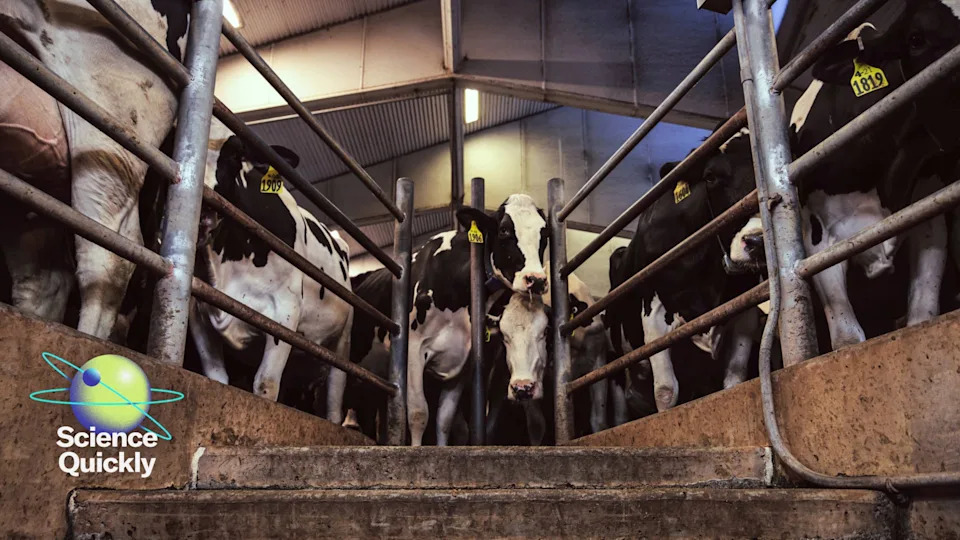
Dairy cows inside the Teaching Dairy Barn at Cornell University in Ithaca, New York.Jeffery DelViscio/Scientific American
6. Avian Influenza (H5N1) Spread And Preparedness
In 2025 H5N1 swept through U.S. dairy herds, poultry and wildlife, with a small number of human infections reported. Scientists intensified efforts to understand species jumps, viral evolution and gaps in pandemic preparedness. Public reporting and a Scientific American podcast series helped illuminate on-the-ground research in farms, beaches and biosafety labs.
7. Evidence-Based Anti-Inflammatory Supplements
In a review of supplements marketed for inflammation, three showed the most consistent disease-related benefits: omega-3 fatty acids, curcumin and vitamin D. While not panaceas, these compounds have the strongest supporting evidence among popular anti-inflammatory supplements.
8. Vitamin D and Telomere Biology—A Nuanced Picture
New analyses suggested vitamin D may slow telomere shortening—a marker associated with cellular aging—but experts caution that telomere preservation may not translate into tangible clinical anti-aging benefits. Some studies also associate excessive vitamin D with shorter telomeres, underscoring the importance of balanced dosing.
9. Hypochlorous Acid: A Skin-Safe Disinfectant Candidate
Hypochlorous acid, a weak acid distinct from household bleach, is gaining attention as a topical antimicrobial that destroys microbes by attacking cell walls. Its historical limitation has been poor shelf stability; researchers are developing more stable formulations that could broaden safe, topical disinfectant options.
10. Genetic Insights Into Hyperemesis Gravidarum & Nobel Prize For Immune Tolerance
Marlena Fejzo received an innovation prize for identifying genes linked to hyperemesis gravidarum, a severe form of pregnancy sickness affecting up to 3% of pregnant people and a leading cause of early-pregnancy hospitalization. Separately, the 2025 Nobel Prize in Physiology or Medicine honored foundational discoveries about peripheral immune tolerance—particularly regulatory T cells—which scientists now aim to harness for treating autoimmune disease, cancer and transplant complications.
What This Means: Together these findings illustrate how diverse research—from vaccines and reproductive biology to microbiomes, pharmacology and immunology—continues to advance clinical care despite broader scientific challenges. Many discoveries require further trials and validation, but each suggests practical paths to preventing or treating long-standing health problems.


