
The Smithsonian’s National Museum of Natural History will display a near-complete Pachycephalosaurus skull (discovered in 2024 in South Dakota’s Hell Creek Formation) from Dec. 22–28. The roughly 3-foot specimen dates to about 67 million years ago and represents animals from the final 1.5 million years before the asteroid extinction. Donated by Eric and Wendy Schmidt, the skull is unusually complete, will be CT-scanned for internal study, and offers a rare window into dome-headed dinosaur anatomy.
Near-Complete Pachycephalosaurus Skull Heads to Smithsonian for One-Week Display

Encyclopaedia Britannica/Universal Images Group via Getty Images - PHOTO: An illustration og a Pachycephalosaurus.
A near-complete skull of a dome-headed Pachycephalosaurus will be briefly exhibited at the Smithsonian’s National Museum of Natural History this December, giving the public a rare, close-up look at a specimen that is both visually striking and scientifically important.
The roughly 3-foot-long skull was discovered in 2024 in the Hell Creek Formation of South Dakota and dates to about 67 million years ago. According to Matthew Carrano, research geologist and curator of Dinosauria at the museum, the specimen represents animals that lived during the last 1.5 million years before the asteroid event that ended the Cretaceous Period.
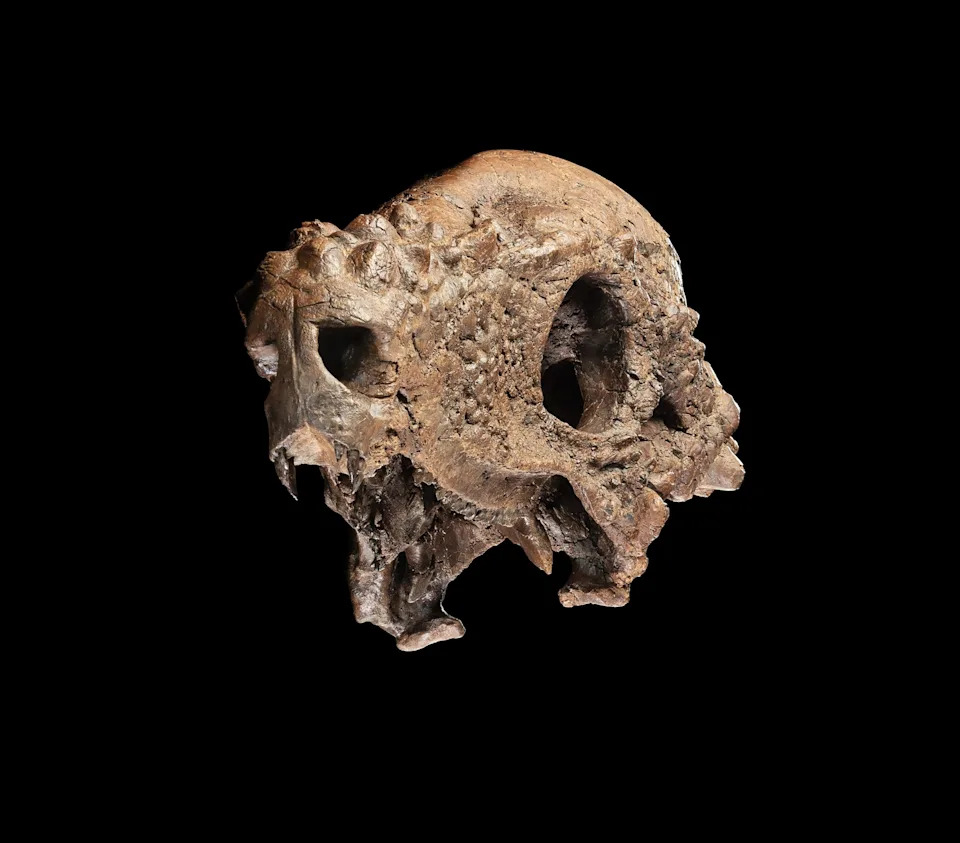
James D. Tiller And Phillip R. Lee - PHOTO: The museum’s new Pachycephalosaurus skull, which was unearthed in South Dakota in 2024.
Why This Skull Matters
This find is exceptional for several reasons: Pachycephalosaurus material is rare in the Hell Creek Formation (making up less than 1% of recovered dinosaur bones), and only about three comparable skulls are known worldwide. Many of the skull bones remain articulated in their original positions, preserving anatomical details rarely seen in specimens of this genus. Carrano described the fossil as "beautiful" and "really, really informative" for researchers.
What Visitors Will See
The dome on a Pachycephalosaurus skull could be 6–9 inches of solid bone; in life the species was bipedal and recognizable for that rounded, bowling-ball–like dome. The newly found skull likely belonged to a subadult individual; a fully grown Pachycephalosaurus may have reached roughly 15–20 feet in length. The skull’s delicate teeth used for cropping plants are "beautifully preserved," Carrano noted.
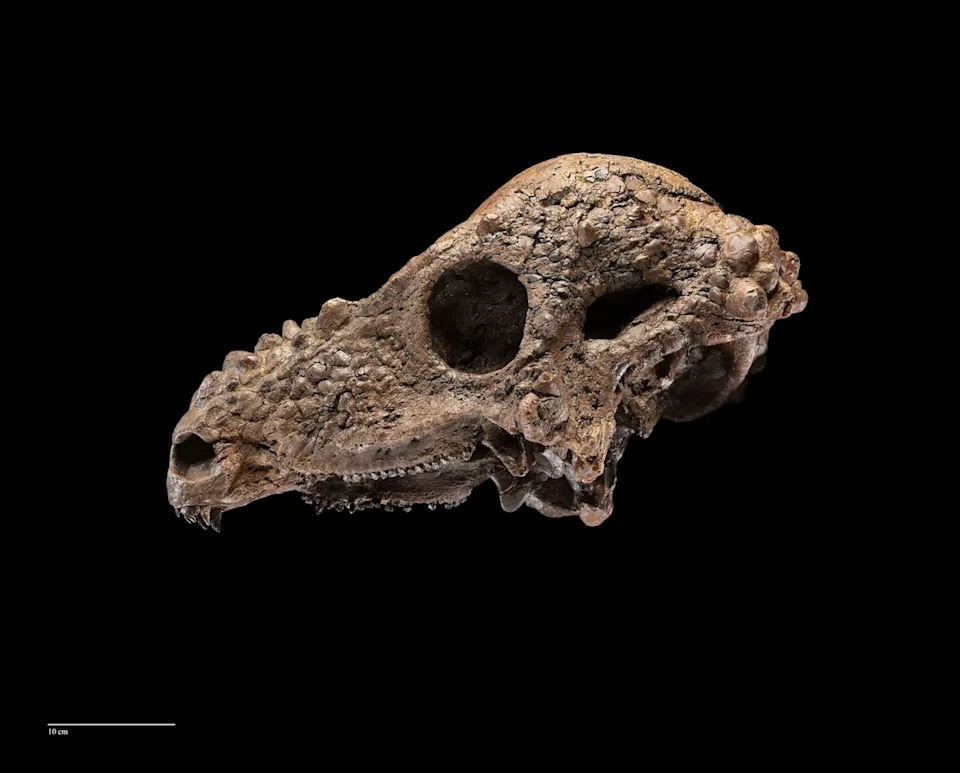
James D. Tiller and Phillip R. Lee - PHOTO: The recently acquired skull of the dome-headed dinosaur Pachycephalosaurus.
The skull will be on public view in the museum’s fossil lab in Washington, D.C., from Dec. 22 through Dec. 28. The exhibit sits within a working lab space where visitors can watch staff prepare and study fossils. Philanthropists Eric and Wendy Schmidt purchased the specimen and donated it to the museum.
Science Next Steps
Paleontologists plan to CT-scan the skull to reveal internal structures inside the brain cavity beneath the thick dome. These scans will allow scientists to study features that are otherwise inaccessible without damaging the fossil.
Carrano: "People have been searching these rocks in that part of the country for more than 100 years," underscoring how uncommon such a complete skull is and how each new specimen improves our understanding of these dome-headed dinosaurs.
Although Pachycephalosaurus remains are uncommon—likely because their smaller bodies preserve less well over geologic time—growing scientific interest means more discoveries may appear in years ahead.


