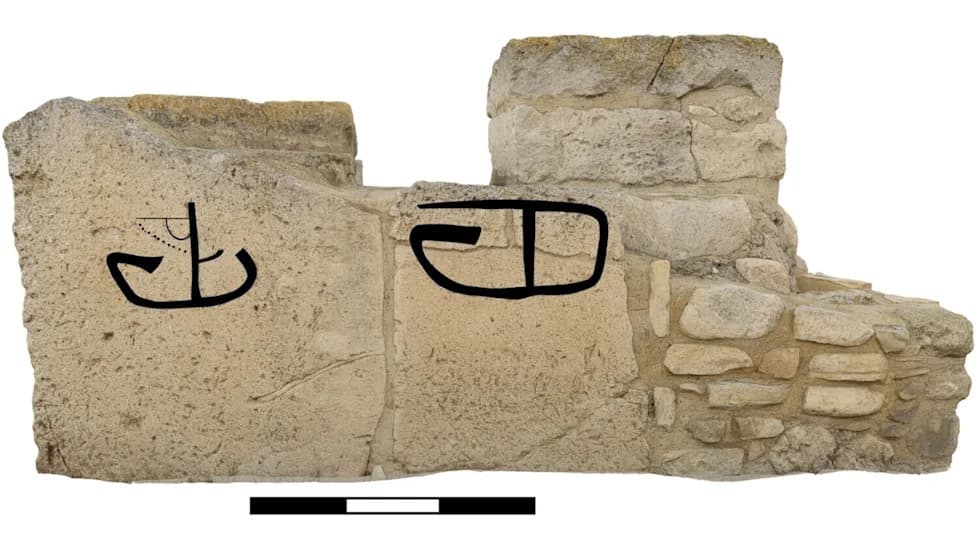
Advanced multispectral imaging uncovered previously invisible tattoos on Nubian human remains, showing that tattooing persisted after Christianity arrived and in some ways expanded. Among 1,048 individuals examined from sites in present-day Sudan and southern Egypt, 27 showed tattoos, including infants and children. Early tattoos were often discreet and associated with women; after the 7th century they became more public and may have marked Christian identity, baptism, protection, or community belonging.
1,400 Years Ago Nubian Babies Were Tattooed to Signal Christian Identity — New Imaging Study
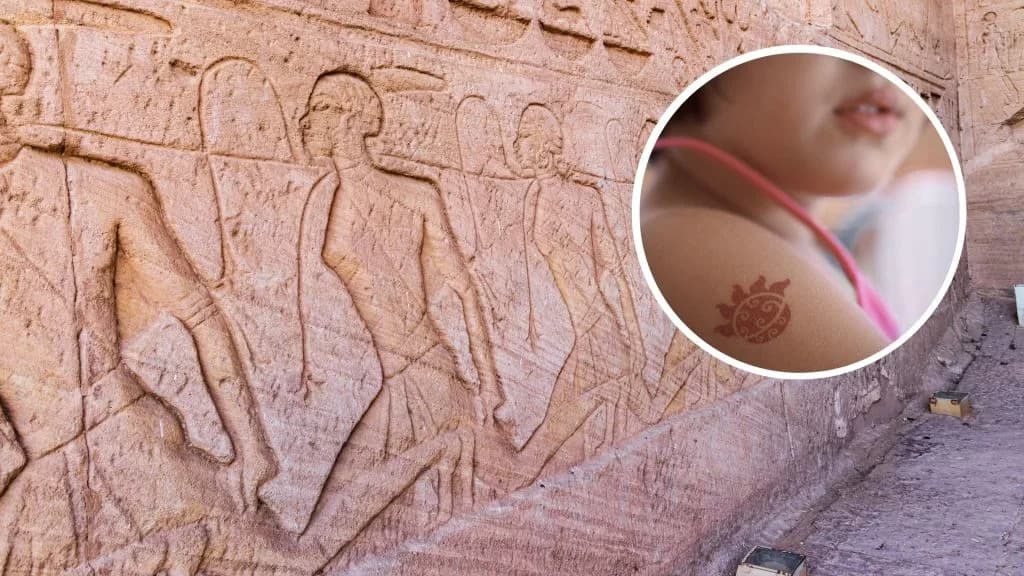
State-of-the-art multispectral imaging reveals that the arrival of Christianity in Nubia did not erase local tattoo traditions — it transformed and expanded them.
A recent study published in PNAS used advanced multispectral imaging to examine human remains from Nubia, the Nile-region civilization spanning parts of modern-day Sudan and southern Egypt. Poor preservation has long limited what researchers could learn about ancient tattooing. By photographing remains at different wavelengths, the team identified tattoos invisible to the naked eye and to earlier analyses.
What the Study Examined
The researchers analyzed 1,048 individuals recovered from three archaeological sites in present-day Sudan and southern Egypt. Multispectral imaging revealed tattoo marks on 27 people of different ages and sexes, including infants and young children — a rare and surprising find in the archaeological record.
How Tattooing Changed Over Time
Evidence indicates that tattooing in Nubia predated the widespread adoption of Christianity. Early marks were often discreet, concentrated on women’s hands and forearms. Artisans used single‑pointed tools to produce small dotted motifs — a meticulous pointillist technique — and many designs drew on natural imagery.
After Christianity spread into the region in the 7th century CE, the practice broadened in both visibility and social role. Tattoos became more public: children were sometimes inked on the face, and markings may have functioned as visible declarations of faith, protective symbols, or markers of baptism and community belonging. Rather than eliminating tattooing, the new religious context appears to have encouraged innovation in technique and wider use across ages and sexes.
Why This Matters
Researchers describe the application of multispectral imaging as "revolutionary" for studies of human remains because it can reveal previously invisible bodily markings and open new lines of inquiry about identity, ritual, and social change. The Nubian case shows how cultural practices can adapt and take on new meanings when communities adopt new beliefs.
Key takeaway: The arrival of Christianity in Nubia amplified and reshaped an existing tattoo tradition rather than erasing it — and modern imaging methods are rewriting what we can learn from the dead.
Sources: Study in PNAS; reporting by Archaeology Magazine and Ancient Origins.
Help us improve.