Inglewood’s public schools have been under state receivership since 2012, and closure decisions tied to falling enrollment and fiscal oversight have deepened community tensions. Enrollment dropped from roughly 18,000 to under 7,000 students, and IUSD spends an estimated $2.3 million annually on FCMAT reviews and loan payments while running a multimillion-dollar deficit. Administrators argue consolidation and new investments — including a $240 million high school — aim to stabilize the district, but parents and advocates say closures disproportionately harm low‑income, immigrant neighborhoods and accelerate displacement.
Are School Closures Saving Or Damaging Inglewood’s Schools? Inside A District In Receivership
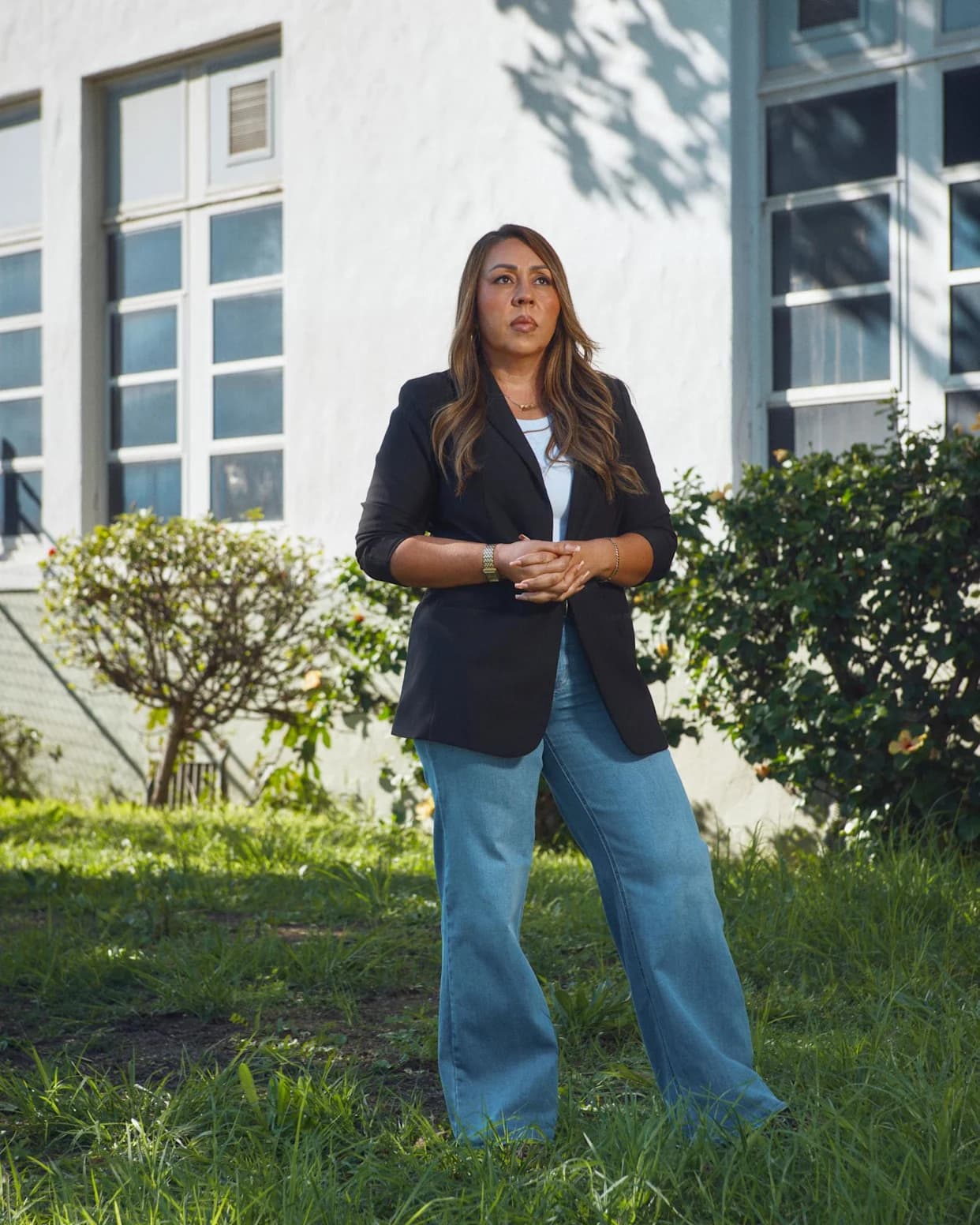
Victoria Preciado, a teacher and lifelong Inglewood resident, in front of Worthington elementary, which her daughter attended before it was closed in 2023.Photograph: Damon Casarez/The Guardian
Inglewood, California — long celebrated as a city of champions and remade in recent years by major sports and entertainment investments such as SoFi Stadium and the Intuit Dome — is also the center of a contentious debate over public education. Under state receivership since 2012, the Inglewood Unified School District (IUSD) has closed multiple campuses, seen enrollment plunge and faced sharp criticism from parents and community advocates who say closures disproportionately harm low-income neighborhoods.
From Local Pride To Financial Crisis
By the mid-2000s the loss of some landmark institutions left Inglewood struggling. Deals and new development — credited largely to Mayor James Butts — brought renewed investment, but many longtime residents say the civic renewal masked deep challenges in the public school system. Between budget shortfalls, aggressive charter growth and policy decisions at the state level, IUSD’s enrollment fell from roughly 18,000 students in the early 2000s to fewer than 7,000 today.
Receivership, Loans, And Oversight
In 2012 California enacted SB 533, which authorized emergency loans for districts in fiscal distress and effectively mandated receivership for IUSD. The district ultimately borrowed about $29 million. Under receivership the Fiscal Crisis and Management Assistance Team (FCMAT) conducts frequent, expensive reviews across community relations, personnel, student achievement, financial management and facilities. IUSD’s annual outlays related to FCMAT reviews and loan payments are roughly $2.3 million — a heavy burden for a district with a $190.6 million budget that is running about a $16 million deficit this school year.
Community Resistance And A Fight Over Neighborhood Schools
Parents and teachers organized as Stop IUSD School Closures after several campuses were placed on closure lists. One focal point was Worthington Elementary in the Lockhaven neighborhood, where a Spanish–English dual-immersion program drew strong enrollment and deep parent engagement. Despite a resident advisory committee recommendation to keep Worthington open, the county-appointed administrator, James Morris, announced the school’s closure — a decision that galvanized local protests and sharpened scrutiny of the receivership process.
“It was a tight-knit community,” said lifelong resident and teacher Victoria Preciado, recalling how families supported one another at Worthington. She later withdrew her daughter from IUSD and became an organizer with Stop IUSD School Closures.
Different Narratives: Stabilization Versus Displacement
County-appointed administrator James Morris, a veteran educator who took the helm in 2023, argues the district must "right-size" to stabilize finances, improve instruction (including stronger foundational literacy rooted in phonics) and upgrade facilities. The district has consolidated high schools — reopening the repaired Morningside campus as Inglewood High School United — and is building a new $240 million high school in the city’s more affluent north, financed by bonds, developer fees and flight-path funds tied to LAX.
Critics say closures and redevelopment are reshaping Inglewood to attract wealthier residents while displacing longtime families and hollowing out neighborhood schools in poorer, immigrant-rich areas. Organizers point to rising rents and smaller apartments priced at roughly $3,000 monthly in some parts of town, and warn of growing "school deserts" where access to neighborhood campuses is disappearing.
Oversight, Progress And Ongoing Disputes
FCMAT scores historically showed low ratings for IUSD in several categories, but recent reports indicate improvement in some areas with scores now in the midrange (about 5–7) and an exit from review in at least one category. The district also benefits modestly from developer fees (a reported $6 million facilities fund) and contributions from local professional teams for improvement projects. Still, activists have filed complaints with the state attorney general and worked with the ACLU to document what they describe as mismanagement and inequitable impacts of closures.
What’s Next
State Assemblymember Tina McKinnor introduced AB 51 to cancel interest on IUSD’s outstanding loan — a proposal that has not yet advanced out of committee. Meanwhile, the district made a surprise move reopening the former Warren Lane campus as Kelso Elementary (a K–8 campus) while closing the former Kelso campus near the Kia Forum. For some families these changes are a small concession; for many activists they are more evidence that financial calculations — and land value — guide decisions more than neighborhood voices.
With redevelopment, community pressure and complex state oversight all shaping the district’s future, residents like Preciado say they will keep organizing. “There is nobody who is going to come to save us,” she said. “It’s not a politician. It is the regular folks from Inglewood. We’re going to have to save ourselves.”
This story was co-published with and supported by the Economic Hardship Reporting Project and the University of Southern California Center for Health Journalism.
Help us improve.