California families and advocates warn proposed federal changes — including nearly $1 trillion in Medicaid cuts and potential shifts in special-education oversight — threaten services that let nearly 1 million children with disabilities attend school and live independently. Regional centers and schools rely heavily on Medicaid funding, which is at risk when federal support lapses at the end of January. Advocates say moving special education to HHS could medicalize services, while reminding families that legal rights under IDEA remain in place even amid funding uncertainty.
‘Terrifying’ Cuts Threaten Special Education In California After Trump Budget Proposals

Sleep is scarce at Lindsay Crain’s home. Her 16-year-old daughter’s frequent seizures leave the family up dozens of times a night — but lately it isn’t only medical needs that keep Crain awake. She is increasingly fearful that proposed federal budget and policy changes could strip away the services her daughter needs to attend school, remain at home, and preserve the independence that decades of policy have made possible.
What’s At Stake
The White House budget blueprint proposes nearly $1 trillion in cuts to Medicaid, the program that pays for many therapies and supports for children with disabilities — including speech, occupational and physical therapy, wheelchairs, in-home aides and medical care. In California, nearly 1 million children with physical, developmental, or cognitive disabilities receive at least some services through Medicaid.
At the same time, the U.S. Department of Education has significantly reduced the role of its Office for Civil Rights, a key enforcer of federal laws that guarantee students with disabilities access to public education. Lawmakers have also proposed moving responsibility for special education out of the Department of Education and into the Department of Health and Human Services (HHS), a shift disability advocates warn would recast special education as a medical issue rather than an educational right.
Regional Centers And Schools Could Lose Critical Funding
In California, regional centers — a network of 21 mostly government-funded nonprofit organizations that coordinate services for people with developmental disabilities — rely on Medicaid for more than a third of their funding. That federal money is scheduled to run out at the end of January, leaving families and providers uncertain about which services might be scaled back or eliminated.
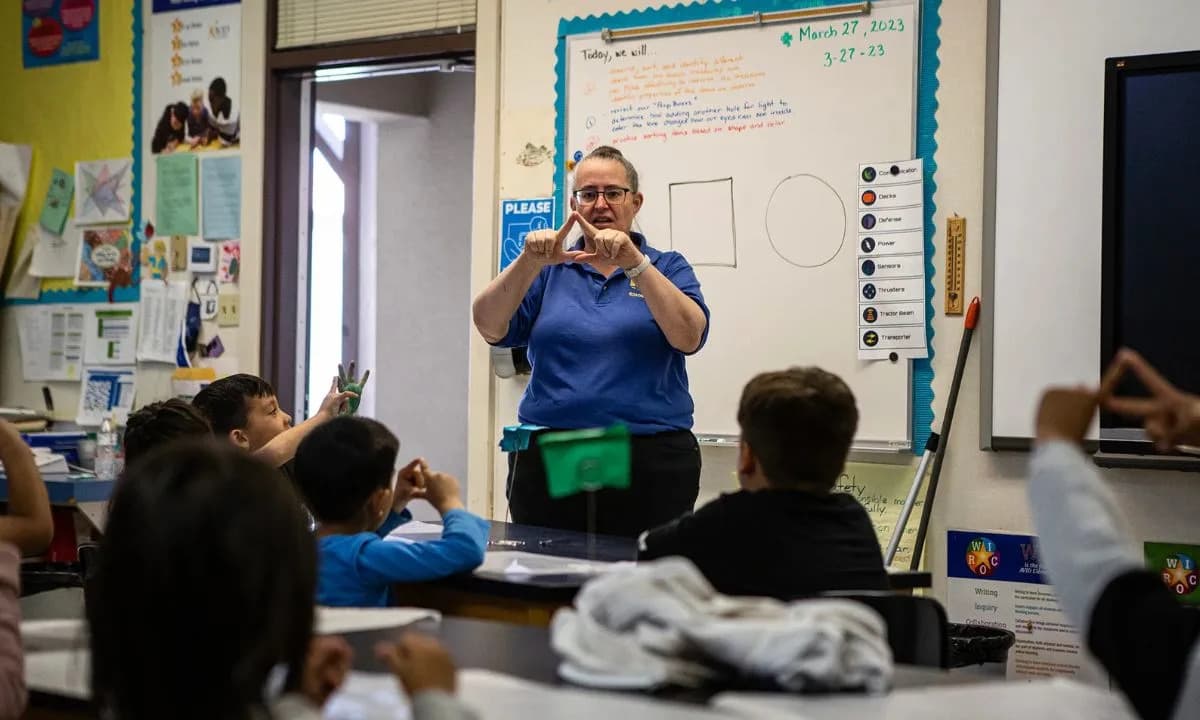
Schools also use Medicaid to fund therapists, vision and hearing screenings, specialized equipment, and related services that help both disabled and nondisabled students. Given state budget constraints, California is unlikely to fully replace a major federal shortfall, which would force districts to reduce services.
Real Families, Real Fear
"Every family I know is terrified right now," said Crain. "We still have to live our everyday lives, which are challenging enough, but now it feels like our kids’ futures are at stake."
Other families describe the same anxiety. Lelah Coppedge of Canoga Park worries that without Medicaid-funded nursing, therapy and regional-center supports, her 16-year-old son Jack — who uses a wheelchair and communicates primarily through eye movements — could lose the path to independent living she had long expected for him.
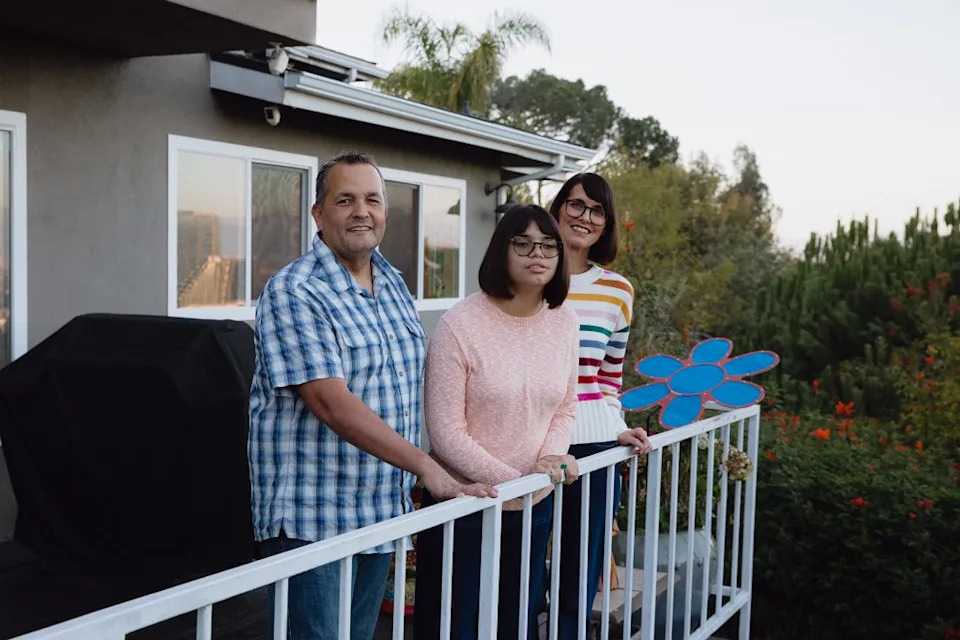
From left, Jack Deacy, his daughter Lena Deacy, and Lindsay Crain at their home in Culver City on Dec. 1, 2025. The family fears potential Medicaid cuts because Lena, who has cerebral palsy, epilepsy and other medical conditions, relies on Medicaid-funded services for her daily care and well-being. Photo by Zaydee Sanchez for CalMatters
Many working families with private insurance still depend on Medicaid to cover daily, specialized care they could not otherwise afford. Advocates warn that moving special education oversight to HHS risks treating students with disabilities as medical patients rather than learners entitled to supports that enable full participation in school and society.
Disproportionate Impact On Vulnerable Communities
Immigrant families, English learners, and low-income households are overrepresented among students receiving special-education services and often face additional barriers to accessing supports. Fear of deportation, language barriers, and limited awareness of legal rights can make it harder for these families to advocate for needed services.
Legal Protections Remain — But Uncertainty Persists
Advocates emphasize that federal laws such as the Individuals with Disabilities Education Act (IDEA) still guarantee students the services outlined in their individualized education programs (IEPs). But enforcement and funding determine how those rights are realized in daily life. If federal dollars shrink, other programs or state budgets will need to absorb the costs — or services may be reduced.
Disability-rights leaders urge families to document needs, keep updated IEPs, and contact local advocates or legal services if they face cuts. At the same time, they continue to press policymakers to protect both funding and the philosophy of inclusive education.
Conclusion
For parents like Crain and Coppedge, the debate in Washington is not abstract policy: it is the future of their children’s education, independence, and dignity. "Just because you need support doesn’t mean you can’t have a say in your life," Crain said. "We’re absolutely terrified of losing that." Advocates and families will be watching federal and state decisions closely in the coming weeks as funding and oversight questions remain unresolved.
This article was originally published by CalMatters and is republished under the Creative Commons Attribution-NonCommercial-NoDerivatives license.
Help us improve.