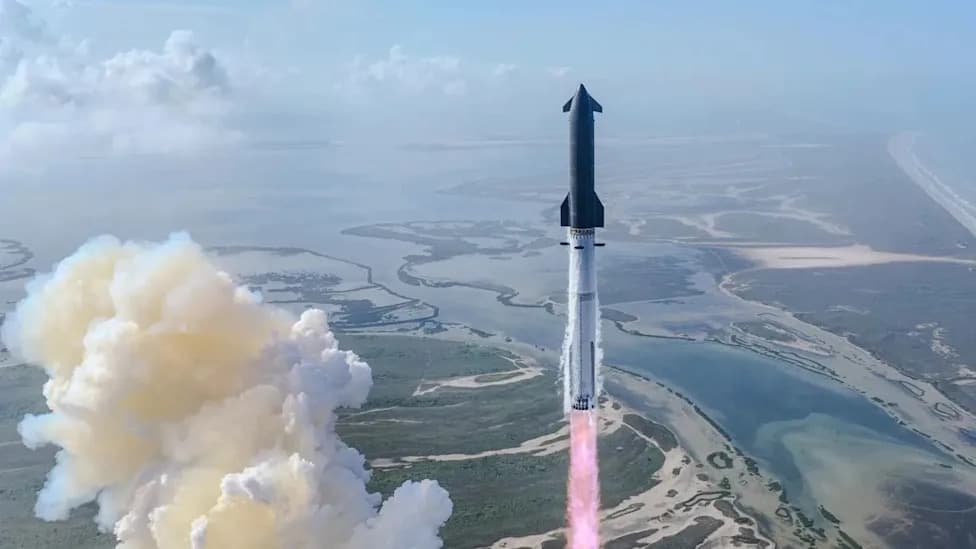
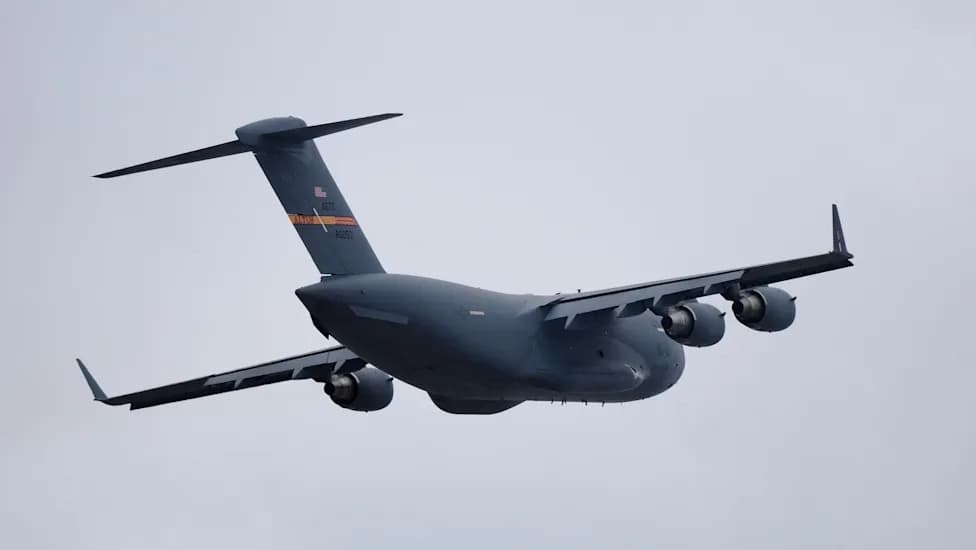
The Jan. 16 SpaceX Starship test disintegrated minutes after liftoff, showering burning debris across the Caribbean and forcing at least three passenger planes, carrying about 450 people, to choose between flying through hazardous wreckage or diverting with low fuel. FAA documents reviewed by the Wall Street Journal say debris fell for roughly 50 minutes and controllers had to reroute traffic, creating a "potential extreme safety risk." All flights landed safely, but the incident spurred an FAA safety review and raised concerns as launch activity is expected to rise sharply.
Pilot Declares “Mayday” After SpaceX Starship Explosion Sends Debris Over Caribbean

Orange balls of light fly across the sky as debris from a SpaceX rocket is spotted over the Caribbean islands of Turks and Caicos - Marcus Haworth/Reuters
An experimental SpaceX Starship disintegrated minutes after liftoff on Jan. 16, scattering burning debris across parts of the Caribbean and forcing commercial aircraft to navigate hazardous conditions. Federal Aviation Administration (FAA) documents reviewed by the Wall Street Journal show that pilots on at least three planes — carrying roughly 450 people in total — faced the stark choice of flying through falling debris or diverting and risking fuel shortages over open water.
Debris Showered The Sky For Nearly An Hour
The explosion produced what the FAA described as a meteor-like rain of debris that persisted for about 50 minutes. Pilots and passengers on both airliners and private jets reported seeing fiery trails streaking across the sky. FAA documents warn that even a single piece of high-velocity wreckage striking an aircraft could have caused catastrophic structural damage and potential fatalities.
Controllers, Crews And Emergency Calls
Air-traffic controllers had to reroute flights to avoid debris zones, significantly increasing workload and creating what one New York air-traffic facility called a "potential extreme safety risk." At least two aircraft came dangerously close to one another during the disruption, requiring controller intervention to prevent a collision.
When one Puerto Rico controller told a JetBlue flight en route to San Juan that landing "would be at your own risk," another pilot responded by declaring, "Mayday. Mayday, Mayday."
The FAA files also recorded that SpaceX did not immediately notify controllers via an emergency hotline after the explosion; Miami controllers first learned of the debris from pilots who reported seeing it.
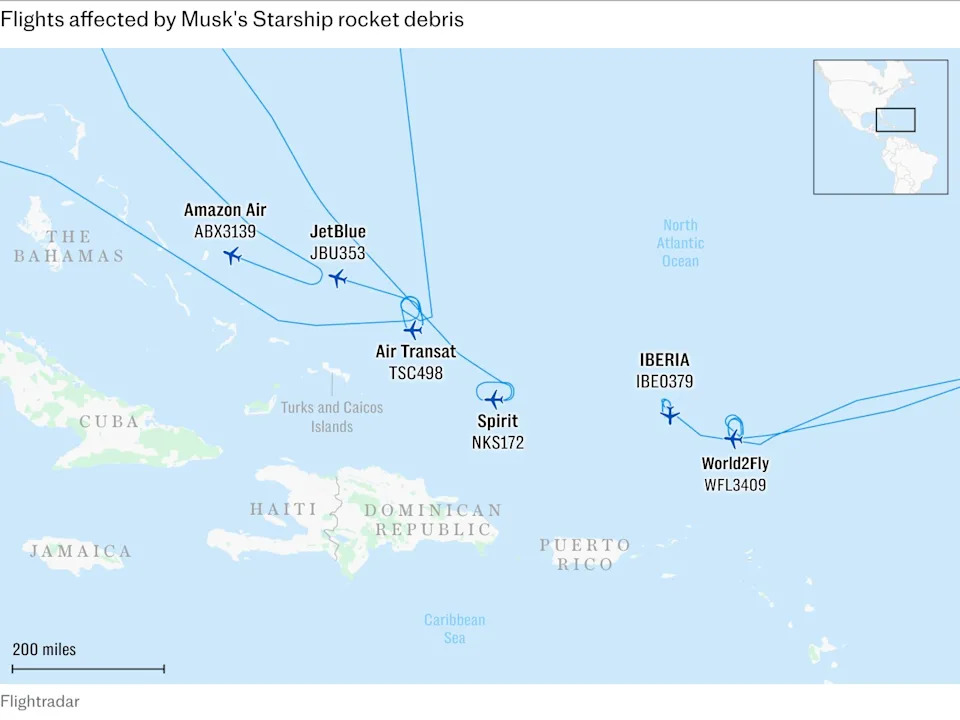
1801 Flights affected by Musk\'s rocket debris
Wider Safety Concerns And Industry Impact
SpaceX has described Starship — roughly 400 feet tall and designed as the company’s most powerful rocket — as central to its long-term goals, including potential missions to Mars. According to the translated documents, SpaceX has conducted 11 Starship missions to date and plans additional flights that will cross air routes over Florida, Mexico and the North Atlantic.
The January incident alarmed airline operators and U.S. officials as launch activity accelerates: the FAA projects an average of 200–400 launches or re-entries per year in the coming years, compared with roughly 24 operations annually from 1989–2024. To address risk, the FAA convened an expert panel to review debris-safety measures after the explosion; the agency later suspended that review in August, saying many recommendations were already being implemented — a decision that surprised some panel members.
Recent Starship Tests And What’s Next
Since the January failure, SpaceX carried out four more Starship test flights: two were successful and two failed. In March, engines failed shortly after liftoff and the vehicle spun out of control and exploded mid-air; in May, another test lost control and broke apart near its intended splashdown area in the Indian Ocean. SpaceX plans to fly a newer, more powerful version next year. Elon Musk commented on social media that "success is uncertain, but entertainment is guaranteed," and has warned the program may have "initial teething pains" as the design evolves.
All affected flights ultimately landed safely, but the episode has heightened concerns about the risks to civil aviation posed by increasing commercial space operations over populated flight corridors.
The Telegraph has approached SpaceX for comment.
Help us improve.