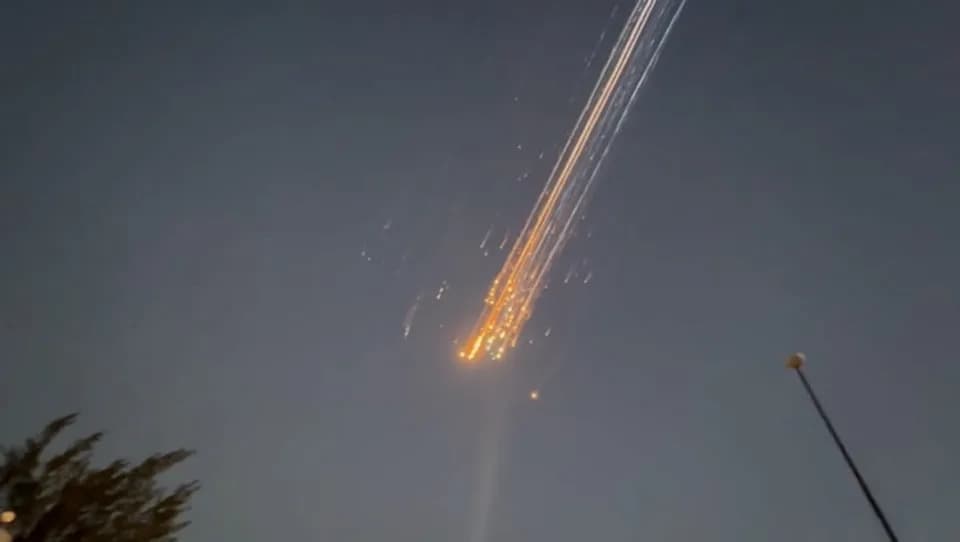
The CRASH Clock, developed by Sarah Thiele and colleagues, estimates we currently have about 5.5 days to restore control of satellites after a major disruption—such as a severe solar storm—before widespread collisions become likely. This is a sharp decline from roughly 164 days in 2018, driven by rapid growth of internet megaconstellations and rising orbital debris. Events like the 2024 Gannon storm demonstrated how quickly satellites can be forced into emergency maneuvers; researchers say improved space-weather resilience, operator coordination and sustainable orbital practices are urgent priorities.
Fleet Of Internet Satellites Could Start Colliding Within 5.5 Days, New 'CRASH Clock' Warns

Satellites Could Crash Out of Orbit in Just 5 DaysYuichiro Chino - Getty Images
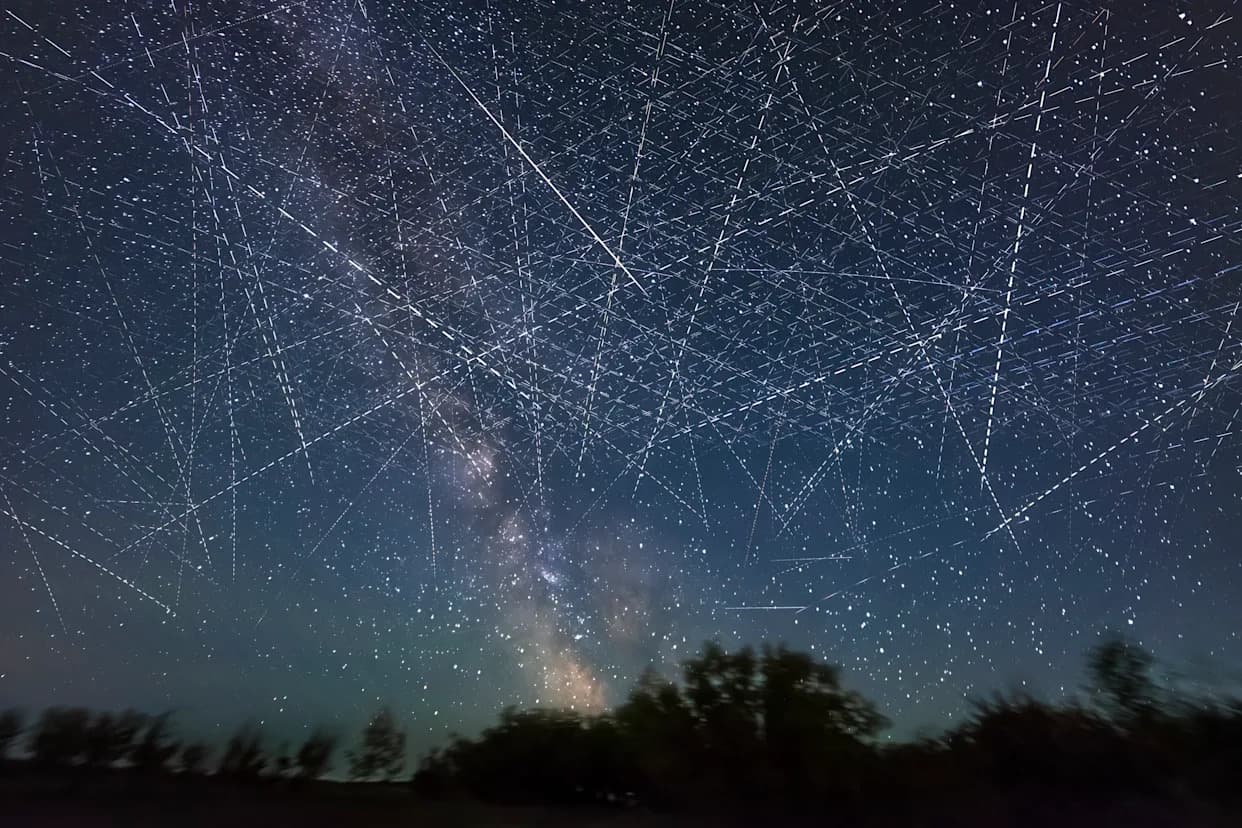
As megaconstellations of internet satellites multiply in low-Earth orbit (LEO), researchers warn the risk of widespread collisions is rising—and a new metric called the CRASH Clock suggests the time to recover control after a disruptive event may be critically short.
What The CRASH Clock Measures
The Collision Realization and Significant Harm (CRASH) Clock, developed by astrophysicist Sarah Thiele and colleagues, estimates how long operators would have to restore command and maneuvering capability after a major disruption—such as a strong solar storm—before catastrophic collisions become likely. The team reports the current CRASH Clock at about 5.5 days.
"The CRASH Clock [gauges] stress in terms of the timescale for a possible catastrophic collision to occur if there are no satellite maneuvers or there is a severe loss in situational awareness," the authors write in a recent preprint on arXiv. "Our calculations show the CRASH Clock is currently 5.5 days, which suggests there is limited time to recover from a wide-spread disruptive event, such as a solar storm."
Why LEO Is Now More Vulnerable
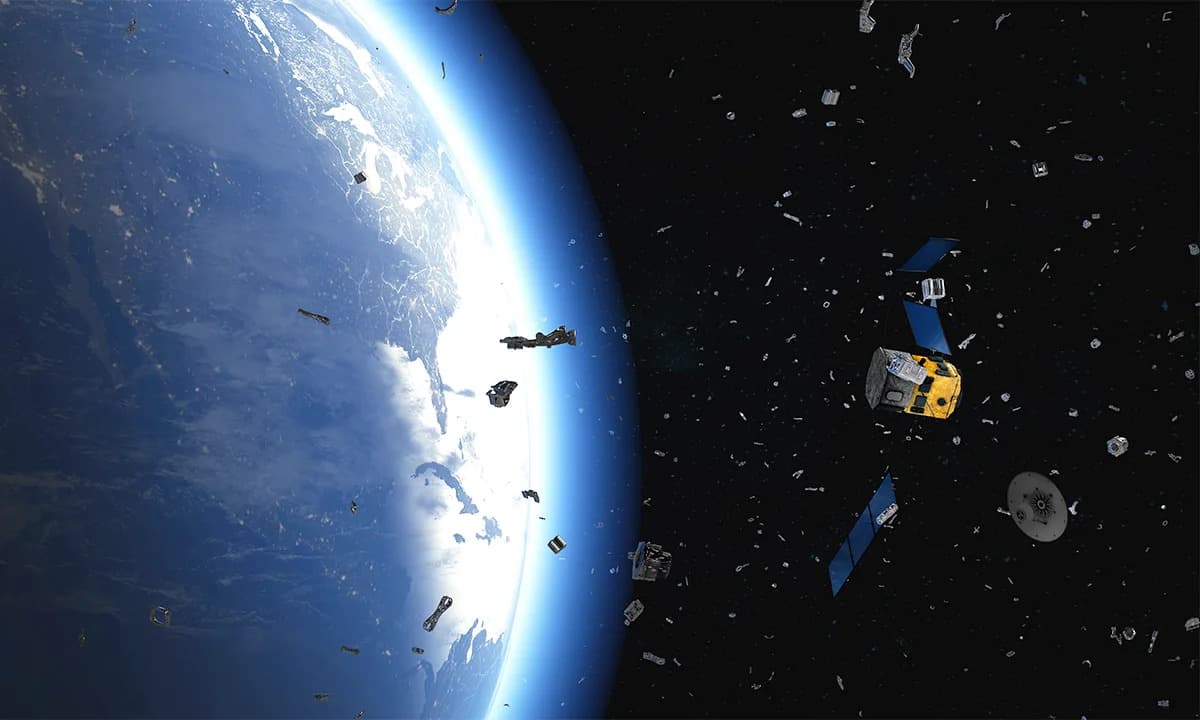
LEO—where most communication constellations operate—ranges from a few hundred kilometers to around 2,000 km above Earth. The past decade has seen thousands of small internet satellites launched into these crowded altitudes. What began as an effort to expand affordable global internet access has become dense clusters of active satellites, spent rocket stages, defunct craft and fragments of debris.
Before megaconstellations were common, models estimated about 164 days would be available to recover control before dangerous collisions could occur. Today, accounting for active satellites, dead hardware and debris, that margin has fallen to under a week.
Solar Storms Make Things Worse
Solar flares and coronal mass ejections (CMEs) stream hot, charged particles toward Earth. Those particles heat and expand the upper atmosphere, increasing drag on LEO satellites and forcing them to burn more fuel to maintain orbit. At the same time, severe solar events can disrupt satellite communications and navigation, making remote command and coordinated maneuvers difficult or impossible.
The 2024 "Gannon" storm illustrated this vulnerability: over a roughly three-day period, nearly half of satellites in LEO required avoidance burns or other corrective action to counter unexpectedly strong drag—already approaching the CRASH Clock limit. Larger storms, like the 1859 Carrington Event, produced multiple disturbances and would likely be far more disruptive to modern satellite operations.
Operational Risks From Frequent Maneuvers
Collision-avoidance maneuvers are a key mitigation tool, but they introduce their own hazards. Each burn changes a satellite's predicted position and can create temporary tracking uncertainty. As maneuver frequency increases, so does the reliance on accurate tracking, timely communications and coordination among operators. System glitches and miscommunications have already caused close calls—for example, a SpaceX alert-system malfunction in 2019 briefly prevented operators from seeing a heightened collision risk, forcing an ESA satellite to move first.
Scale Of The Challenge
Industry plans and filings indicate dramatic near-future growth: SpaceX has proposed a second-generation Starlink of some 7,500 satellites for launch in 2031, while also planning to lower orbits for roughly 4,400 existing Starlink craft to reduce collision risk. Multiple Chinese companies have filed applications that could add hundreds of thousands of new internet satellites in coming years. Observational studies also show very frequent close approaches—on the order of one every several dozen seconds when every tracked object is considered—and Starlink satellites experience close approaches on the order of minutes.
Global institutions have taken note. The United Nations and other bodies increasingly treat LEO as a finite, shared resource: every active satellite consumes usable orbital capacity, while debris occupies that space without delivering benefits. Satellites and fragments also contribute to light pollution that hampers astronomical observations.
What The CRASH Clock Means
Thiele says the CRASH Clock is partly "a measure of the consumption of Earth’s orbital space and the degree to which operations there are being done sustainably." Increases in orbital density or collisional cross-section shrink the time to collision and reduce the margin for safe operations. The CRASH Clock does not predict an exact date for collisions, but it quantifies how rapidly the window for recovery could close if a large-scale communications failure or severe space-weather event occurs.
Addressing the risk will require improved resilience to space weather, better coordination and transparency among satellite operators, strengthened debris mitigation and international agreements that prioritize sustainable use of orbital space.
Help us improve.